




























Views
Downloads

Printable Grade K Bedtime Routine Sequencing Worksheet

Paste this activity's link or code into your existing LMS (Google Classroom, Canvas, Teams, Schoology, Moodle, etc.).
Students can open and work on the activity right away, with no student login required.
You'll still be able to track student progress and results from your teacher account.
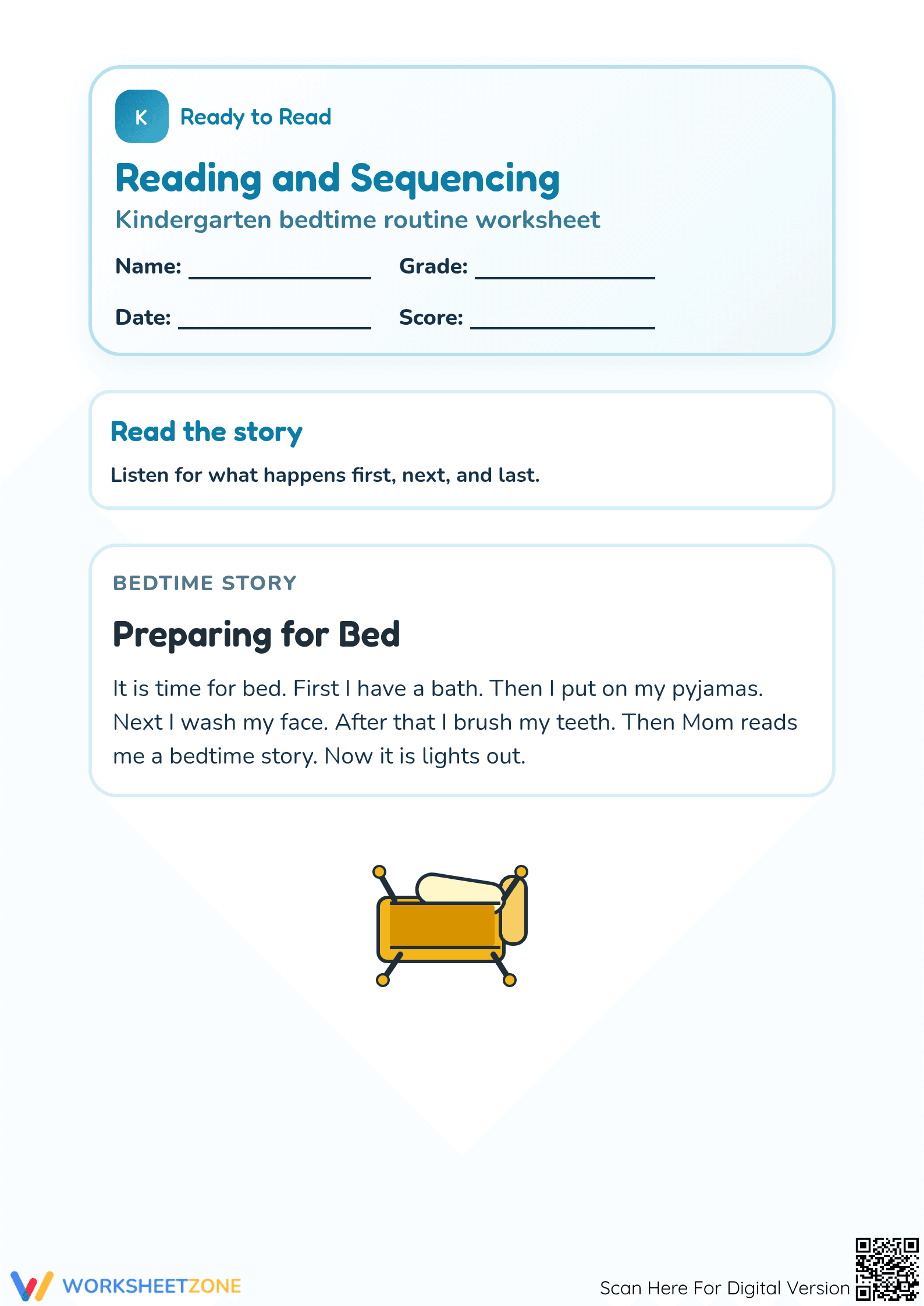
This printable Kindergarten reading comprehension worksheet helps young learners master the essential skill of sequencing events through a relatable bedtime routine story. By identifying the chronological order of five specific tasks, students build a foundation for narrative logic and reading fluency. This resource ensures students can retell simple stories with accuracy and confidence.
At a Glance
- Grade: Kindergarten · Subject: ELA Literature
- Standard:
CCSS.ELA-LITERACY.RL.K.2— Retell familiar stories, including key details and sequence of events- Skill Focus: Chronological Sequencing and Reading Retell
- Format: 2 pages · 5 problems · Answer key included · PDF
- Best For: Literacy centers, sub plans, and morning work
- Time: 10–15 minutes per student session
What's Inside
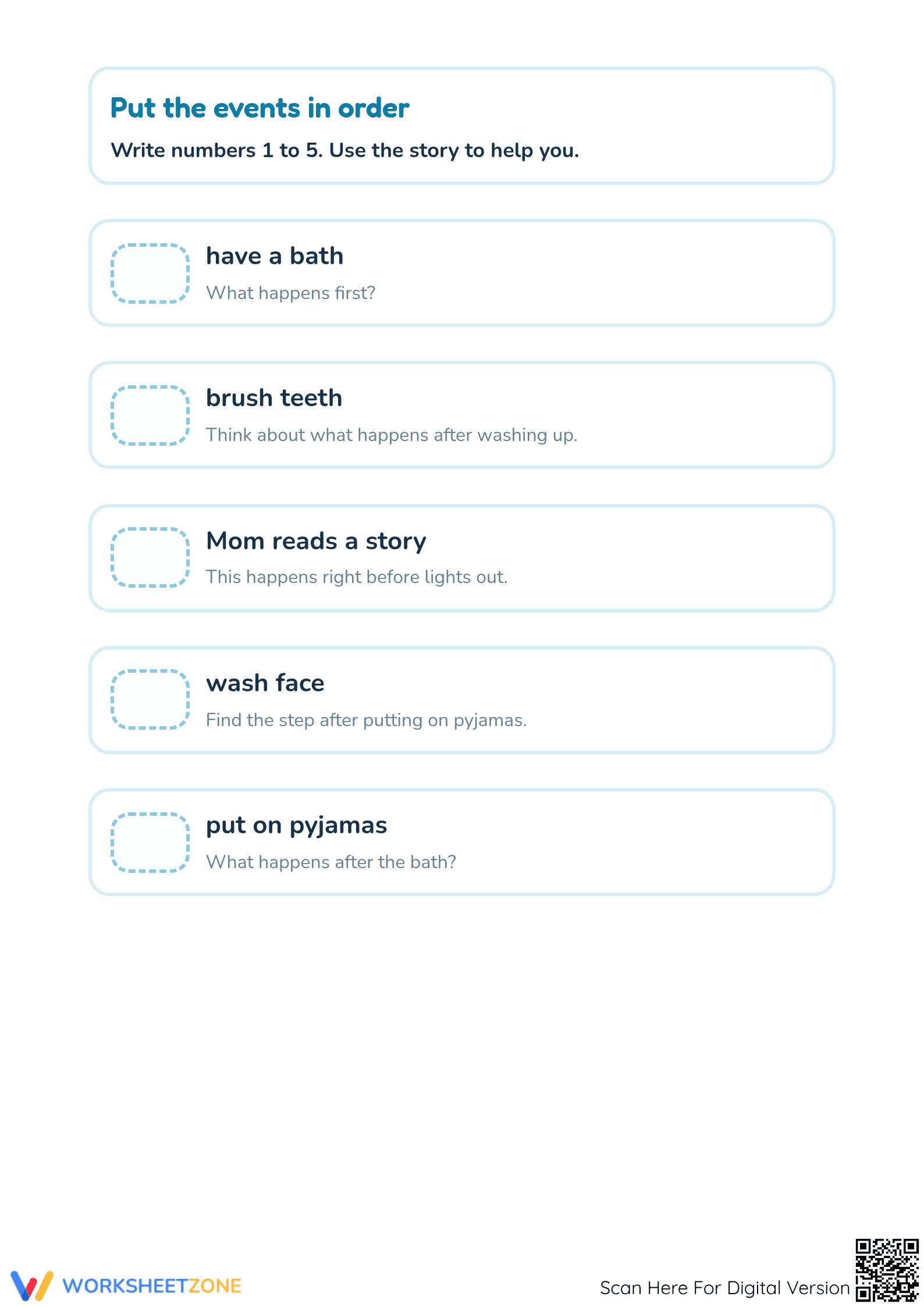
The packet consists of two professionally designed pages. The first page features a "Bedtime Story" titled "Preparing for Bed," which uses clear, simple sentences and transitional keywords like "first," "then," and "next" to guide the reader. The second page provides the assessment component, where students number five distinct actions from the story in their correct chronological order. A comprehensive answer key is provided for immediate feedback.
Zero-Prep Workflow
Designed for the busy educator, this resource requires exactly zero minutes of preparation. First, print the two-page PDF directly from your device (30 seconds). Second, distribute the copies to your students for independent or guided work (1 minute). Finally, use the included answer key to review the correct sequence as a whole class or during small-group instruction (under 2 minutes). The intuitive layout and clear instructions make this an ideal candidate for emergency sub plans or last-minute literacy centers.
Standards Alignment
This worksheet is primarily aligned with `CCSS.ELA-LITERACY.RL.K.2`, which requires students to retell familiar stories including key details. By focusing on the temporal order of a routine, it also supports `CCSS.ELA-LITERACY.L.K.6`, helping students use words and phrases acquired through conversations and reading. Both standard codes can be copied directly into lesson plans, IEP goals, or district curriculum mapping tools.
How to Use It
Use this worksheet as a formative assessment after a direct instruction lesson on sequencing signal words. Observe if students can transition from the text to the numbering task without constant teacher redirection. Alternatively, it serves as an excellent "Early Finisher" task, allowing students to practice independent reading and logic skills while you work with small groups.
Who It's For
This resource is ideal for Kindergarten students, though it can support Pre-K learners with teacher-led read-alouds or Grade 1 students needing remedial sequencing practice. It pairs naturally with a classroom anchor chart on "First, Next, Last" or a picture book focused on daily routines and time-order transitions.
The ability to sequence events is a critical precursor to complex reading comprehension and logical reasoning in early childhood. According to research from Fisher & Frey (2014) on the gradual release of responsibility, structured practice with familiar narratives—such as the bedtime routine featured here—allows students to internalize chronological structures before applying them to more abstract informational texts. By focusing on CCSS.ELA-LITERACY.RL.K.2, this worksheet provides the specific "retelling" practice necessary for Kindergarten mastery. The inclusion of 5 distinct ordering tasks provides enough data points for teachers to identify whether a student has grasped the concept of temporal flow or requires further scaffolding with visual aids. This resource bridges the gap between listening comprehension and independent literacy, ensuring that students can articulate the "why" behind event placement in a narrative. Fisher & Frey emphasize that such foundational sequencing skills are predictive of later success in summarizing and identifying cause-and-effect relationships.


