




























Views
Downloads

Grade K Story Sequencing — Printable No-Prep Worksheet

Paste this activity's link or code into your existing LMS (Google Classroom, Canvas, Teams, Schoology, Moodle, etc.).
Students can open and work on the activity right away, with no student login required.
You'll still be able to track student progress and results from your teacher account.
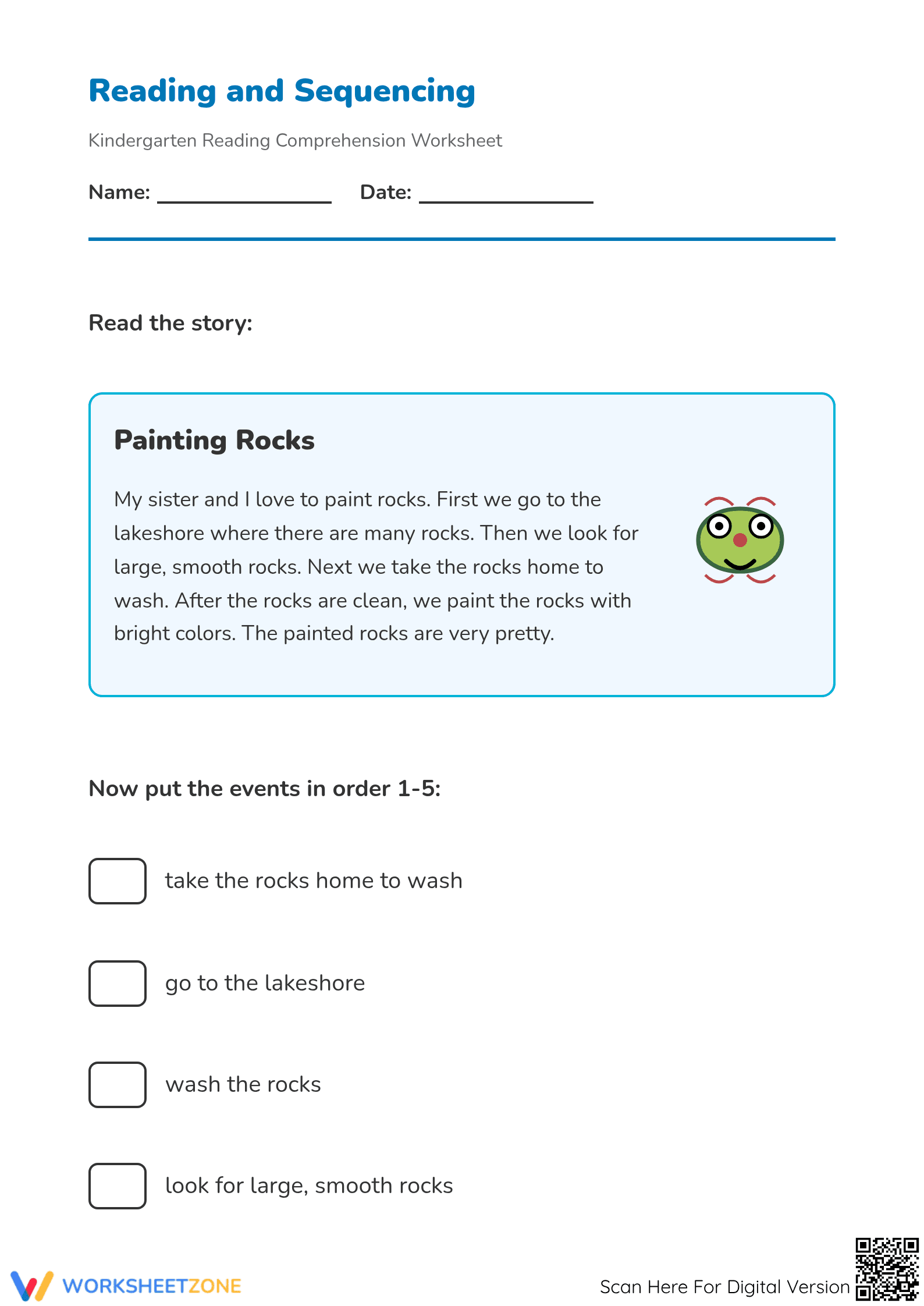
This Kindergarten reading comprehension worksheet helps young learners master story sequencing by ordering key events from a short text. Students read a relatable passage about painting rocks and then number five specific actions in the correct chronological order, building foundational retelling and comprehension skills.
At a Glance
- Grade: Kindergarten · Subject: ELA
- Standard:
CCSS.ELA-LITERACY.RL.K.3— Identify major events in a story- Skill Focus: Sequencing Events
- Format: 2 pages · 5 problems · Answer key included · PDF
- Best For: Independent practice or centers
- Time: 10–15 minutes
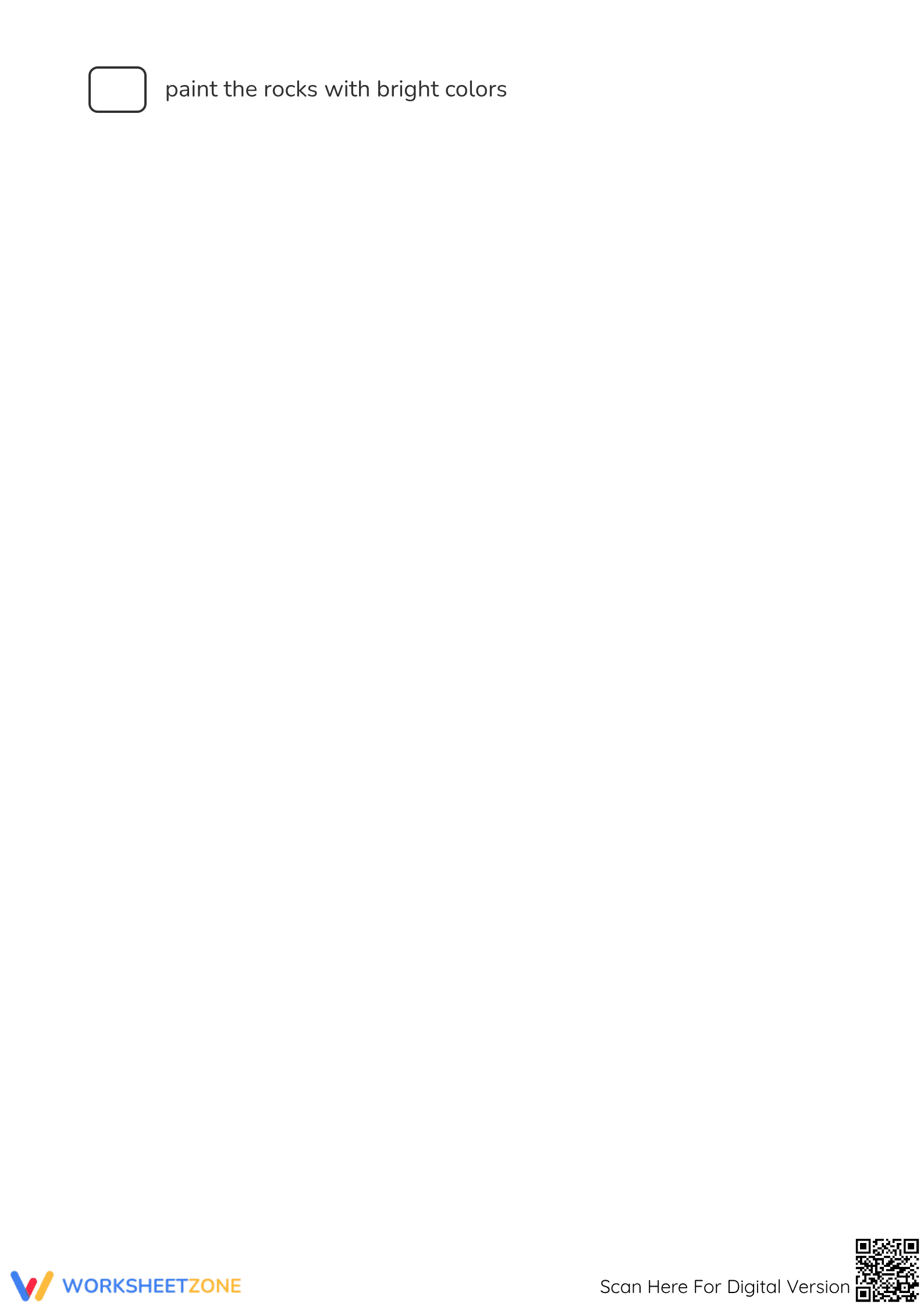
Inside this resource, educators will find a two-page activity featuring a short, decodable story titled "Painting Rocks." The text uses simple transition words like "First," "Then," "Next," and "After" to guide early readers. Following the passage, students are presented with five distinct events from the narrative and must write the numbers one through five in the provided boxes to sequence the story accurately. A complete answer key is included for quick grading.
This resource is designed for immediate classroom implementation with a streamlined, zero-prep workflow:
- Print (1 minute): Download the PDF and print the two-page student activity and the corresponding answer key.
- Distribute (1 minute): Hand out the worksheets during your literacy block or place them in reading center folders.
- Review (3 minutes): Use the included answer key to quickly check student sequencing or review the correct order together as a class.
With less than two minutes of total teacher preparation required, this worksheet is an excellent addition to emergency sub plans or last-minute schedule changes.
Aligned to primary standard CCSS.ELA-LITERACY.RL.K.3, this worksheet requires students to identify major events in a story with prompting and support. It also reinforces early reading comprehension by having students track the logical progression of a narrative. Both standard codes can be copied directly into lesson plans, IEP goals, or district curriculum mapping tools.
This sequencing activity works perfectly as an independent practice task after a whole-group read-aloud focused on story structure. Teachers can also utilize it during small-group guided reading sessions to monitor how well students identify transition words. As a formative assessment tip, observe whether students refer back to the text to find the sequence words before numbering the boxes. Expected completion time is between 10 and 15 minutes.
This worksheet is ideal for Kindergarten students developing basic reading comprehension and retelling skills. It can be easily differentiated by reading the passage aloud for students who are still mastering decoding, allowing them to focus purely on the auditory sequencing task. It pairs naturally with anchor charts about transition words or visual story maps.
Mastering the ability to identify major events in a story, as outlined in CCSS.ELA-LITERACY.RL.K.3, is a critical milestone in early childhood literacy. Research from the RAND AIRS 2024 report emphasizes that explicit instruction in narrative sequencing significantly improves overall reading comprehension and working memory in young learners. When Kindergarten students practice ordering events chronologically, they develop the cognitive frameworks necessary for more complex analytical reading in later grades. This foundational skill not only aids in retelling familiar stories but also supports early writing development, as children learn how to structure their own narratives logically. By providing targeted practice with clear transition markers, educators can effectively bridge the gap between basic decoding and deeper textual understanding, ensuring students build a robust foundation for future academic success.


