




























Views
Downloads


Kindergarten Sequencing Worksheet | Printable Reading Guide

Paste this activity's link or code into your existing LMS (Google Classroom, Canvas, Teams, Schoology, Moodle, etc.).
Students can open and work on the activity right away, with no student login required.
You'll still be able to track student progress and results from your teacher account.
This Kindergarten reading and sequencing worksheet helps early learners master chronological order by identifying the beginning, middle, and end of a short story. Students build essential literacy foundations by connecting actions to their logical progression. It provides a clear, structured path for developing comprehension skills through familiar daily routines.
At a Glance
- Grade: Kindergarten · Subject: English Language Arts
- Standard:
CCSS.ELA-LITERACY.RL.K.2— Retell familiar stories by identifying key details and sequencing events correctly- Skill Focus: Story event sequencing
- Format: 2 pages · 5 problems · Answer key included · PDF
- Best For: Literacy centers and independent practice
- Time: 10–15 minutes
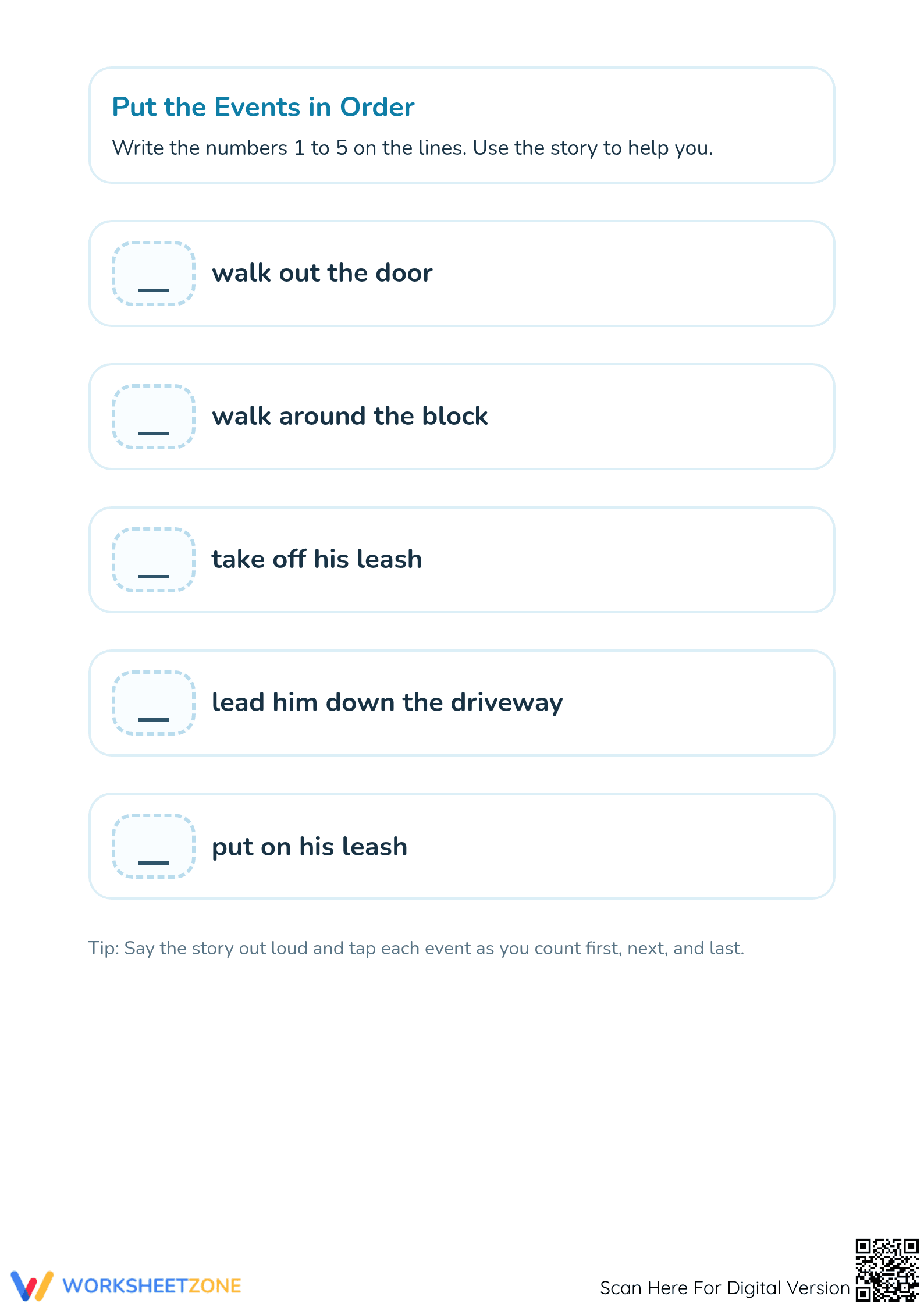
This resource includes a two-page PDF featuring a relatable narrative followed by a sequencing activity. The story uses transition words like "first" and "next" to scaffold understanding. The second page presents five events from the text with spaces for students to number them. A full answer key is provided for quick verification by teachers or parents.
The zero-prep design allows teachers to implement this activity in under two minutes. First, print the two pages (30 seconds). Second, distribute the worksheets to students (30 seconds). Third, review the completed work using the included key (30 seconds). This streamlined workflow makes it an ideal choice for emergency sub plans or quick morning work transitions when time is limited.
The primary focus is CCSS.ELA-LITERACY.RL.K.2, which requires students to retell familiar stories, including key details, with prompting and support. By requiring students to order the steps of the story, this worksheet directly targets the ability to recognize story structure and narrative flow. This standard code can be copied directly into lesson plans, IEP goals, or district curriculum mapping tools.
Use this worksheet during a direct instruction lesson on narrative sequence. Read the story aloud to students, emphasizing the transition words, then have them complete the ordering task independently. As a formative assessment, observe if students refer back to the text to find evidence for their numbering choices. Expect completion within 10 to 15 minutes for most Kindergarteners.
This resource is designed for Kindergarten students but serves as an excellent intervention for Grade 1 learners needing extra support. It pairs naturally with anchor charts focused on transition words like "First, Next, Last." The simple vocabulary and clear illustrations make it accessible for English Language Learners developing basic narrative comprehension skills in a classroom setting.
This Kindergarten sequencing resource aligns with CCSS.ELA-LITERACY.RL.K.2, focusing on the plain-English skill of retelling story events in chronological order. According to the NAEP 2022 framework, early mastery of sequencing is a high-leverage predictor of later reading proficiency. Fisher & Frey (2014) emphasize that providing structured practice with text-dependent tasks is essential for developing independent comprehension. By isolating five key events, this worksheet reduces cognitive load while reinforcing the logical structure of narrative texts. The inclusion of an answer key ensures immediate feedback, a critical component of successful Kindergarten literacy instruction. Educators can utilize this tool as a reliable evidence-based practice for early childhood classroom settings. This structured approach helps bridge the gap between listening comprehension and independent reading by anchoring tasks in clear, observable narrative steps that students can easily identify and order.


