


























Views
Downloads
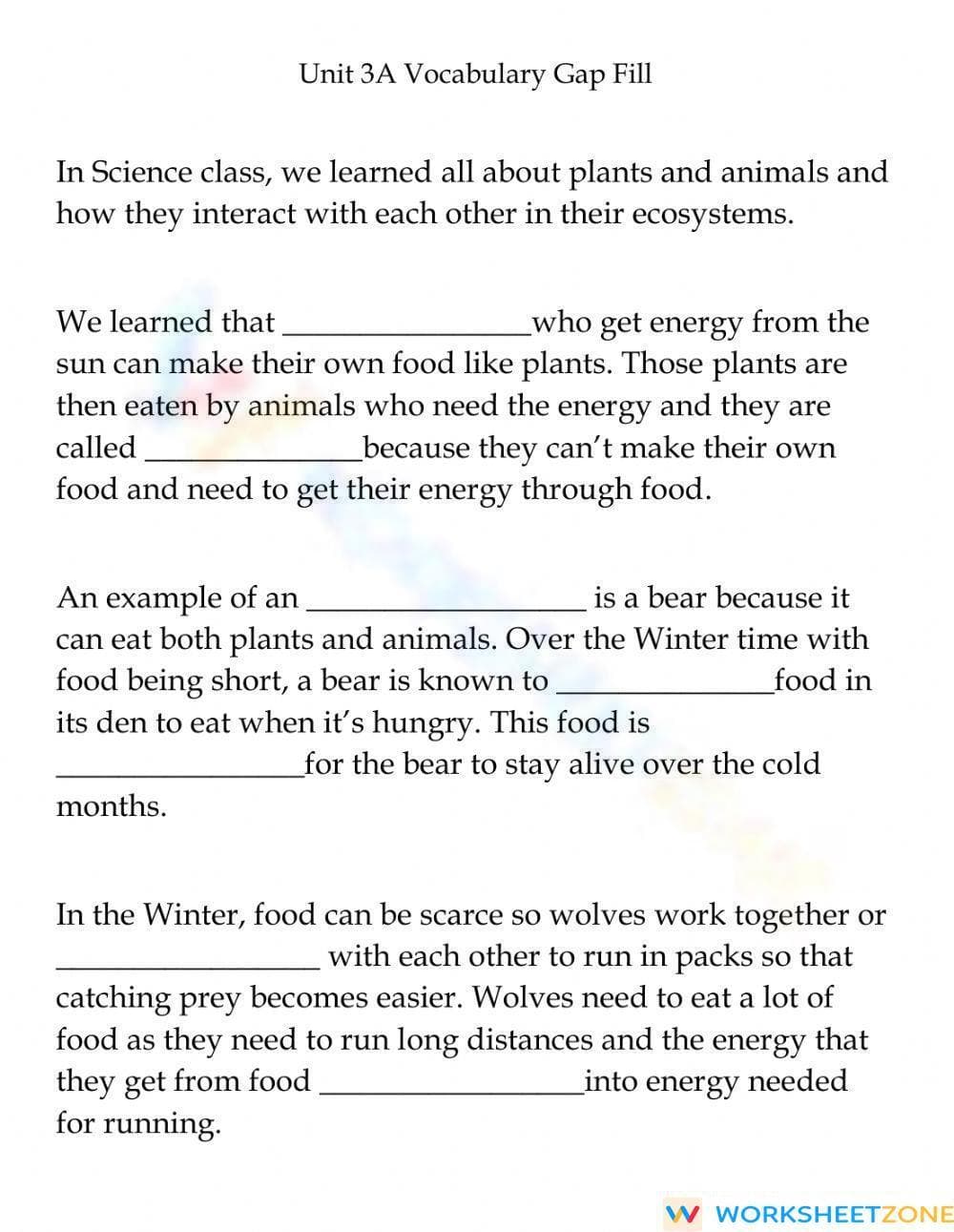


Essential Grade 5 Ecosystems Vocabulary Gap Fill Worksheet
Paste this activity's link or code into your existing LMS (Google Classroom, Canvas, Teams, Schoology, Moodle, etc.).
Students can open and work on the activity right away, with no student login required.
You'll still be able to track student progress and results from your teacher account.
This Grade 5 ELA worksheet bridges language arts and life science by challenging students to apply domain-specific vocabulary within a cohesive narrative about ecosystems. Students use context clues to identify roles in a food chain, from producers to apex predators. This exercise ensures students master complex academic terms while improving reading comprehension.
At a Glance
- Grade: 5 · Subject: ELA (Science Integration)
- Standard:
CCSS.ELA-LITERACY.RI.5.4— Determine the meaning of academic and domain-specific words in text- Skill Focus: Ecosystem vocabulary and context clues
- Format: 2 pages · 11 problems · Answer key included · PDF
- Best For: Vocabulary reinforcement and science cross-curricular study
- Time: 15–20 minutes
This comprehensive 2-page resource features a structured gap-fill narrative that covers energy transfers, symbiotic relationships, and consumer classifications. It includes a clear word bank containing 11 essential terms such as carnivore, producers, and partnerships. The layout is clean and accessible, with a full answer key provided for rapid grading.
Educators can implement this resource in under 2 minutes. Step 1: Print the 2-page PDF. Step 2: Distribute to the class for independent work or as a warm-up activity. Step 3: Use the included answer key for a quick whole-class review. Its self-contained nature makes it an ideal choice for emergency sub plans or quiet center rotations.
This worksheet aligns directly with CCSS.ELA-LITERACY.RI.5.4, which requires students to determine the meaning of general academic and domain-specific words and phrases in a text relevant to a grade 5 topic. By integrating life science concepts, it also supports NGSS cross-cutting concepts regarding energy. Both standard codes can be copied directly into lesson plans, IEP goals, or district curriculum mapping tools.
Assign this worksheet as a formative assessment after an introductory lesson on food chains to check for conceptual understanding. It works exceptionally well as a transition activity between ELA and Science blocks. Teachers should observe whether students can distinguish between herbivore and carnivore based on the described behaviors. Completion time is typically 15 to 20 minutes.
This resource is designed for Grade 5 students, including English Language Learners who benefit from the scaffolded word bank and narrative context. It pairs naturally with an anchor chart on the energy pyramid or a reading passage about animal adaptations in the wild.
The use of cloze procedures and gap-fill tasks is supported by research from Fisher & Frey (2014) regarding the importance of domain-specific vocabulary acquisition in the upper elementary grades. By embedding terms like foodchain and consumers within a meaningful narrative rather than isolated lists, this worksheet promotes deeper cognitive processing. This Grade 5 ELA worksheet uses 11 targeted tasks to build fluency with CCSS.ELA-LITERACY.RI.5.4 standards. According to NAEP data, students who master academic vocabulary in context show significantly higher proficiency in science-related informational texts. The integration of life science content ensures that the vocabulary practice is relevant and rigorous, meeting the demands of modern college and career readiness standards. Educators can confidently use this tool as part of a comprehensive literacy program.


