


























Views
Downloads


Printable Addition Worksheet | Grade 1 Math Practice
Paste this activity's link or code into your existing LMS (Google Classroom, Canvas, Teams, Schoology, Moodle, etc.).
Students can open and work on the activity right away, with no student login required.
You'll still be able to track student progress and results from your teacher account.
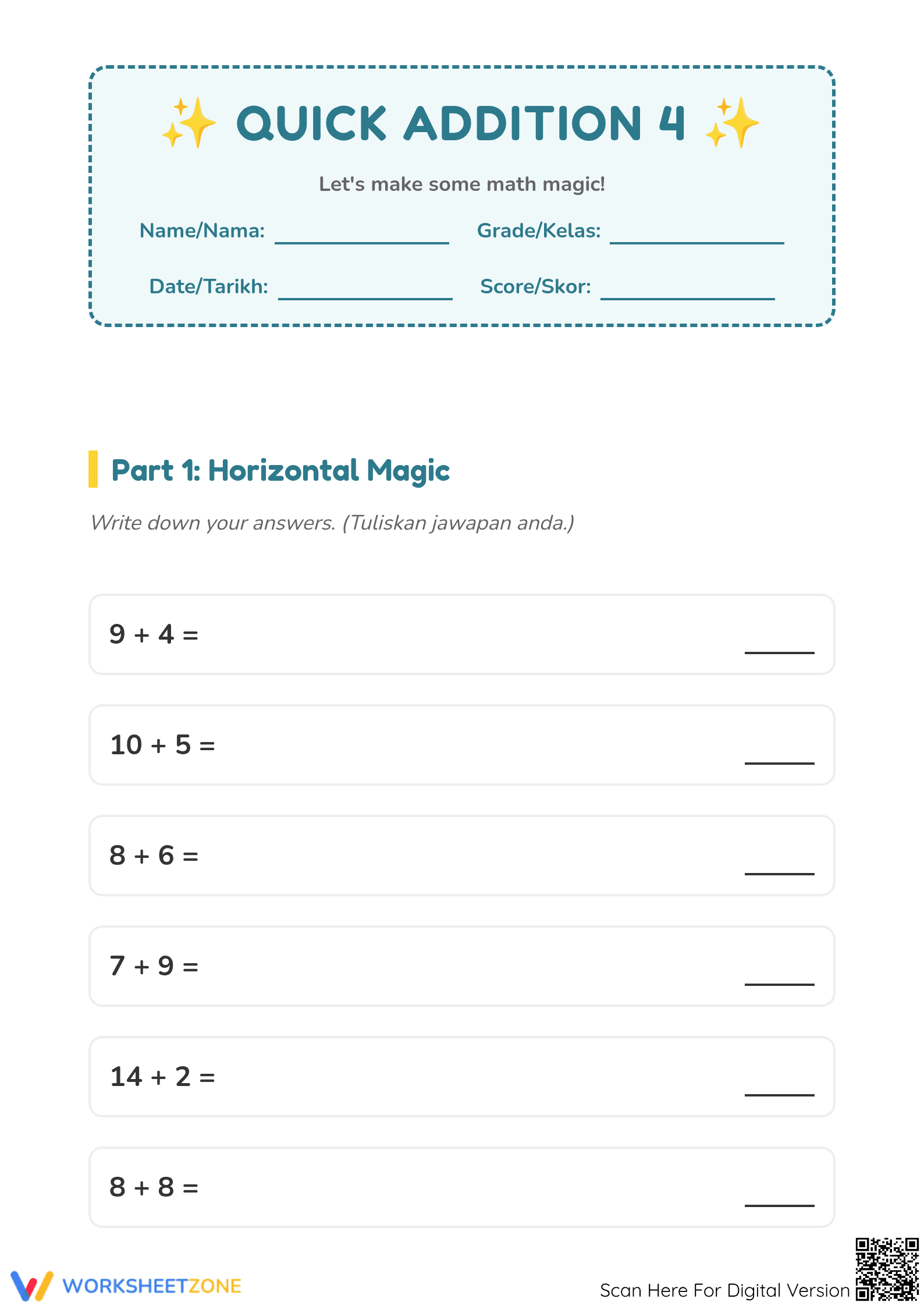
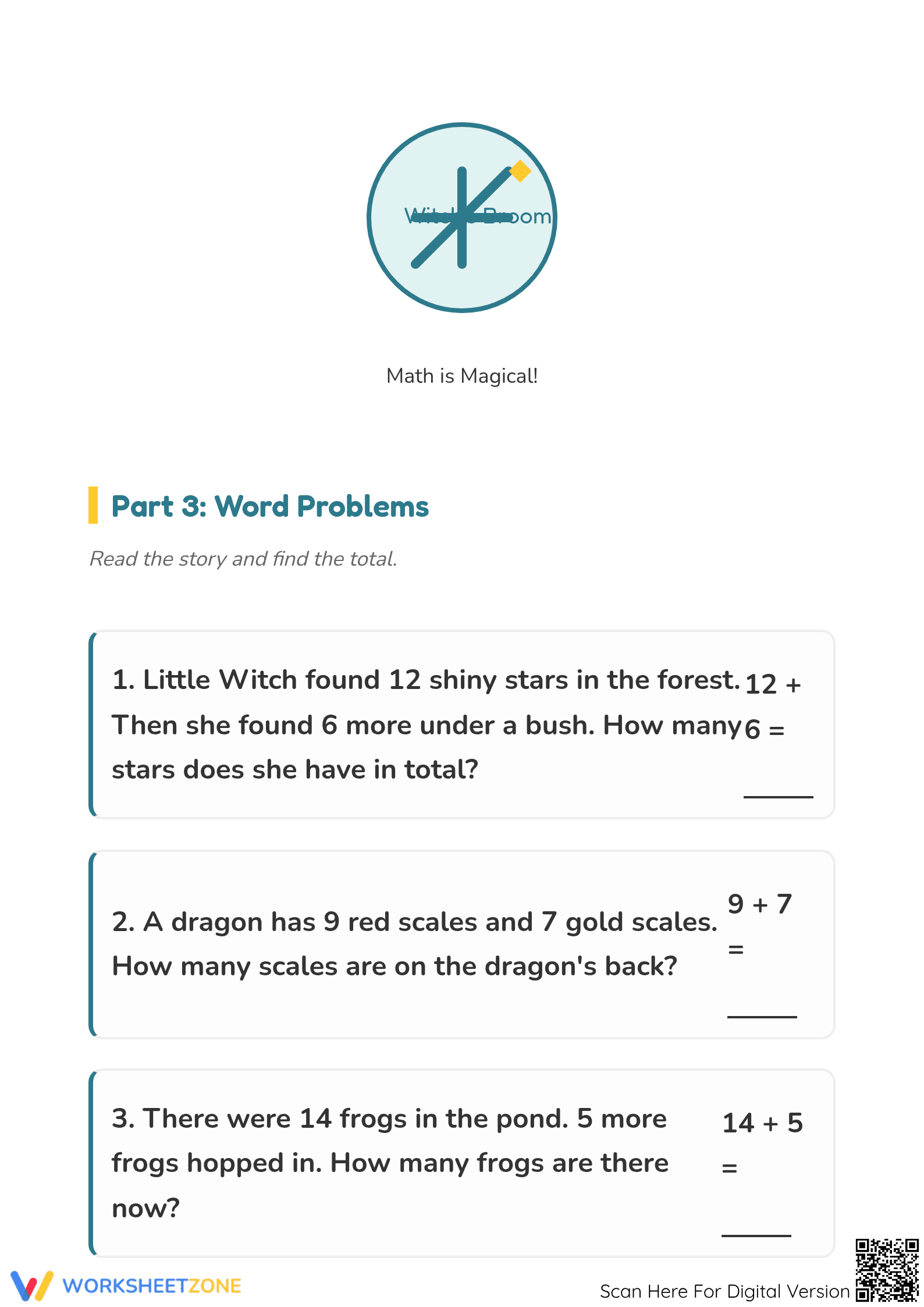
This first-grade math worksheet is designed to solidify students' understanding of addition. Through a series of 23 carefully sequenced problems, learners will practice adding single and double-digit numbers in multiple formats, including horizontal equations, vertical problems, and word problems, building a strong foundation for more complex arithmetic.
At a Glance
- Grade: 1 · Subject: Math
- Standard:
CCSS.MATH.CONTENT.1.NBT.C.4— Add a two-digit and a one-digit number within 100.- Skill Focus: Single & Double-Digit Addition
- Format: 4 pages · 23 problems · Answer key included · PDF
- Best For: Independent practice, homework, assessment.
- Time: 15–25 minutes
What's Inside
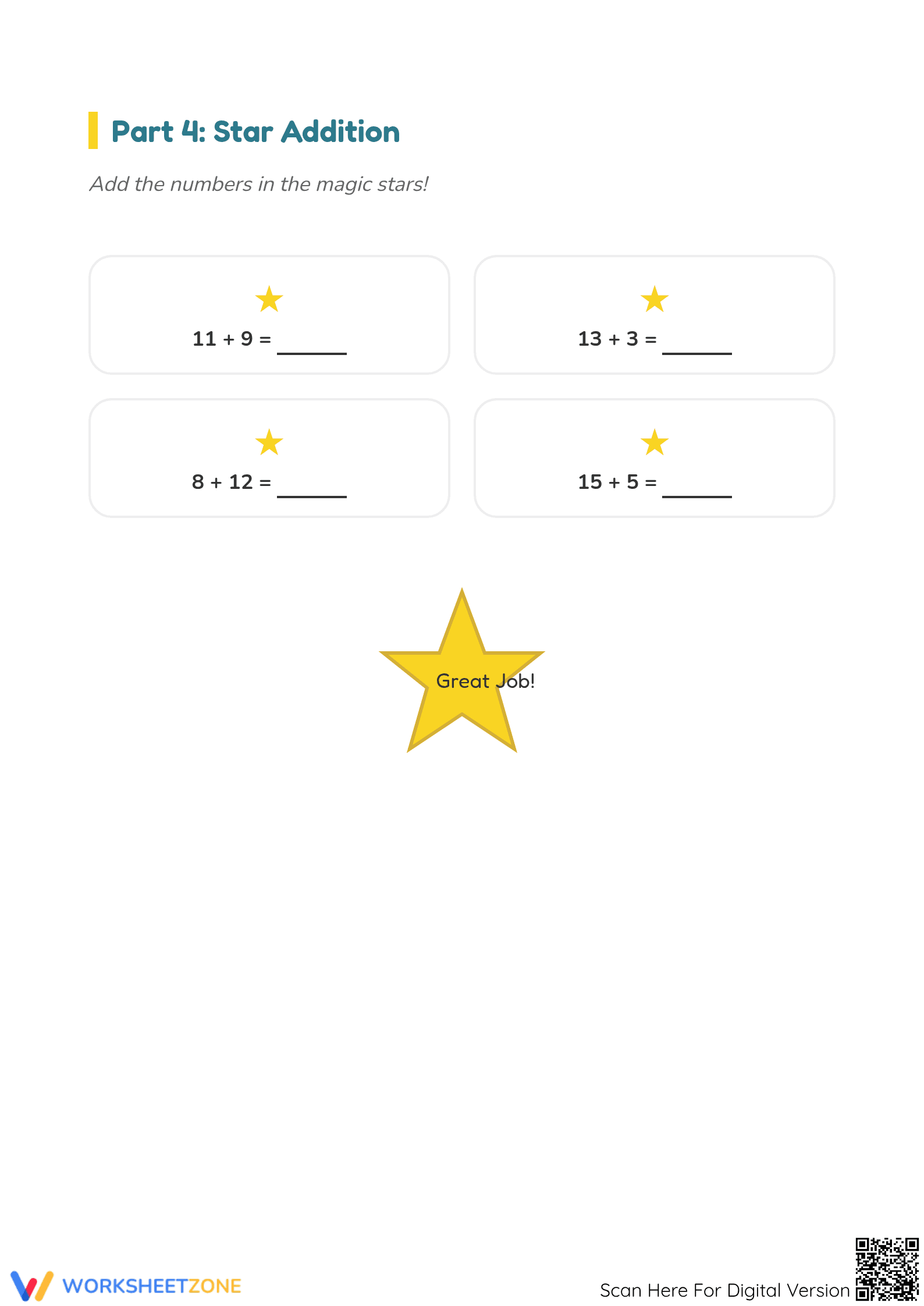
This four-page PDF resource includes a comprehensive answer key for quick and easy grading. The worksheet is divided into four parts: horizontal addition, vertical addition, word problems, and a final mixed review. This varied structure keeps students engaged while providing practice with different problem-solving contexts and layouts.
Skill Progression
The worksheet follows a gradual release model to support student learning.
- Guided practice: Initial sections present simple horizontal and vertical problems to build confidence with the mechanics of two-digit addition.
- Supported practice: The third section's word problems require students to apply addition skills in context, bridging calculation and application.
- Independent practice: The final section is a mixed review, letting students demonstrate mastery. This ensures a steady path to confident application.
Standards Alignment
This worksheet directly aligns with Common Core standard CCSS.MATH.CONTENT.1.NBT.C.4, where students add within 100, including a two-digit and one-digit number. The exercises support learning strategies based on place value as specified by the standard. It also touches on CCSS.MATH.CONTENT.1.OA.A.1 (solving word problems). Both standard codes can be copied directly into lesson plans or curriculum maps.
How to Use It
Use this resource for independent practice after a lesson on two-digit addition, as a homework assignment, or as a formative assessment. For assessment, observe which problem type (horizontal, vertical, or word problem) presents the most difficulty to identify areas for re-teaching. Most students will complete the worksheet in 15 to 25 minutes.
Who It's For
This worksheet is ideal for first-grade students who are learning to add with and without regrouping. It's also suitable for advanced kindergarteners ready for a challenge or second-grade students needing targeted review. For students needing extra support, pair this worksheet with a number line or base-ten blocks to help them visualize the process of composing a ten.
This worksheet helps students build fluency with CCSS.MATH.CONTENT.1.NBT.C.4, which requires adding within 100—a key skill for future math success. Consistent, varied practice is critical for procedural fluency. The worksheet's format, mixing calculations and word problems, aligns with findings from the RAND AIRS (2024) report on effective math instruction, which emphasizes connecting procedures to applications. By providing 23 distinct practice problems, it offers the repetition needed to internalize place value strategies when adding tens and ones. This approach ensures students not only compute correctly but also understand the logic behind the operations, preparing them for more complex arithmetic.


