


























Views
Downloads
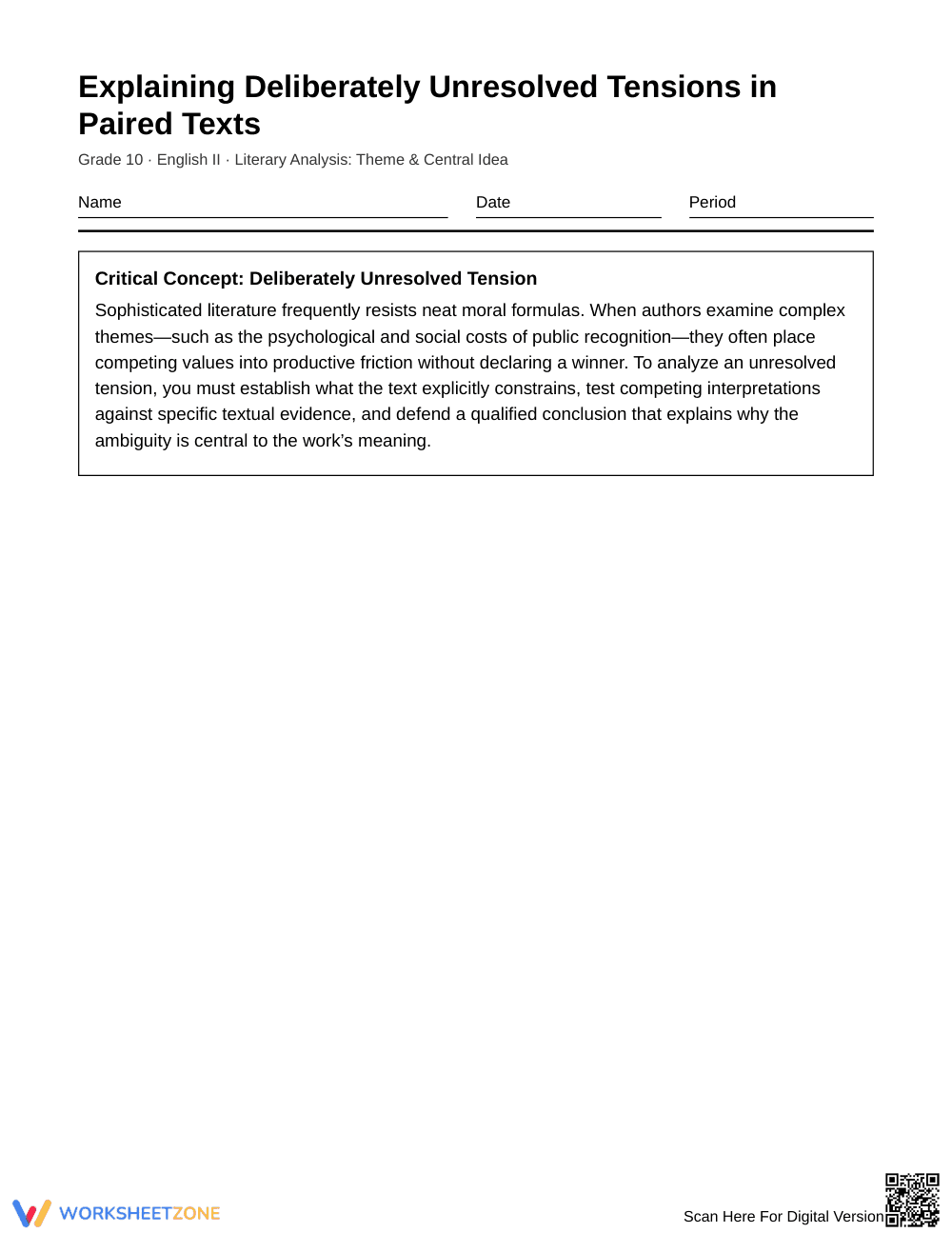

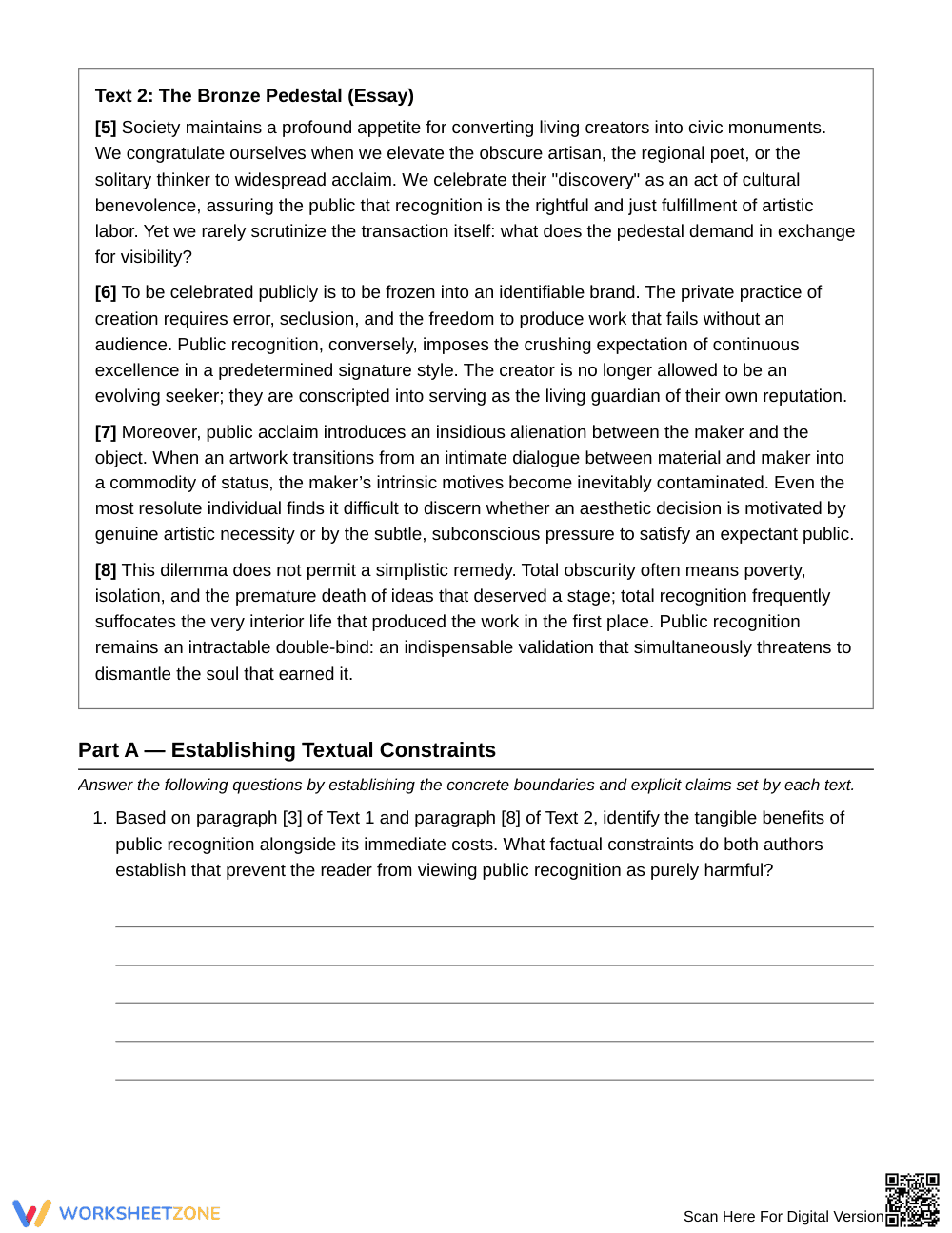
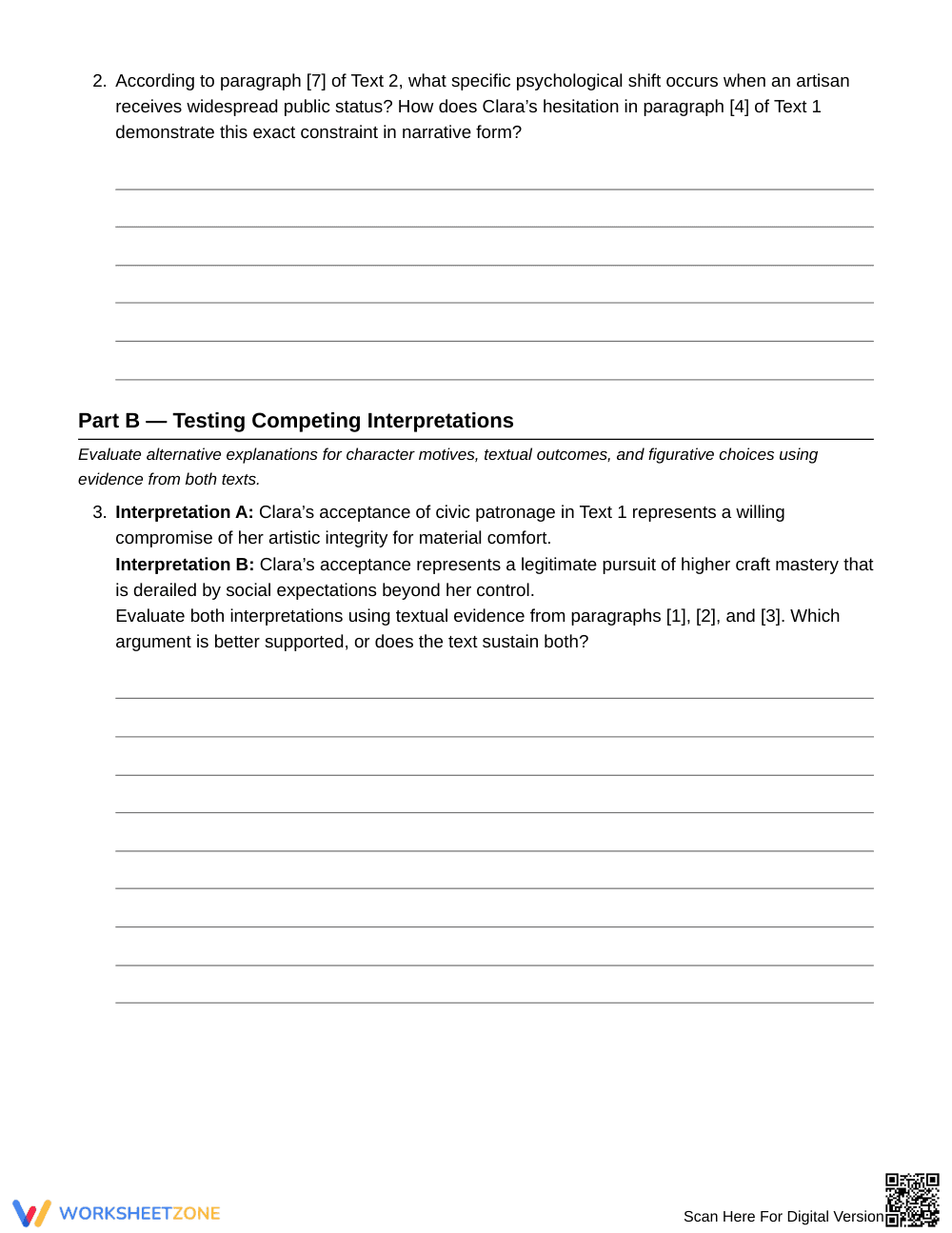
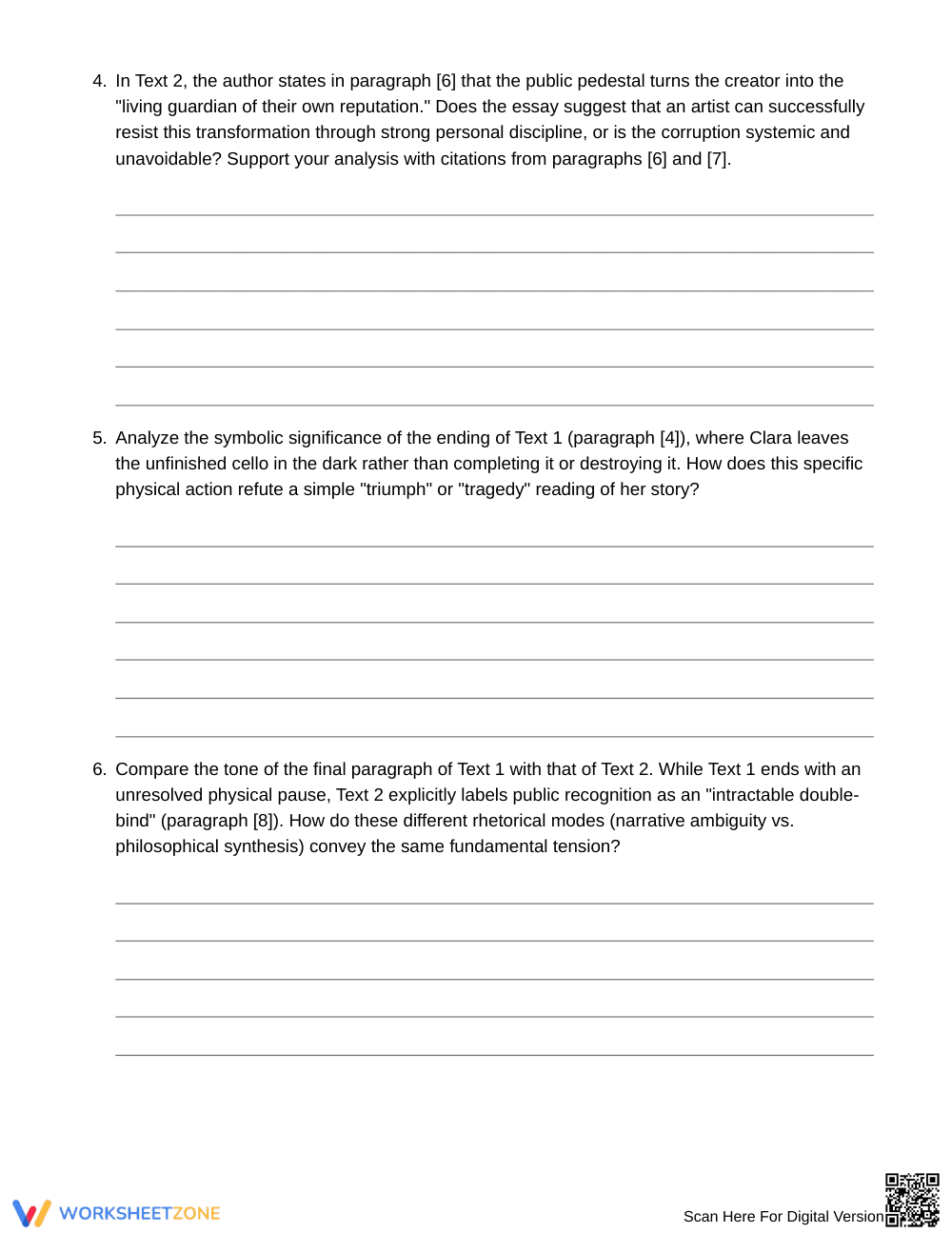

Proven Unresolved Tension Worksheet | Grade 10 English II
Paste this activity's link or code into your existing LMS (Google Classroom, Canvas, Teams, Schoology, Moodle, etc.).
Students can open and work on the activity right away, with no student login required.
You'll still be able to track student progress and results from your teacher account.
This Grade 10 literary analysis worksheet trains students to analyze sophisticated paired texts where central themes resist neat moral resolutions. Working across fiction and essay excerpts, high school readers examine how authors sustain productive friction between competing values, cite textual constraints, test competing interpretations, and defend qualified analytical arguments about thematic ambiguity.
At a Glance
- Grade: 10 · Subject: English II
- Standard: Analyze how complex themes develop and remain unresolved across texts
- Skill Focus: Thematic tension and qualified argumentation
- Format: 6 pages · 8 problems · Answer key included · PDF
- Best For: Close reading and essay pre-writing
- Time: 45–60 minutes
What's Inside
The 6-page printable resource includes two rigorous companion passages—a short story about an artisan overwhelmed by sudden fame and an argumentative essay examining the costs of public acclaim. Across 8 multi-part analytical questions, students work through textual constraints, comparative analysis, and open-ended synthesis prompts supported by a thorough 3-page explanatory answer key.
Skill Progression
- Guided Practice (Part A, 2 tasks): Students identify concrete textual constraints and factual boundaries established by both authors regarding public recognition.
- Supported Practice (Part B, 4 tasks): Students evaluate competing interpretations of character motivations, investigate tone contrasts, and analyze symbolic choices.
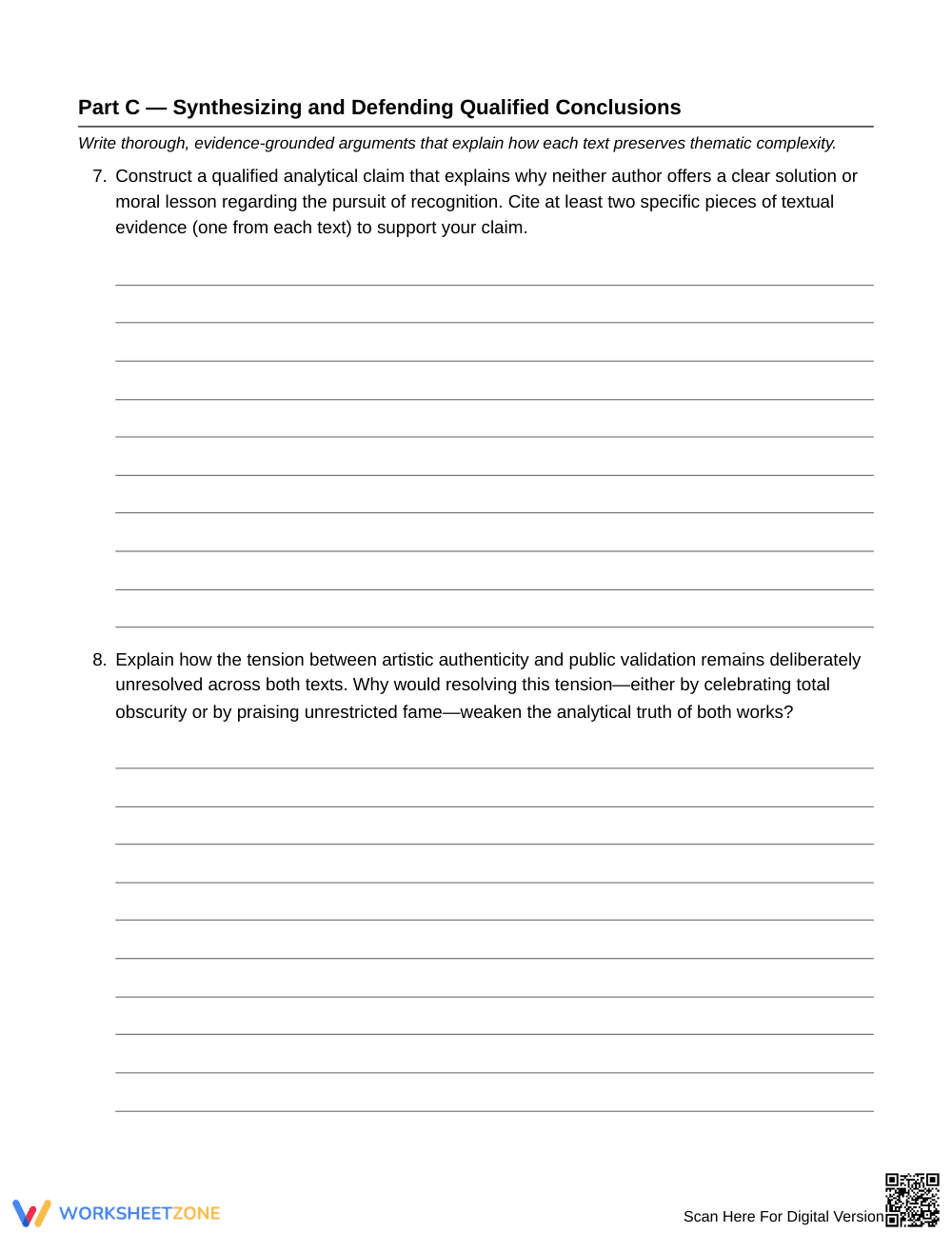
- Independent Practice (Part C, 2 tasks): Students synthesize paired texts to construct qualified thematic claims defending why the central dilemma remains deliberately unresolved.
This sequence follows an explicit gradual-release model that builds rigorous critical thinking from baseline textual comprehension to nuanced comparative synthesis.
Standards Alignment
This worksheet aligns directly with high school English Language Arts standards requiring students to determine central ideas, evaluate how themes interact over the course of a text, and assess how authors handle conflicting perspectives. Both standard competencies can be copied directly into lesson plans, IEP goals, or district curriculum mapping tools.
How to Use It
Assign this activity during a literary analysis unit after direct instruction on complex characterization or authorial nuance. It serves as an effective pre-writing workshop for comparative thematic essays. For formative assessment, examine student responses in Part B to verify whether learners can acknowledge valid textual counter-evidence before writing their final synthesis claims. Expected completion time is 45 to 60 minutes.
Who It's For
This resource is designed for Grade 10 English II general education, honors, and AP-prep classrooms. Pair this practice with an anchor chart on crafting qualified thesis statements or a direct instruction lesson on rhetorical counterarguments.
Secondary ELA research demonstrates that analyzing complex literary ambiguities requires explicit instruction in evaluating competing textual claims. According to Fisher & Frey (2014), structured close-reading routines that move students from establishing factual boundaries to defending qualified interpretive arguments significantly increase reading comprehension and analytical writing stamina. This 6-page worksheet operationalizes that research through an 8-task progression spanning fiction and informational commentary. By requiring students to analyze deliberately unresolved thematic tensions across 45 to 60 minutes of focused practice, the activity prevents simplistic binary readings and prepares high school writers to craft mature, evidence-grounded arguments in advanced literary analysis courses.


