




























1 / 2
0
Views
0
Downloads

0.0
0
Save
0 Likes
Share
Producers and Consumers Science Worksheet for Kids
0 Views
0 Downloads

Paste this activity's link or code into your existing LMS (Google Classroom, Canvas, Teams, Schoology, Moodle, etc.).
Students can open and work on the activity right away, with no student login required.
You'll still be able to track student progress and results from your teacher account.
Information
Description
What It Is:
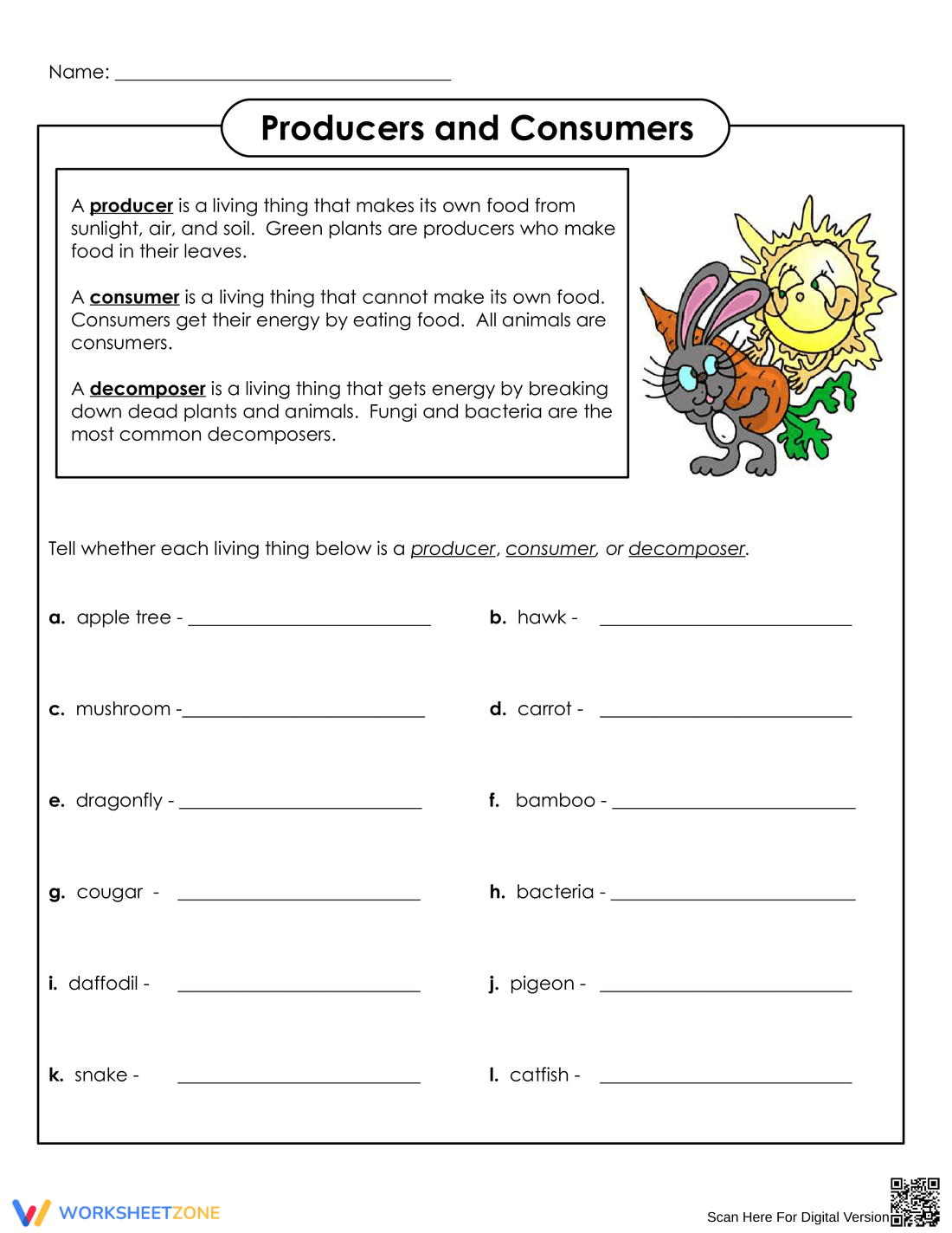
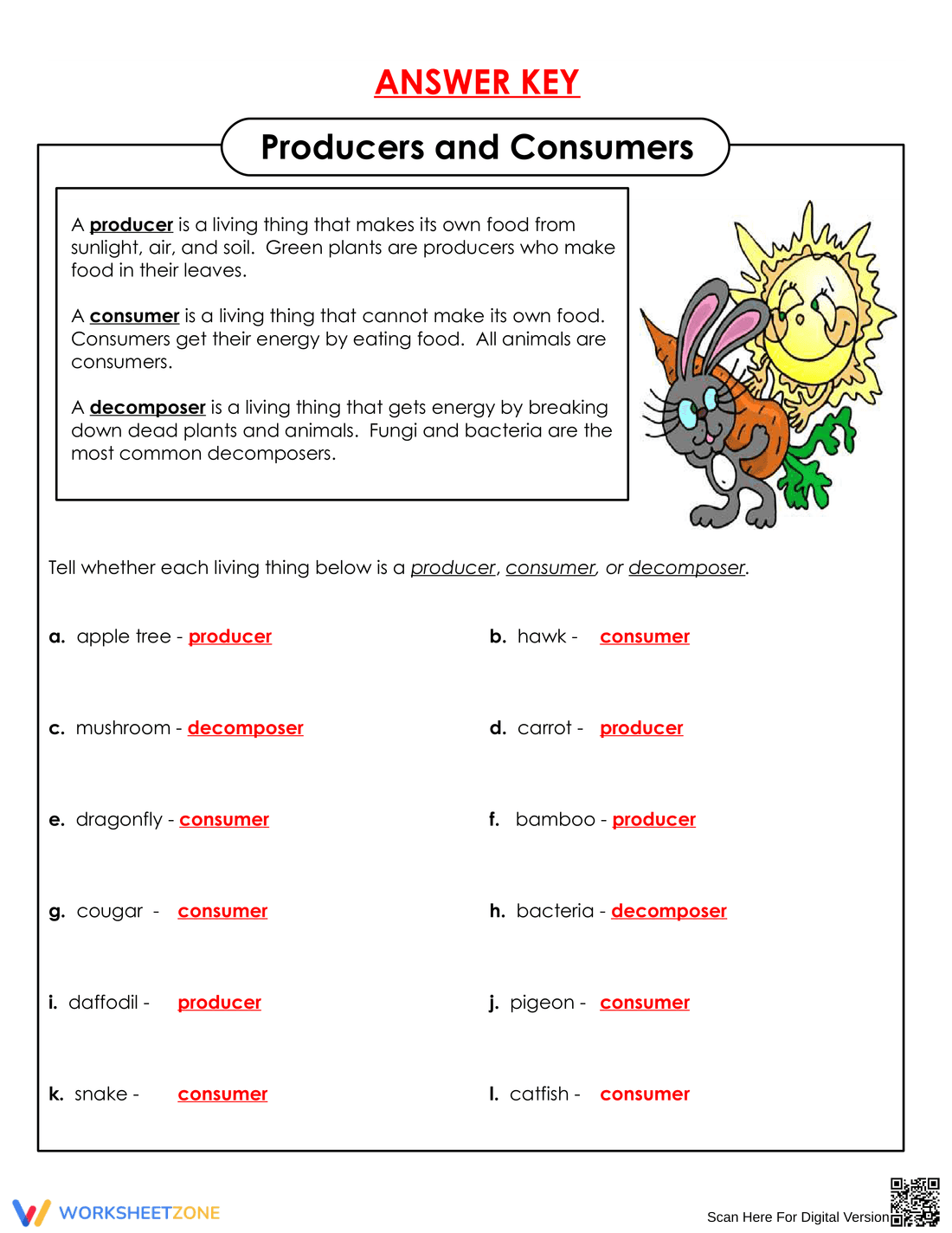
This worksheet helps young learners distinguish between producers, consumers, and decomposers in nature. It includes a simple explanation of each type, followed by a list of living things for students to categorize accordingly.
Why Use It:
This activity reinforces the fundamental concepts of ecosystems by helping students understand the roles different organisms play in the food chain. It enhances their knowledge of how energy flows through nature and is essential for building foundational biology concepts.
How to Use It:
• Students will read the definitions of producers, consumers, and decomposers.
• They will then categorize each living thing (such as animals, plants, and fungi) as a producer, consumer, or decomposer.
• Teachers can use this worksheet to explain the flow of energy in ecosystems and reinforce biological terms.
Grade Suitability:
Best suited for students in Grade 1–2.
• Helps students grasp basic ecological and biological concepts.
• Encourages critical thinking and classification skills.
Target Users:
• Young students learning about ecosystems and energy flow.
• Teachers introducing the concepts of food chains and environmental science.
This worksheet helps young learners distinguish between producers, consumers, and decomposers in nature. It includes a simple explanation of each type, followed by a list of living things for students to categorize accordingly.
Why Use It:
This activity reinforces the fundamental concepts of ecosystems by helping students understand the roles different organisms play in the food chain. It enhances their knowledge of how energy flows through nature and is essential for building foundational biology concepts.
How to Use It:
• Students will read the definitions of producers, consumers, and decomposers.
• They will then categorize each living thing (such as animals, plants, and fungi) as a producer, consumer, or decomposer.
• Teachers can use this worksheet to explain the flow of energy in ecosystems and reinforce biological terms.
Grade Suitability:
Best suited for students in Grade 1–2.
• Helps students grasp basic ecological and biological concepts.
• Encourages critical thinking and classification skills.
Target Users:
• Young students learning about ecosystems and energy flow.
• Teachers introducing the concepts of food chains and environmental science.


