


























Views
Downloads

Essential Probability Worksheet | Grade 3 Printable Math
Paste this activity's link or code into your existing LMS (Google Classroom, Canvas, Teams, Schoology, Moodle, etc.).
Students can open and work on the activity right away, with no student login required.
You'll still be able to track student progress and results from your teacher account.
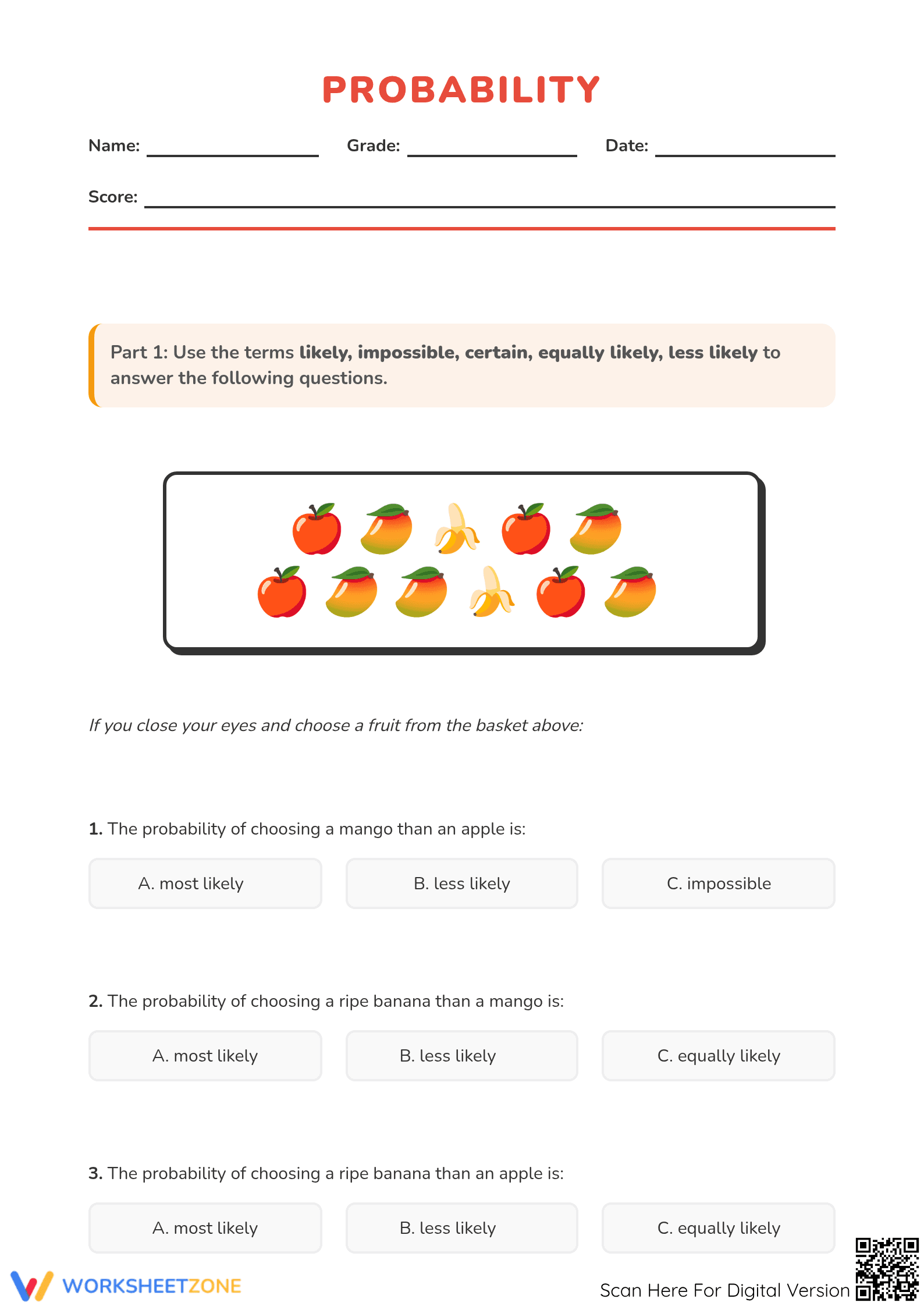
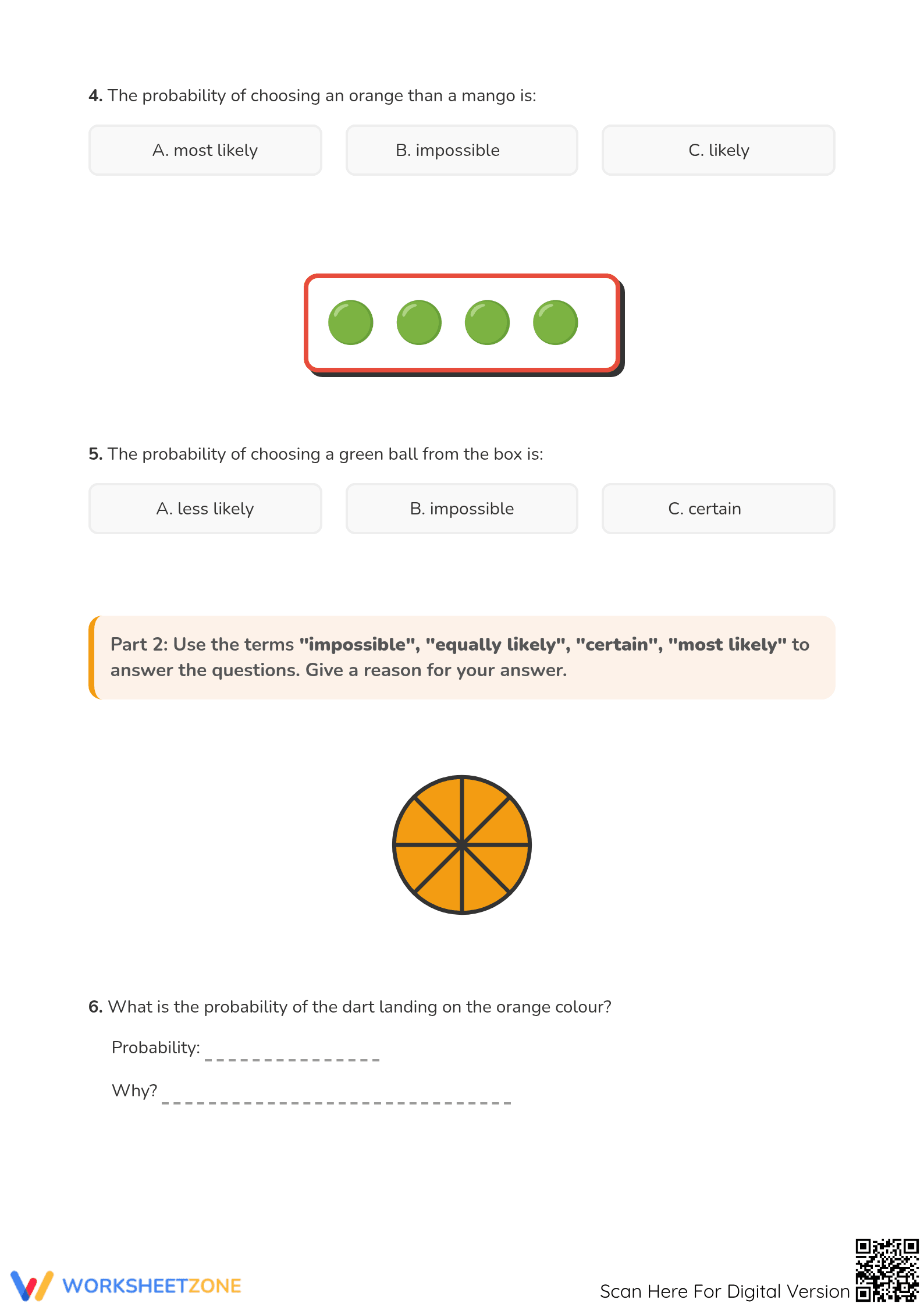
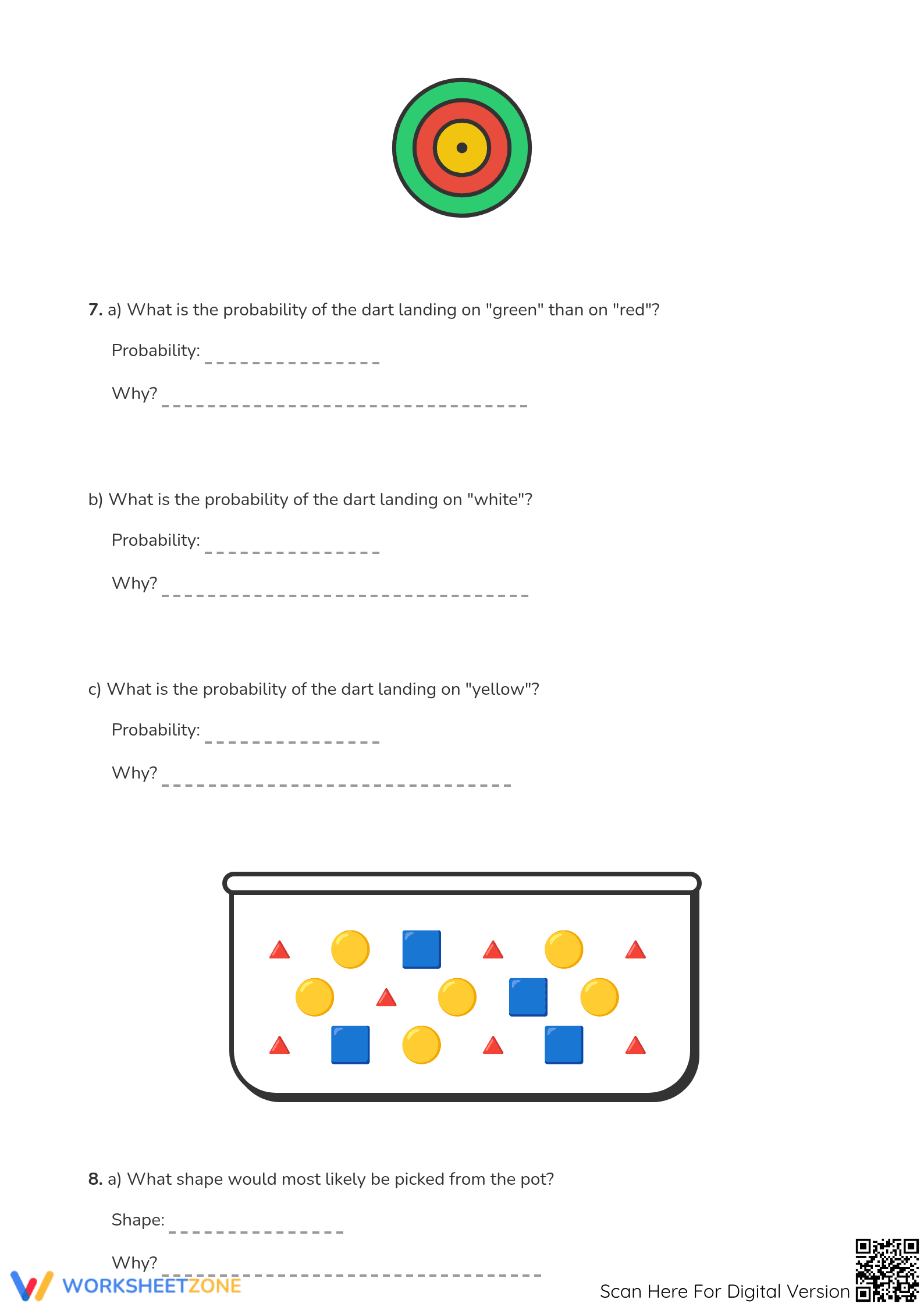
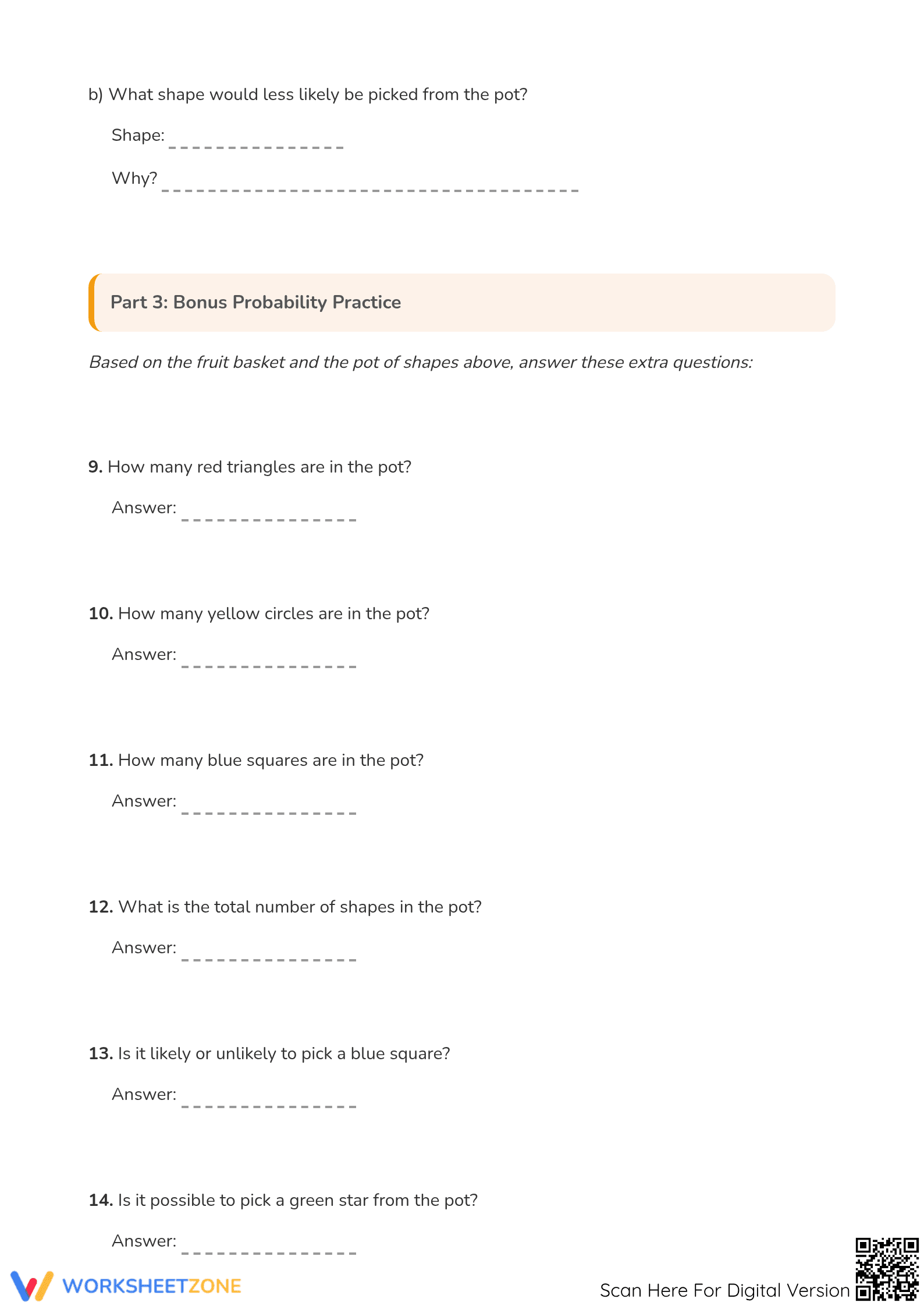
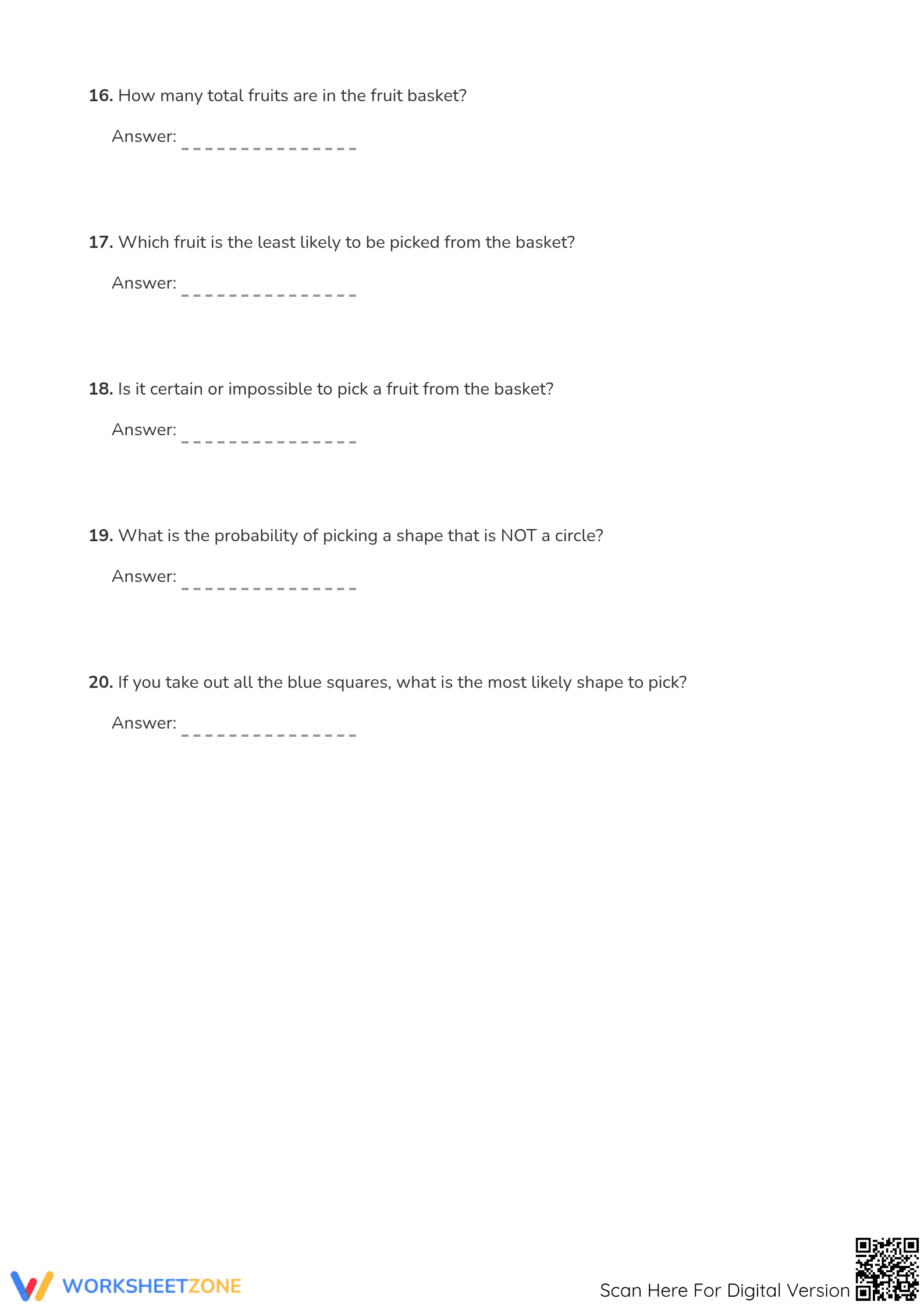
This comprehensive Grade 3 probability worksheet provides students with targeted practice identifying the likelihood of various events using standard mathematical terminology. By analyzing 28 distinct scenarios, learners develop a concrete understanding of chance, moving from intuitive guesses to structured reasoning. This printable resource ensures students can confidently distinguish between certain, likely, equally likely, unlikely, and impossible outcomes in everyday contexts.
At a Glance
- Grade: 3 · Subject: Math
- Standard:
7.SP.C.5— Use terms like certain or impossible to describe the probability of an event- Skill Focus: Probability Vocabulary & Qualitative Likelihood
- Format: 5 pages · 28 problems · Answer key included · PDF
- Best For: Introduction to probability and chance vocabulary
- Time: 25–35 minutes
What's Inside is a structured 5-page packet designed to build fluency with probability concepts. The worksheet features 28 scenario-based problems where students evaluate events like weather patterns, game outcomes, and simple physics. Each page includes clear instructions and ample writing space. A full answer key is provided, allowing for quick grading or student self-correction, making it ideal for independent centers or homework assignments.
Skill Progression
- Guided Practice: The first page features 6 foundational problems with explicit cues to help students identify certain and impossible events, establishing the poles of the probability scale.
- Supported Practice: Pages 2 and 3 introduce 12 scenarios requiring students to differentiate between likely and unlikely outcomes, utilizing common real-world examples to anchor their reasoning.
- Independent Practice: The final 10 problems challenge students to apply all terms, including equally likely, to complex situations without scaffolding. This follows a gradual-release model ensuring mastery before moving to quantitative probability.
Standards Alignment
This resource aligns with `CCSS.MATH.CONTENT.7.SP.C.5`, which states that the probability of a chance event is a number between 0 and 1 that expresses the likelihood of the event occurring. While designed for Grade 3 introductory levels, it uses the qualitative vocabulary mandated by this anchor standard to describe events as impossible, unlikely, equally likely, likely, or certain. Both standard codes can be copied directly into lesson plans, IEP goals, or district curriculum mapping tools.
How to Use It
Assign this worksheet during the introductory phase of a statistics and data unit. It serves as an excellent formative assessment tool after a whole-group lesson on chance. Teachers should circulate and observe if students can justify why an event is "unlikely" versus "impossible," as this distinction is critical for later work with fractions and percentages. Expect students to complete the full 5-page set in approximately 30 minutes.
Who It's For
This packet is perfect for general education students in Grade 3, as well as Grade 4 or 5 students needing a refresher on probability vocabulary. The clear language and repetitive structure also support English Language Learners (ELLs) in acquiring mathematical terminology. It pairs naturally with a physical spinner or a deck of cards to provide a tactile anchor for the paper-and-pencil tasks provided here.
According to the RAND AIRS 2024 report on mathematics instructional materials, the use of qualitative descriptors like certain and impossible is a foundational step in developing probabilistic reasoning in elementary learners. This worksheet utilizes a structured approach to transition students from subjective observation to objective analysis of chance. By providing 28 varied tasks, the material ensures that students encounter enough diversity in scenarios to avoid pattern-matching and instead engage in genuine critical thinking. This alignment with evidence-based practices for gradual release of responsibility supports long-term retention of 7.SP.C.5 concepts. Educators can use the included answer key to identify specific misconceptions regarding likelihood scales early in the instructional cycle, preventing the solidification of errors before moving to numerical probability calculations in later grades.


