




























Views
Downloads




Printable What Text Cannot Establish Worksheet | Grade 8 ELA

Paste this activity's link or code into your existing LMS (Google Classroom, Canvas, Teams, Schoology, Moodle, etc.).
Students can open and work on the activity right away, with no student login required.
You'll still be able to track student progress and results from your teacher account.
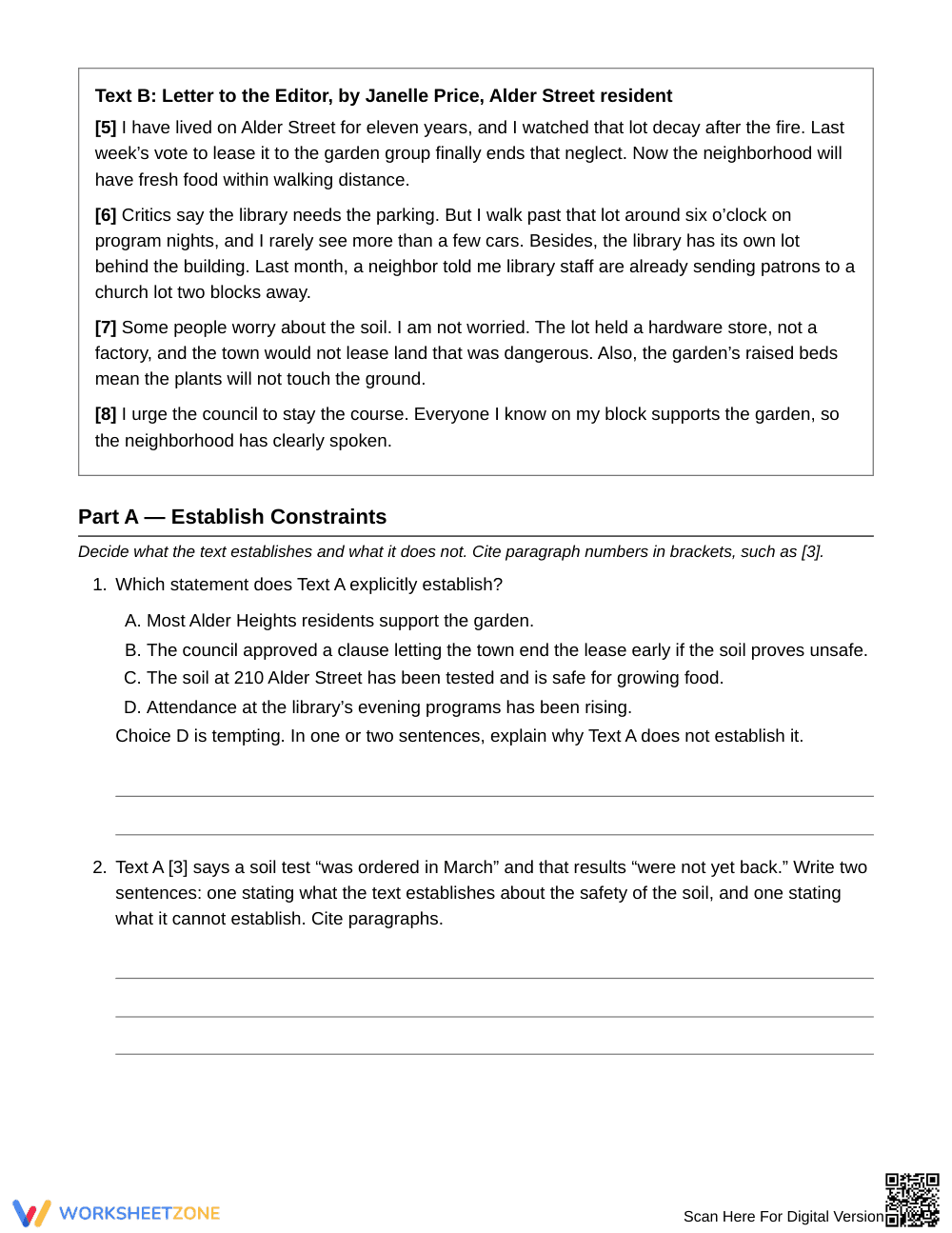
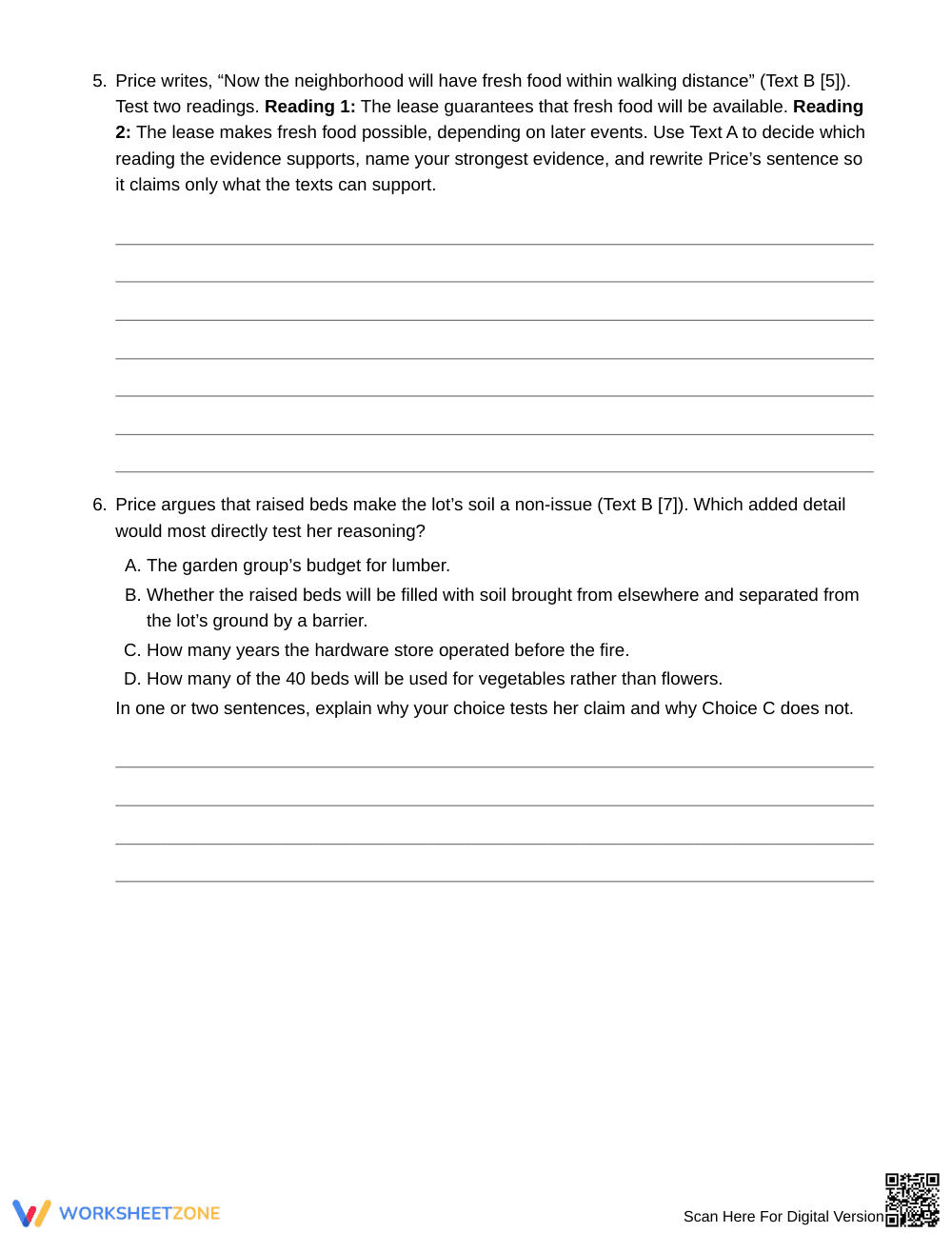
This worksheet teaches eighth graders to separate what a text states, what it reasonably implies, and what it cannot establish. Students test competing readings of two fictional texts about a community garden dispute, then write qualified conclusions that name the strongest evidence and the missing information.
At a Glance
- Grade: 8 · Subject: ELA
- Standard:
RI.8.1— Cite the strongest evidence for what a text says and implies- Skill Focus: State what the text cannot establish
- Format: 5 pages · 8 problems · Answer key included · PDF
- Best For: Evidence-based reasoning after direct instruction
- Time: 40–50 minutes
What's Inside
Five pages include a Reading Tool defining stated, reasonable inference, and not established; two original texts (a news summary and a letter to the editor) with numbered paragraphs; and 8 tasks. Formats include multiple choice with explanation, short written responses, and one closing paragraph. An answer key is included.
Skill Progression
- Guided practice: Part A, 2 tasks, with the Reading Tool and explicit prompts.
- Supported practice: Part B, 4 tasks comparing competing readings and choosing the strongest evidence.
- Independent practice: Part C, 2 tasks writing qualified conclusions with paragraph citations.
The sequence follows gradual release: I Do, We Do, You Do.
Standards Alignment
RI.8.1: Cite the textual evidence that most strongly supports an analysis of what the text says explicitly as well as inferences drawn from the text. The standard code can be copied directly into lesson plans, IEP goals, or district curriculum mapping tools.
How to Use It
- After direct instruction: assign as independent practice once students have seen explicit versus inferred evidence.
- During a writing workshop: have students complete Part C, then swap and check each other's stated limits.
Formative tip: watch whether students treat a quoted claim as proof. Expect 40–50 minutes total.
Who It's For
Designed for Grade 8 ELA students practicing evidence-based reasoning. Struggling readers can complete Part A first with the Reading Tool; advanced students can focus on Part C. Pair it with an anchor chart on claims and evidence.
RI.8.1 asks students to cite the textual evidence that most strongly supports what a text says and implies. This Grade 8 ELA worksheet builds the skill of stating what a text cannot establish. Students classify claims as stated, reasonably inferred, or not established, then test competing readings of a fictional news summary and letter to the editor about a community garden lease. Eight tasks move from spotting unsupported claims to writing a qualified conclusion with paragraph citations and a named limit. The sequence follows the gradual release model described by Fisher & Frey (2014): guided, supported, then independent work. Because each response must cite paragraphs and name what remains unknown, teachers can quickly see whether students separate a reported opinion from an established fact. An answer key is included for fast, consistent scoring.


