


























Views
Downloads



Printable Rhetorical Devices Worksheet | Grade 10
Paste this activity's link or code into your existing LMS (Google Classroom, Canvas, Teams, Schoology, Moodle, etc.).
Students can open and work on the activity right away, with no student login required.
You'll still be able to track student progress and results from your teacher account.
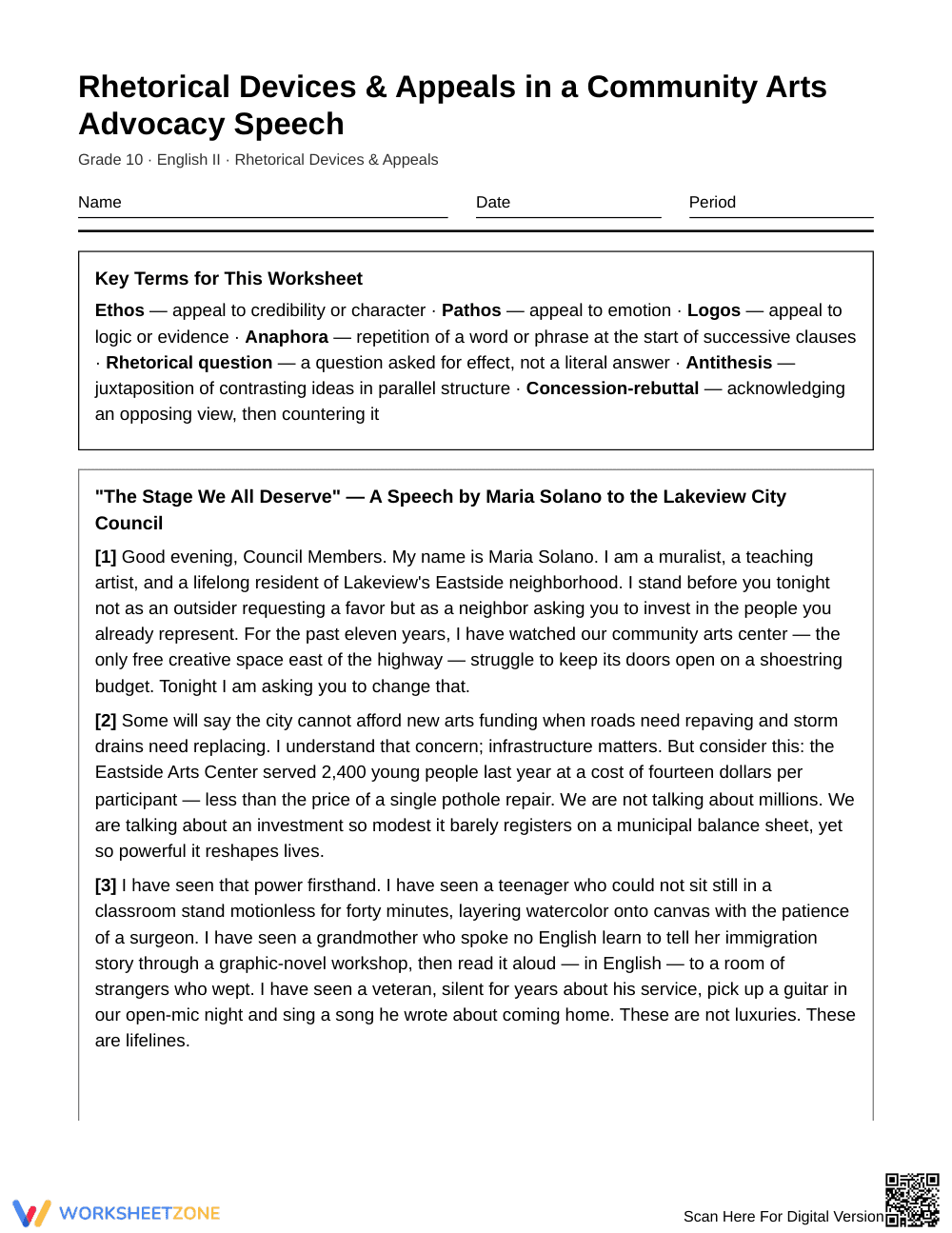
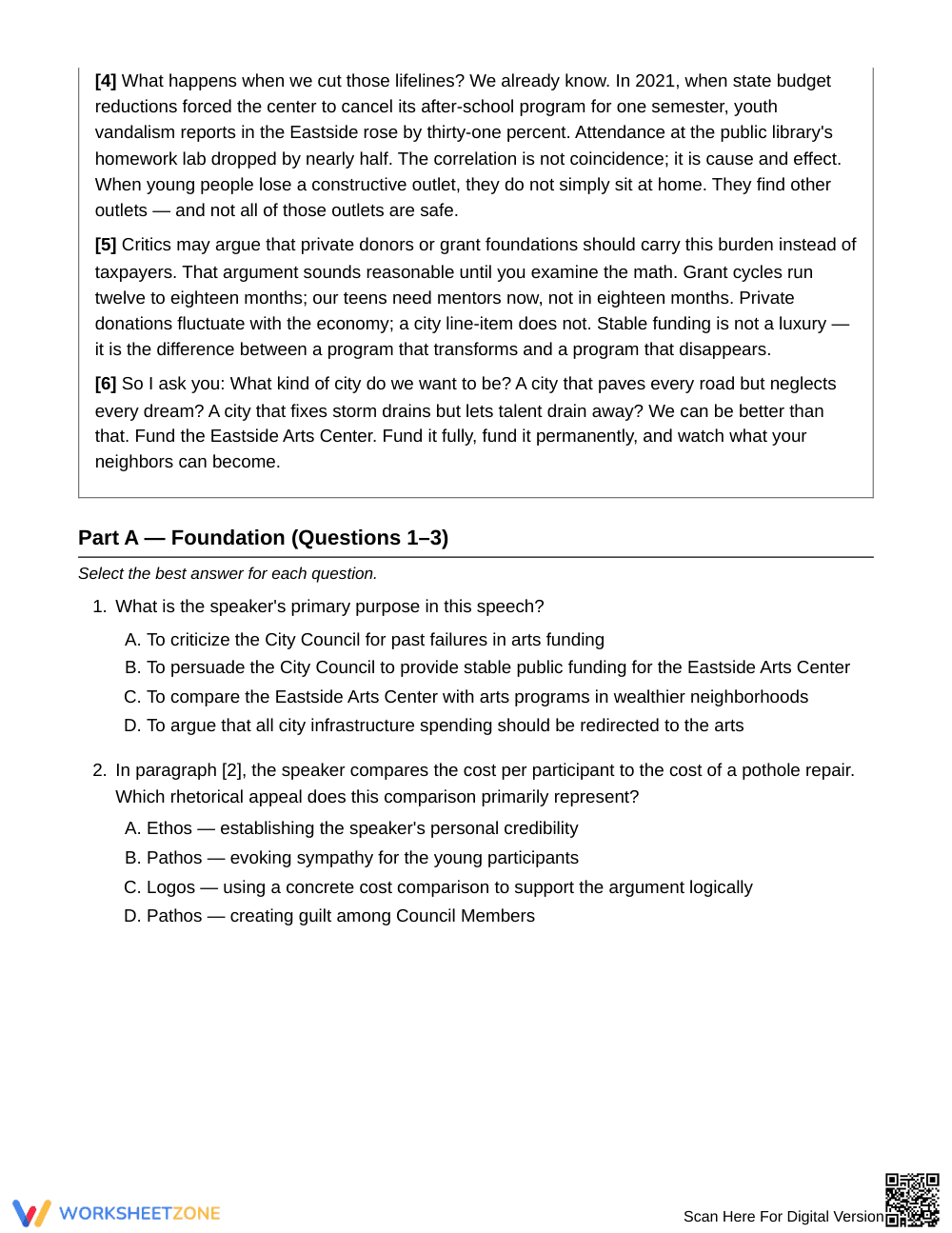
This Grade 10 English II worksheet builds students' ability to identify and analyze rhetorical devices and appeals—ethos, pathos, logos, anaphora, antithesis, and concession-rebuttal—through a compelling community arts advocacy speech. Working across 12 scaffolded tasks, students move from foundational recognition to critical evaluation and audience-aware revision, leaving class with analytical skills they can apply to any persuasive text.
At a Glance
- Grade: 10 · Subject: English II
- Standard:
RI.9-10.6— Determine an author's point of view and analyze how rhetoric shapes meaning- Skill Focus: Identifying and analyzing rhetorical devices and appeals in an argumentative speech
- Format: 6 pages · 12 problems · Answer key included · PDF
- Best For: Guided practice during rhetorical analysis unit
- Time: 45–60 minutes
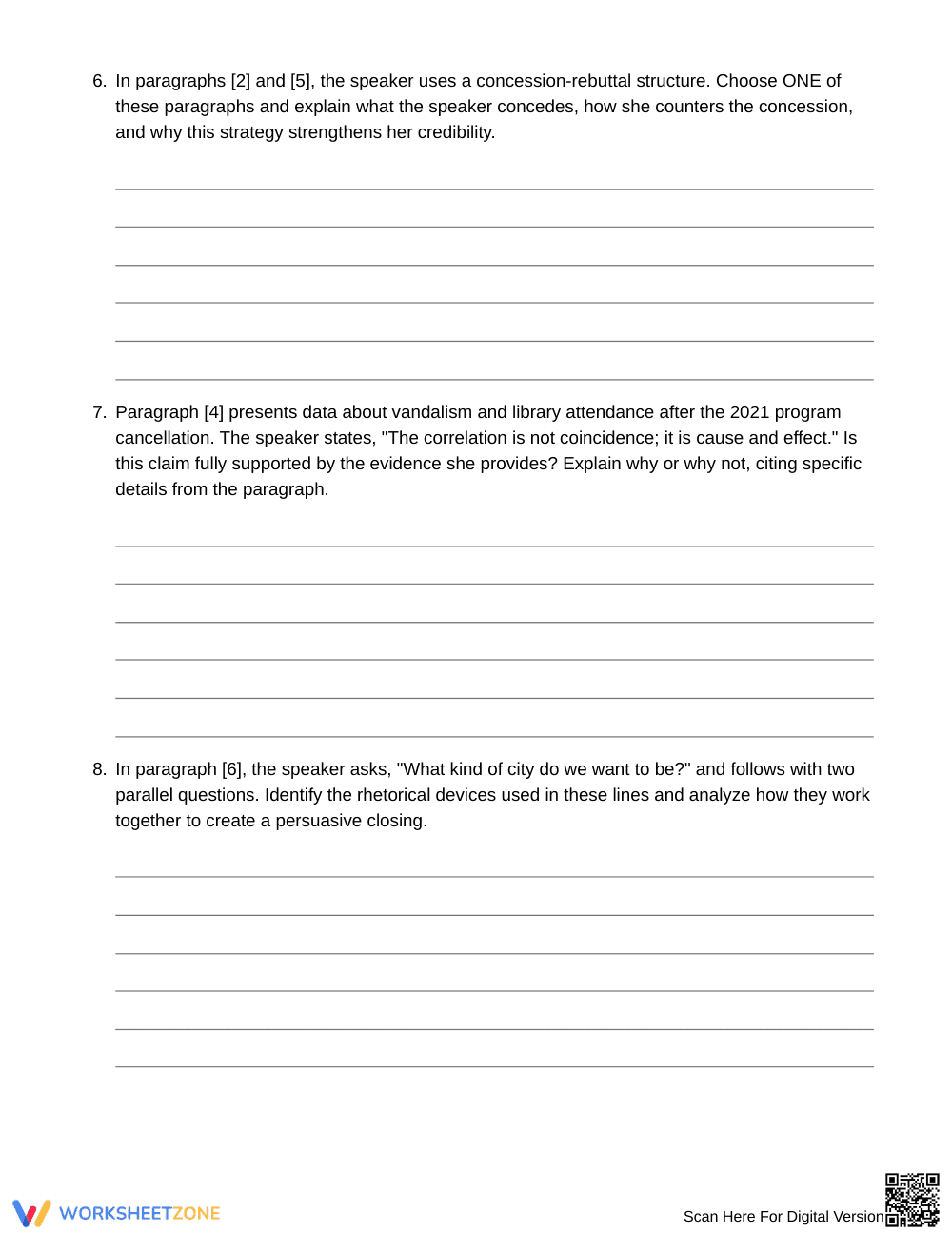
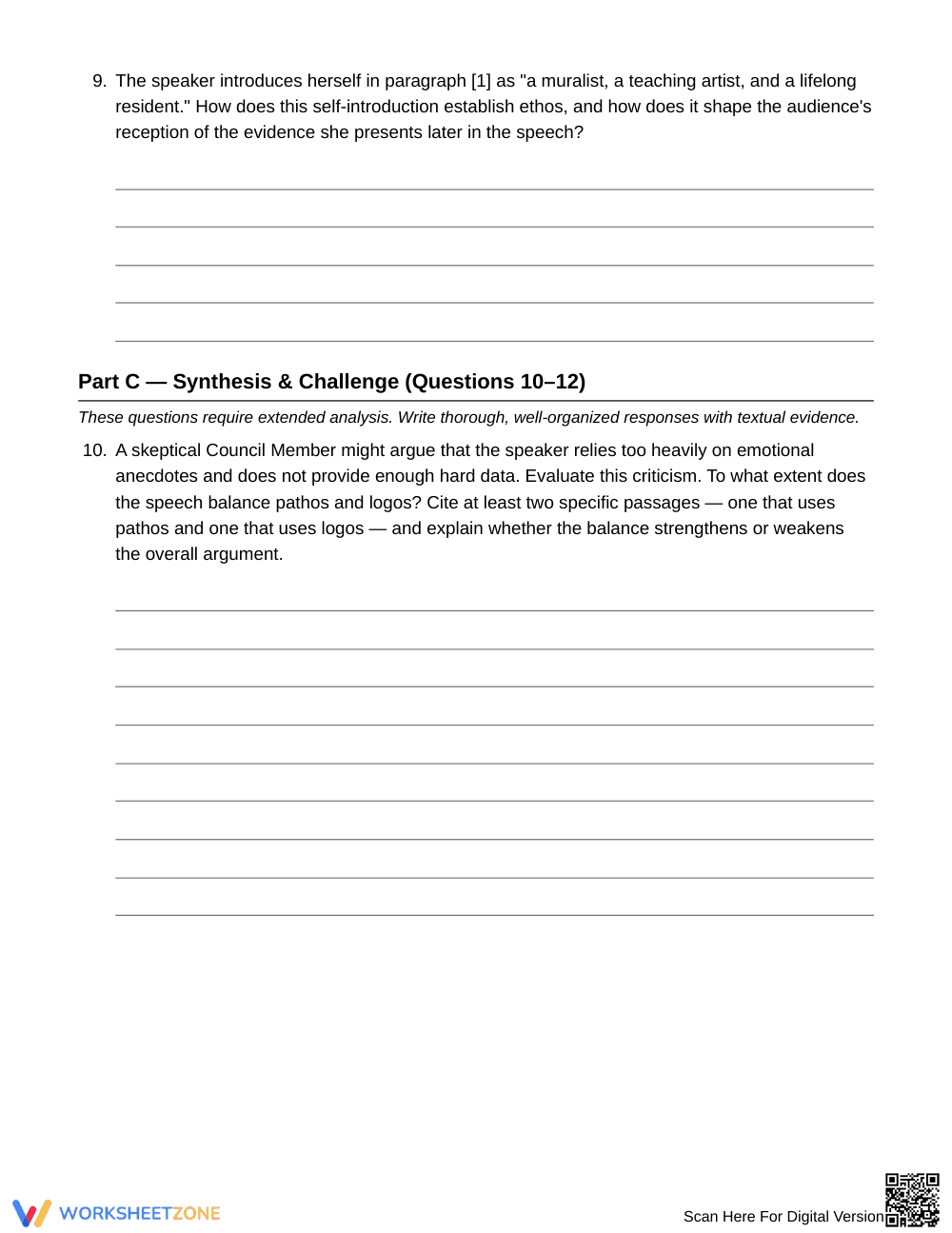
The worksheet opens with a key-terms reference box defining seven rhetorical concepts, then presents "The Stage We All Deserve," a six-paragraph student-facing speech. Three parts follow: Part A uses multiple-choice and short-answer items to check recognition; Part B requires complete-sentence analysis with textual evidence; and Part C demands extended responses including comparative analysis and audience-adaptation tasks. The complete answer key spans the remaining pages with model responses for every item.
Skill Progression and Use
- Guided practice (Questions 1–3): Students identify devices in the text with reference-box support, establishing foundational mastery.
- Supported practice (Questions 4–9): Students write evidence-based analysis in complete sentences, examining how specific rhetorical choices function.
- Independent practice (Questions 10–12): Students evaluate claims, compare passages, and adapt rhetorical choices for new audiences.
Assign Part A as a warm-up after direct instruction, then use Parts B and C as independent or partner practice during a 45–60 minute period. The resource also serves as a post-unit check before students write formal rhetorical analysis essays.
This six-page worksheet targets RI.9-10.6, the Grade 9–10 standard requiring students to analyze how an author uses rhetoric to advance a point of view. Across 12 structured tasks, students examine ethos, pathos, logos, anaphora, antithesis, and concession-rebuttal in an authentic advocacy speech context. Research strongly supports this scaffolded instructional model: Fisher & Frey (2014) demonstrate that gradual-release frameworks—moving students intentionally from guided identification to independent practice—significantly increase long-term retention of critical analytical skills in secondary ELA classrooms. The worksheet's three-part design directly applies that research, starting with supported recognition items and culminating in audience-adaptation challenges that ask students to apply core rhetorical principles in new writing situations. An answer key is included for every item, making the resource ideal for self-assessment, peer review, or teacher-led debrief. Standard code RI.9-10.6 is ready to paste into lesson plans.


