


























Views
Downloads


Printable Inheritance Inference Worksheet | Grade 9 Biology
Paste this activity's link or code into your existing LMS (Google Classroom, Canvas, Teams, Schoology, Moodle, etc.).
Students can open and work on the activity right away, with no student login required.
You'll still be able to track student progress and results from your teacher account.
This worksheet teaches Grade 9 Biology students to make a claim about inheritance that matches what the data can actually support. Using synthetic Arden cress crosses, students select relevant evidence, explain results with chromosome pairs, meiosis and chance, and write a limited conclusion that states its assumptions.
At a Glance
- Grade: 9 · Subject: Biology
- Standard: Not specified — students use data tables to make and defend limited inheritance claims
- Skill Focus: Defending a limited inheritance inference from cross data
- Format: 5 pages · 8 problems · Answer key included · PDF
- Best For: Evidence-based reasoning in genetics units
- Time: 40–50 minutes
What's Inside
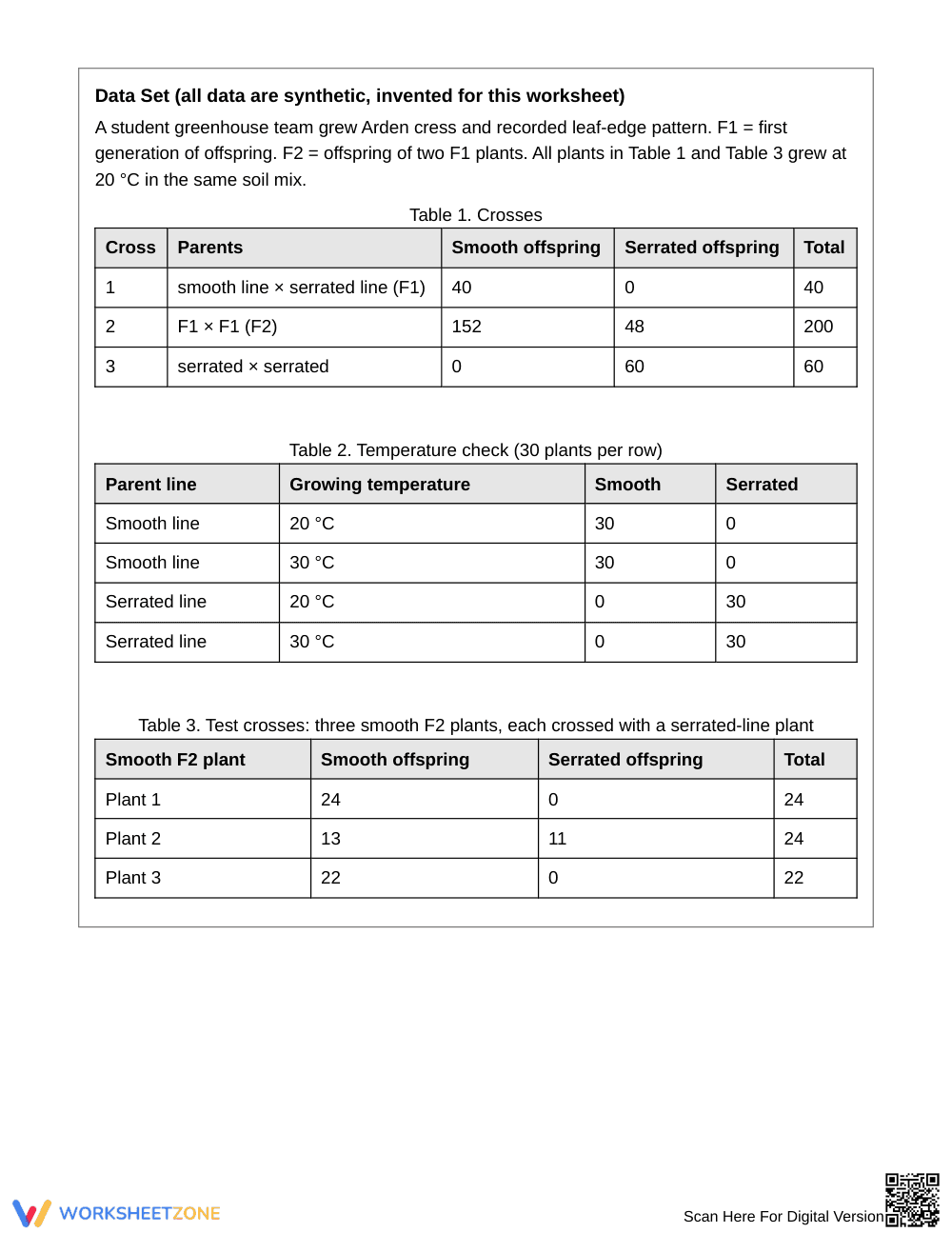
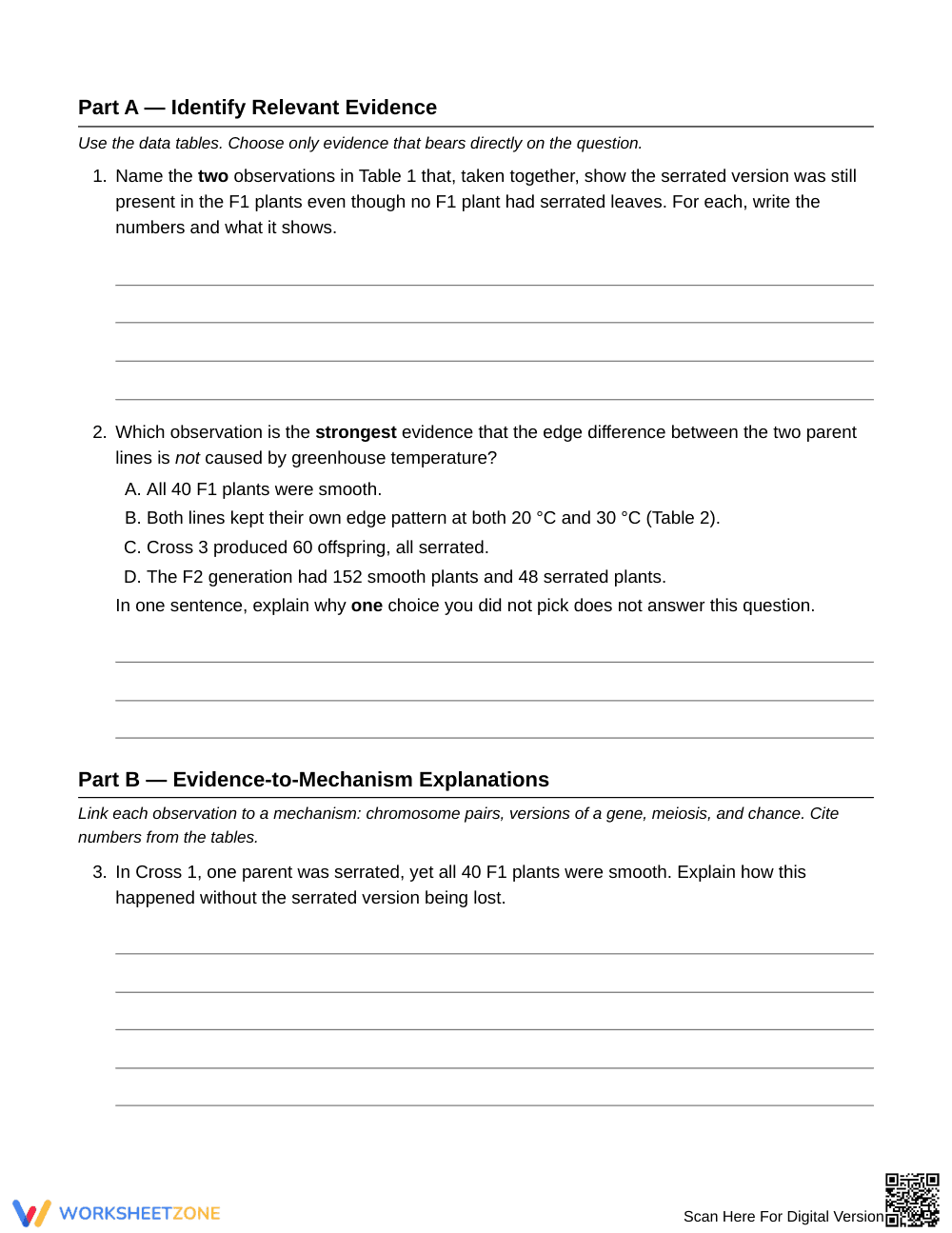
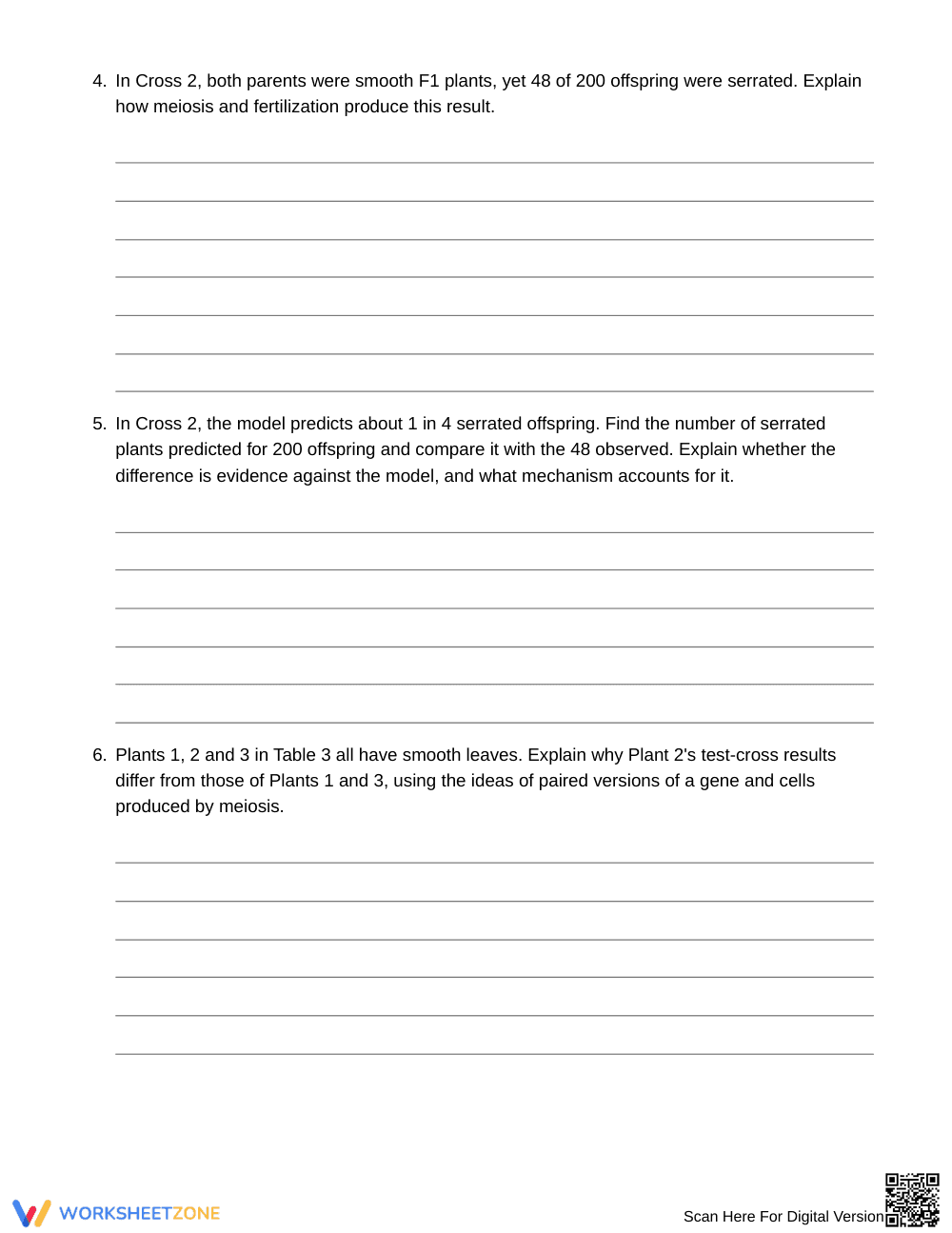
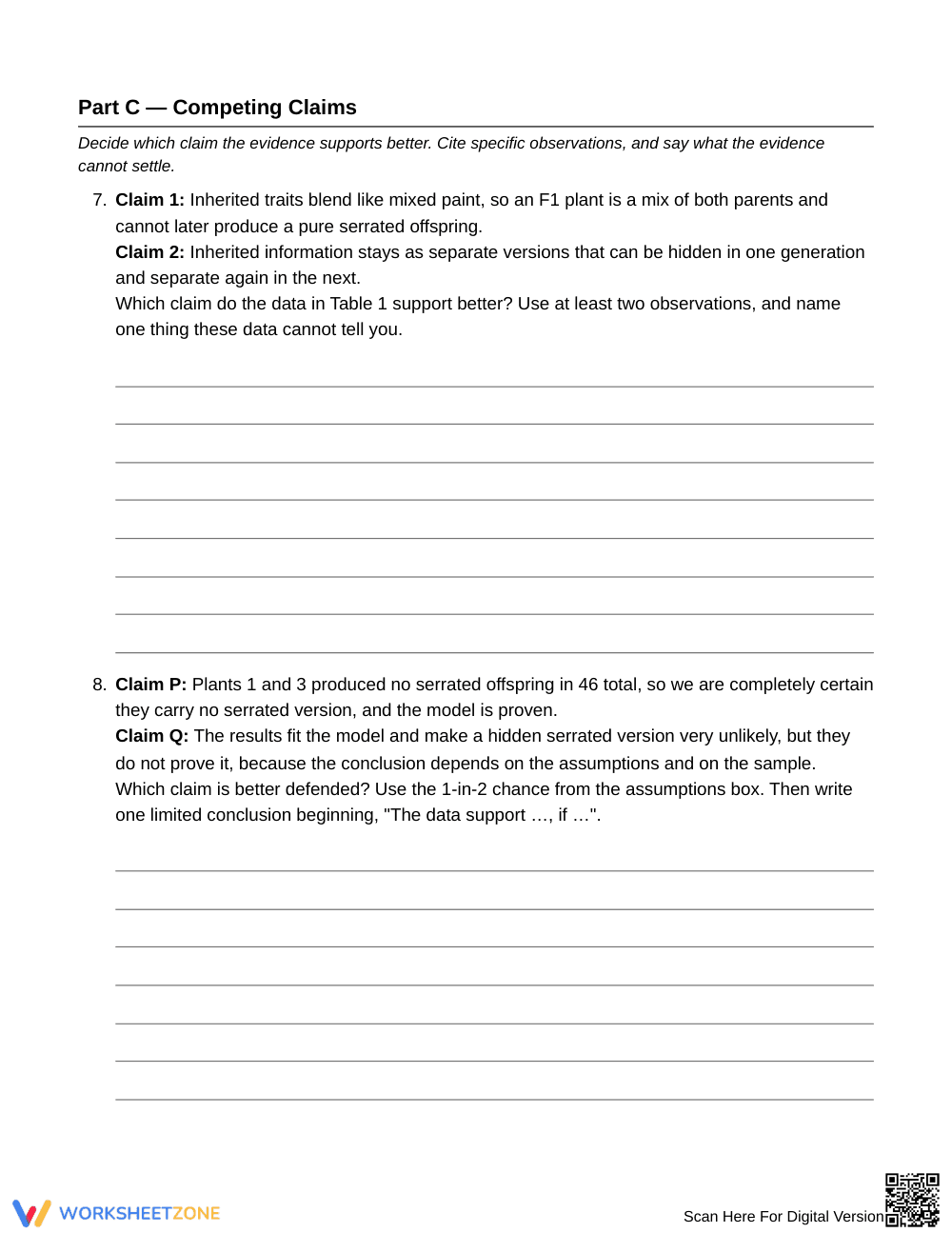
Five pages begin with a shared model-assumptions box and three data tables: crosses, a temperature check, and test crosses. Part A has 2 evidence-selection tasks, Part B has 4 mechanism explanations, and Part C has 2 competing-claims tasks. A 2-page answer key is included.
Skill Progression
- Guided practice: Part A, 2 tasks, choosing relevant evidence from the tables with answer options provided.
- Supported practice: Part B, 4 tasks, linking table numbers to chromosome pairs, meiosis, and chance.
- Independent practice: Part C, 2 tasks, weighing competing claims and writing a limited conclusion.
This gradual-release sequence (I Do, We Do, You Do) moves students from selecting evidence to building their own argument.
Standards Alignment
No standard code was supplied for this worksheet, so none is listed. The skills match high school genetics practice: using evidence to explain how traits pass between generations through chromosome pairs and meiosis, and constructing arguments from data. Add your district or state code when copying this into lesson plans, IEP goals, or curriculum maps.
How to Use It
- After direct instruction on dominant and recessive inheritance, assign Parts A and B as classwork.
- Use Part C as a closing discussion or exit task, with partners defending Claim P or Claim Q.
Formative tip: listen for students who treat 48 serrated plants out of 200 as proof the model fails, then ask whether they have considered chance. Expect 40–50 minutes.
Who It's For
Built for Grade 9 Biology students in a genetics unit. Students who struggle with writing can lean on the “The data support …, if …” sentence starter, while advanced students can name extra data they would collect. Pair it with a Punnett square anchor chart.
Defending a Limited Inheritance Inference is a Grade 9 Biology worksheet on Genetics and Heredity that teaches students to make claims that match the evidence. Across 8 tasks and 5 pages, students use synthetic Arden cress data to identify relevant observations, explain results with chromosome pairs, meiosis, and chance, and compare competing claims about blending versus separate versions of a gene. They finish by writing one conclusion that names its assumptions, using the form “The data support …, if …”. The structure follows the gradual release of responsibility model described by Fisher & Frey (2014), moving from guided evidence selection to independent argument. A two-page answer key is included. Teachers can use it after direct instruction on Mendelian inheritance to check whether students separate what data show from what assumptions supply. The result is a reusable routine for scientific argument.


