


























Views
Downloads

Printable Energy-Transfer Worksheet | Grade 6 Science
Paste this activity's link or code into your existing LMS (Google Classroom, Canvas, Teams, Schoology, Moodle, etc.).
Students can open and work on the activity right away, with no student login required.
You'll still be able to track student progress and results from your teacher account.
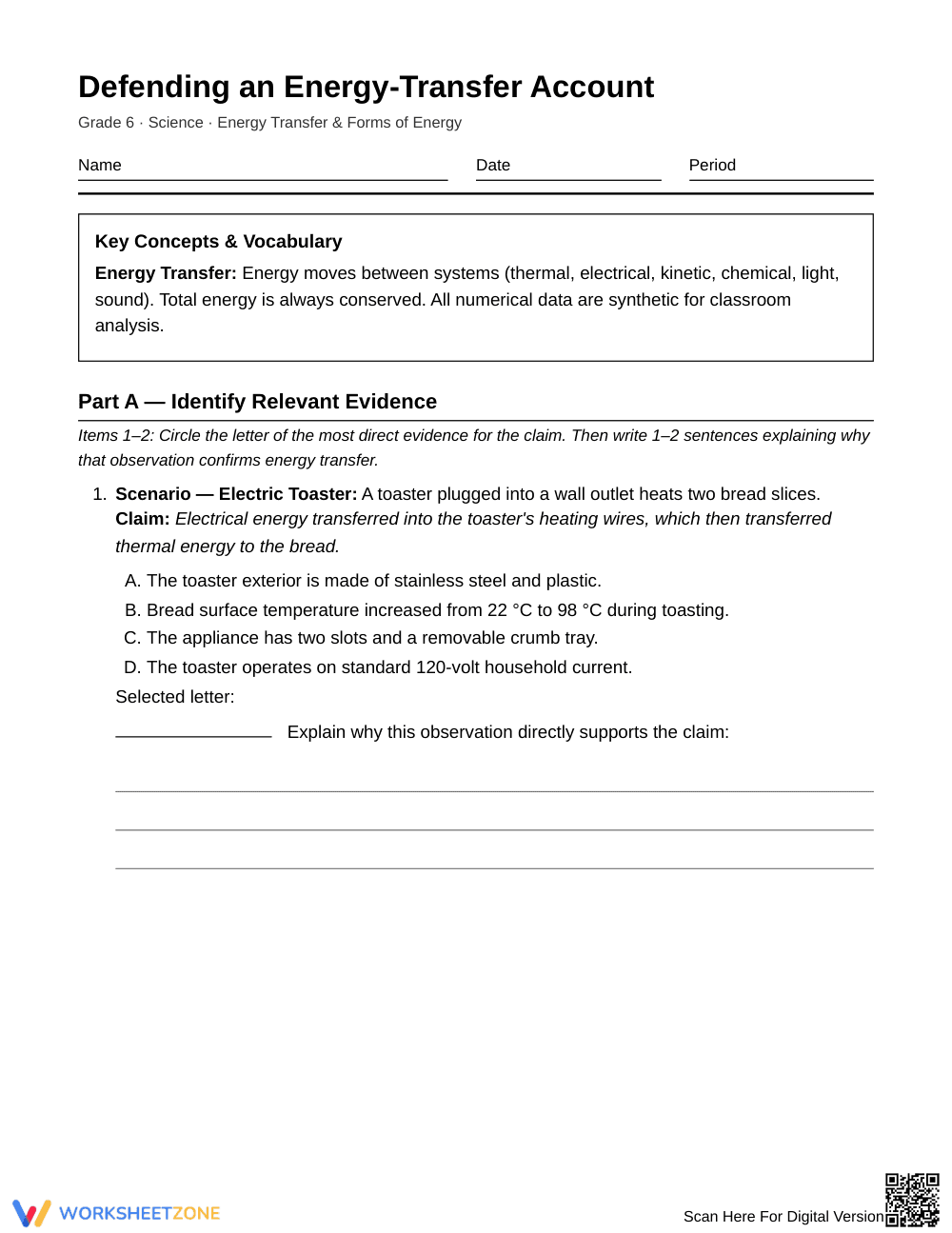
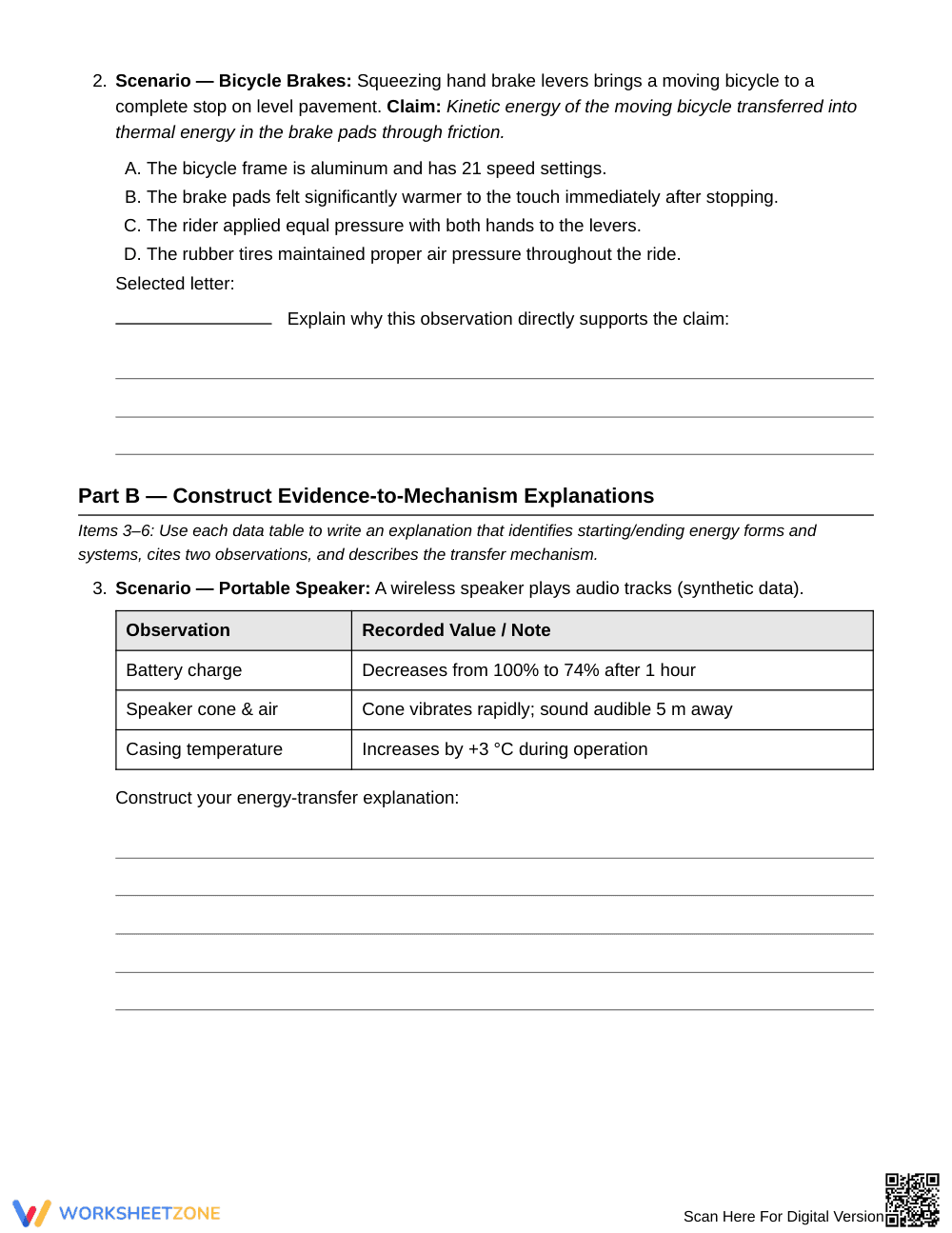
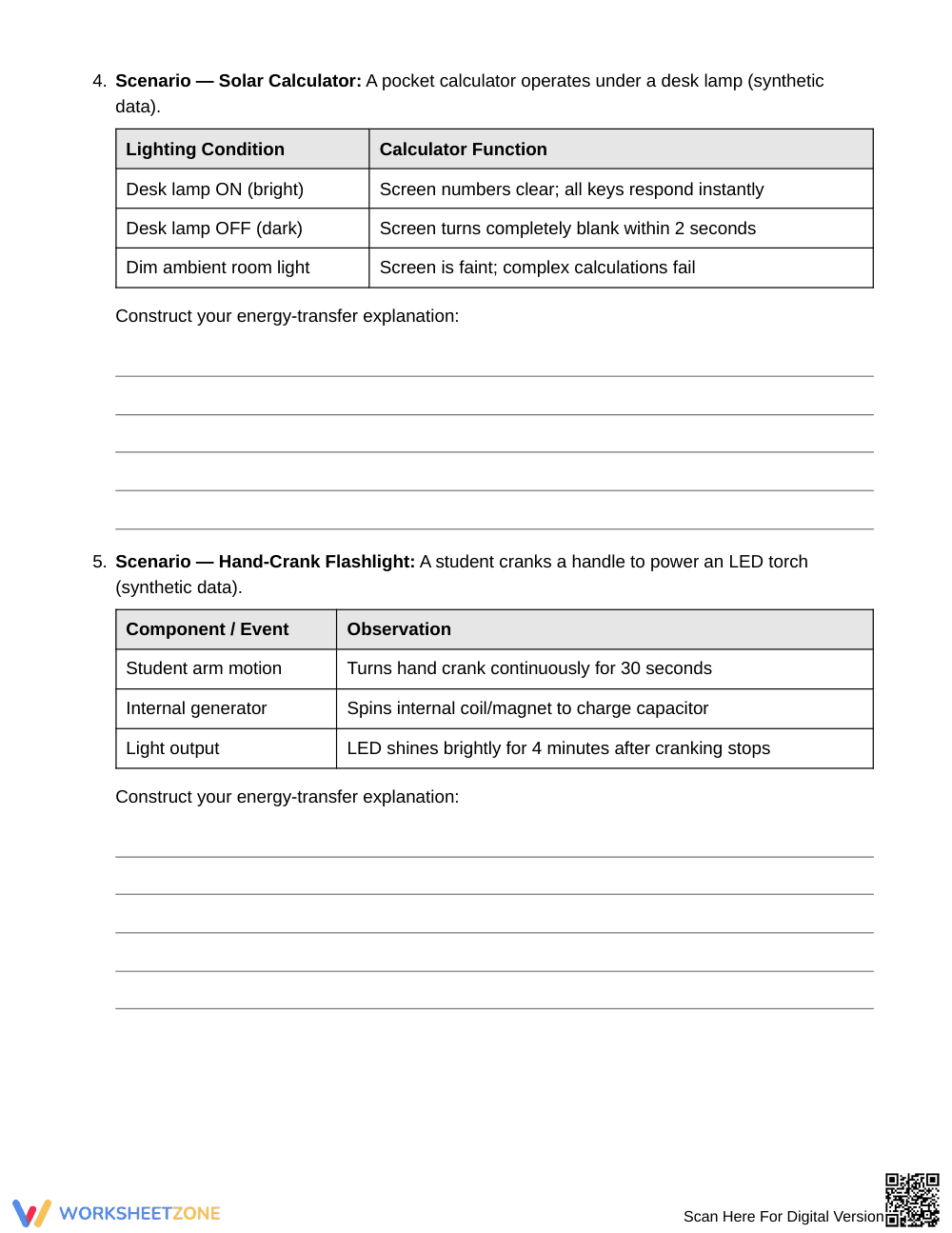
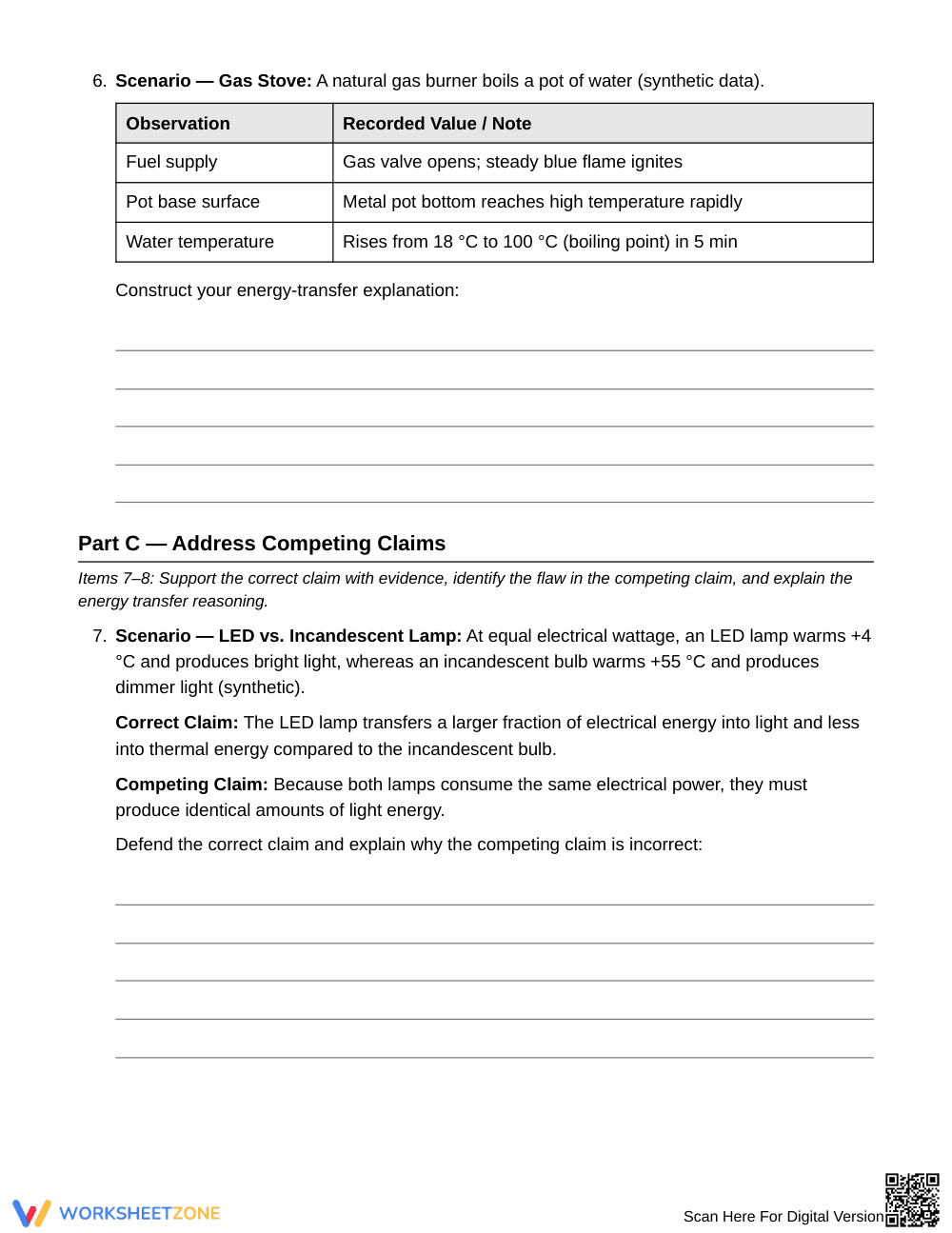
This Grade 6 Science worksheet strengthens students' ability to defend energy-transfer accounts using real-world observational evidence. Across 8 structured tasks, students identify relevant observations, construct mechanism-based scientific explanations, and evaluate competing claims, progressing smoothly from guided practice to independent argumentation within a single resource.
At a Glance
- Grade: 6 · Subject: Science
- Standard: Energy Transfer & Forms of Energy — Identify evidence and explain how energy moves between systems
- Skill Focus: Defending energy-transfer accounts with evidence and reasoning
- Format: 5 pages · 8 problems · Answer key included · PDF
- Best For: Guided practice after direct instruction on energy
- Time: 35–50 minutes
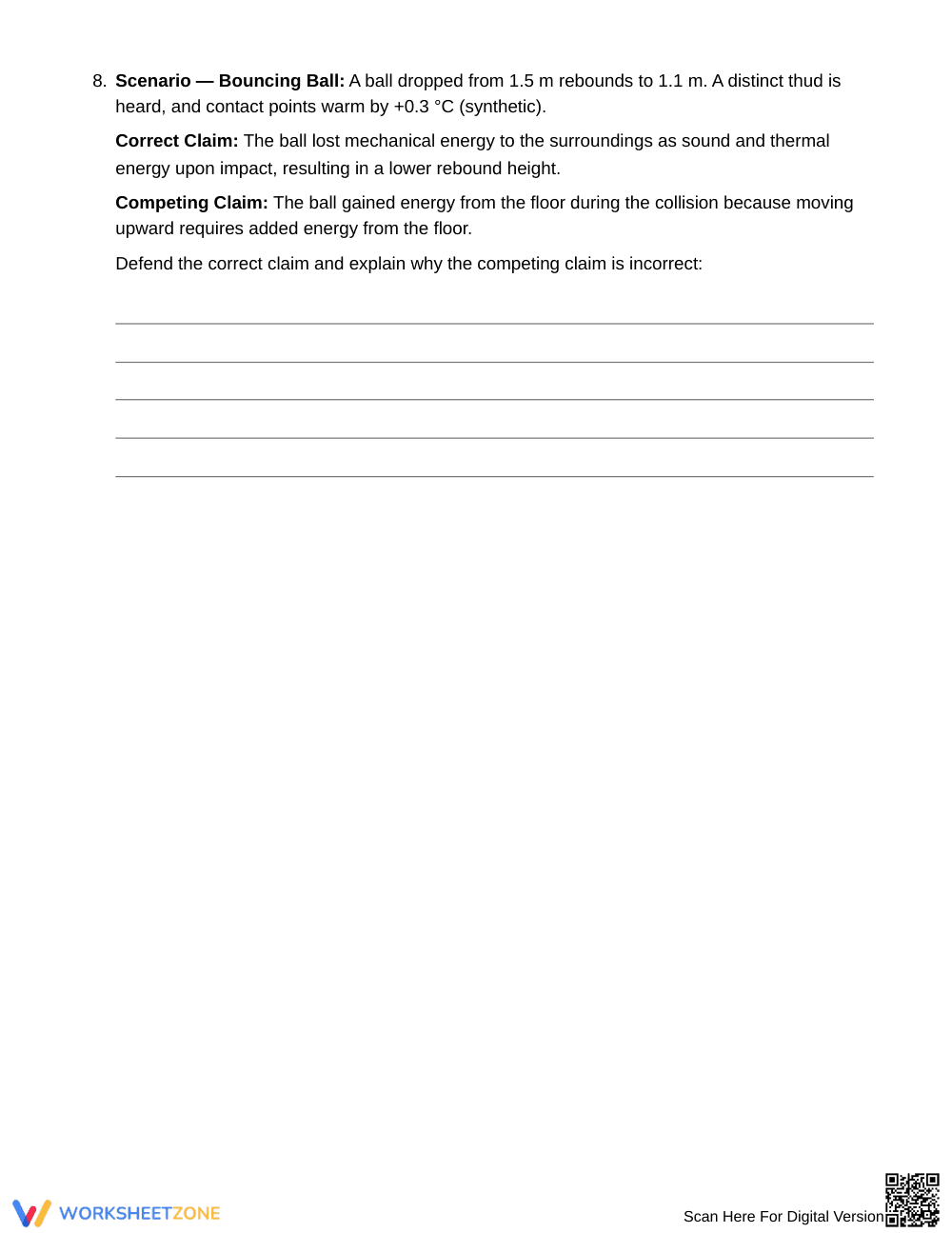
The 5-page worksheet is organized into three distinct parts designed to build mastery step by step. Part A (Items 1–2) asks students to select direct evidence from labeled options and write brief sentences justifying their choices. Part B (Items 3–6) presents data tables for four familiar devices—a portable speaker, a solar calculator, a hand-crank flashlight, and a gas stove. Students compose multi-sentence energy-transfer explanations by identifying input and output energy forms, citing two specific observations, and describing the physical mechanism. Part C (Items 7–8) asks students to evaluate competing claims, defend the valid account, and pinpoint the flaw in the alternate argument.
How to Use It
Assign Parts A and B directly after whole-class instruction on energy forms and transfer mechanisms; learners usually complete Items 1–6 in 25 to 35 minutes. Reserve Part C for partner analysis or a closing formative check. Observing whether students successfully spot the misconception in competing claims provides clear diagnostic insight into whether conservation principles are securely understood before moving to summative assessments.
Who It's For
This worksheet is tailored for Grade 6 science classes investigating forms of energy and energy conservation. Pair the activity with an anchor chart for students needing extra scaffolding, or encourage early finishers to trace thermal energy loss in each system. It functions effectively during independent seatwork, collaborative lab stations, review days, or targeted remediation sessions.
This 5-page, 8-task worksheet addresses the core middle school science disciplinary concept that energy moves between systems in forms including thermal, electrical, kinetic, chemical, light, and sound, while total energy remains conserved throughout every interaction. Students defend energy-transfer accounts by selecting relevant evidence, constructing mechanism-based explanations, and actively evaluating competing claims during classroom instruction. Educational research strongly supports structured evidence-based writing in science: Fisher and Frey (2014) established that gradual-release instructional frameworks, in which learners move systematically from guided tasks to independent application, significantly improve both conceptual retention and the quality of written scientific explanations. This worksheet operationalizes that proven model across three scaffolded sections, providing educators with a practical formative assessment tool requiring zero prep time. The included complete answer key streamlines scoring, facilitates immediate feedback, and effectively supports ongoing progress monitoring in intervention, general education, and enrichment settings.


