


























Views
Plays

Printable Price Ceilings & Floors Quiz | Grade 11-12
Paste this activity's link or code into your existing LMS (Google Classroom, Canvas, Teams, Schoology, Moodle, etc.).
Students can open and work on the activity right away, with no student login required.
You'll still be able to track student progress and results from your teacher account.
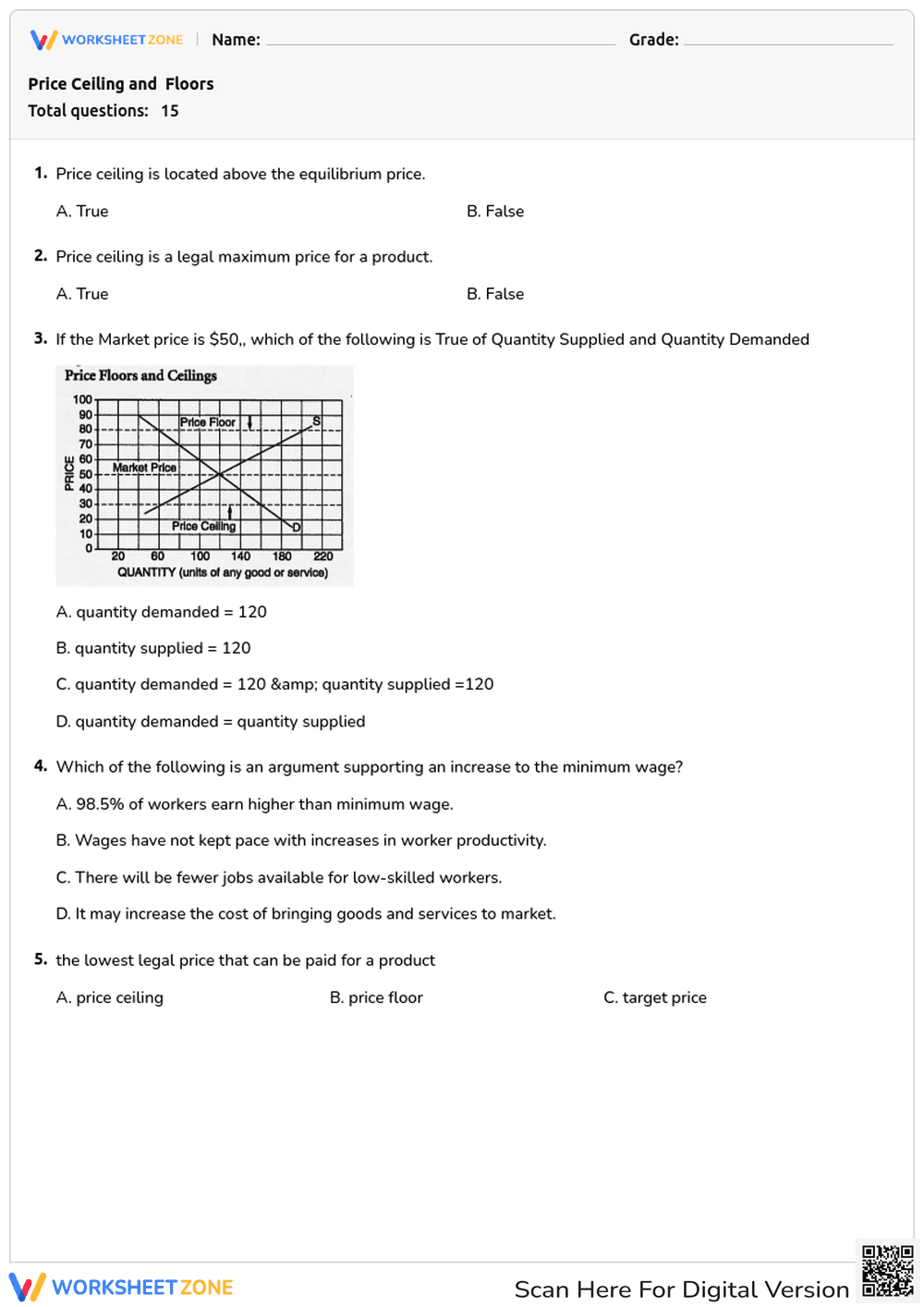
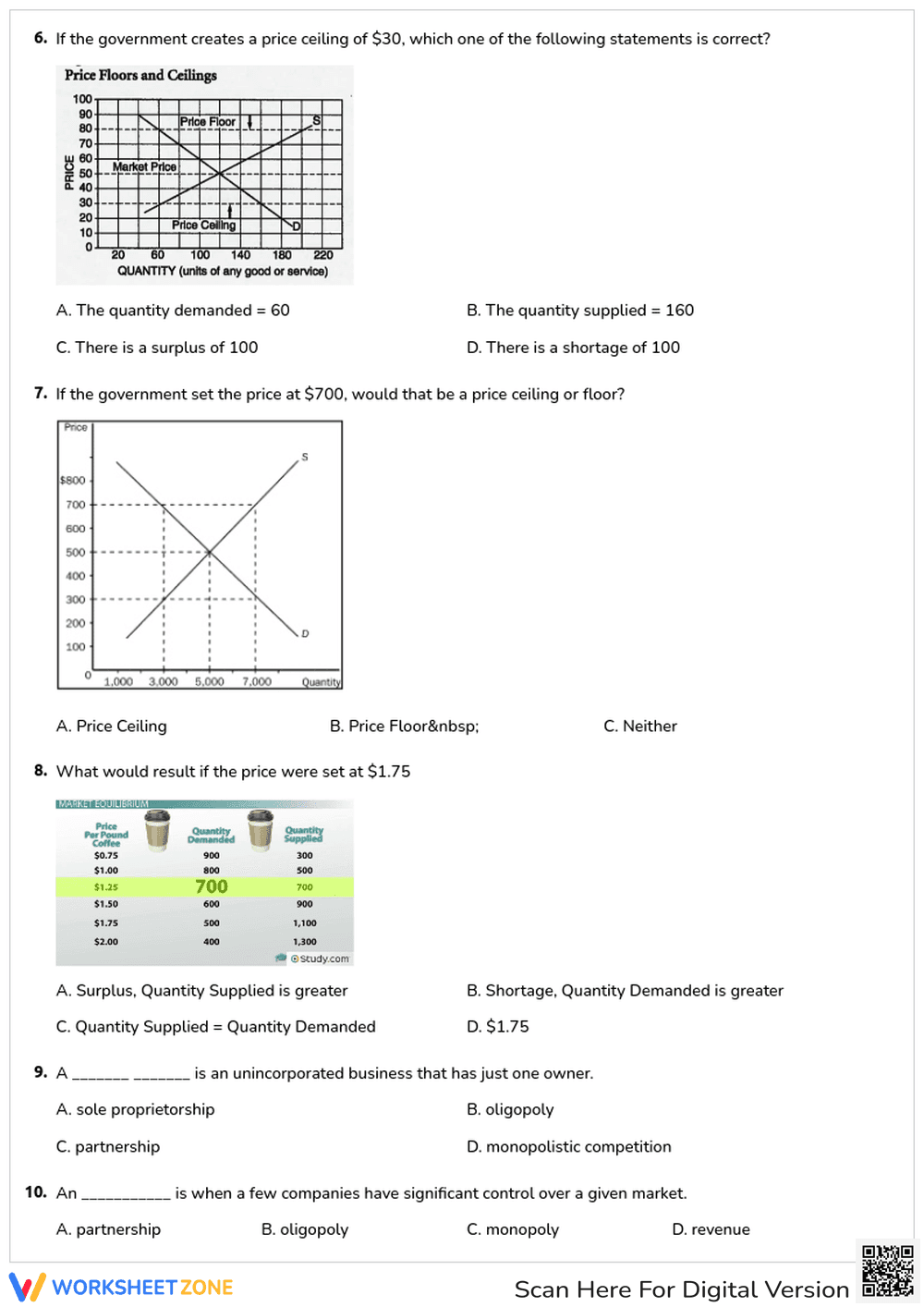
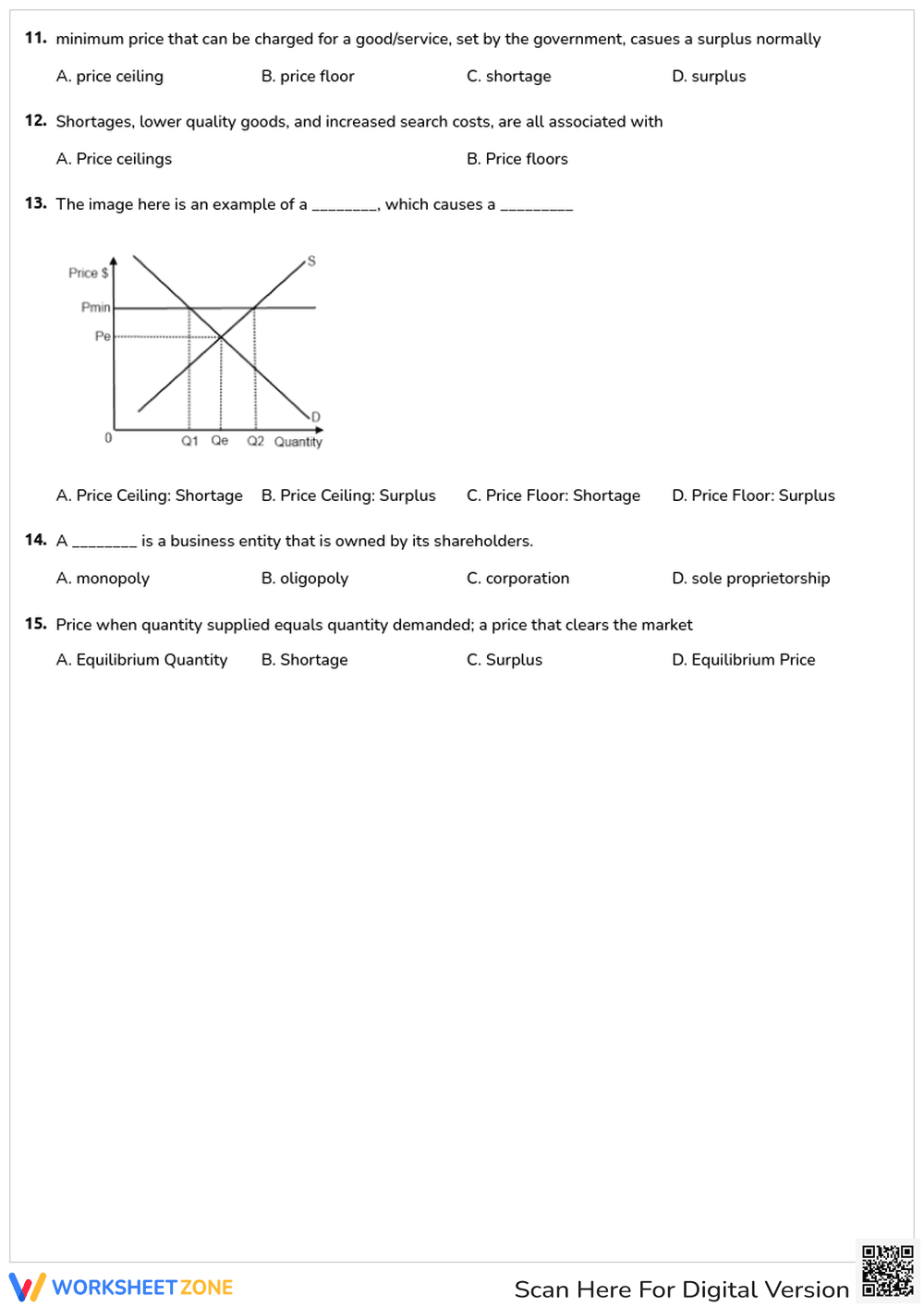
This Grade 11 and 12 economics worksheet gives students targeted practice analyzing market interventions. By evaluating graphs and scenarios, learners will determine the impact of price ceilings and price floors on market equilibrium, identifying resulting shortages or surpluses to build foundational microeconomics skills.
At a Glance
- Grade: 11-12 · Subject: Economics
- Standard:
C3.D2.Eco.7.9-12— Analyze how prices send signals and provide incentives- Skill Focus: Price Ceilings, Floors, and Equilibrium
- Format: 3 pages · 15 problems · Answer key included · PDF
- Best For: Formative assessment or sub plans
- Time: 20–25 minutes
What's Inside
This comprehensive resource features 15 multiple-choice questions spread across three pages. The task types include graph interpretation, vocabulary matching, and scenario analysis. Students will encounter visual models of supply and demand curves to calculate exact quantities of shortages and surpluses. A complete answer key is provided to ensure accurate and efficient grading.
Zero-Prep Workflow
- Print (1 minute): Simply download the PDF and print a class set. No special formatting or color ink is required.
- Distribute (1 minute): Hand out the three-page packet at the start of class or leave it in a highly visible folder for a substitute teacher.
- Review (3 minutes): Use the included answer key to quickly score the 15 multiple-choice questions or review them collectively as a class.
Total teacher prep time is under two minutes, making this an ideal zero-prep solution and highly suitable for emergency sub plans.
Standards Alignment
Aligned to C3.D2.Eco.7.9-12, this resource requires students to analyze how prices send signals and provide incentives to buyers and sellers in a competitive market. It also touches on foundational business structures like sole proprietorships and corporations. Both standard codes can be copied directly into lesson plans, IEP goals, or district curriculum mapping tools.
How to Use It
Deploy this worksheet as a formative assessment immediately following direct instruction on market interventions. It serves perfectly as an independent practice activity to solidify graph-reading skills. While students work, circulate the room and observe how they trace the lines on the supply and demand graphs; this provides immediate feedback on their understanding of equilibrium points. Expect completion to take 20 to 25 minutes.
Who It's For
This material is designed for high school economics students in grades 11 and 12. It offers built-in visual scaffolds through clear supply and demand graphs, making it accessible for diverse learners who benefit from visual data representation. Pair this quiz with a direct instruction lesson on government market interventions or an anchor chart detailing the differences between shortages and surpluses.
Integrating structured graph analysis into high school economics instruction significantly improves student comprehension of abstract market forces and government interventions. According to the RAND AIRS 2024 report, providing students with repeated exposure to visual data models and scenario-based questioning enhances their ability to accurately predict complex economic outcomes. By mastering the C3.D2.Eco.7.9-12 standard, students learn to analyze how prices send signals and provide incentives in real-world competitive markets. This targeted practice ensures learners can confidently differentiate between a price ceiling and a price floor, calculate exact surplus or shortage quantities, and understand the broader implications of market regulations. Ultimately, this strengthens their analytical reasoning, builds critical data literacy skills, and thoroughly prepares them for advanced microeconomic coursework or introductory college-level social studies classes.


