


























Views
Downloads
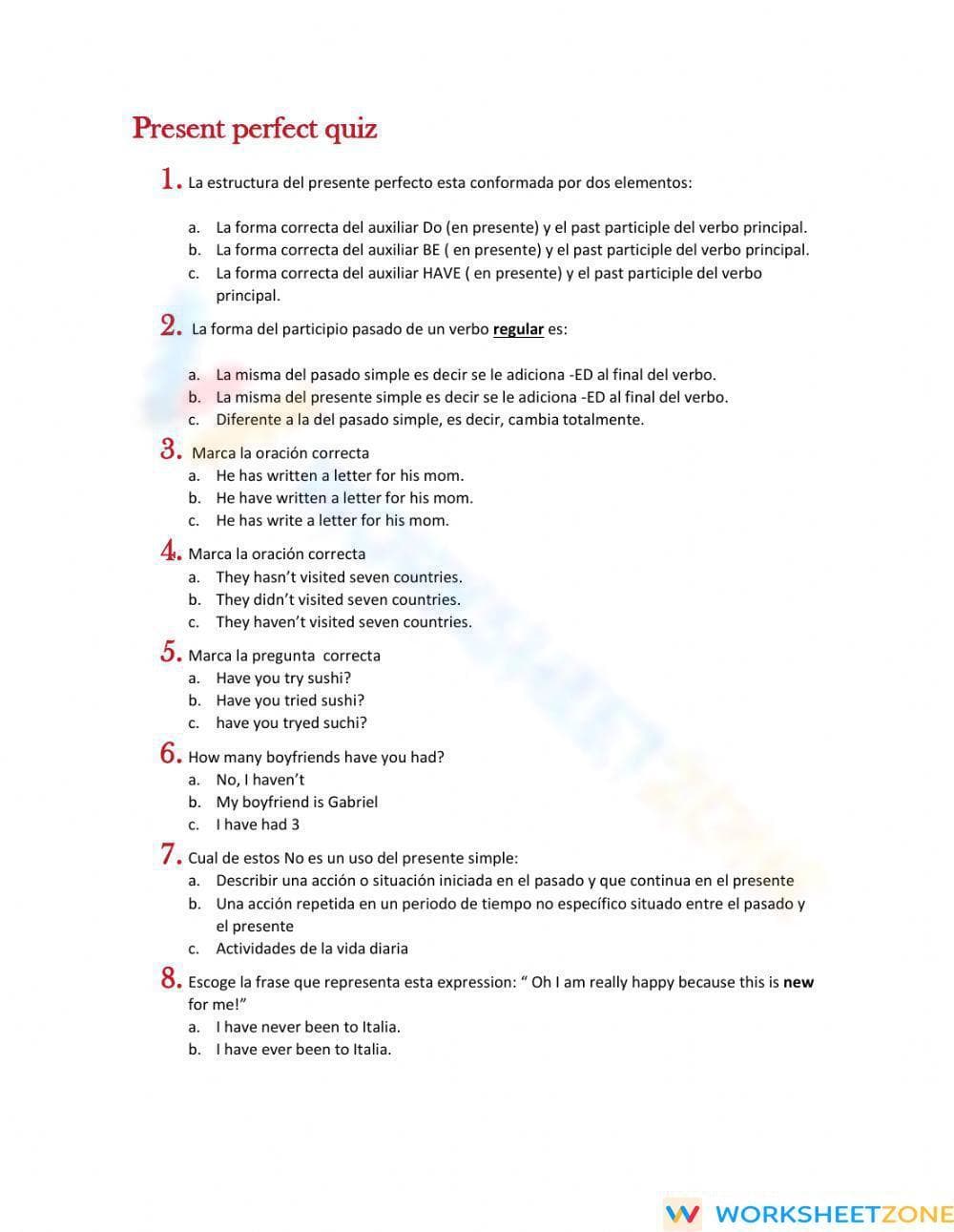
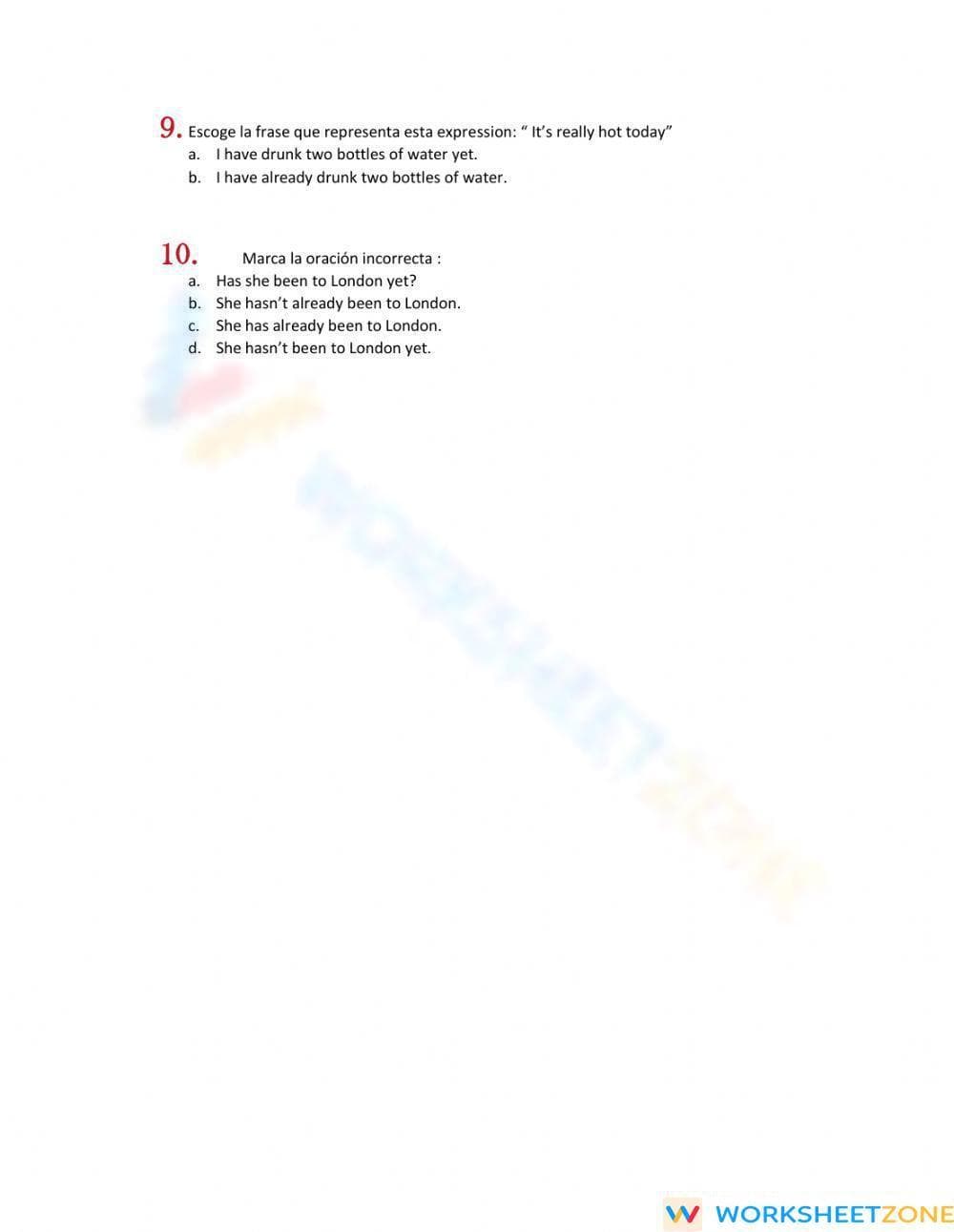

Essential Present Perfect Quiz | Grade 11-12 ELA
Paste this activity's link or code into your existing LMS (Google Classroom, Canvas, Teams, Schoology, Moodle, etc.).
Students can open and work on the activity right away, with no student login required.
You'll still be able to track student progress and results from your teacher account.
Strengthen your students' command of English verb forms with this focused assessment on the present perfect tense. This worksheet facilitates a clear evaluation of grammar conventions, ensuring learners can accurately construct and apply complex tenses in their academic writing. By practicing these specific structures, students achieve greater linguistic precision and rhetorical clarity in high school and college-level compositions.
At a Glance
- Grade: 11-12 · Subject: English Language Arts
- Standard:
CCSS.ELA-LITERACY.L.11-12.1— Demonstrate command of the conventions of standard English grammar and usage- Skill Focus: Present Perfect Verb Construction
- Format: 2 pages · 20 problems · Answer key included · PDF
- Best For: Formative assessment and grammar review
- Time: 15–20 minutes
What's Inside
This comprehensive 2-page assessment features 20 carefully curated tasks designed to test student proficiency with auxiliary verbs and past participles. The layout includes structured fill-in-the-blank sentences and identification exercises that require students to distinguish between simple past and present perfect forms. A complete, easy-to-read answer key is provided to facilitate rapid grading and immediate feedback for learners.
Zero-Prep Workflow
This resource is designed for maximum teacher efficiency with a three-step implementation: Print the two-page document (30 seconds), distribute to students for independent completion (15 minutes), and use the included key for a rapid whole-class review (5 minutes). Total teacher preparation time is under 2 minutes, making this an ideal solution for emergency sub plans or last-minute grammar check-ins without sacrificing instructional rigor.
Standards Alignment
This worksheet is primarily aligned with CCSS.ELA-LITERACY.L.11-12.1, which requires students to demonstrate command of the conventions of standard English grammar and usage. By focusing on the nuances of the present perfect tense, the material supports secondary standards related to writing clarity and stylistic consistency. Both standard codes can be copied directly into lesson plans, IEP goals, or district curriculum mapping tools.
How to Use It
Implement this quiz as a summative exit ticket after a unit on verb tenses or as a diagnostic tool before beginning advanced narrative writing. During the 20-minute completion window, observe whether students struggle with irregular past participles, as this often indicates a need for targeted vocabulary intervention. This formative data allows you to adjust subsequent instruction to address specific grammatical gaps effectively.
Who It's For
This resource is tailored for Grade 11, Grade 12, and early college students who are refining their formal writing skills. It is particularly effective for English Language Learners (ELL) in advanced bridge programs who need to master the temporal relationships signaled by the present perfect. Pair this worksheet with a grammar anchor chart or a short informational passage for a complete, integrated language arts lesson.
Mastery of the present perfect tense is a critical component of academic literacy. Grammatical precision directly correlates with reading comprehension in complex texts, and students at this level must demonstrate a sophisticated understanding of standard English conventions for post-secondary success. This 20-task worksheet provides structured practice to move from memorization to functional application of verb forms. Focused, short-form assessments are highly effective for consolidating grammatical knowledge, allowing educators to provide specific, actionable feedback to bridge the gap between conversational fluency and the rigorous demands of academic communication.


