


























Views
Downloads



Grade 5 Prepositional Phrases Worksheet | Essential Practice
Paste this activity's link or code into your existing LMS (Google Classroom, Canvas, Teams, Schoology, Moodle, etc.).
Students can open and work on the activity right away, with no student login required.
You'll still be able to track student progress and results from your teacher account.
This Grade 5 prepositional phrases worksheet helps students master the function of prepositions as adjectives. By adding descriptive phrases to existing sentences, learners develop a deeper understanding of how to modify nouns to provide specific detail. This practice ensures students can distinguish between simple adjectives and complex phrase-based modifiers in their own writing.
At a Glance
- Grade: 5 · Subject: ELA
- Standard:
CCSS.ELA-LITERACY.L.5.1— Explain the function of conjunctions, prepositions, and interjections in general- Skill Focus: Prepositional phrases as adjectives
- Format: 3 pages · 10 problems · Answer key included · PDF
- Best For: Independent practice or homework reinforcement
- Time: 15–20 minutes
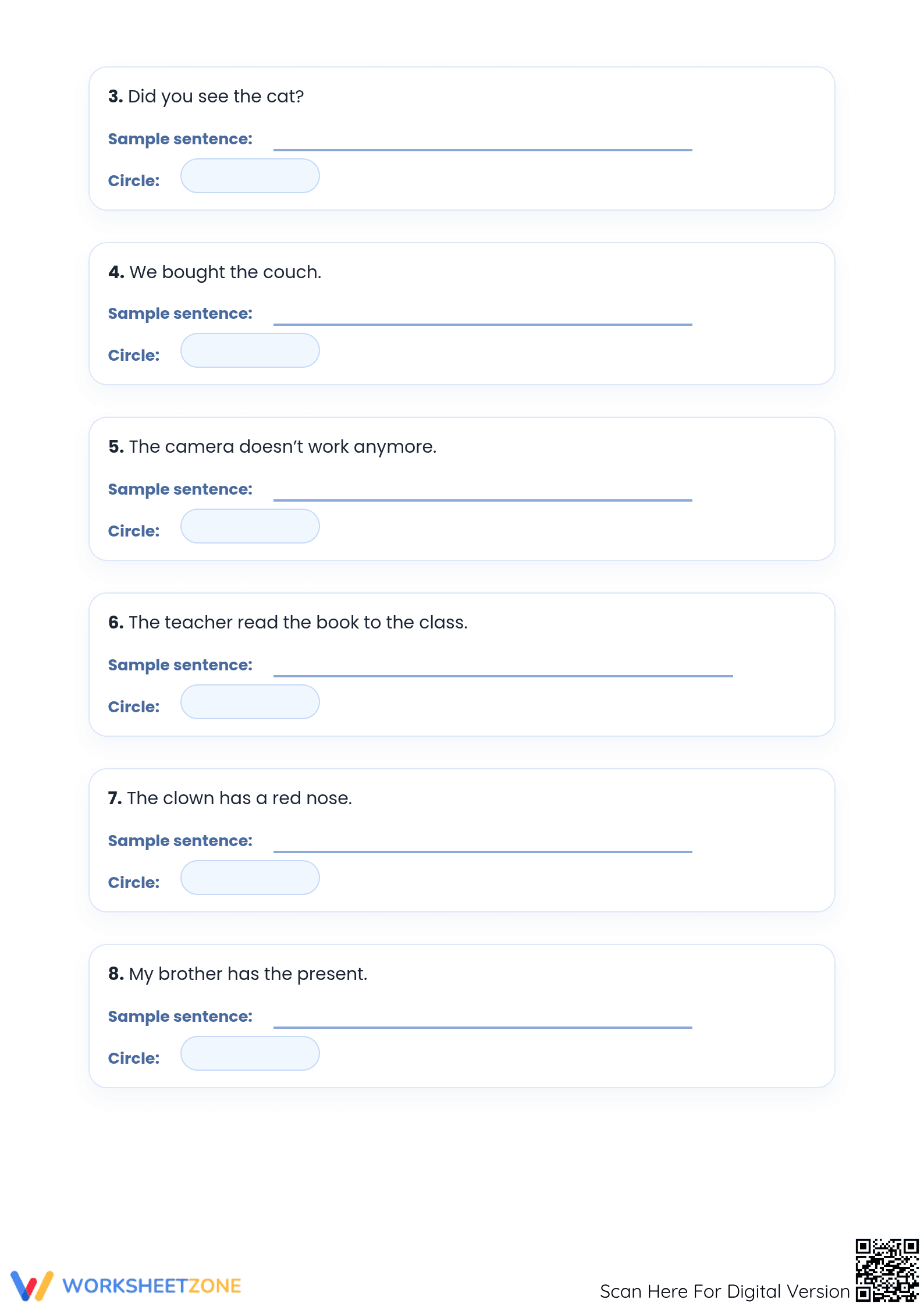
What's Inside: This resource contains three pages of focused grammar practice featuring 10 unique sentence-building tasks. Each task provides a base sentence with a bolded noun, requiring students to generate an original prepositional phrase and identify the noun being modified. A clear instructional box defines the concept with a visual example, and a comprehensive answer key provides sample responses for every item.
Zero-Prep Workflow: Teachers can implement this resource in under two minutes. First, print the three-page PDF (1 minute). Second, distribute the sheets to students for independent work during a grammar block or as a quiet morning activity (30 seconds). Finally, use the included answer key to review responses as a whole group or for quick grading (30 seconds). It is an ideal solution for unexpected sub plans.
Standards Alignment: The primary focus is CCSS.ELA-LITERACY.L.5.1, which requires students to explain the function of prepositions in general. It also supports CCSS.ELA-LITERACY.L.4.1.E by having students form and use prepositional phrases. Both standard codes can be copied directly into lesson plans, IEP goals, or district curriculum mapping tools.
How to Use It: Use this worksheet after a direct instruction lesson on prepositional phrases to provide structured practice. It works well as a formative assessment; observe if students can correctly circle the noun being modified to gauge their grasp of adjectival function. Expect completion within 15 to 20 minutes depending on student writing speed.
Who It's For: This resource is designed for Grade 4 and Grade 5 students who are transitioning from identifying single-word adjectives to understanding multi-word modifiers. It is particularly helpful for English Language Learners who need concrete practice with English word order and syntax. Pair this with a preposition anchor chart for maximum support.
According to the RAND AIRS 2024 report, structured grammar practice that requires students to generate their own linguistic constructions—rather than simply selecting from multiple choices—significantly improves long-term retention of syntactic rules. This worksheet aligns with those findings by tasking students with the creation of original prepositional phrases within a controlled sentence frame. By focusing on the adjectival function of these phrases, the resource addresses a critical gap in middle-elementary writing development where students often struggle to move beyond basic sentence structures. The inclusion of a clear definition and a worked example provides the necessary scaffolding for independent mastery. This approach ensures that the standard CCSS.ELA-LITERACY.L.5.1 is met through active application rather than passive recognition. Educators can rely on this evidence-based design to support literacy goals and improve student writing clarity across various genres and academic contexts.


