




























Views
Downloads
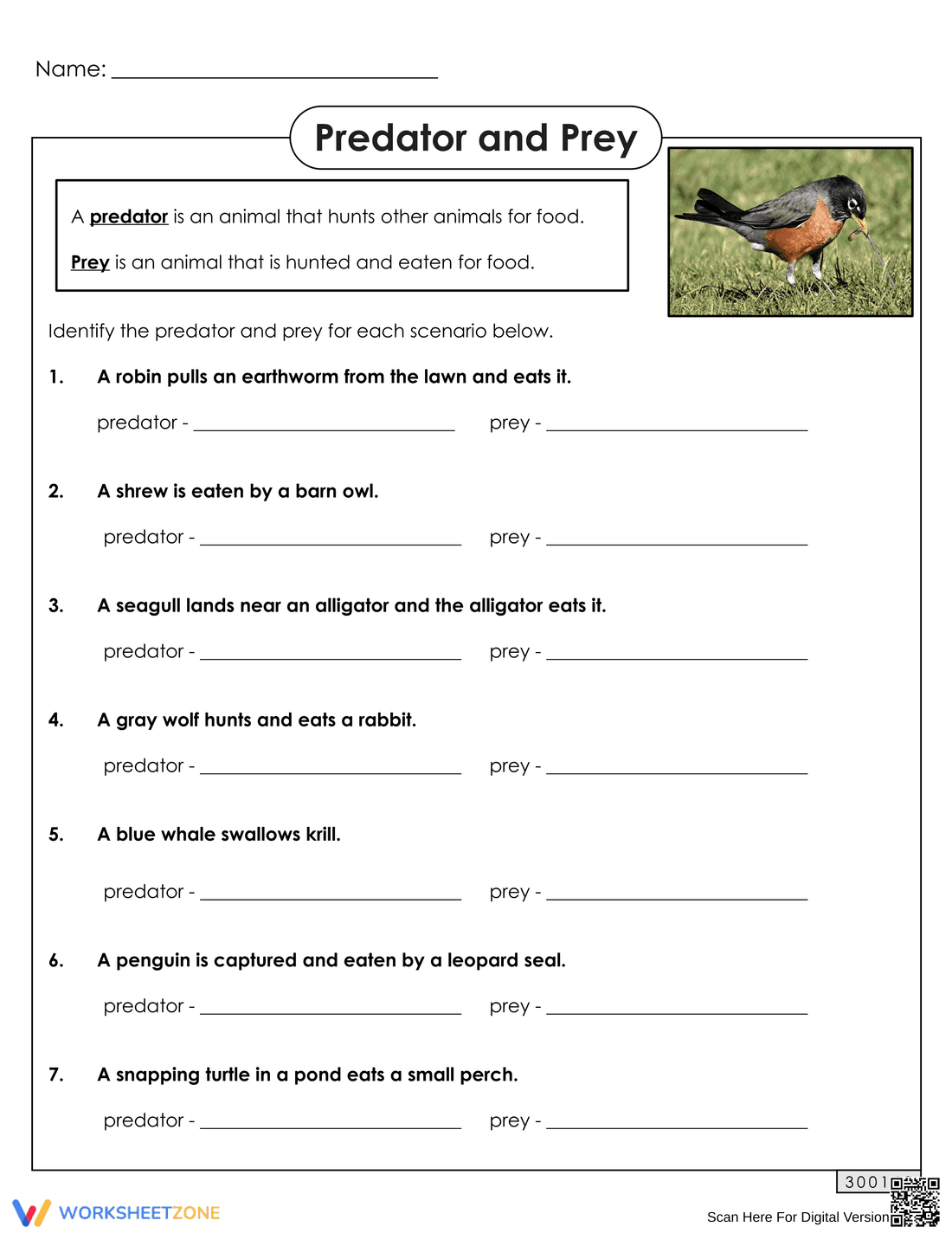
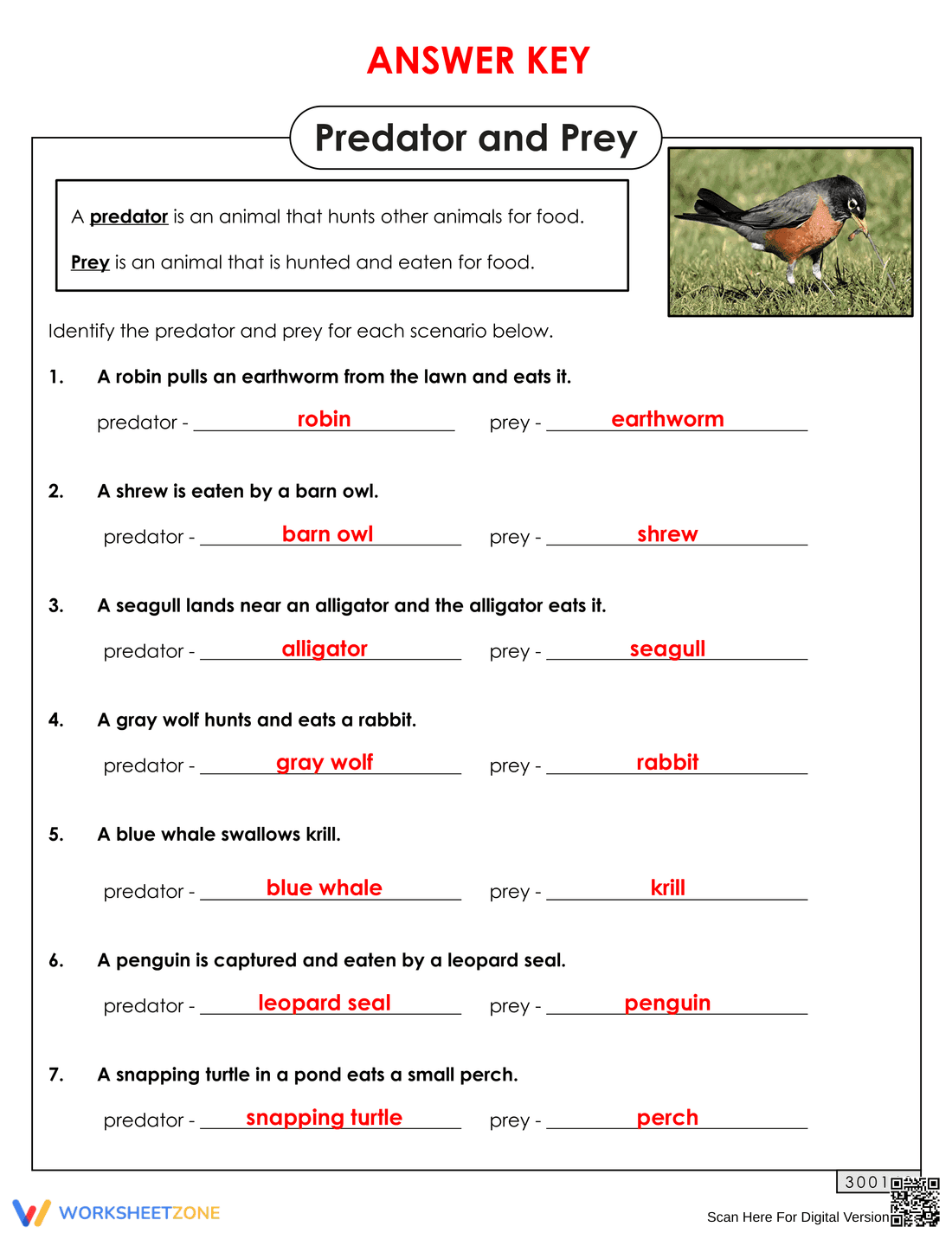

Predator and Prey Worksheet | Grade 4 Essential Science

Paste this activity's link or code into your existing LMS (Google Classroom, Canvas, Teams, Schoology, Moodle, etc.).
Students can open and work on the activity right away, with no student login required.
You'll still be able to track student progress and results from your teacher account.
This Grade 4 science worksheet helps students master the fundamental concepts of ecological relationships by identifying predator and prey roles. Students analyze seven distinct scenarios to determine which organism is the hunter and which is the hunted, reinforcing critical biology vocabulary through practical application and reading comprehension.
At a Glance
- Grade: 4 · Subject: Science
- Standard:
4-LS1-1— Identify how internal and external structures support survival and growth- Skill Focus: Predator and prey identification
- Format: 2 pages · 7 problems · Answer key included · PDF
- Best For: Introduction to food chains and webs
- Time: 15–20 minutes
The resource features a clear, concise definition block at the top to anchor student understanding. It contains 7 descriptive scenarios ranging from aquatic environments (snapping turtles and perch) to terrestrial habitats (gray wolves and rabbits). The layout provides dedicated lines for predator and prey responses, ensuring organized student work. A full-color answer key is included for rapid grading and immediate feedback.
This worksheet is designed for immediate classroom implementation with a total teacher prep time of under 2 minutes. Simply print the single-page student sheet and distribute it during your ecology unit. The self-explanatory definitions allow students to work independently, making it an ideal choice for emergency sub plans or a quick formative assessment following a lesson on food chains. The clear structure ensures that students stay on task without constant teacher intervention.
This resource aligns with 4-LS1-1, focusing on how animals use their structures to survive, specifically through hunting or avoiding being hunted. By identifying these roles, students build the foundational knowledge required for more complex food web modeling in later grades. Both standard codes can be copied directly into lesson plans, IEP goals, or district curriculum mapping tools to ensure compliance with state science frameworks.
Use this worksheet as a check for understanding immediately after direct instruction on consumer roles. It works effectively as a transition activity between a lecture and a hands-on food web building project. Teachers should observe if students struggle with passive voice scenarios (e.g., "A shrew is eaten by a barn owl") to assess reading comprehension alongside science knowledge. The expected completion time is approximately 15 minutes for most Grade 4 learners.
This activity is tailored for general education 4th-grade students, but the clear definitions and repetitive structure make it highly accessible for English Language Learners (ELLs) and students with IEPs. It pairs naturally with an introductory video on animal adaptations or a classroom anchor chart depicting local wildlife interactions. It provides the necessary scaffolding for students who are just beginning to explore the flow of energy in ecosystems.
According to the RAND AIRS 2024 report, structured practice that requires students to categorize biological interactions significantly improves long-term retention of ecological concepts. This worksheet addresses the 4-LS1-1 standard by requiring students to recognize the functional roles of organisms within their environments. By isolating the predator-prey relationship across 7 diverse examples, the material scaffolds the cognitive shift from simple identification to complex systems thinking. Research from Fisher & Frey (2014) emphasizes that clear definitions paired with immediate application—as seen in this resource—facilitate the gradual release of responsibility. This ensures that Grade 4 learners develop the scientific literacy necessary for middle school life science tracks. The inclusion of an answer key supports high-frequency feedback, a critical component of effective formative assessment in elementary science education.


