




























Views
Downloads
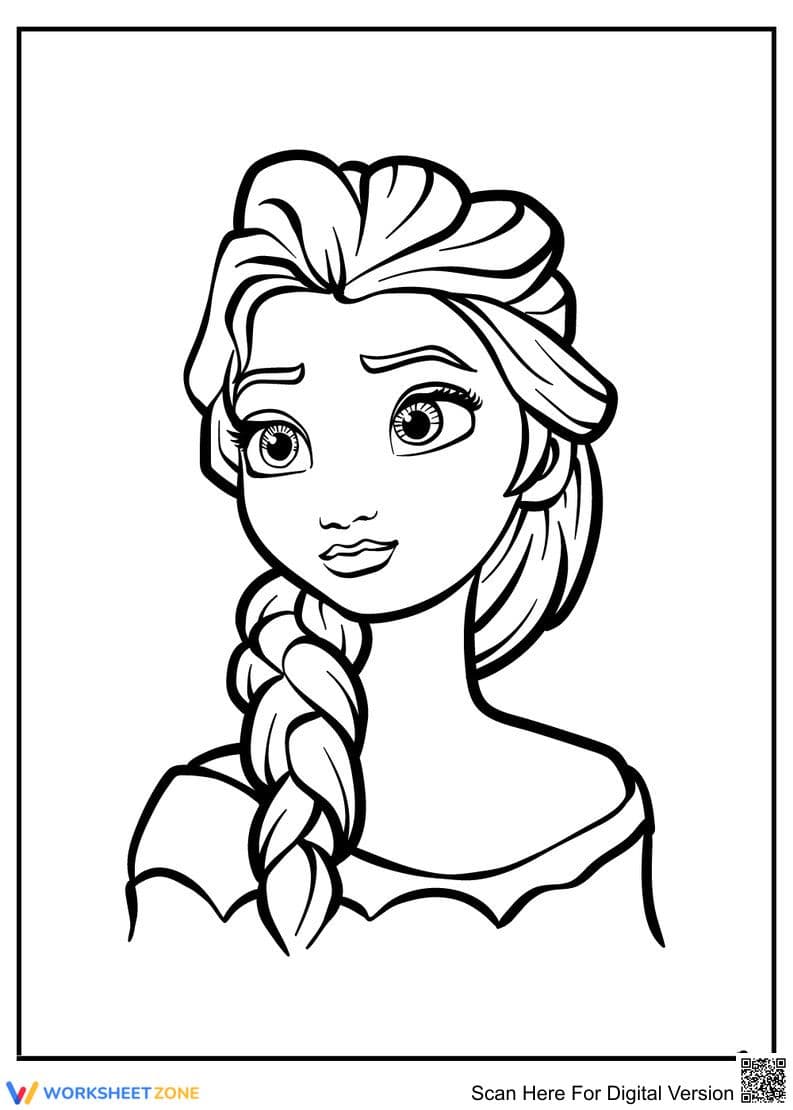

Powerful Queen Elsa Coloring Page | Essential Grade K-2

Paste this activity's link or code into your existing LMS (Google Classroom, Canvas, Teams, Schoology, Moodle, etc.).
Students can open and work on the activity right away, with no student login required.
You'll still be able to track student progress and results from your teacher account.
This Queen Elsa coloring worksheet provides Kindergarten students with a high-interest creative task to develop essential fine motor control. By focusing on staying within lines and selecting colors, learners strengthen the small muscle groups required for pencil grip and letter formation. It offers a familiar character to maximize student engagement during independent work time.
At a Glance
- Grade: Kindergarten · Subject: Arts & Crafts
- Standard:
CCSS.ELA-LITERACY.L.K.1.A— Use fine motor control to produce art and prepare for writing- Skill Focus: Fine Motor Development
- Format: 1 page · 1 task · No answer key needed · PDF
- Best For: Morning work or early finisher activity
- Time: 15–20 minutes
Inside this resource, you will find a single-page, high-resolution PDF featuring a detailed illustration of Queen Elsa. The lines are bold and clear, making it accessible for young learners who are still mastering spatial awareness. There are no complex instructions or teacher-led components, allowing for immediate student autonomy. The portrait orientation is optimized for standard letter-sized paper and easy duplication.
The zero-prep workflow for this worksheet is designed for maximum efficiency. First, print the single PDF page (30 seconds). Second, distribute the sheets along with crayons or colored pencils to your students (1 minute). Third, review the completed work to observe grip strength and color choice (30 seconds). Total teacher preparation time is under 2 minutes, making it an ideal sub-plan addition or emergency filler activity.
This activity aligns with `CCSS.ELA-LITERACY.L.K.1.A`, which focuses on the physical requirements of writing. While the standard specifically mentions printing letters, the foundational fine motor skills are built through coloring and drawing tasks. By controlling a writing utensil to fill specific shapes, students practice the precision needed for literacy. Both standard codes can be copied directly into lesson plans, IEP goals, or district curriculum mapping tools.
Use this worksheet as a hook before a creative writing prompt about bravery or as a calming transition after recess. It serves as an excellent formative assessment tool; teachers can observe a student's pincer grasp and hand-eye coordination in a low-stakes environment. Expected completion time ranges from 15 to 20 minutes depending on the student's level of detail and artistic focus.
This resource is primarily for Kindergarten and Grade 1 students, particularly those who benefit from high-interest visual stimuli. It is an effective tool for occupational therapy sessions or for students with IEP goals related to fine motor precision. Pair this worksheet with a short reading passage about winter or a character trait anchor chart to extend the learning into other subject areas.
Research from the RAND AIRS 2024 report emphasizes that integrating high-interest visual tasks into early childhood education significantly increases task persistence among learners. This Queen Elsa worksheet utilizes familiar media characters to bridge the gap between play and academic skill-building. By engaging with `CCSS.ELA-LITERACY.L.K.1.A` through coloring, students develop the muscular endurance and hand-eye coordination necessary for the transition to formal handwriting. Studies in the Fisher & Frey (2014) framework for gradual release suggest that low-stakes creative tasks provide the necessary independent practice phase for motor development without the anxiety of formal assessment. This 1-page resource is a practical application of these principles, ensuring that students remain focused while refining the physical mechanics of literacy. The standard code and plain-English skill of fine motor control are central to this resource's educational value in any early elementary classroom setting.


