


























Views
Downloads
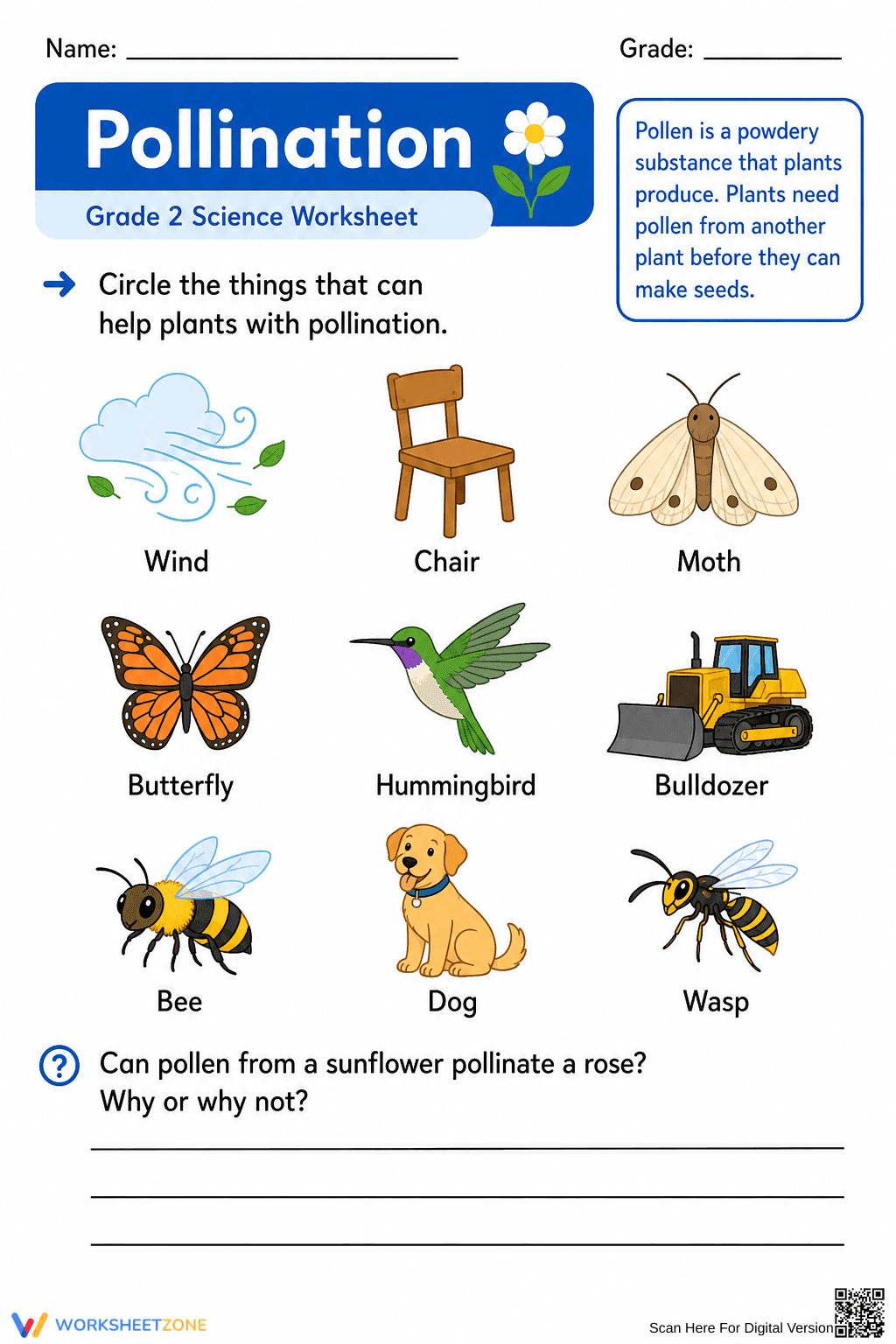

Grade 2 Pollination — Printable No-Prep Worksheet
Paste this activity's link or code into your existing LMS (Google Classroom, Canvas, Teams, Schoology, Moodle, etc.).
Students can open and work on the activity right away, with no student login required.
You'll still be able to track student progress and results from your teacher account.
This Grade 2 science worksheet helps students identify common pollinators and understand their role in plant reproduction. By evaluating different organisms and natural elements, young learners will solidify their grasp of how plants make seeds. This clear, focused activity ensures students can distinguish between active pollinators and unrelated objects.
At a Glance
- Grade: 2 · Subject: Science
- Standard:
2-LS2-2— Identify animals and elements that pollinate plants- Skill Focus: Identifying pollinators
- Format: 1 page · 10 problems · Answer key included · PDF
- Best For: Zero-prep science center or sub plan
- Time: 10–15 minutes
This 1-page printable features a brief informational text box explaining pollen, followed by nine visual identification tasks where students circle the correct pollinators from a mixed group of animals, objects, and natural forces. It concludes with one short-answer critical thinking question about cross-species pollination. A complete answer key is included to make grading fast and straightforward.
Implementation is effortless with a simple three-step workflow: Print the PDF (30 seconds), Distribute to your class (1 minute), and Review the instructions (2 minutes). Total teacher preparation time is under four minutes. Because the directions are self-explanatory and the layout is highly visual, this resource requires zero complex setup, making it an excellent option for emergency sub plans or independent morning work.
Standards Alignment
Primary alignment is to 2-LS2-2, which requires students to develop a simple model that mimics the function of an animal in dispersing seeds or pollinating plants. This worksheet builds the foundational knowledge needed for that standard by having students correctly identify which agents actually perform this function in nature. Both standard codes can be copied directly into lesson plans, IEP goals, or district curriculum mapping tools.
How to Use It
Assign this worksheet as a "during instruction" activity to check for understanding immediately after introducing the concept of pollen and plant life cycles. Teachers can observe students as they complete the visual identification section, noting any misconceptions about non-living pollinators like the wind. Expect completion within 10 to 15 minutes. Afterward, use the final short-answer question to spark a brief class discussion about why a sunflower cannot pollinate a rose.
Who It's For
This resource is designed for Grade 2 students learning about living things, ecosystems, and plant life cycles. It is particularly useful for visual learners and early readers who benefit from the clear, icon-based layout and simple vocabulary. It pairs naturally with a hands-on pollination simulation using glitter or cornmeal, or a direct instruction lesson on how flowers produce seeds.
The study of pollination in early elementary grades is a foundational component of biological literacy. According to RAND AIRS 2024, structured identification tasks in science help students build the prerequisite knowledge necessary for understanding complex food webs and environmental interdependence. This worksheet focuses on the 2-LS2-2 standard, which emphasizes the role of animals and natural forces in plant reproduction. By identifying specific pollinators like bees, butterflies, and wind, students move from simple observation to an understanding of functional relationships in nature. High-quality, single-page printables reduce cognitive load for younger learners, allowing them to focus on the core scientific concept without being overwhelmed by complex formatting. This 10-task resource provides a reliable method for assessing whether second-grade students can distinguish between the active agents of pollination and unrelated objects, ensuring mastery of essential life science concepts.


