


























Views
Downloads
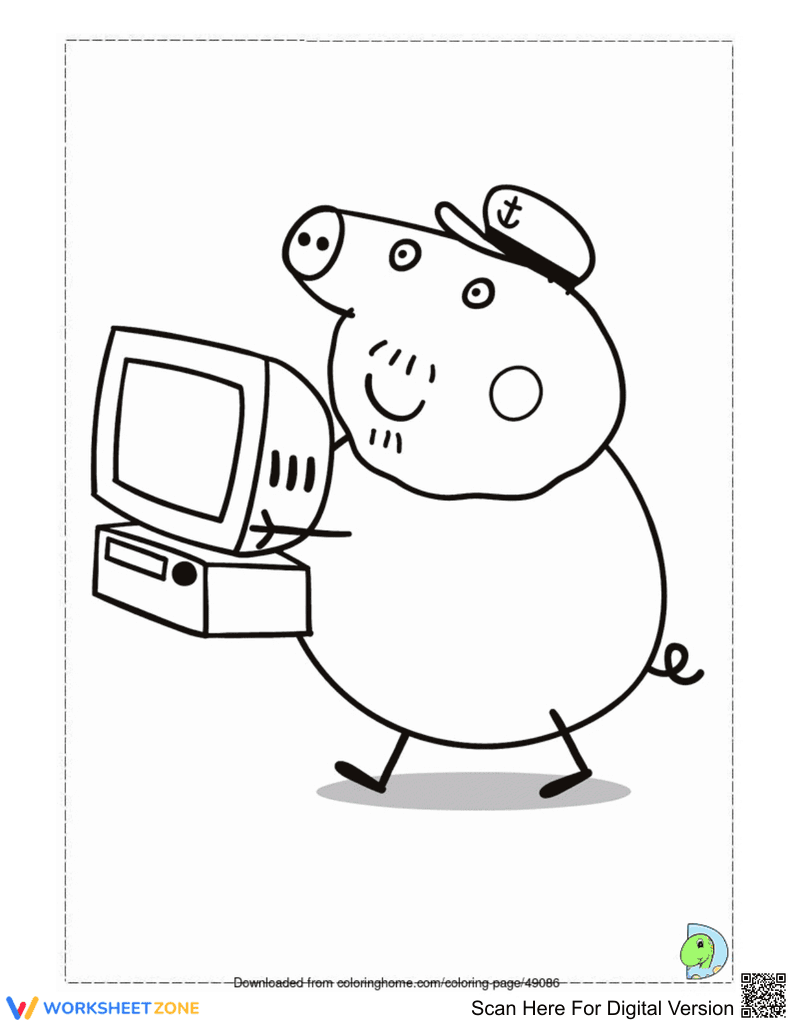

Peppa Pig Coloring Page | Essential Grade K-2 Printable
Paste this activity's link or code into your existing LMS (Google Classroom, Canvas, Teams, Schoology, Moodle, etc.).
Students can open and work on the activity right away, with no student login required.
You'll still be able to track student progress and results from your teacher account.
This Kindergarten coloring worksheet featuring a character from Peppa Pig provides a creative outlet for young learners to develop essential fine motor control. By engaging with familiar characters, students practice hand-eye coordination and color selection while expressing their artistic side. It serves as an excellent transition activity or a reward for completing core literacy tasks.
At a Glance
- Grade: Kindergarten · Subject: Arts & English
- Standard:
CCSS.ELA-LITERACY.SL.K.5— Add drawings or visual displays to descriptions to provide detail- Skill Focus: Fine Motor Development
- Format: 1 page · 1 task · No answer key required · PDF
- Best For: Early finishers and creative brain breaks
- Time: 15–20 minutes
This single-page PDF features a high-quality line art illustration of a character from the popular Peppa Pig series. The large, clear outlines are specifically designed for young children who are still mastering the ability to stay within lines. There are no complex instructions, making it an ideal independent activity for students in grades K through 2 who need to practice focus and grip.
The workflow for this resource is designed for maximum efficiency. First, print the single-page PDF in seconds. Second, distribute the sheets to students with a box of crayons or colored pencils. Third, allow students to work independently while you manage small groups or administrative tasks. Total teacher preparation time is under 2 minutes, making it a perfect emergency sub plan addition or a quick filler for unexpected schedule gaps.
This worksheet aligns with `CCSS.ELA-LITERACY.SL.K.5`, which encourages students to use visual displays to enhance their communication and descriptions. While primarily an artistic task, it supports the foundational fine motor skills necessary for writing and letter formation. Both standard codes can be copied directly into lesson plans, IEP goals, or district curriculum mapping tools to justify the use of creative arts in the literacy block.
Use this worksheet during the "cool down" period after a high-energy lesson or as a quiet morning work option. It is also effective as a formative assessment tool to observe a student's grip strength and pencil control. Expect students to spend approximately 15 to 20 minutes completing the page with full color, allowing for a peaceful classroom environment during transitions.
This resource is tailored for Kindergarten and Grade 1 students, including those receiving occupational therapy support for fine motor delays. It pairs naturally with a Peppa Pig storybook or a media literacy lesson about household technology. The familiar imagery helps lower the affective filter for English Language Learners, allowing them to participate fully in the classroom activity.
According to the RAND AIRS 2024 report, integrating creative visual tasks into early childhood education significantly improves student engagement and persistence. This worksheet, aligned with CCSS.ELA-LITERACY.SL.K.5, focuses on the plain-English skill of using visual displays to provide detail and context. Research from Fisher & Frey (2014) suggests that "brain breaks" involving familiar characters can reduce cognitive load and improve subsequent focus on rigorous academic content. By providing 1 clear, high-interest task, this resource supports the development of the intrinsic motivation necessary for long-term academic success. The use of coloring as a precursor to formal writing is a well-documented pedagogical strategy in early elementary classrooms, ensuring that students develop the manual dexterity required for standard-aligned penmanship and artistic expression.


