


























Views
Downloads
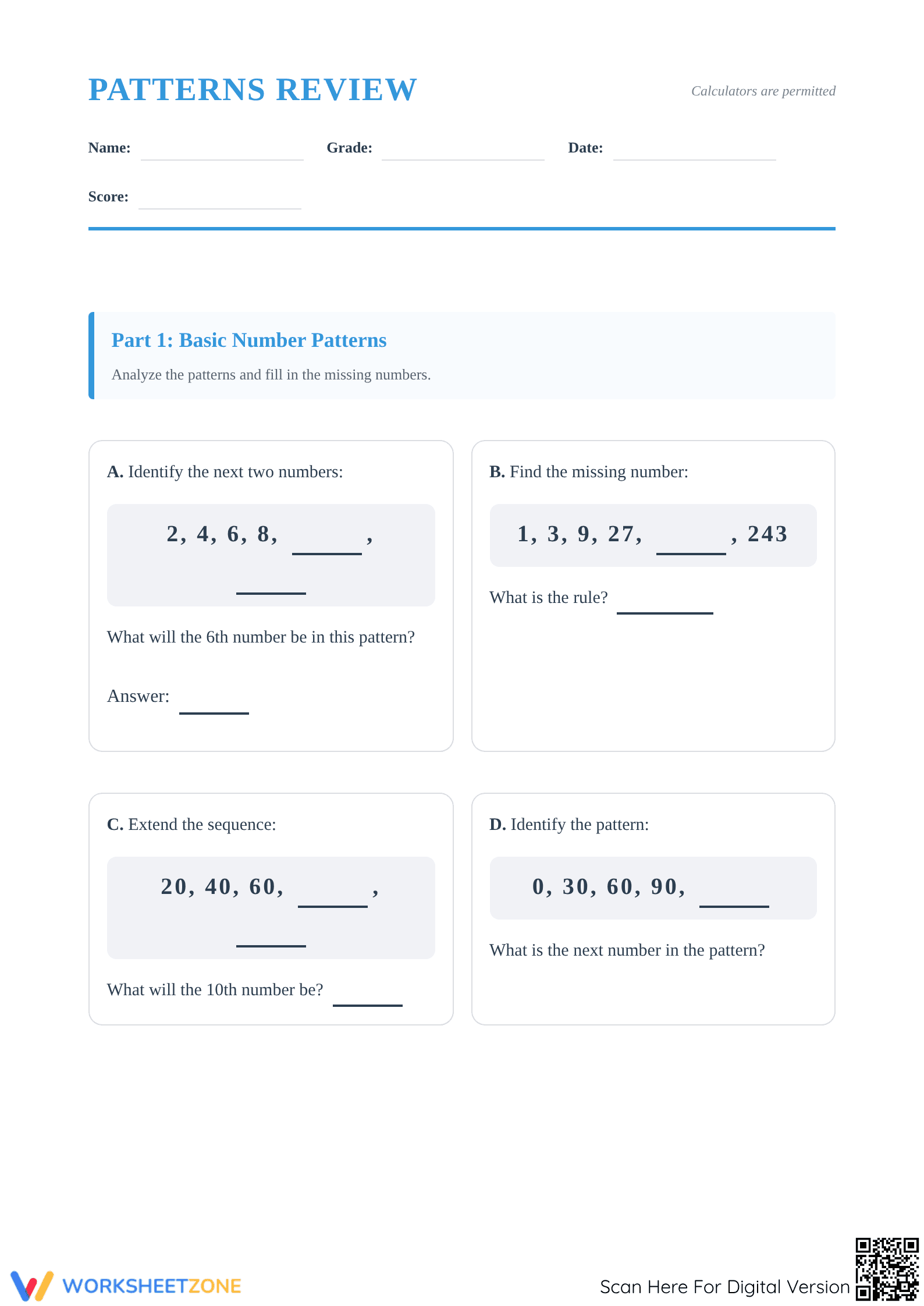
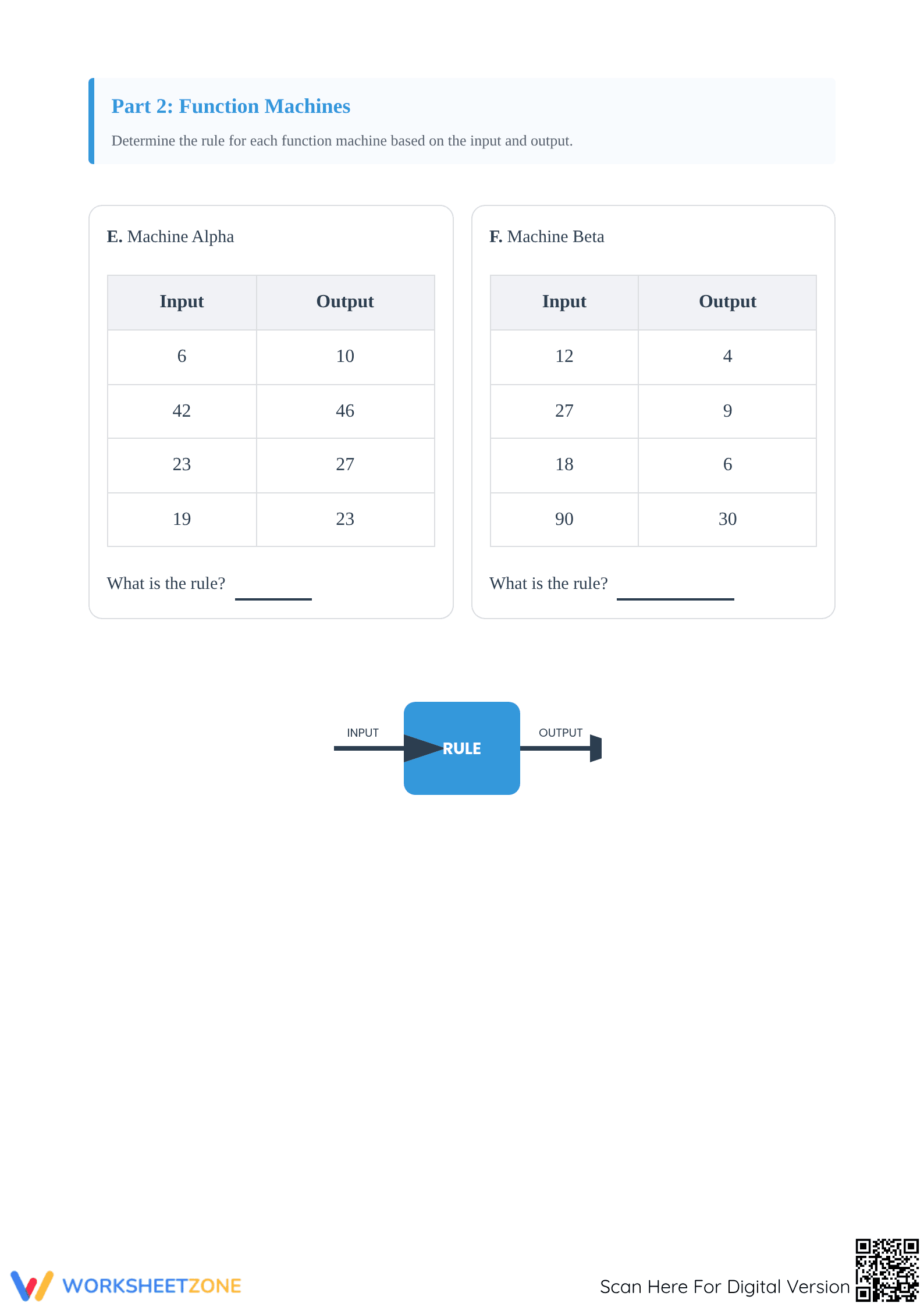
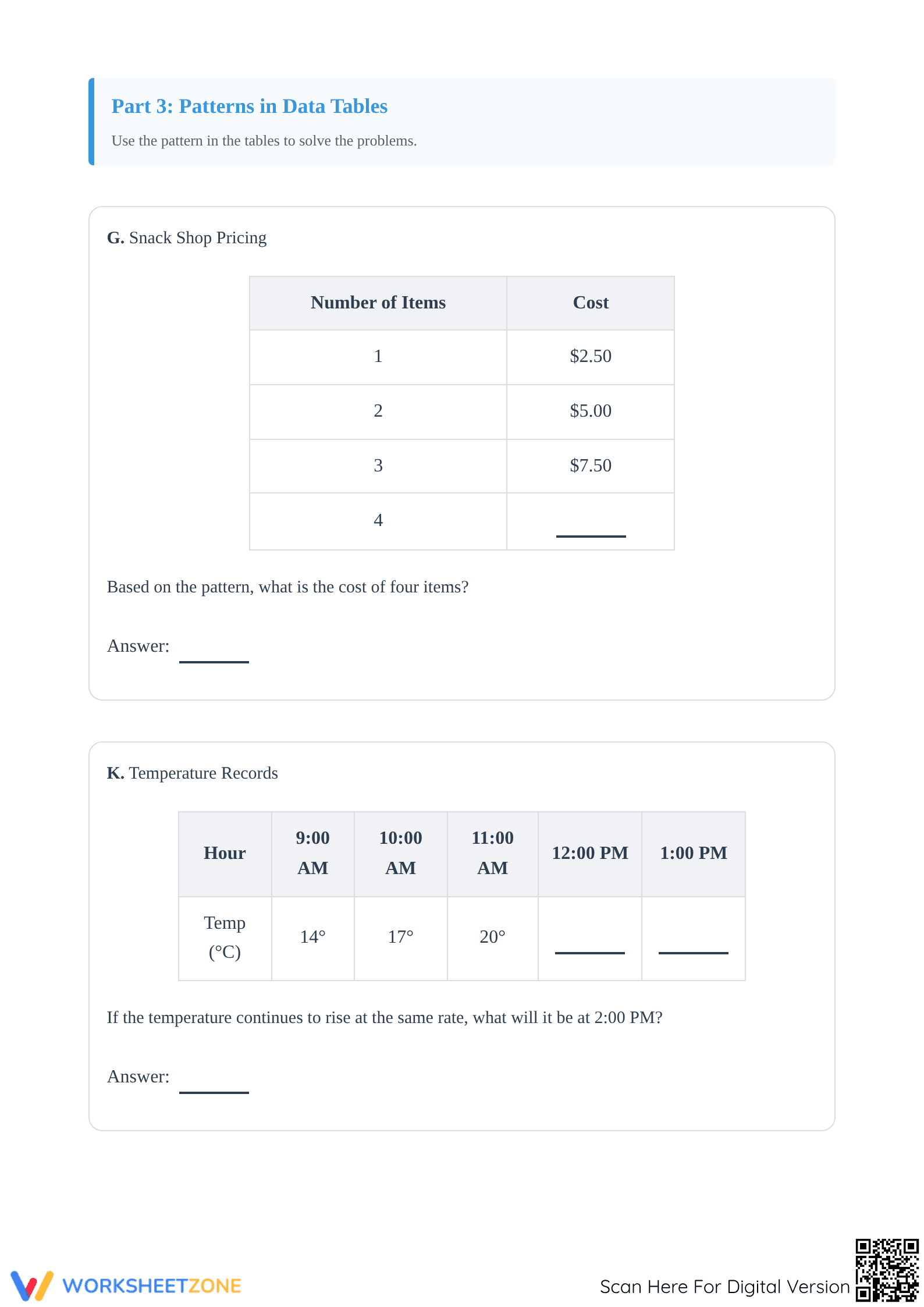
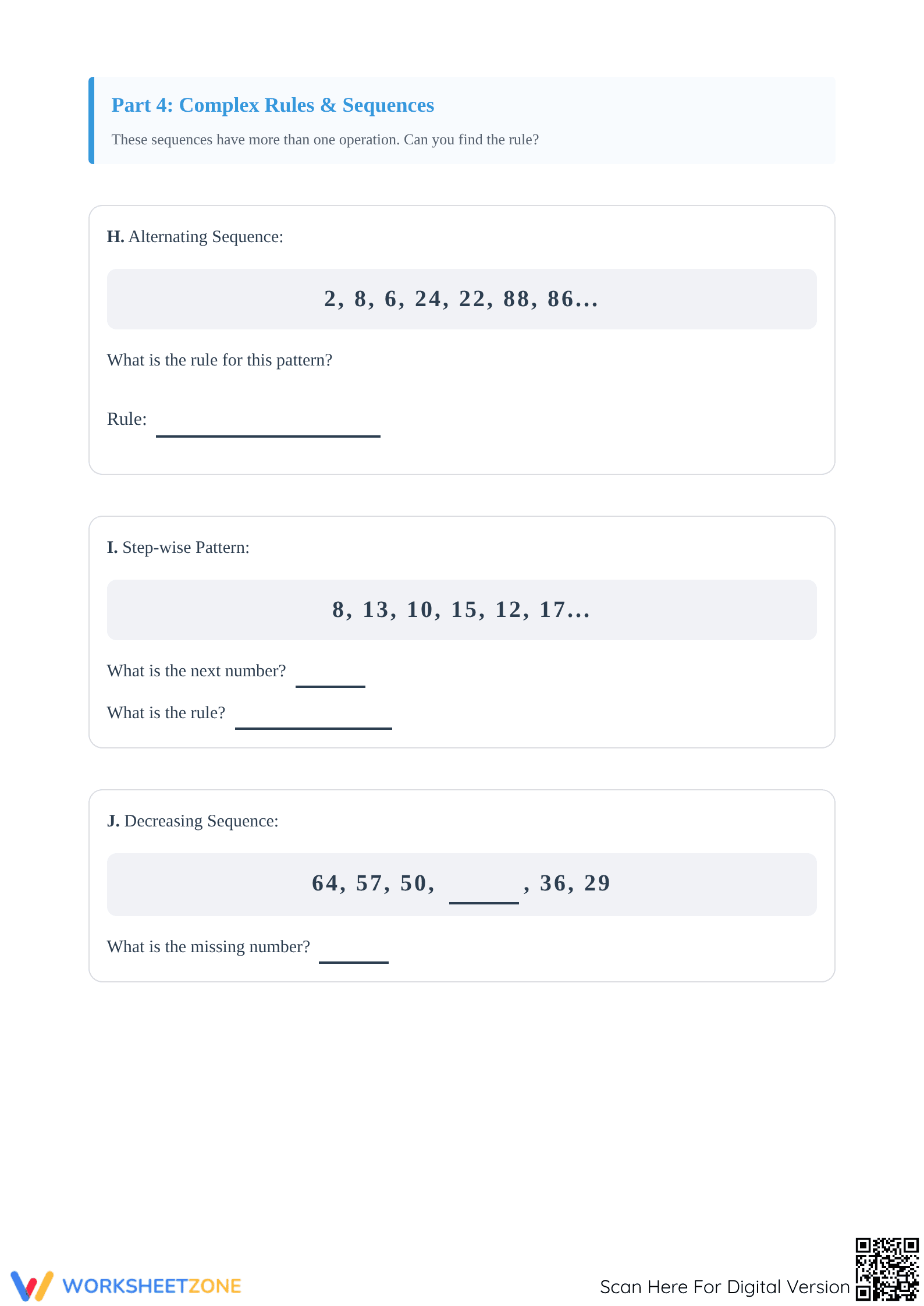

Essential 5.OA.B.3 Patterns and Relationships Review
Paste this activity's link or code into your existing LMS (Google Classroom, Canvas, Teams, Schoology, Moodle, etc.).
Students can open and work on the activity right away, with no student login required.
You'll still be able to track student progress and results from your teacher account.
Mastering numerical patterns and relationships is a foundational skill for algebraic thinking. This comprehensive review packet focuses on identifying rules within input-output tables, comparing corresponding terms between two patterns, and translating these relationships onto a coordinate plane. Students will move from basic rule identification to complex graphical analysis. Lead your students to mastery with this essential practice tool.
At a Glance
- Grade: 5 · Subject: Math
- Standard:
5.OA.B.3— Generate numerical patterns using rules, identify relationships, and graph ordered pairs on a plane- Skill Focus: Pattern Relationships & Coordinate Graphing
- Format: 5 pages · 6 tasks · Answer key included · PDF
- Best For: End-of-unit review or test preparation
- Time: 35–45 minutes
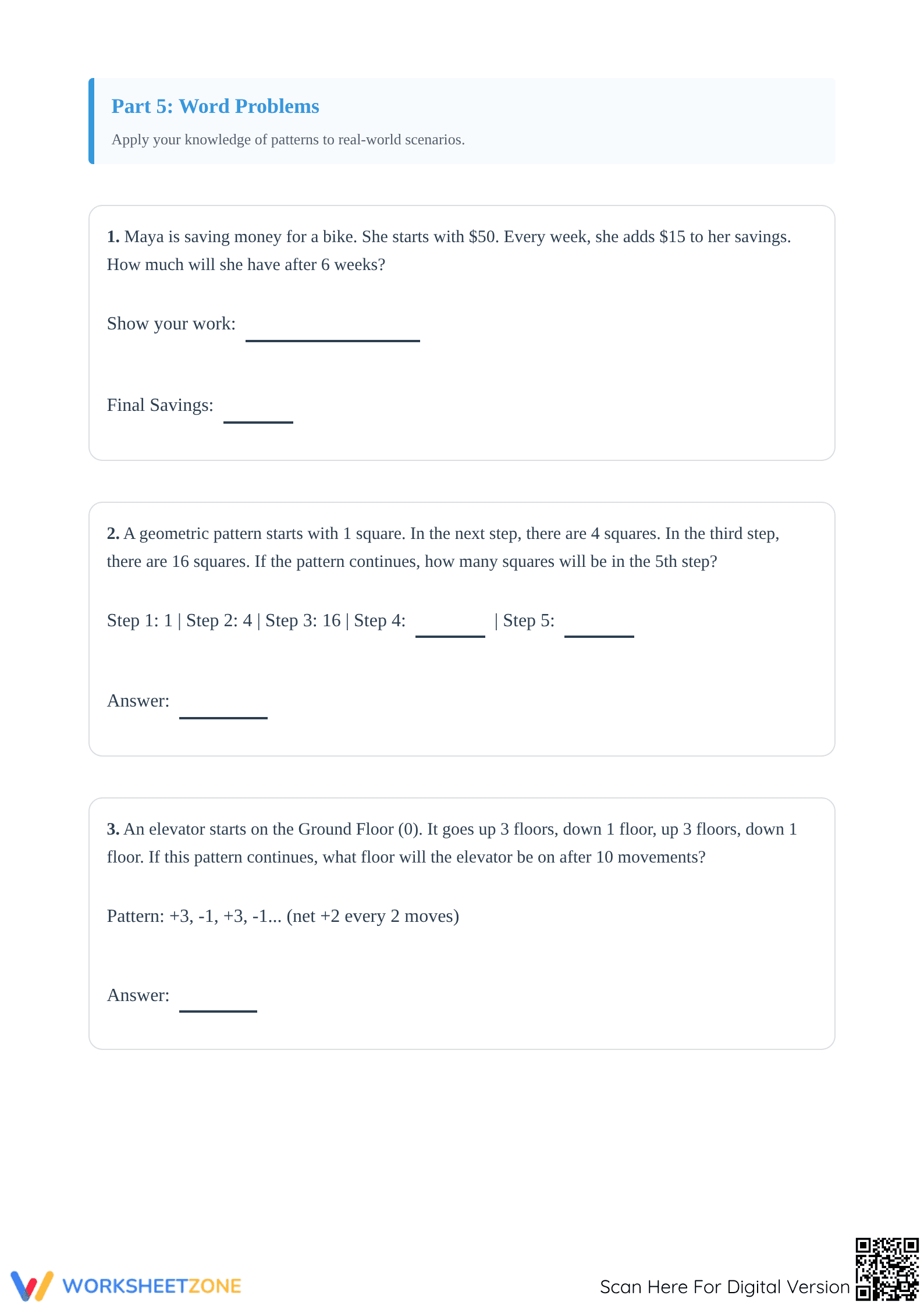
This multi-page document provides a structured approach to pattern analysis across four full pages of student tasks and a comprehensive 1-page answer key. The resource includes detailed input-output tables for multiple rules, comparison prompts that ask students to identify the relationship between values, and a dedicated coordinate plane for plotting ordered pairs derived from the patterns.
The mastery evidence in this resource is designed to track progression toward the CCSS.MATH.CONTENT.5.OA.B.3 standard. Tasks are tiered to identify if students are Approaching, Meeting, or Exceeding expectations. Educators can use the final word problem on page 4 as a performance task to verify that students can apply pattern logic to real-world scenarios independently. The structured layout allows for easy grading.
Standards Alignment
The primary alignment for this worksheet is 5.OA.B.3: "Generate two numerical patterns using two given rules. Identify apparent relationships between corresponding terms. Form ordered pairs consisting of corresponding terms from the two patterns, and graph the ordered pairs on a coordinate plane." Both standard codes can be copied directly into lesson plans, IEP goals, or district curriculum mapping tools.
How to Use It
Implement this resource as a summative assessment following direct instruction on algebraic patterns. Teachers should monitor students during the transition from table completion to graphing to ensure they are correctly identifying the (x, y) coordinates. An effective formative observation tip is to check if students recognize that the relationship between patterns remains constant across every row. The expected completion time is 40 minutes.
Who It's For
This review is ideal for Grade 5 students but serves as an excellent challenge for advanced Grade 4 learners or a necessary intervention for Grade 6 students. It pairs naturally with an anchor chart on coordinate planes or a short instructional video on input-output rules. The included answer key allows for immediate feedback or student self-correction during independent practice sessions or homework.
Algebraic thinking in the elementary years is not just about finding 'x'; it is about understanding how variables interact. Research from RAND AIRS 2024 emphasizes that students who can successfully identify relationships between numerical patterns (5.OA.B.3) demonstrate higher proficiency when introduced to linear functions in Grade 7. This worksheet supports that cognitive development by requiring students to visualize data through coordinate graphing, a practice that Fisher & Frey (2014) identify as essential for mathematical literacy. By moving from the abstract rule to the concrete graph, learners build a mental model of rate and change. This resource provides the necessary scaffolding to bridge the gap between simple arithmetic and the foundational requirements of Algebra I. It serves as a high-quality instructional tool for teachers looking to provide rigorous, standards-aligned practice that meets state testing depth requirements. It is a complete solution for pattern analysis.


