


























Views
Downloads
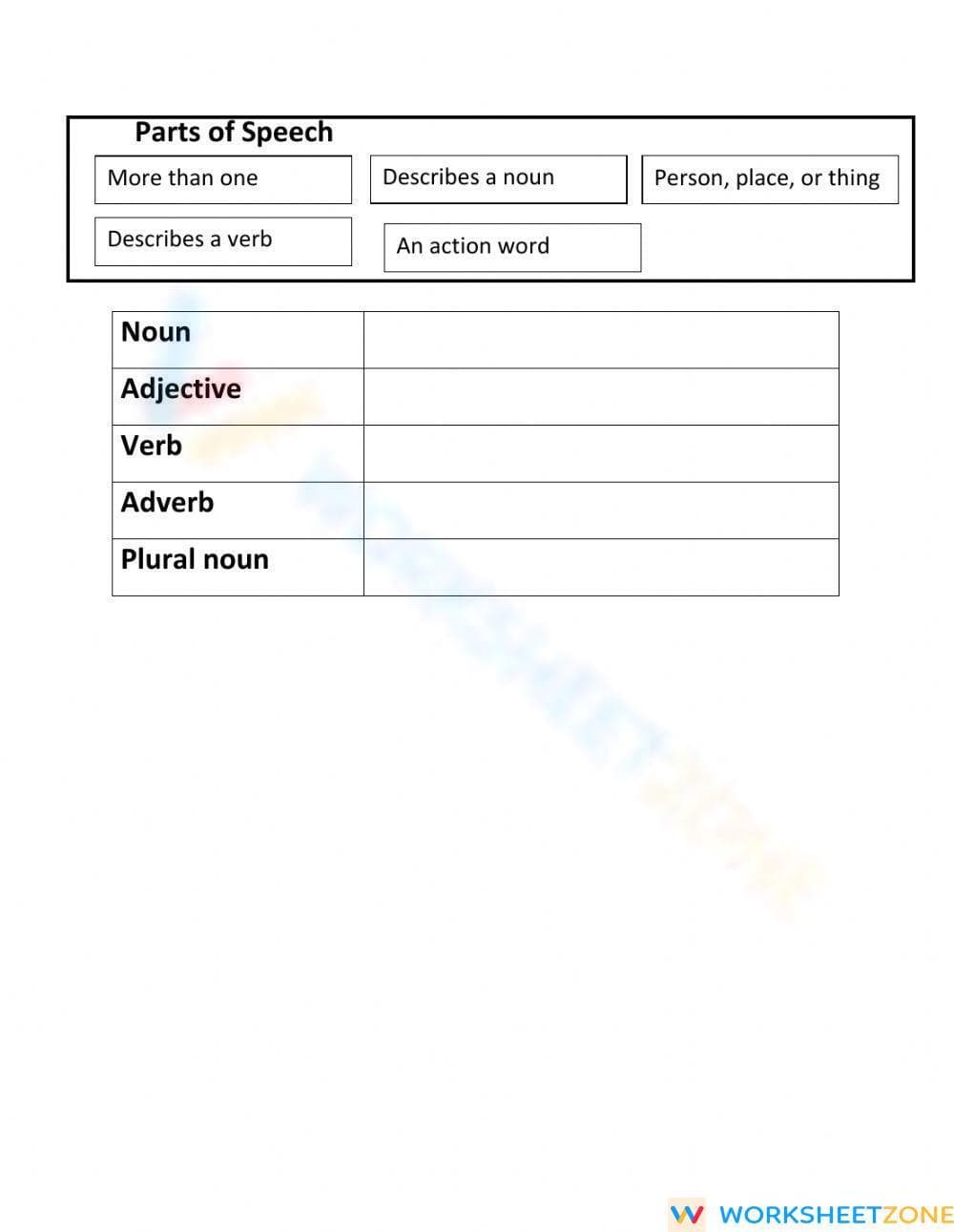

Printable Parts of Speech Match — Grades 3-6 Worksheet
Paste this activity's link or code into your existing LMS (Google Classroom, Canvas, Teams, Schoology, Moodle, etc.).
Students can open and work on the activity right away, with no student login required.
You'll still be able to track student progress and results from your teacher account.
This Parts of Speech Match worksheet provides Grade 3-6 students with a streamlined way to practice word classification. By identifying nouns, verbs, and adjectives, learners strengthen grammar skills and writing clarity for immediate classroom impact. It is designed for teachers who need a high-quality, effective resource that requires no prior setup or complicated instructions.
At a Glance
- Grade: 3-6 · Subject: English Language Arts (ELA)
- Standard:
CCSS.ELA-LITERACY.L.3.1— Explain the functions of nouns, pronouns, verbs, adjectives, and adverbs in general- Skill Focus: Parts of speech classification
- Format: 1 page · 10 problems · Answer key included · PDF
- Best For: Grammar review and morning work
- Time: 10–15 minutes
What's Inside
This one-page PDF features 10 vocabulary words paired with categorical boxes for major parts of speech. It includes a dedicated answer key for rapid grading. The visual design minimizes distractions, using clear fonts and whitespace to ensure accessibility for all students. This structure supports quick processing and immediate feedback in any instructional setting, allowing students to focus purely on the grammatical task at hand.
Zero-Prep Workflow
The zero-prep workflow saves teachers valuable planning time. First, print the single-page PDF. Second, distribute copies for an independent warm-up or grammar station activity. Finally, review answers using the provided key for formative data. Total teacher preparation time is less than two minutes, making this an ideal solution for sub plans, morning work, or quick transitions between subjects during the busy school day.
Standards Alignment
This resource is aligned to `CCSS.ELA-LITERACY.L.3.1`, requiring students to demonstrate command of standard English grammar conventions. Specifically, it targets categorizing words into respective parts of speech. The standard code can be copied directly into lesson plans, IEP goals, or district curriculum mapping tools to ensure activities remain focused on high-priority grade-level mastery benchmarks and evidence-based literacy instruction requirements.
How to Use It
Use this worksheet as a "bell ringer" before creative writing to prime students for descriptive language. Alternatively, assign it as a quick exit ticket after a direct instruction lesson. For a formative observation, watch how students handle specific words to gauge their understanding of word functions. Students typically complete these 10 tasks within 10 minutes, providing a fast data point for your daily progress monitoring.
Who It's For
This resource is perfect for Grades 3-6 and ELL students who benefit from visual associations. It can be differentiated by pairing it with a parts-of-speech anchor chart for students needing scaffolds. For a comprehensive lesson, pair this activity with a reading passage where students must find examples of the words they just categorized, helping them see grammar in a real-world literary context.
Research from the RAND AIRS 2024 study suggests that targeted practice on grammatical components—such as identifying parts of speech—leads to greater automaticity in student writing. By reducing the cognitive load required to identify word roles, students can devote more mental energy to complex sentence structure. This worksheet aligns with evidence-based practices for explicit instruction in standard English conventions. By mastering `CCSS.ELA-LITERACY.L.3.1` through structured matching, Grade 3-6 learners build the linguistic framework necessary for college readiness. This printable asset serves as a reliable tool for educators seeking to bridge the gap between abstract grammar rules and concrete application, ensuring core skills are reinforced through consistent practice.


