


























Views
Downloads



Grade 1 Ordering Numbers Worksheet — Printable Math Guide
Paste this activity's link or code into your existing LMS (Google Classroom, Canvas, Teams, Schoology, Moodle, etc.).
Students can open and work on the activity right away, with no student login required.
You'll still be able to track student progress and results from your teacher account.
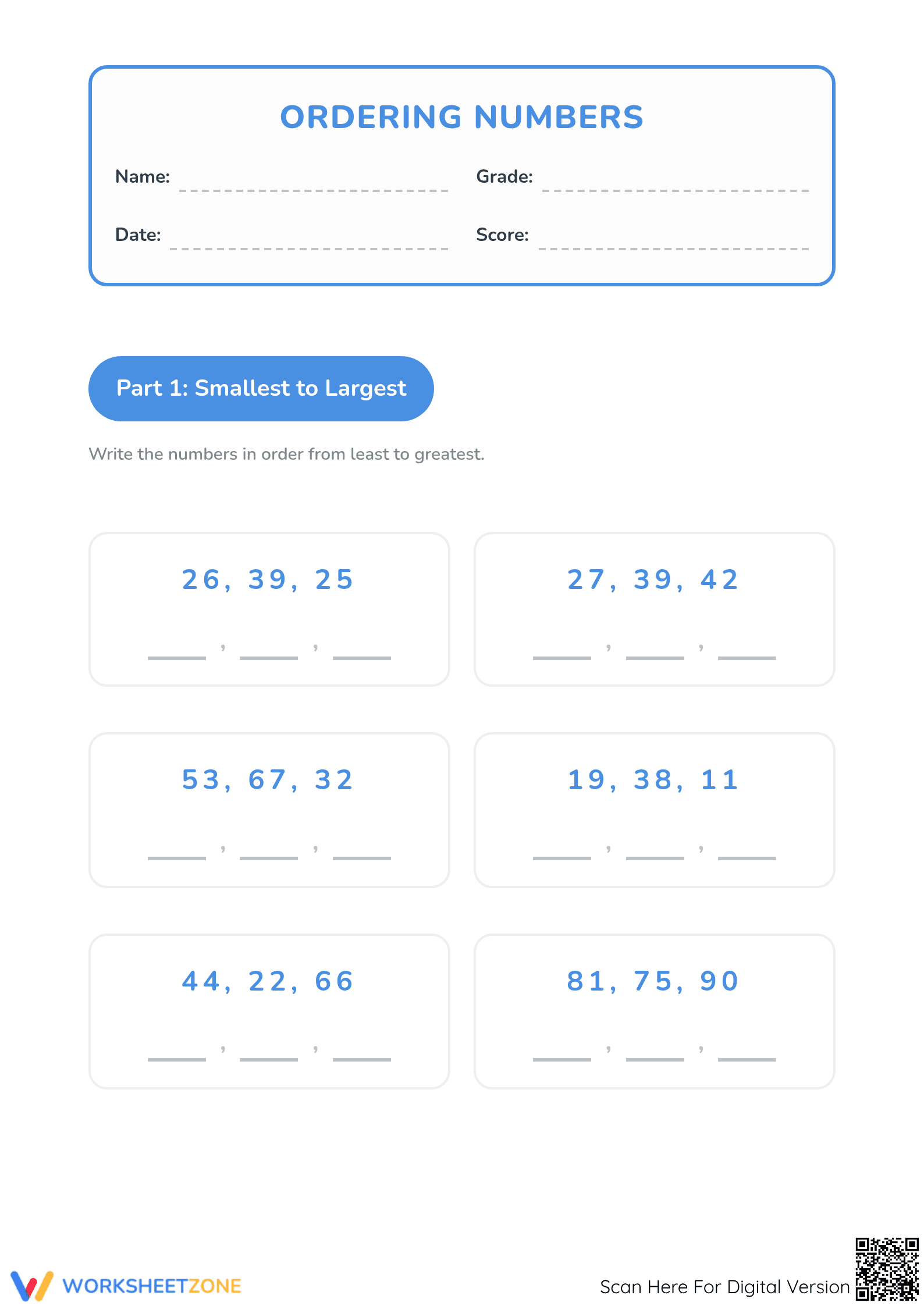
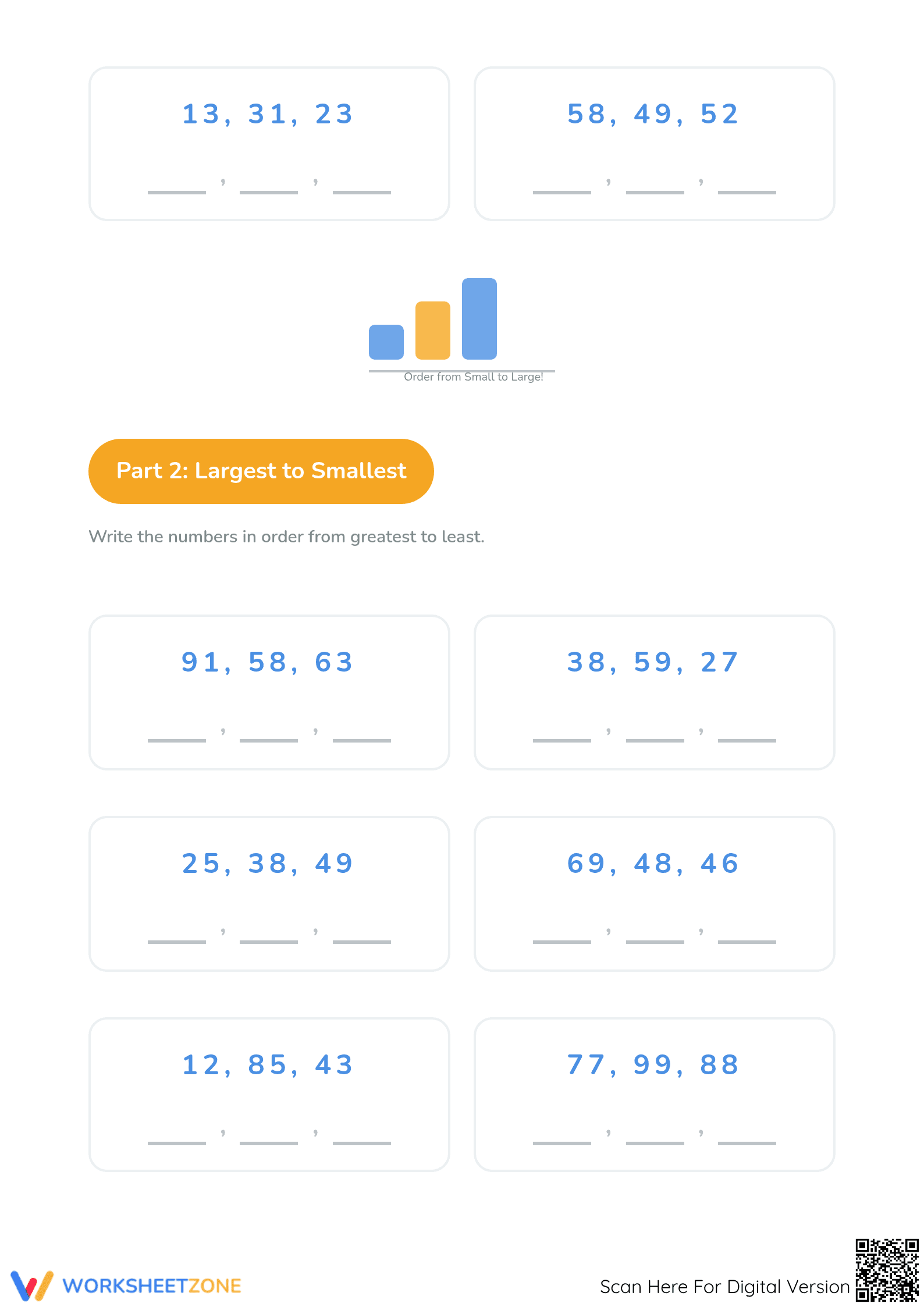
This Grade 1 ordering numbers worksheet provides students with a structured environment to master the essential skill of numerical sequencing. By working through various tasks that require arranging two-digit numbers from least to greatest and greatest to least, students develop a deep understanding of relative magnitude. The exercises move from simple comparisons to multi-number challenges, ensuring students achieve place value mastery.
At a Glance
- Grade: 1 · Subject: Math
- Standard:
CCSS.MATH.CONTENT.1.NBT.B.3— Compare two-digit numbers and order them from least to greatest or vice versa- Skill Focus: Ordering two-digit numbers
- Format: 5 pages · 26 problems · Answer key included · PDF
- Best For: Independent math centers and sub plans
- Time: 15–20 minutes
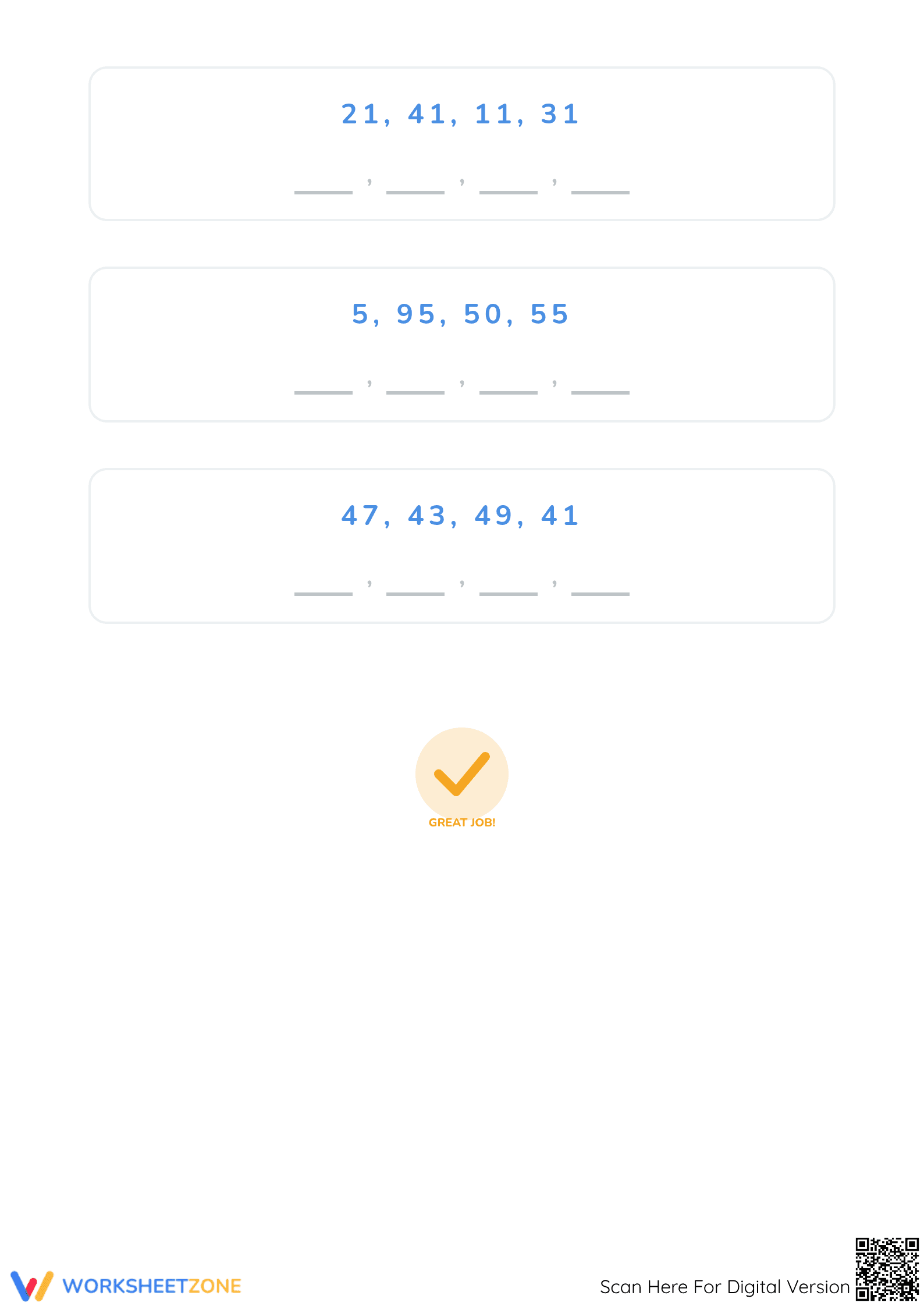
Inside this 5-page printable pack, you will find four distinct sections that guide students through the ordering process. The worksheets feature clear boxes for numerical input, intuitive instructions, and a visual layout that prevents cognitive overload. The collection includes 26 individual tasks that cover both ascending and descending order, supported by a comprehensive answer key for quick evaluation and feedback.
The zero-prep workflow is designed to maximize instructional time and minimize administrative burden. Teachers can implement this resource in three simple steps:
- Print (30 Seconds): Select the required pages from the 5-page PDF bundle based on your current lesson focus.
- Distribute (1 Minute): Hand out the sheets to students for morning work, centers, or independent practice.
- Review (30 Seconds): Use the included answer keys for rapid grading or to allow students to self-correct their work.
Total teacher preparation time is under two minutes, making this an ideal choice for emergency substitute folders or transition periods between subjects.
Standards Alignment
This resource is specifically aligned to `CCSS.MATH.CONTENT.1.NBT.B.3`, which requires students to compare two two-digit numbers based on meanings of the tens and ones digits. By extending this comparison to groups of three and four numbers, the worksheet builds the foundational logic needed for numerical fluency. This standard code can be copied directly into lesson plans, IEP goals, or district curriculum mapping tools.
How to Use It
This worksheet is most effective when used during the independent practice phase of a lesson. After a brief direct instruction on place value, assign the first two pages to verify student understanding. For students who finish early, the "Super Challenge" and "Mega Challenge" sections provide excellent extension opportunities. Use these pages as a formative assessment to observe which students still struggle with the distinction between tens and ones when comparing magnitude. Most students will complete the full sequence within 20 minutes.
Who It's For
This resource is designed for Grade 1 students working on core math standards, though it also serves as a valuable intervention tool for Grade 2 students needing a place value refresher. It pairs naturally with physical base-ten blocks or a hundreds chart to provide a concrete bridge to the abstract task of numerical ordering. Educators in inclusive classrooms will find the clear formatting supportive for students with learning differences.
This Grade 1 ordering numbers worksheet provides targeted practice for the CCSS.MATH.CONTENT.1.NBT.B.3 standard, helping students master the sequential logic of two-digit numbers. By organizing values from least to greatest and greatest to least, learners develop a robust internal number line and stronger place value fluency. According to the ScienceDirect TpT Analysis, high-quality math worksheets that balance simple three-number sets with challenging four-number sequences effectively bridge the gap between rote counting and advanced numerical comparison. This resource facilitates that transition by providing clear visual scaffolds and a logical difficulty progression. Students who engage with these structured comparison tasks show improved accuracy in identifying relative magnitude, which is a critical predictor of later success in multi-digit operations. The inclusion of comprehensive answer keys ensures immediate feedback, supporting independent student growth and streamlining the grading process for busy educators in diverse classroom settings.


