


























Views
Downloads

Ordering Numbers Mastery Worksheet | Printable Grade 1 Math
Paste this activity's link or code into your existing LMS (Google Classroom, Canvas, Teams, Schoology, Moodle, etc.).
Students can open and work on the activity right away, with no student login required.
You'll still be able to track student progress and results from your teacher account.
Ordering numbers is a foundational skill that bridges basic counting and complex algebraic thinking. This Grade 1 Math worksheet provides a robust platform for students to practice sorting numbers from 100 to 999. By engaging with these structured exercises, learners develop a stronger sense of place value and numerical magnitude, ensuring they can confidently sequence any set of digits they encounter.
At a Glance
- Grade: Grade 1 · Subject: Math
- Standard:
1.NBT.B.3— Compare and order numbers based on meanings of the digits in each place- Skill Focus: Number Sequencing & Place Value
- Format: 5 pages · 19 problems · Answer key included · PDF
- Best For: Independent practice and sequence mastery
- Time: 25–35 minutes
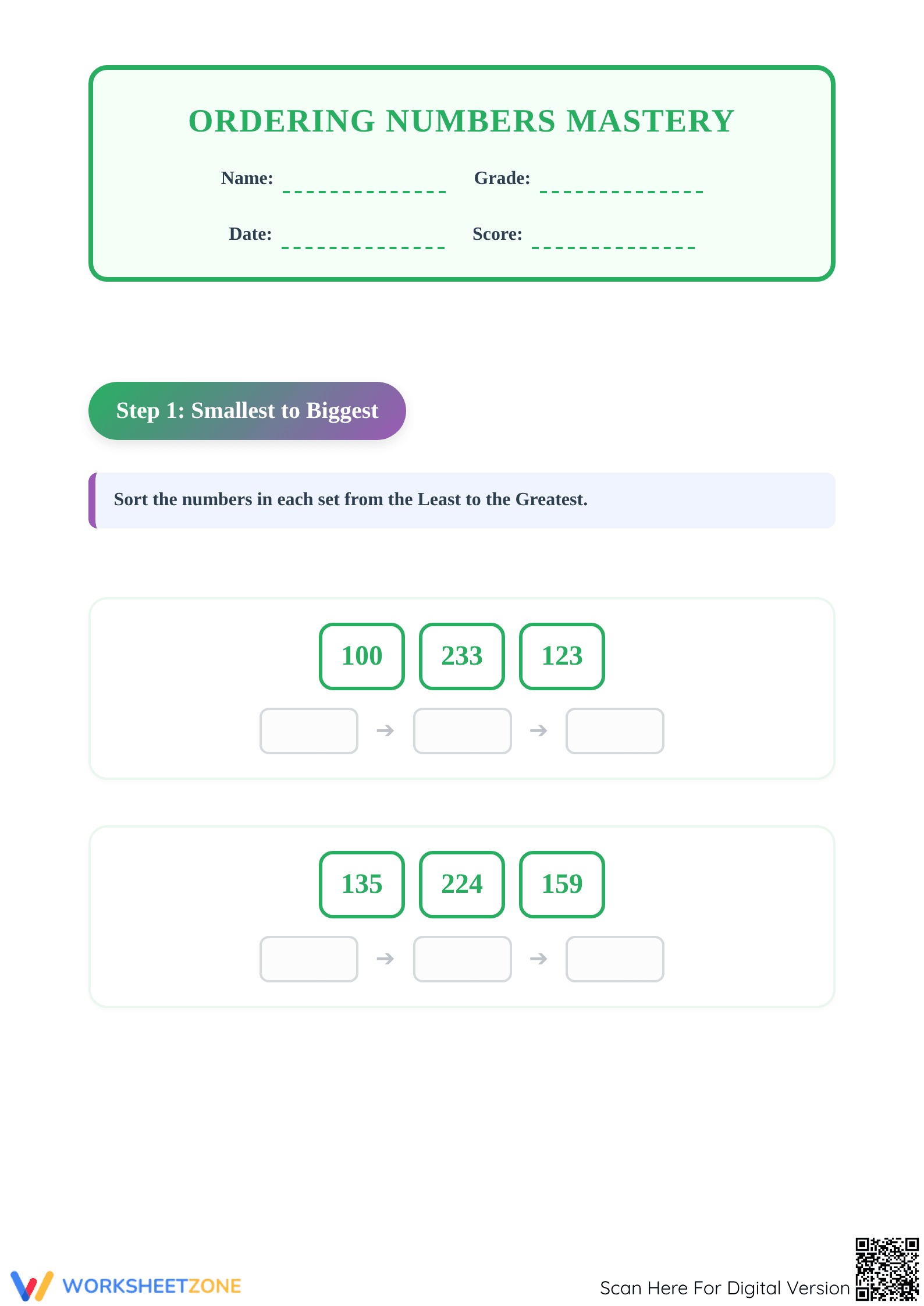
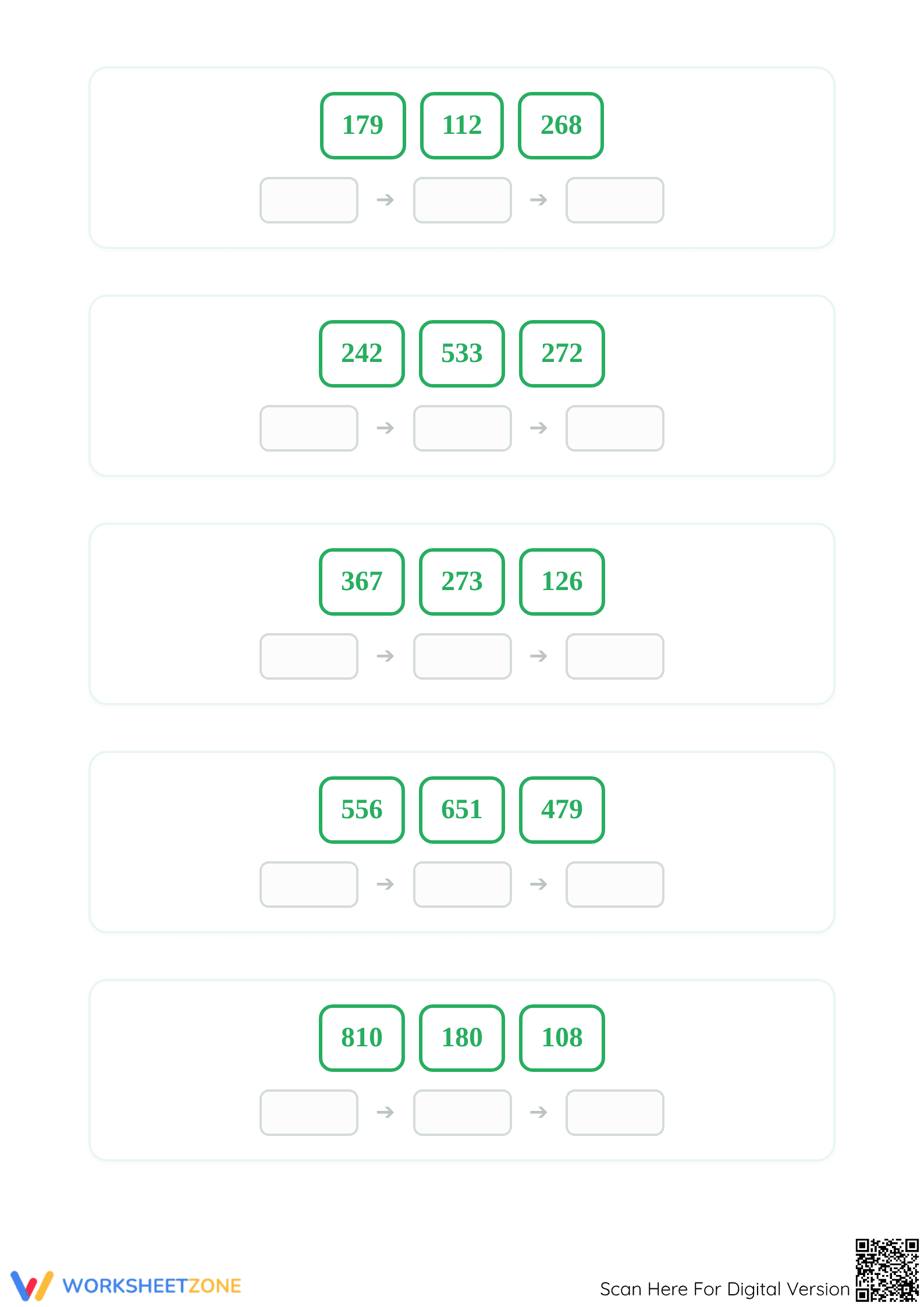
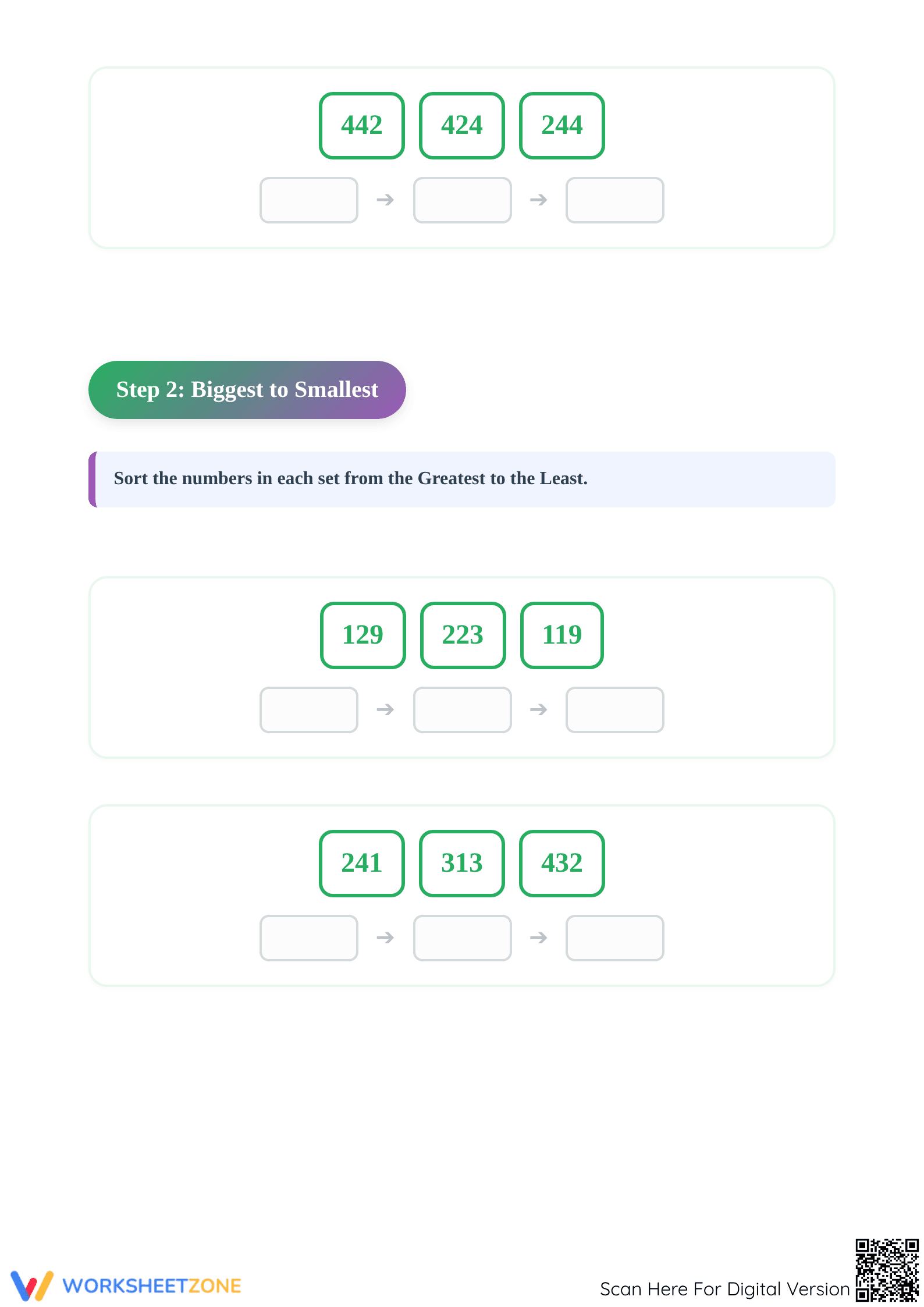
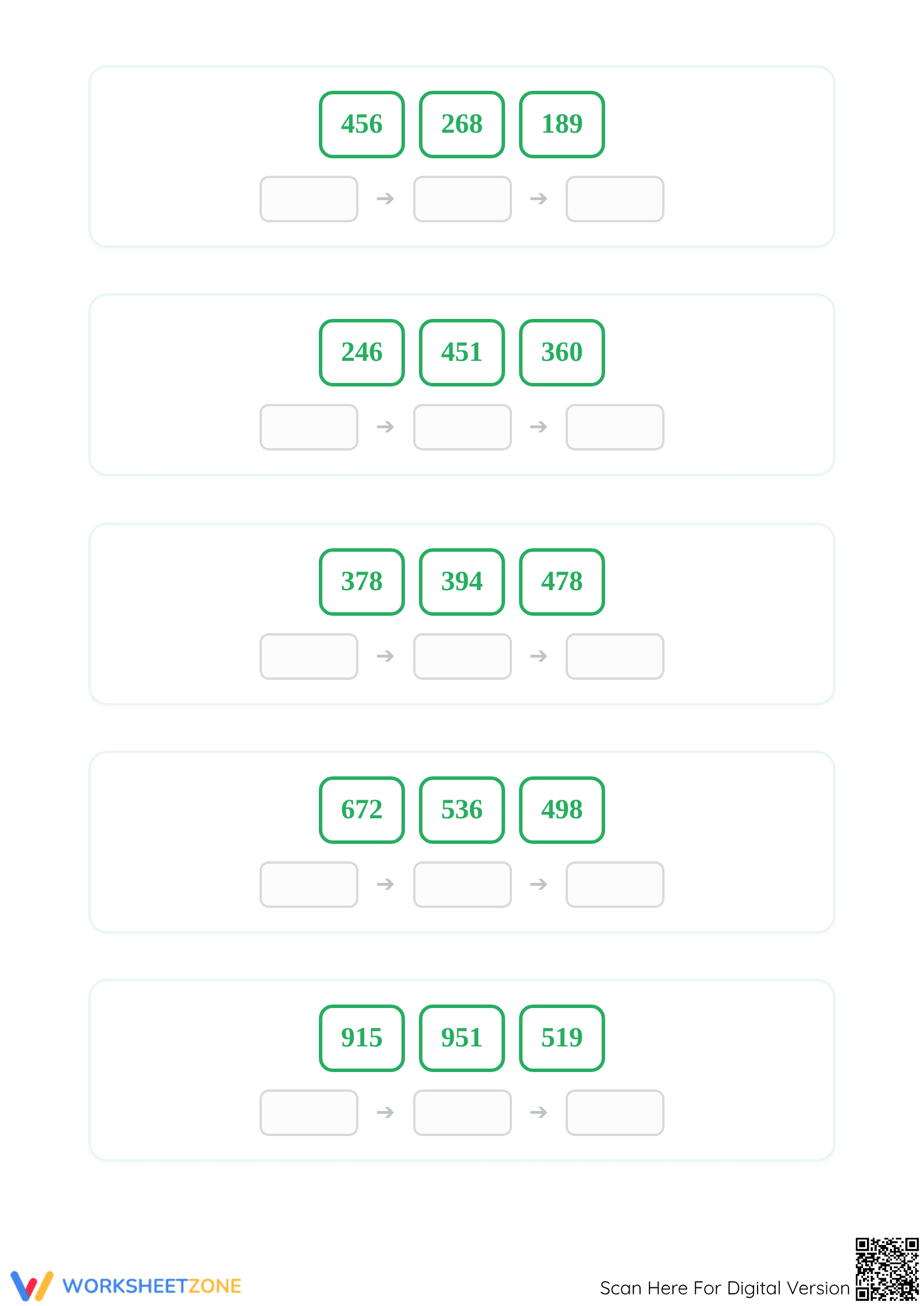
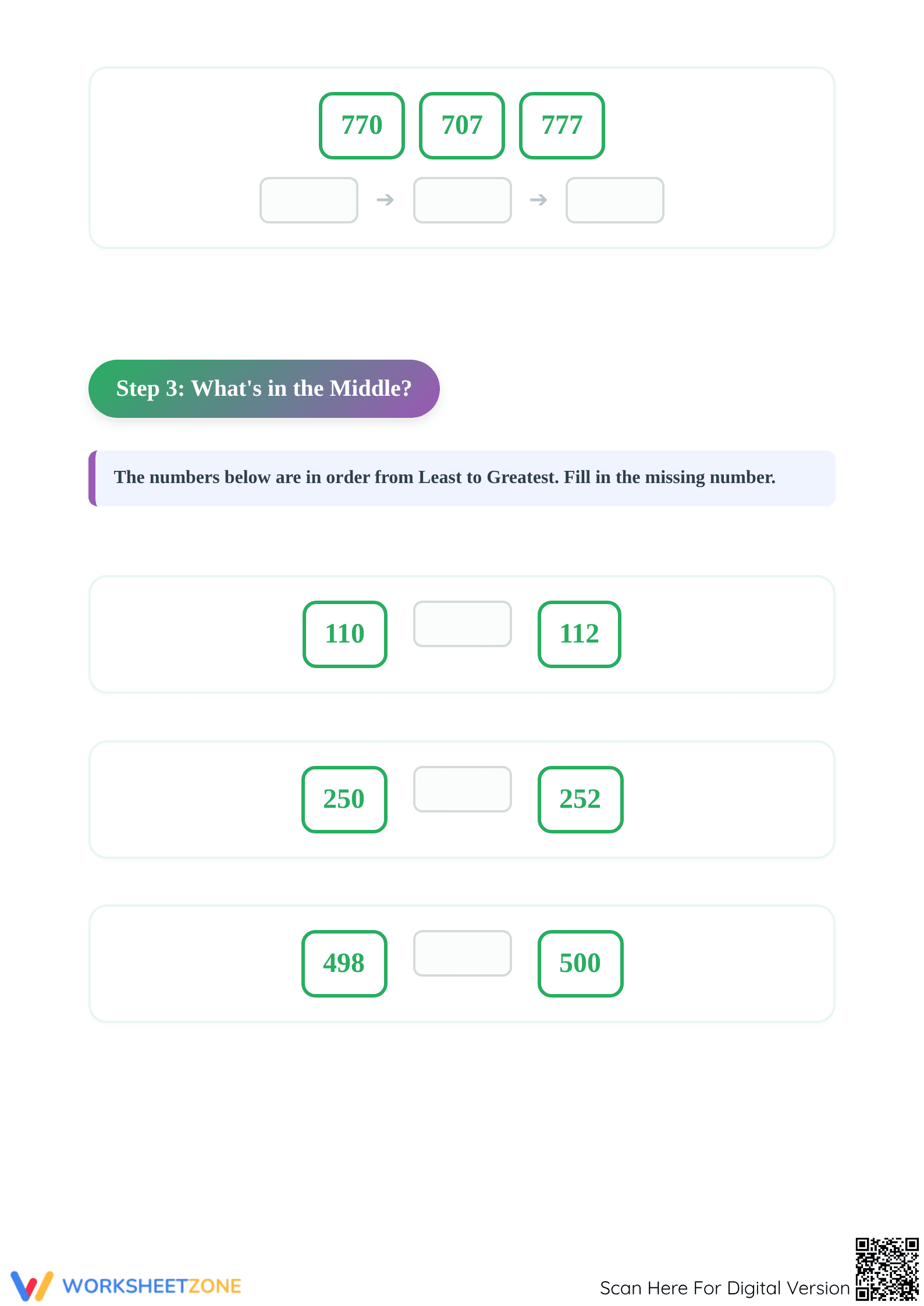
This comprehensive five-page PDF is designed to provide exhaustive practice in number ordering. The worksheet is divided into three logical steps: sorting from smallest to biggest, sorting from biggest to smallest, and identifying the missing number in a sequence. Each page features clean, high-contrast layouts with dedicated boxes for student input, making it easy for young learners to follow the flow of the tasks. A complete answer key is provided to facilitate quick grading and immediate feedback.
Skill Progression
- Guided Practice: Students begin with 8 sets of numbers to sort from least to greatest, solidifying the concept of growing sequences using familiar three-digit numbers.
- Supported Practice: Learners transition to reverse sequencing, ordering 8 sets from greatest to least, which requires a shift in perspective to identify the largest value first.
- Independent Practice: The final stage asks students to find the missing middle number in a pre-ordered sequence, a higher-order task requiring pattern recognition.
This progression ensures that students move from simple sorting to deeper conceptual understanding of numerical order and magnitude.
Standards Alignment
The primary focus of this resource is aligned with `1.NBT.B.3`, which emphasizes comparing numbers based on the meanings of the tens and ones digits. While this worksheet extends that logic to the hundreds place, it remains grounded in the Grade 1 objective of understanding relative magnitude. It also supports higher-level standards for students ready for more advanced three-digit comparisons. Both standard codes can be copied directly into lesson plans, IEP goals, or district curriculum mapping tools.
How to Use It
This worksheet is an excellent tool for during-instruction practice after a lesson on place value. Teachers can use the first page as a whole-group activity to model the thinking process before letting students work through the remaining pages independently. For a formative assessment tip, observe students as they work on Step 2; if they struggle to identify the largest number first, it may indicate a need for a refresher on identifying digits in the hundreds place.
Who It's For
This resource is tailored for Grade 1 students who have mastered basic counting and are ready to tackle 3-digit place value. It is also suitable for Grade 2 students needing a review or Grade 1 advanced learners looking for a challenge. Pair this worksheet with a physical number line to provide a visual anchor for students during the ascending sequence sections.
According to RAND AIRS 2024, structured practice in ordering numbers directly correlates with a student's ability to perform mental arithmetic and understand more complex operations like regrouping. By isolating the skill of sequencing, this worksheet allows students to focus purely on numerical magnitude without the cognitive load of simultaneous calculation. The inclusion of both ascending and descending tasks ensures that students truly comprehend the directional nature of numbers rather than just memorizing a procedure. This type of targeted, high-repetition practice is endorsed by educational frameworks as a necessary component for moving from procedural fluency to conceptual understanding. Educators can trust that the 1.NBT.B.3 alignment provides a standard-based pathway for students to demonstrate their growth in number sense and place value logic. This resource serves as a reliable bridge between basic counting and the abstract world of mathematical relationships.


