


























Views
Downloads
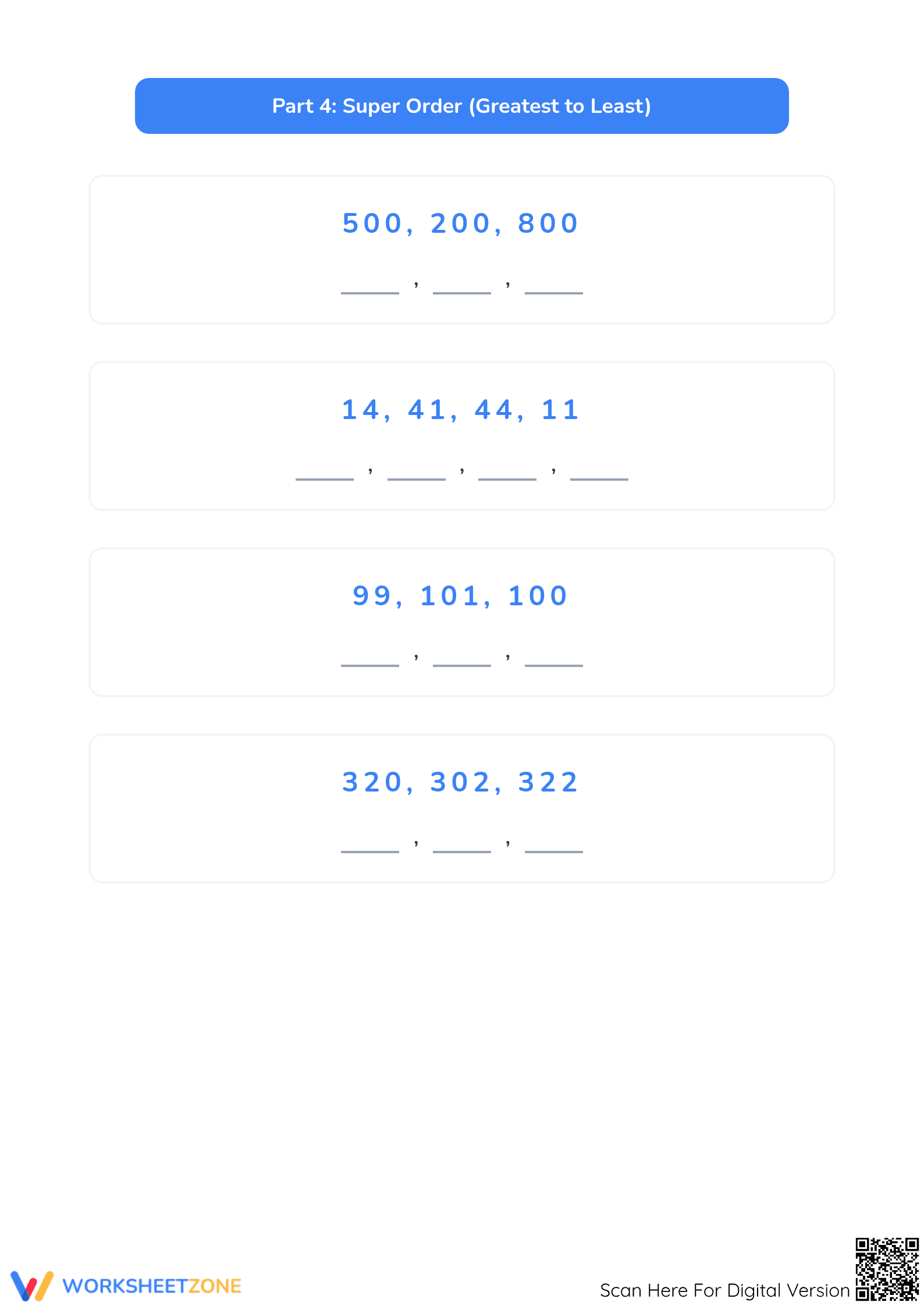

Printable Ordering Numbers Worksheet | Grade 1 Math Aligned
Paste this activity's link or code into your existing LMS (Google Classroom, Canvas, Teams, Schoology, Moodle, etc.).
Students can open and work on the activity right away, with no student login required.
You'll still be able to track student progress and results from your teacher account.
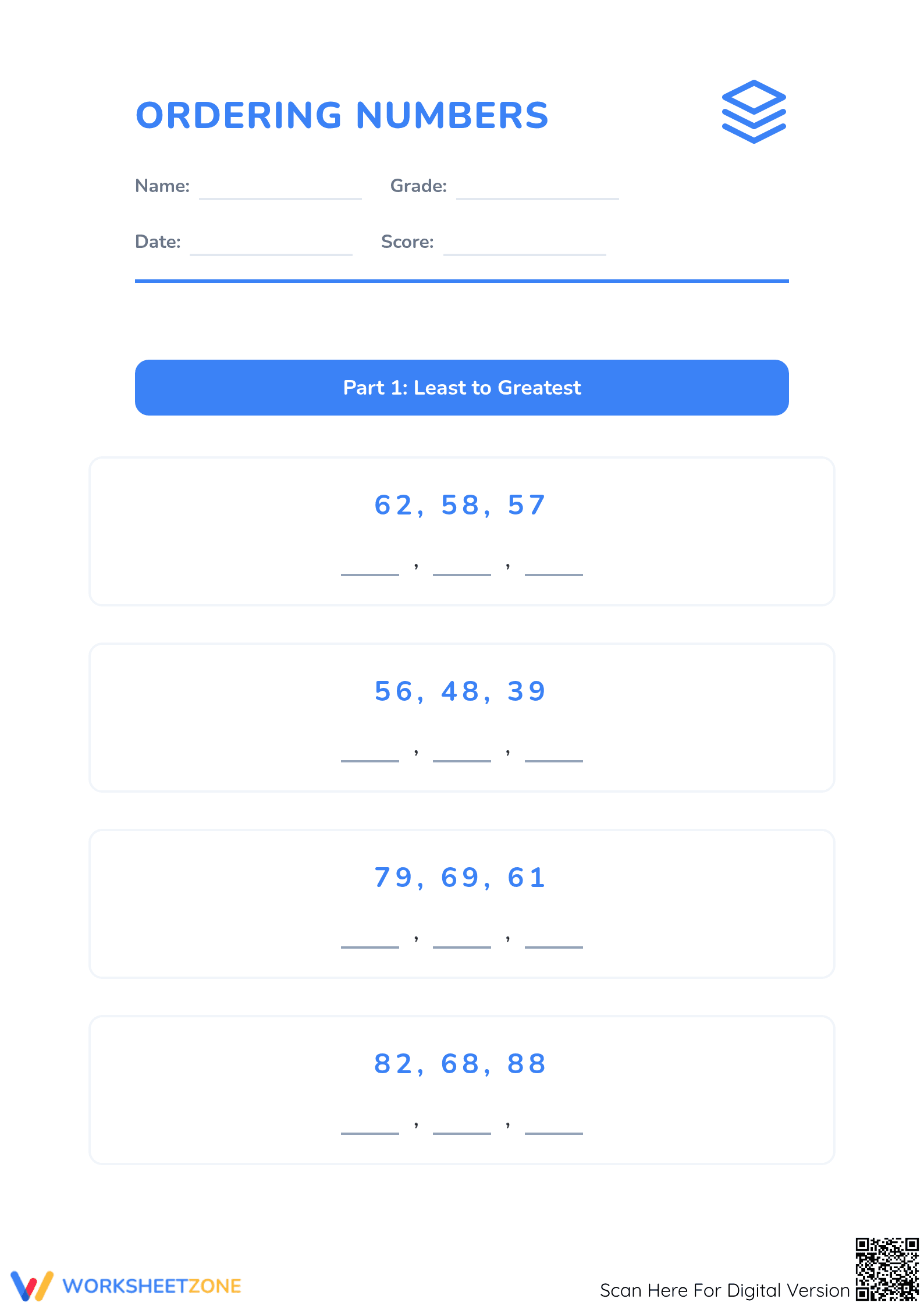
This comprehensive Grade 1 ordering numbers worksheet provides essential practice in comparing and sequencing multi-digit numbers. By organizing numerical sets from least to greatest and greatest to least, students develop a concrete understanding of place value and numerical magnitude. This resource ensures learners master the foundational logic required for advanced arithmetic operations and number sense.
At a Glance
- Grade: 1 · Subject: Math
- Standard:
1.NBT.B.3— Compare two-digit numbers based on place value meanings of tens and ones digits- Skill Focus: Ordering whole numbers (least to greatest and vice versa)
- Format: 5 pages · 24 problems · Answer key included · PDF
- Best For: Small group intervention and independent skills practice
- Time: 15–25 minutes
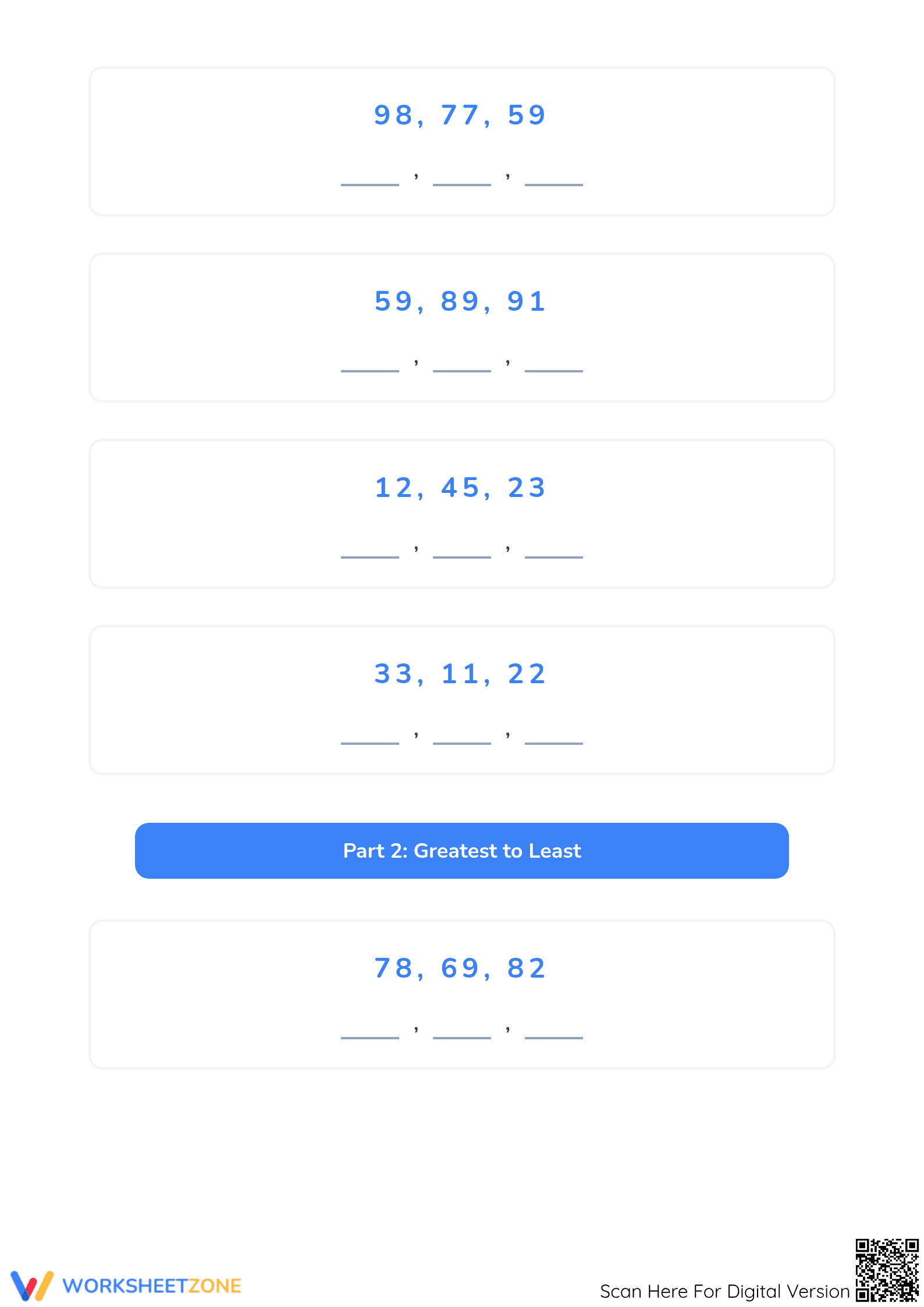
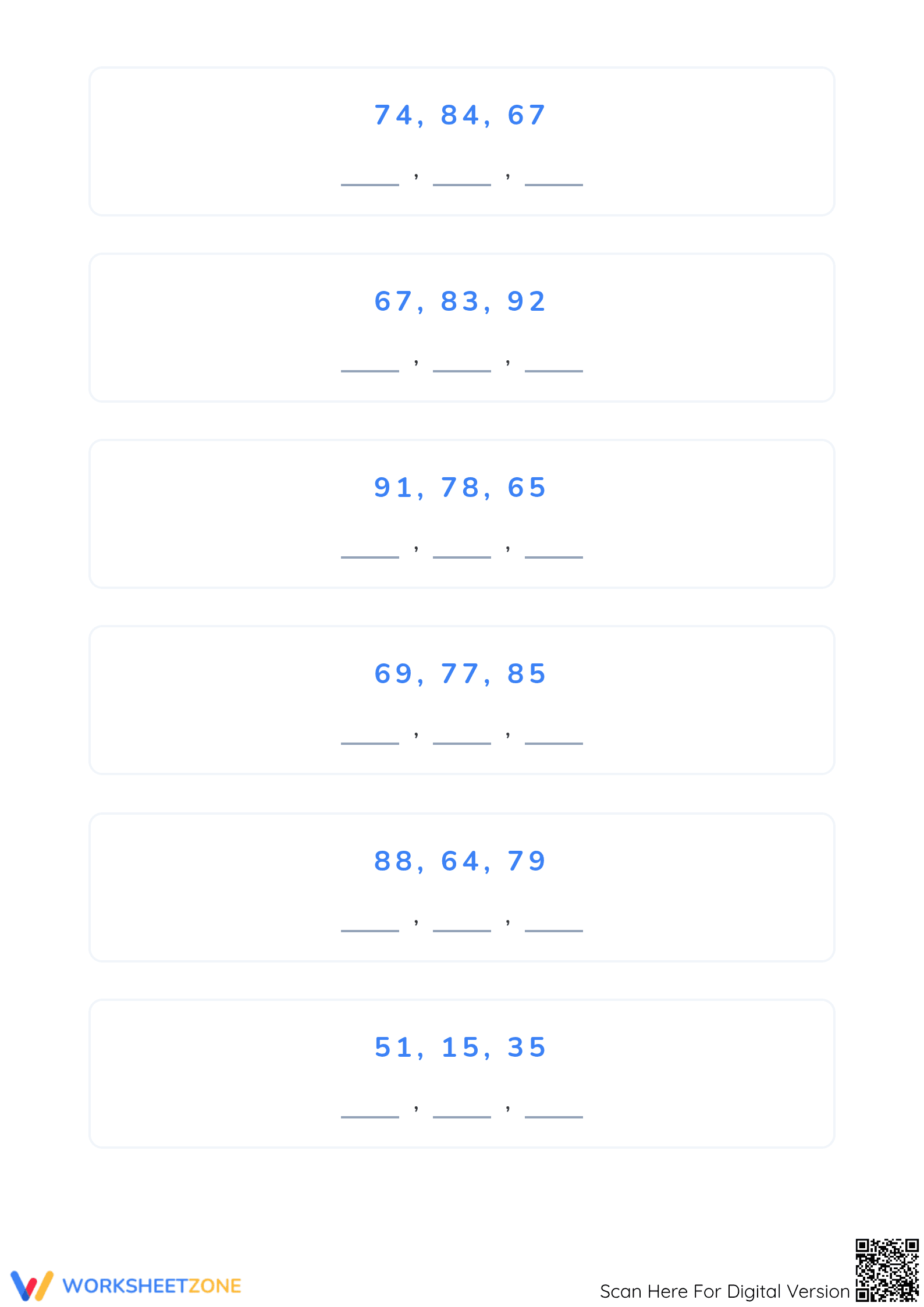
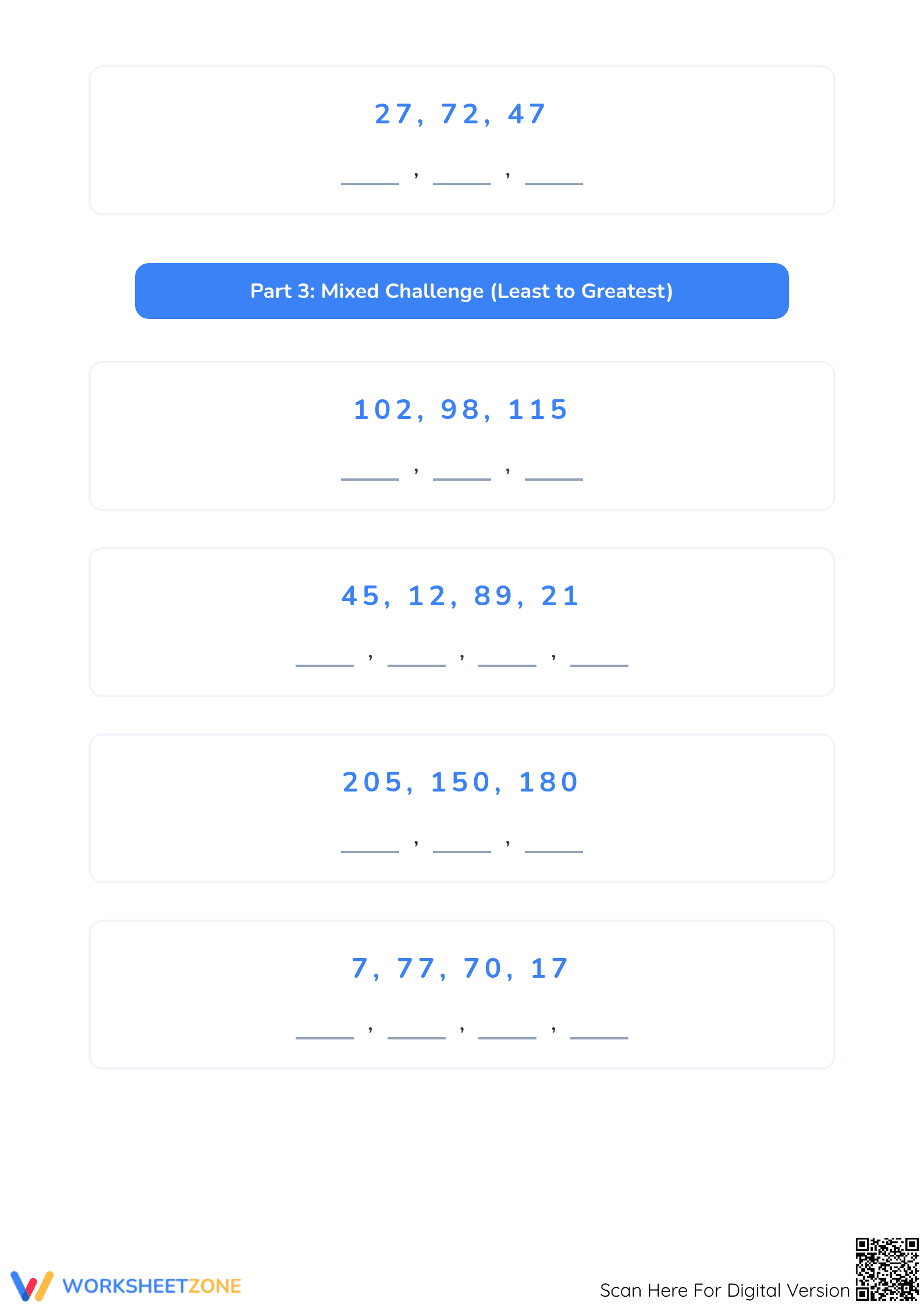
What's Inside: This packet includes five structured pages containing 24 distinct ordering tasks. The worksheet is divided into four parts, starting with basic 2-digit sets and progressing toward 3-digit sets of four numbers. A clear answer key is provided for immediate teacher feedback or student self-correction in various classroom settings.
Skill Progression
- Guided Practice: The first eight tasks focus on sets of three 2-digit numbers, allowing students to compare tens and ones with a manageable set size.
- Supported Practice: Parts 2 and 3 introduce descending order and larger numbers up to 200, challenging students to apply comparison rules across different contexts.
- Independent Practice: The "Super Order" section features 3-digit numbers up to 800, requiring high-level synthesis of place value concepts.
The curriculum follows a gradual release model, moving from predictable structures to independent challenges that require deeper analysis of number relationships.
Standards Alignment
This resource is specifically aligned to `1.NBT.B.3`, which requires students to compare two-digit numbers based on meanings of the tens and ones digits. It also introduces 2.NBT.A.4 concepts in the challenge sections for advanced learners who are ready for three-digit comparison. Both standard codes can be copied directly into lesson plans, IEP goals, or district curriculum mapping tools.
How to Use It
Assign the first two pages during a core math block to evaluate baseline understanding. For students who finish early, the "Super Order" challenge serves as an excellent enrichment activity. Observe whether students check the tens digit first; this is a key formative indicator for place value mastery. Expected completion time is 20 minutes.
Who It's For
This packet is designed for Grade 1 students but serves as a bridge for Grade 2 learners. It is easily differentiated—struggling learners can focus on Part 1 while advanced students attempt the 3-digit sets in Part 4. Pair this worksheet with a 120-chart to provide visual scaffolds during direct instruction.
Mathematics research emphasizes that the ability to order numbers is a critical predictor of later success in fractional reasoning. According to a NAEP analysis, students who struggle with numerical magnitude early often experience persistent gaps in mathematical fluency. This Grade 1 ordering numbers worksheet addresses this by providing intensive practice in the standard 1.NBT.B.3, moving students beyond rote counting into strategic comparison. By requiring students to sort both ascending and descending sets, the tasks strengthen the mental number line, a concept identified by Fisher & Frey (2014) as foundational to cognitive development in STEM. The inclusion of multi-digit challenges ensures that students do not simply memorize patterns but instead apply place value logic consistently across different numerical ranges. This systematic approach transforms abstract comparison into a concrete skill, providing the evidence-based repetition necessary for long-term retention and mastery.


