


























Views
Downloads
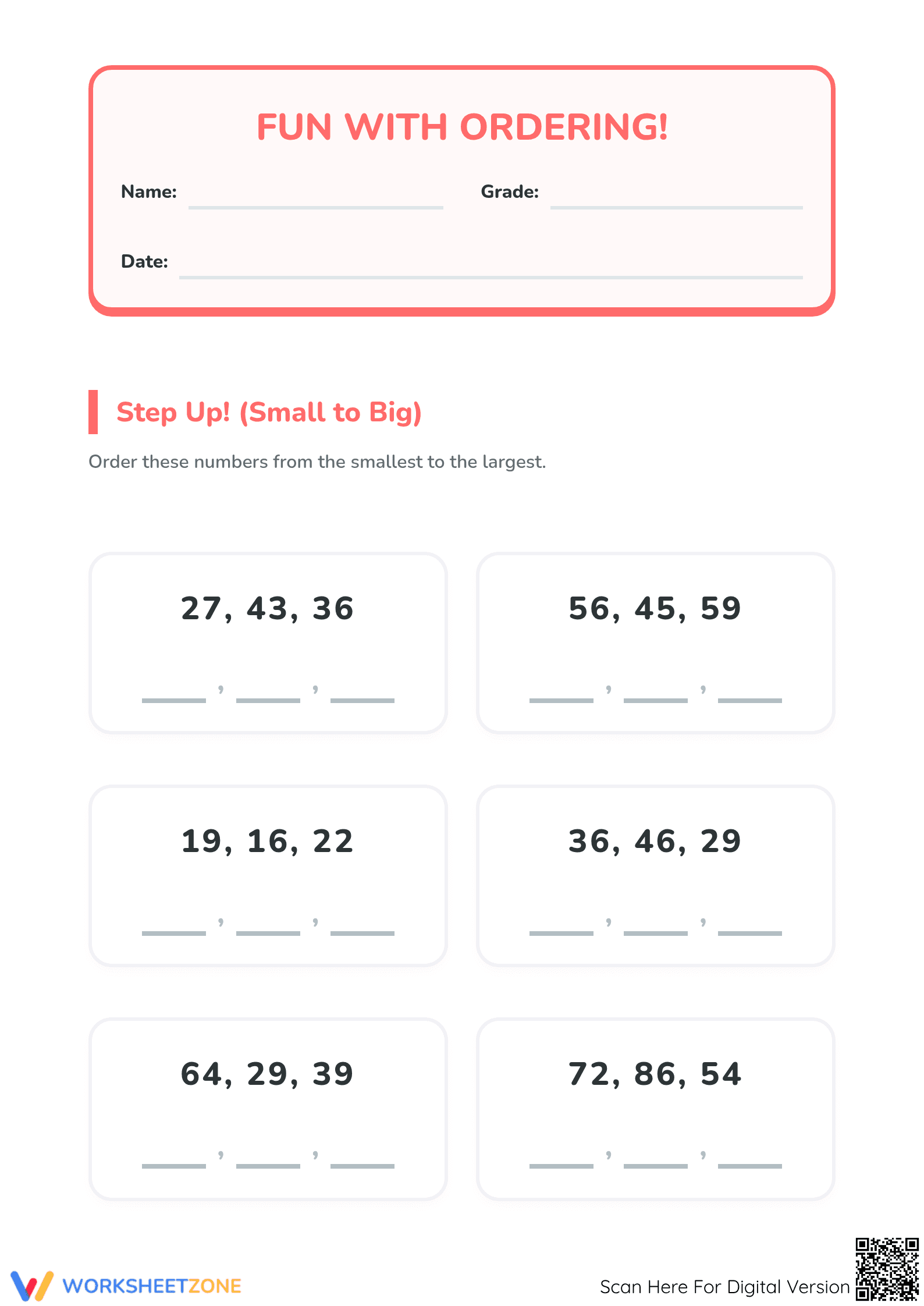
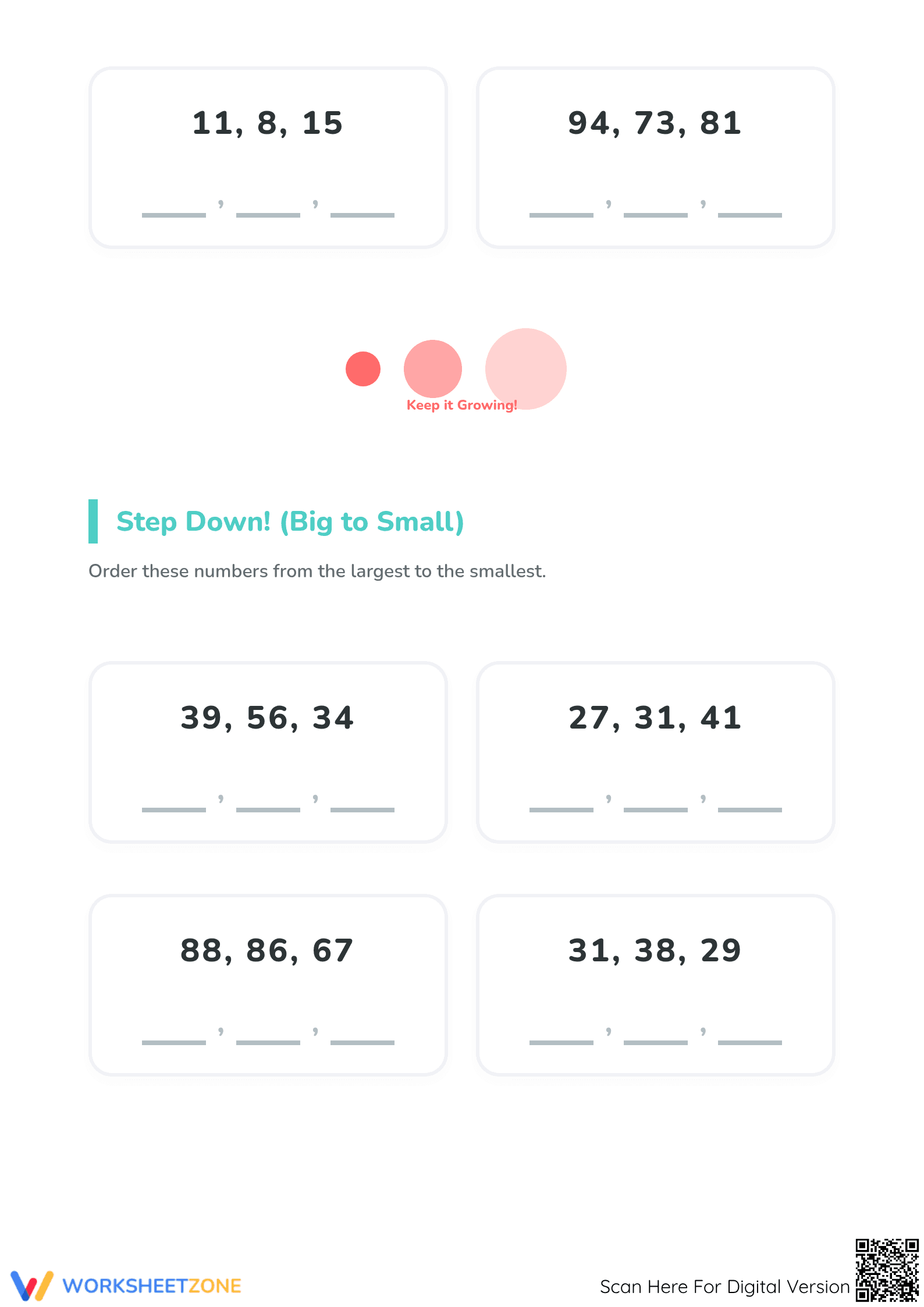
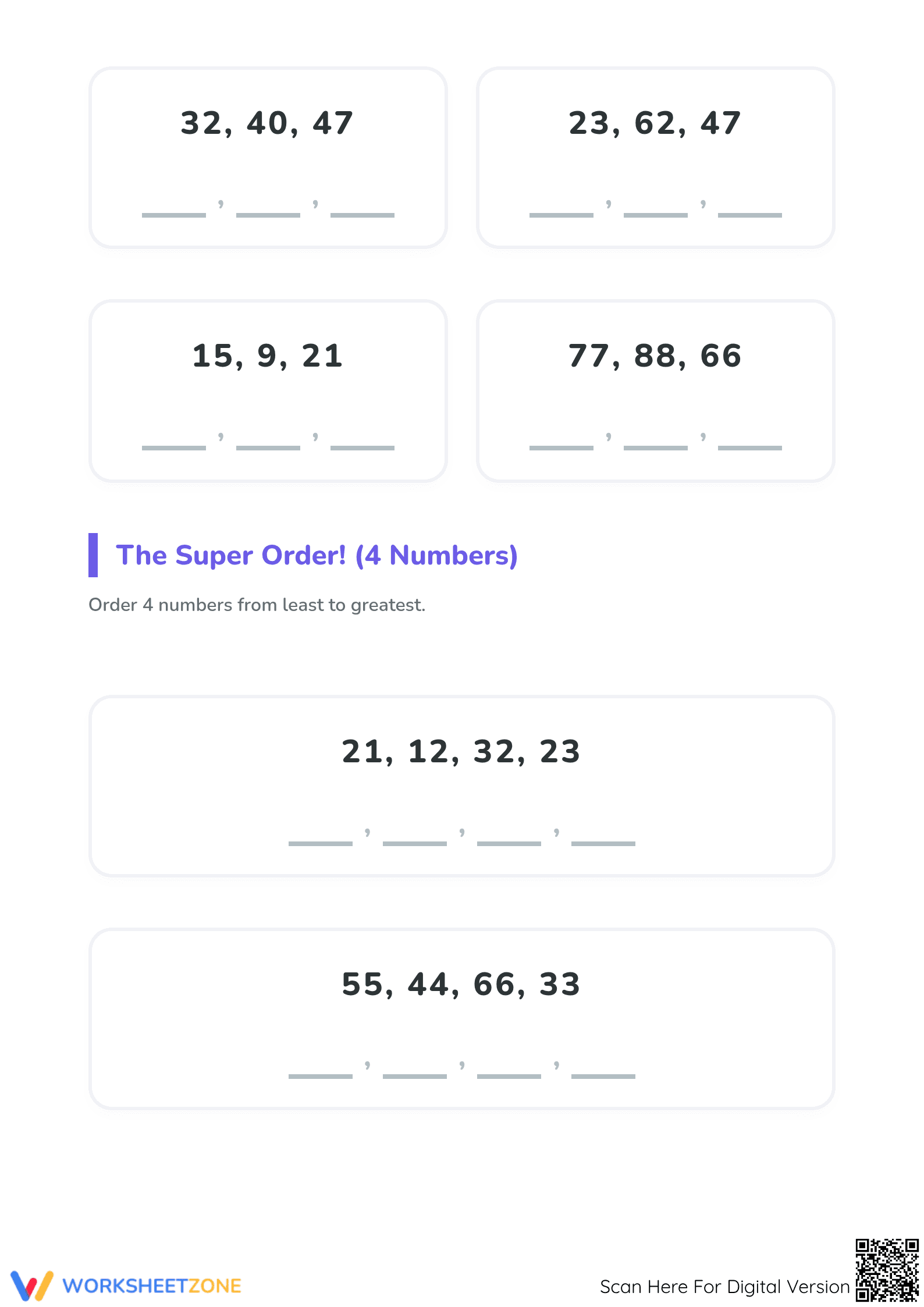
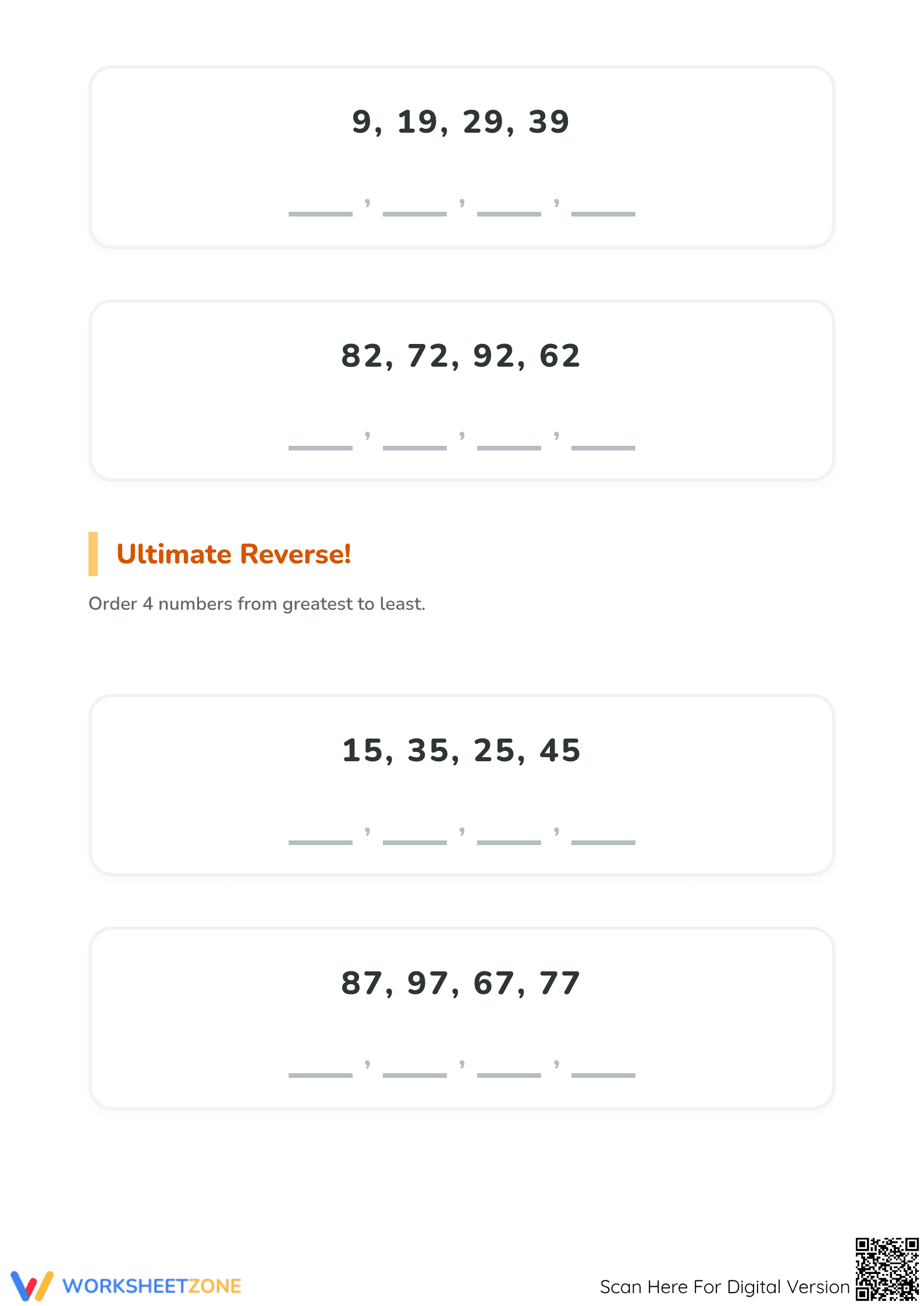


Printable Grade 1 Ordering Numbers 10 Worksheet Packet
Paste this activity's link or code into your existing LMS (Google Classroom, Canvas, Teams, Schoology, Moodle, etc.).
Students can open and work on the activity right away, with no student login required.
You'll still be able to track student progress and results from your teacher account.
This Grade 1 Math worksheet provides comprehensive practice for students to master the skill of ordering two-digit numbers. By organizing sequences from least to greatest and greatest to least, learners develop a deep understanding of place value and numerical relationships. This essential resource ensures students gain the confidence needed for advanced mathematical comparisons and operations.
At a Glance
- Grade: 1 · Subject: Math
- Standard:
CCSS.MATH.CONTENT.1.NBT.B.3— Compare two-digit numbers based on meanings of tens and ones digits- Skill Focus: Ordering numbers to 100
- Format: 5 pages · 23 problems · Answer key included · PDF
- Best For: Independent practice and math centers
- Time: 20–30 minutes
This five-page PDF packet features 23 structured problems designed to build numerical fluency. The collection includes tasks for ordering three numbers and advances to sequences of four numbers. Students practice both "Step Up" (smallest to largest) and "Step Down" (largest to smallest) logic. A full answer key is included for quick grading, and the clean layout minimizes visual distractions for young learners.
The workflow for this resource is designed for maximum teacher efficiency. First, print the five-page packet, which takes less than one minute. Distribute the worksheets to your students for immediate engagement during a math block or as a homework assignment. Finally, review the completed work using the included answer key in under two minutes. Total preparation time is minimal, making this an ideal "grab-and-go" solution for busy classrooms or unexpected substitute plans.
This resource is primary aligned to CCSS.MATH.CONTENT.1.NBT.B.3, which requires students to compare two-digit numbers based on the meanings of the tens and ones digits. By ordering multiple numbers, students apply these comparison skills repeatedly in a logical sequence. Both standard codes can be copied directly into lesson plans, IEP goals, or district curriculum mapping tools.
Use this worksheet packet during the "Independent Practice" phase of a lesson on place value. It serves as an excellent formative assessment tool; observe students as they work to identify those struggling with the transition from ordering three numbers to four. The expected completion time for the full packet is approximately 25 minutes, but it can easily be broken into smaller segments for daily warm-ups.
This collection is tailored for first-grade students but also serves as a valuable intervention for second graders needing a place-value refresher. It pairs naturally with base-ten blocks or a hundreds chart to provide visual support for learners who are still developing their number sense. Differentiation is inherent in the increasing complexity of the tasks across the five pages.
Mastering number ordering is a critical milestone in early elementary mathematics, serving as the foundation for more complex skills such as addition with regrouping and algebraic thinking. According to the RAND AIRS 2024 report, high-quality, standards-aligned practice materials like this CCSS.MATH.CONTENT.1.NBT.B.3 worksheet are essential for closing achievement gaps in foundational numeracy. The systematic progression from three-number to four-number sequences supports the cognitive development of first-grade students as they internalize the hierarchical nature of the base-ten system. By engaging with 23 targeted problems, students move beyond simple counting to a comparative understanding of magnitude. This resource provides the structured repetition necessary for students to achieve procedural fluency in ordering numbers to 100, a key indicator of future success in higher-level mathematics. Educators can confidently integrate this proven practice tool into their curriculum to ensure students meet rigorous state and national standards.


