


























Views
Downloads

Ordering Numbers Worksheet | Essential Grade 1 Math Practice
Paste this activity's link or code into your existing LMS (Google Classroom, Canvas, Teams, Schoology, Moodle, etc.).
Students can open and work on the activity right away, with no student login required.
You'll still be able to track student progress and results from your teacher account.
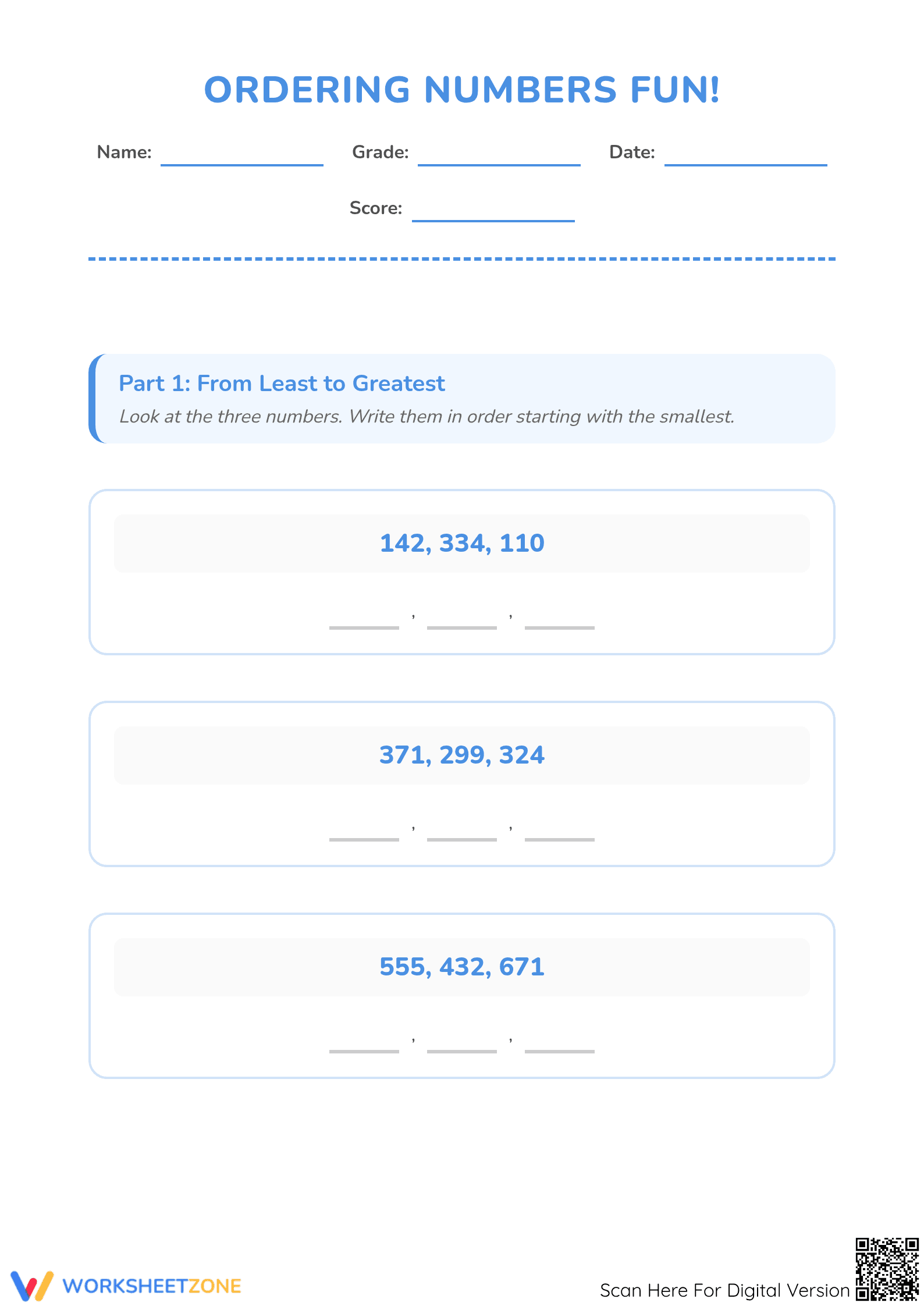
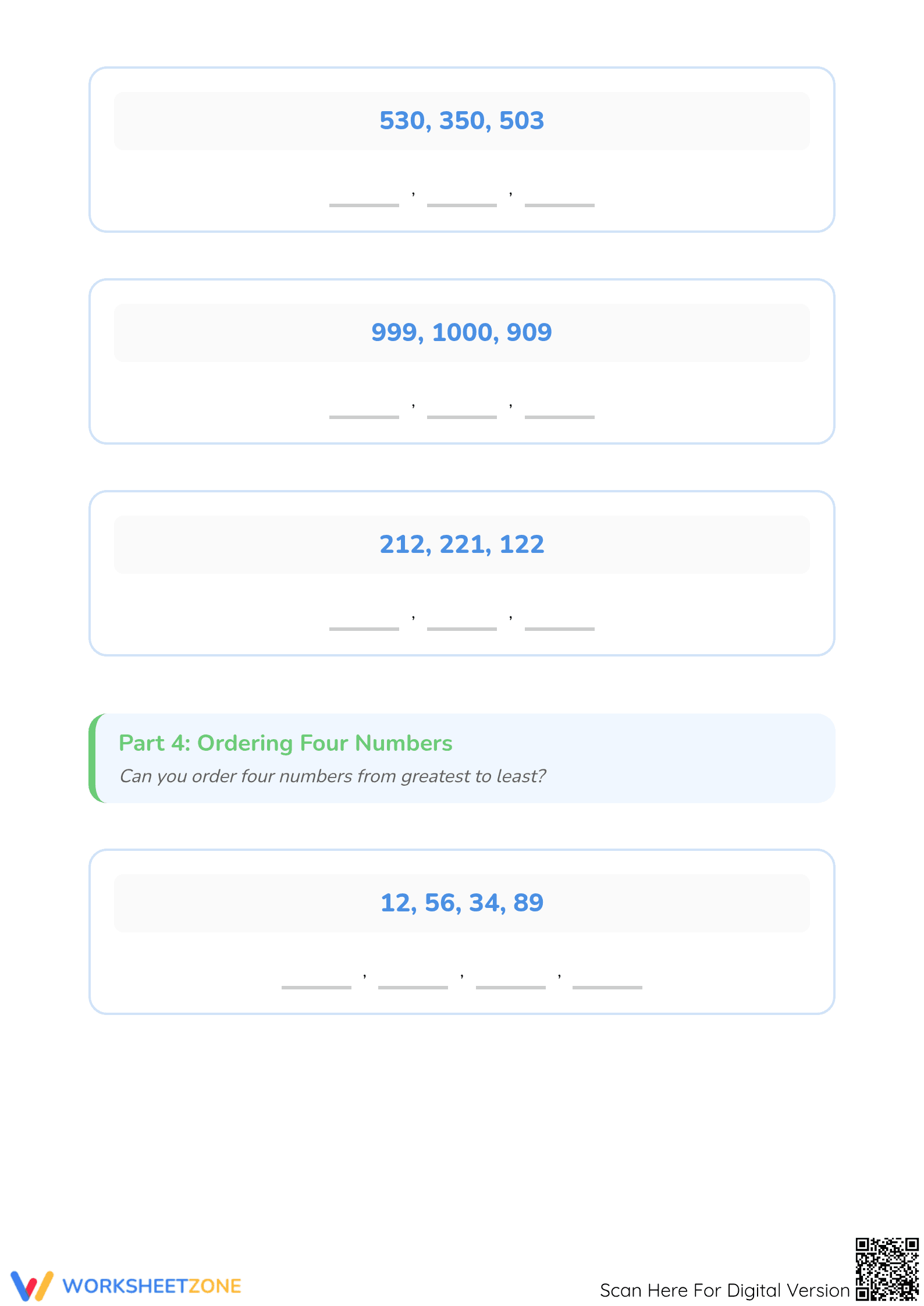
Build a rock-solid foundation in number sense with this comprehensive ordering numbers worksheet designed for first-grade learners. Students will master the critical skill of comparing three-digit values and organizing them in logical sequences. By practicing both ascending and descending order, children develop a deeper understanding of place value and numerical magnitude, ensuring they are prepared for more complex mathematical operations.
At a Glance
- Grade: 1 · Subject: Math
- Standard:
1.NBT.B.3— Compare numbers using place value to determine relative order and magnitude- Skill Focus: Ordering sets of three and four numbers
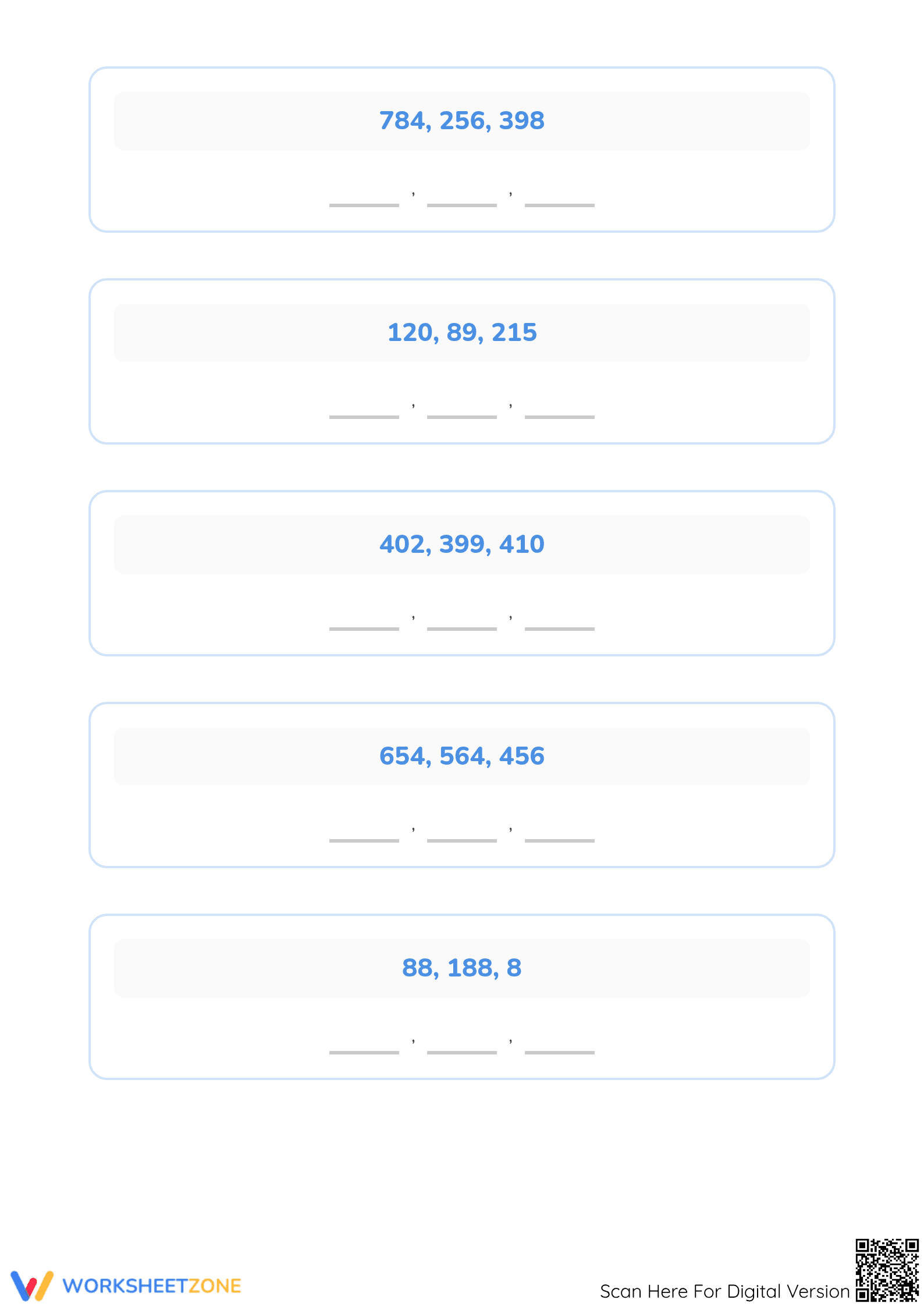
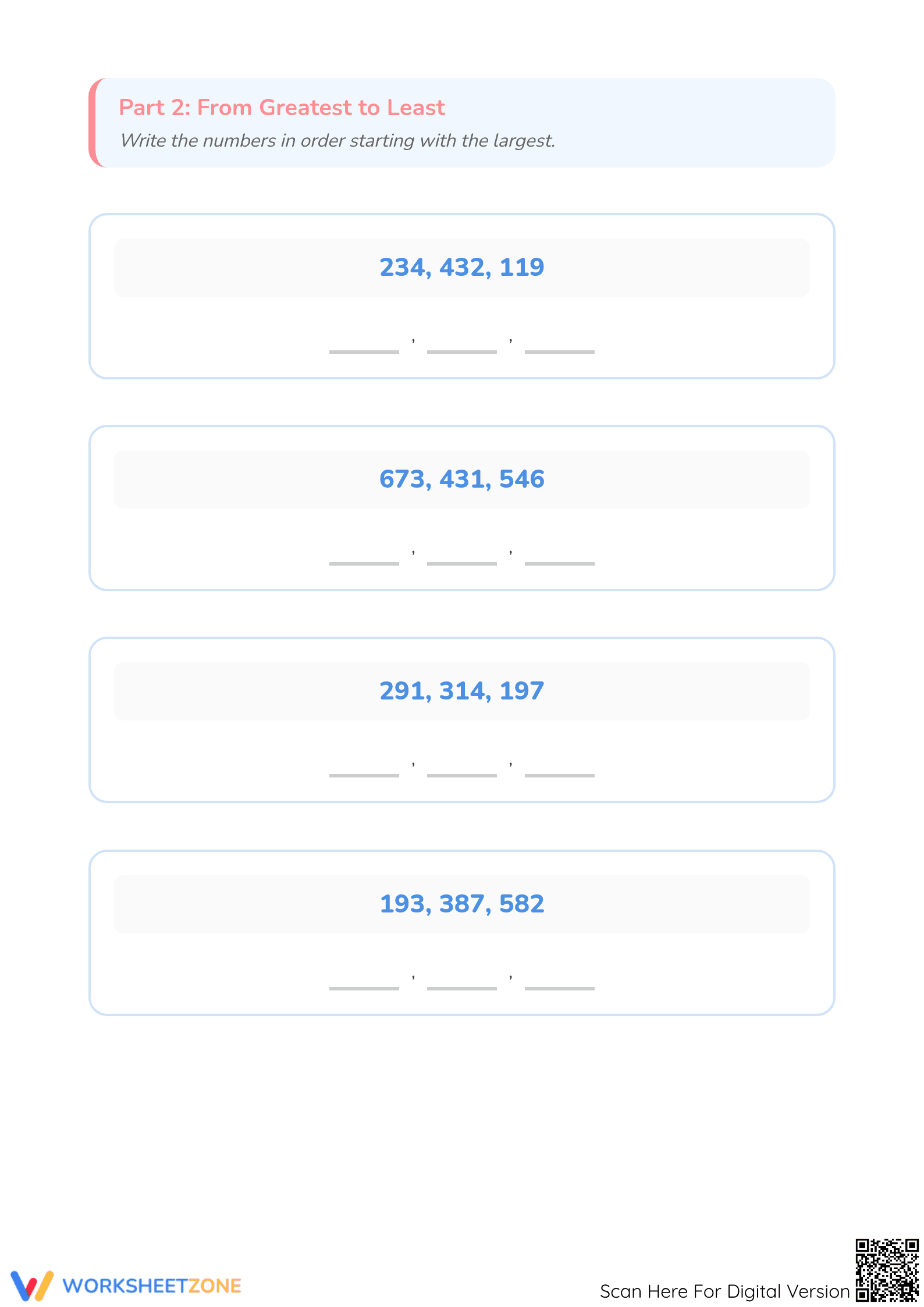
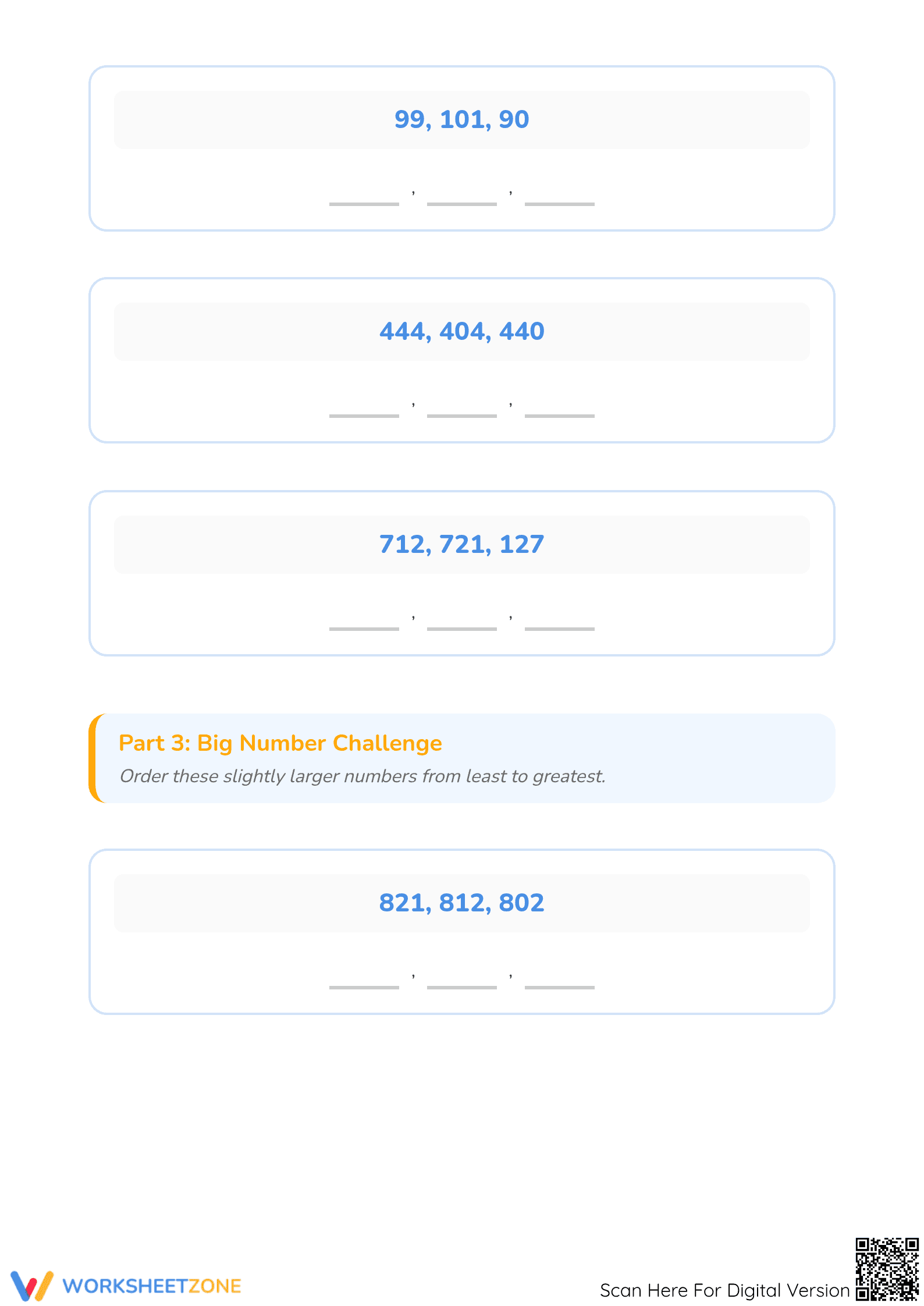
- Format: 5 pages · 20 problems · Answer key included · PDF
- Best For: Independent practice and place value reinforcement
- Time: 20–30 minutes
This classroom-ready resource features a clean, distraction-free layout across five high-quality pages. Inside, you will find 20 structured tasks that challenge students to analyze groups of numbers and rearrange them correctly. The packet includes a full answer key, making it ideal for self-correction or quick teacher grading. Its incremental design ensures that students remain engaged as they move from basic three-number sets to more challenging four-number sequences.
Skill Progression
- Guided Practice: The first section introduces eight tasks where students order three numbers from least to greatest, using clear visual cues to support initial place value comparisons.
- Supported Practice: Students then transition to seven tasks requiring them to order numbers from greatest to least, reinforcing the inverse relationship of numerical sequencing.
- Independent Practice: The final five tasks include a "Big Number Challenge" and four-number sets, requiring students to apply their comparison skills to larger values and longer sequences.
This structured sequence follows the gradual-release model, moving from basic identification to higher-order application of place value principles.
Standards Alignment
This worksheet primarily aligns with 1.NBT.B.3, focusing on comparing two-digit numbers. While it offers a challenge by extending to three-digit numbers, it remains rooted in first-grade place value standards. This code can be copied into lesson plans, IEP goals, or curriculum mapping tools.
How to Use It
Ideal for independent practice after a direct lesson on comparing numbers. Observe students during the "Big Number Challenge" for insights into struggles with place value. Expected completion: 20-30 minutes.
Who It's For
Designed for Grade 1, this also serves as an intervention for Grade 2 learners needing place value support, or enrichment for advanced Kindergarten students. It pairs well with base-ten blocks or hundred-chart tools.
Systematic practice in number comparison is crucial for long-term arithmetic fluency. This worksheet provides repetitive yet varied engagement with numerical sequences, improving mental number line internalisation. By practicing both least-to-greatest and greatest-to-least, students generalize the skill of ordering numbers under 1.NBT.B.3 rather than memorizing. Early mastery reduces cognitive load for multi-digit addition and subtraction. The challenge section bridges to 2nd-grade place value expectations.


