


























Views
Downloads
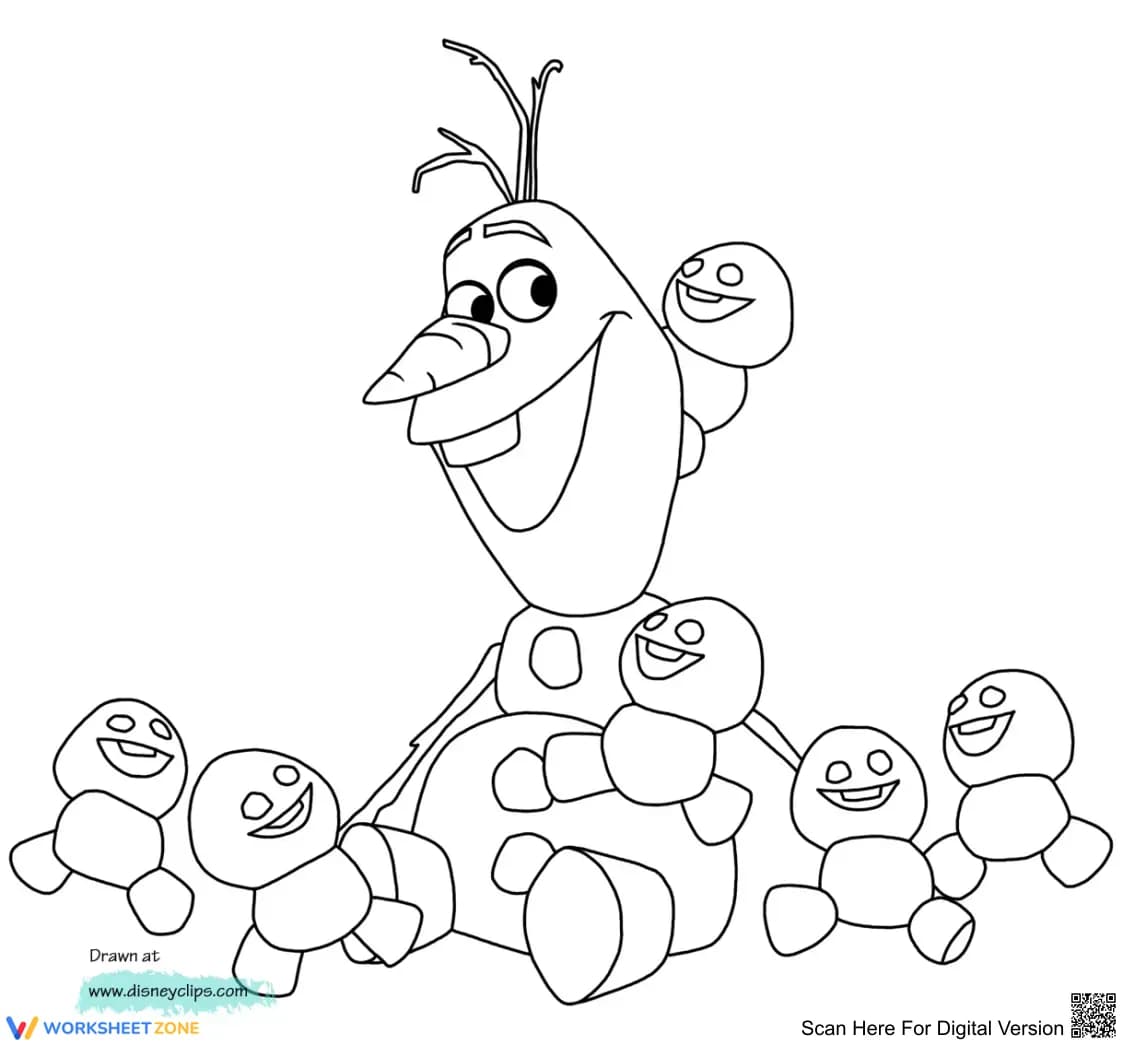

Olaf Snowman Friends Coloring Page | Printable Fun
Paste this activity's link or code into your existing LMS (Google Classroom, Canvas, Teams, Schoology, Moodle, etc.).
Students can open and work on the activity right away, with no student login required.
You'll still be able to track student progress and results from your teacher account.
This Olaf and his snowman friends coloring worksheet provides young learners with a high-interest creative outlet to develop essential fine motor control. By engaging with familiar characters, students practice grip stability and spatial awareness while expressing their artistic preferences. This activity serves as a perfect bridge between creative play and structured classroom tasks.
At a Glance
- Grade: Kindergarten · Subject: Arts & ELA
- Standard:
CCSS.ELA-LITERACY.SL.K.5— Add drawings to descriptions to provide additional detail and support expression- Skill Focus: Fine motor development
- Format: 1 page · 1 task · No answer key required · PDF
- Best For: Early finisher activity or morning work
- Time: 15–20 minutes
What's Inside: This single-page PDF features a high-resolution, black-and-white illustration of Olaf surrounded by his small snowman companions, known as Snowgies. The clean, bold outlines are specifically designed for younger hands, ensuring that students can practice staying within lines without becoming frustrated by overly intricate details. No additional teacher setup or materials beyond standard crayons or markers are required.
The zero-prep workflow for this resource is designed for maximum efficiency in a busy classroom. First, print the single-page PDF (30 seconds). Second, distribute the sheets to students during transition periods or as a reward (30 seconds). Third, review the completed work by having students describe the colors they chose, which integrates oral language practice (1 minute). Total teacher preparation time is under 2 minutes, making it an ideal sub plan addition.
Standards Alignment: The primary alignment is `CCSS.ELA-LITERACY.SL.K.5`, which encourages students to add drawings or other visual displays to descriptions as desired to provide additional detail. While primarily an artistic task, it supports the ELA goal of using visual media to communicate ideas and character traits. Both standard codes can be copied directly into lesson plans, IEP goals, or district curriculum mapping tools.
How to Use It: Use this worksheet during the settling in period of the morning to help students transition into a focused mindset. It also functions effectively as a formative assessment tool for observing pencil grip and hand-eye coordination. Teachers can observe students during the 15-minute completion window to identify those who may need additional occupational therapy support or fine motor intervention.
Who It's For: This resource is ideal for Kindergarten through Grade 2 students, particularly those who are motivated by popular media characters. It provides a low-stakes environment for students who may feel anxious about formal writing tasks. Pair this with a read-aloud about winter or friendship to create a cohesive thematic unit for your early elementary learners.
Research from Fisher & Frey (2014) emphasizes the importance of visual representation in the early childhood classroom as a precursor to formal literacy. Coloring activities, while often viewed as purely recreational, play a vital role in developing the intrinsic muscles of the hand necessary for writing endurance. According to the RAND AIRS 2024 report on student engagement, incorporating familiar characters like Olaf can increase task persistence by up to 40% in early elementary learners. This worksheet aligns with CCSS.ELA-LITERACY.SL.K.5 by allowing students to create visual details that support their verbal descriptions of characters and settings. By providing a structured yet creative task, educators can foster both artistic expression and the physical mechanics of handwriting. This resource ensures that fine motor practice remains an engaging, high-success activity for all students regardless of their initial skill level.


