


























Views
Downloads


Octopus Reading Comprehension | Essential Grade 3-5 ELA
Paste this activity's link or code into your existing LMS (Google Classroom, Canvas, Teams, Schoology, Moodle, etc.).
Students can open and work on the activity right away, with no student login required.
You'll still be able to track student progress and results from your teacher account.
This Grade 3 reading comprehension worksheet provides a focused exploration of the octopus, helping students master informational text analysis. By engaging with a high-interest sea animal topic, learners practice extracting specific details and making logical connections. The structured format ensures students achieve clear outcomes in reading accuracy and retention.
At a Glance
- Grade: 3 · Subject: ELA
- Standard:
CCSS.ELA-LITERACY.RI.3.1— Ask and answer questions to demonstrate understanding by referring to the text- Skill Focus: Literal recall and informational reading
- Format: 3 pages · 10 problems · Answer key included · PDF
- Best For: Independent practice or sub plans
- Time: 20–30 minutes
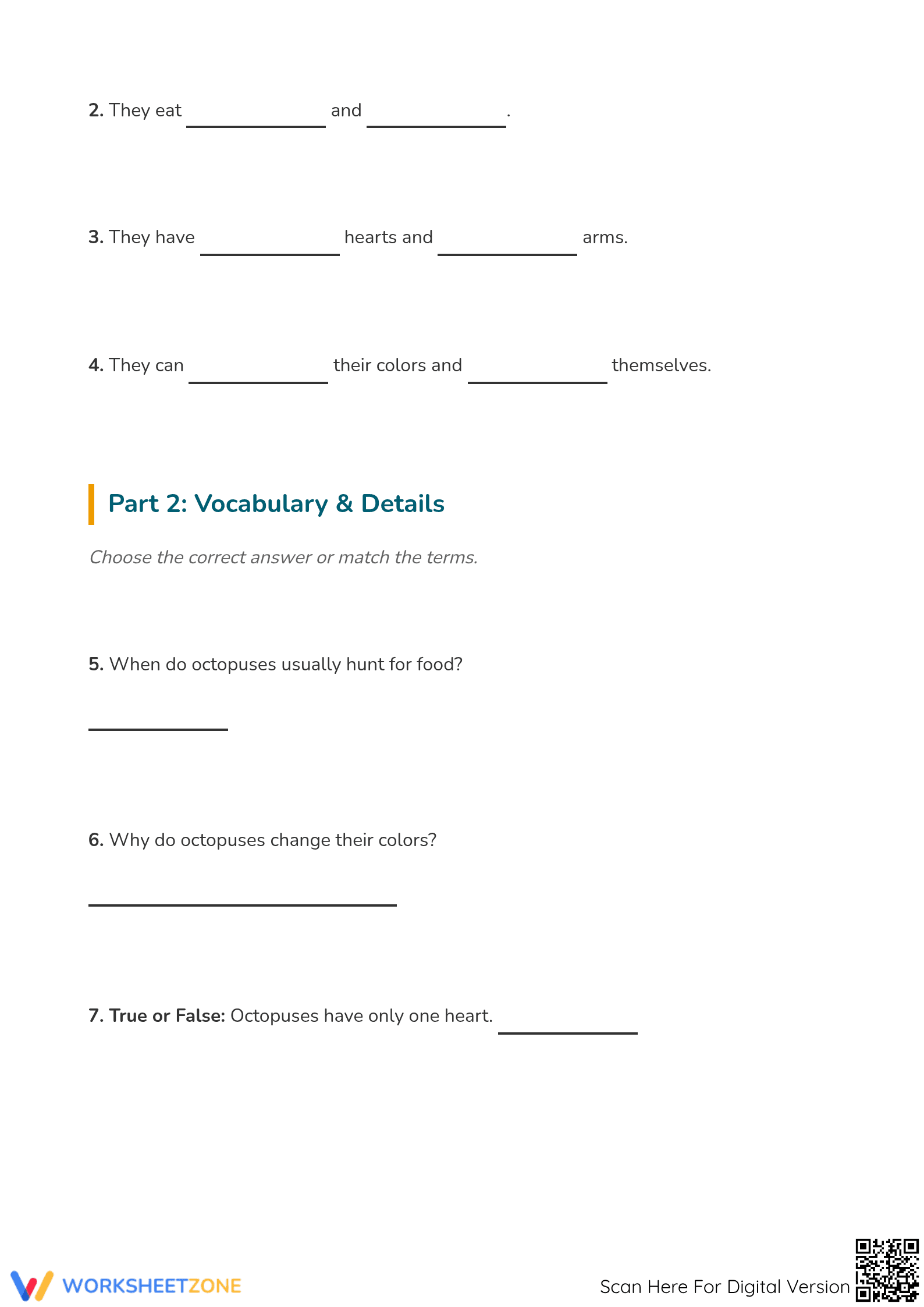
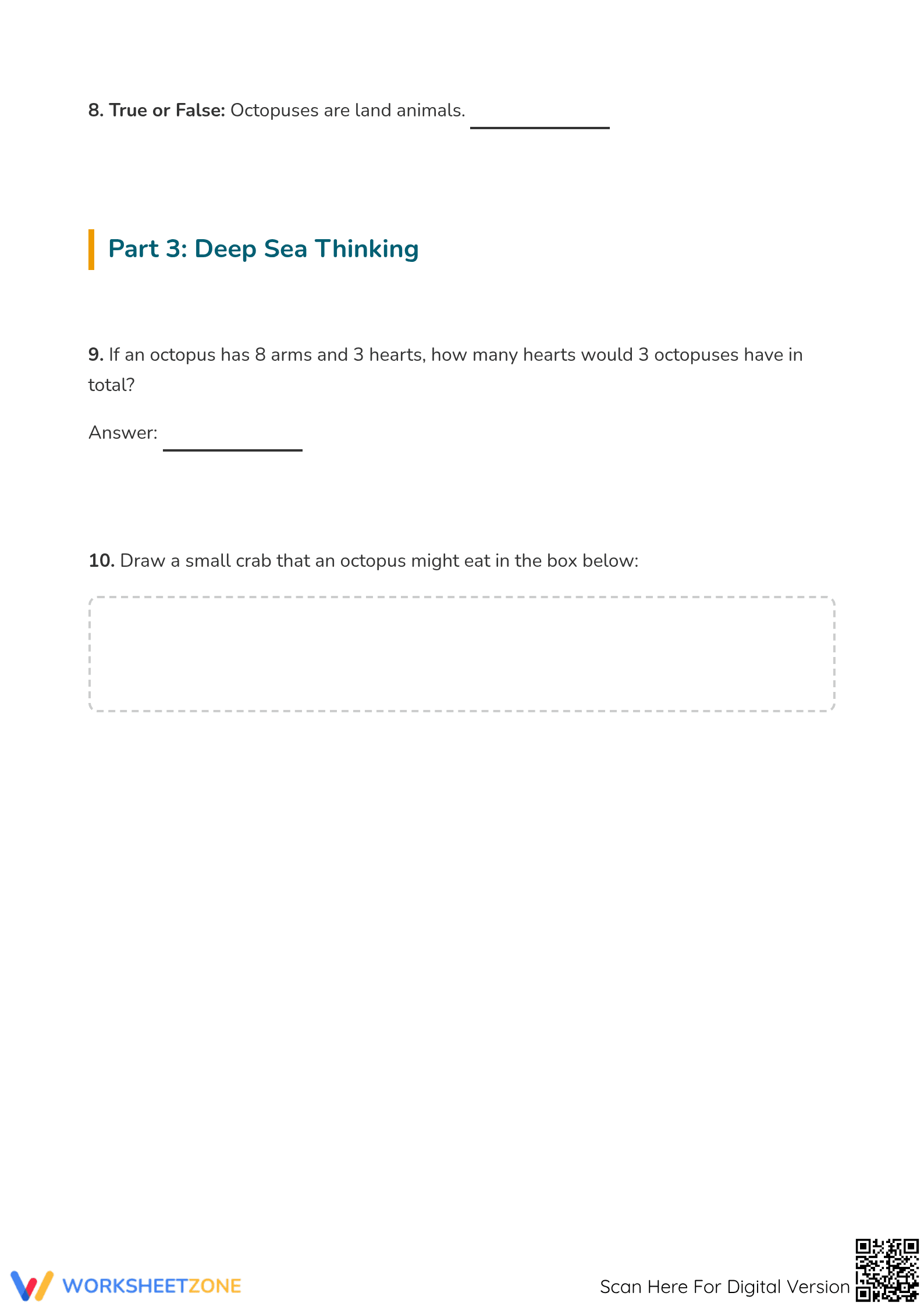
The packet contains a three-page instructional sequence featuring a concise informational passage about octopus biology and behavior. It includes 10 diverse tasks: four fill-in-the-blank sentences for vocabulary reinforcement, two short-answer questions for detail extraction, two true/false statements, a cross-curricular math logic problem, and a creative drawing prompt. A full answer key is provided for immediate feedback.
Zero-Prep Workflow
- Print: Generate the three-page PDF in under 30 seconds.
- Distribute: Hand out to students for immediate engagement; no background lecture required.
- Review: Use the included answer key to grade or peer-review in less than 1 minute.
This resource is designed for a two-minute teacher setup, making it an ideal solution for emergency sub plans or morning work.
Standards Alignment
The primary focus is CCSS.ELA-LITERACY.RI.3.1: "Ask and answer questions to demonstrate understanding of a text, referring explicitly to the text as the basis for the answers." It also supports RI.3.4 by introducing domain-specific vocabulary like "shellfish" and "camouflage." Both standard codes can be copied directly into lesson plans, IEP goals, or district curriculum mapping tools.
How to Use It
Assign this worksheet during the independent practice phase of a lesson on informational text features. It serves as an excellent formative assessment to see if students can locate specific facts within a paragraph. Expect completion within 20 to 30 minutes, depending on the student's reading speed and the depth of their drawing in the final task.
Who It's For
This resource is tailored for Grade 3 students but remains accessible for Grade 4 and 5 learners needing reading intervention. It pairs naturally with a science unit on marine biology or a classroom library book about ocean habitats. The clear font and segmented parts support students who benefit from chunked information.
Research by Fisher & Frey (2014) emphasizes that close reading of short, complex informational texts is vital for developing literacy stamina in elementary learners. This worksheet applies these principles by requiring students to return to the text to answer 10 specific questions, including literal recall and basic inference. By integrating a cross-curricular logic problem, the material aligns with NAEP recommendations for interdisciplinary literacy application. The use of high-interest topics like sea animals has been shown to increase engagement and time-on-task for developing readers. This resource provides the necessary scaffolding to meet CCSS.ELA-LITERACY.RI.3.1 while maintaining a low-barrier entry point for students. Educators can rely on this structured approach to verify that students are not just reading, but actively processing informational content for specific evidence-based outcomes.


