


























Views
Downloads
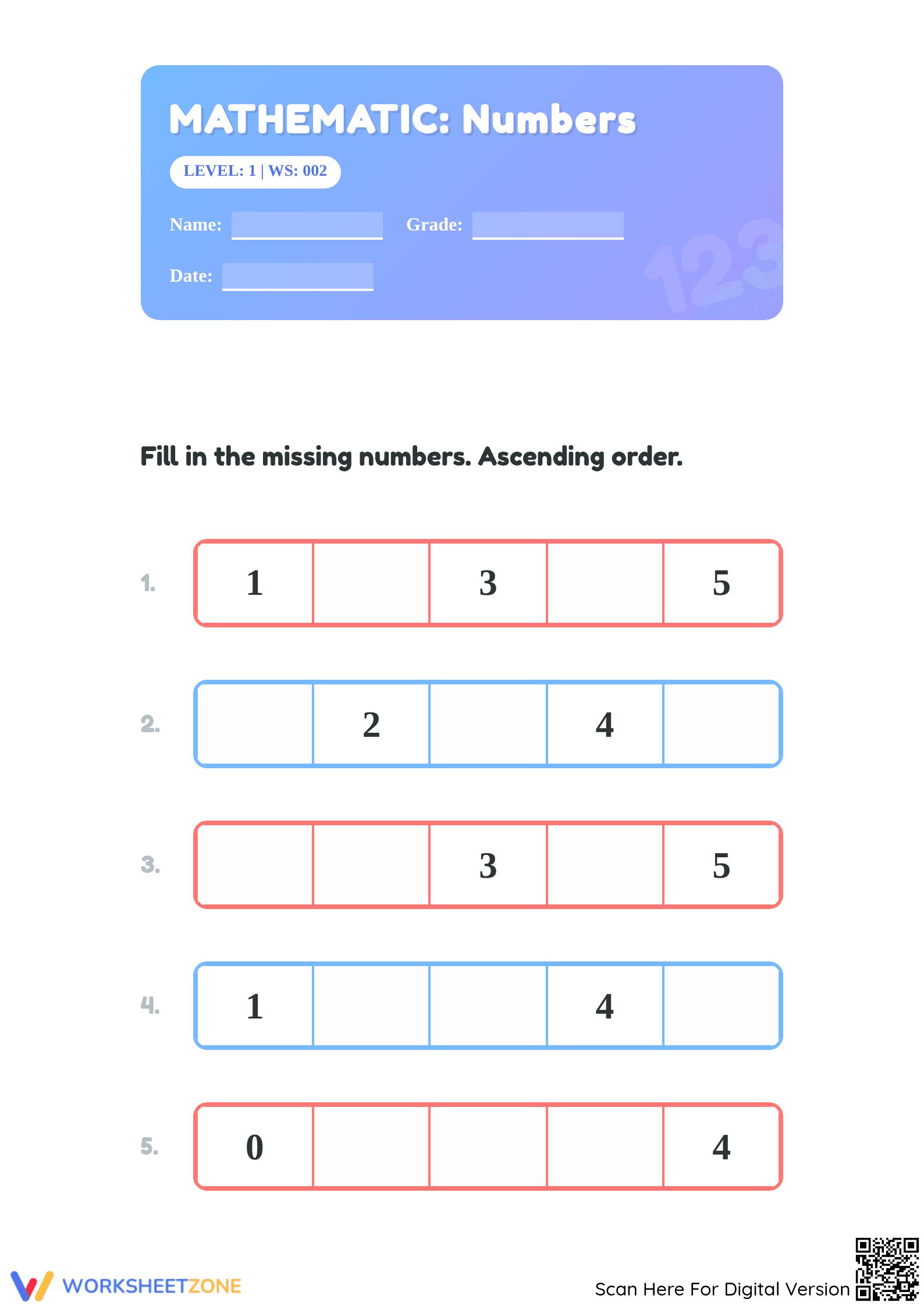
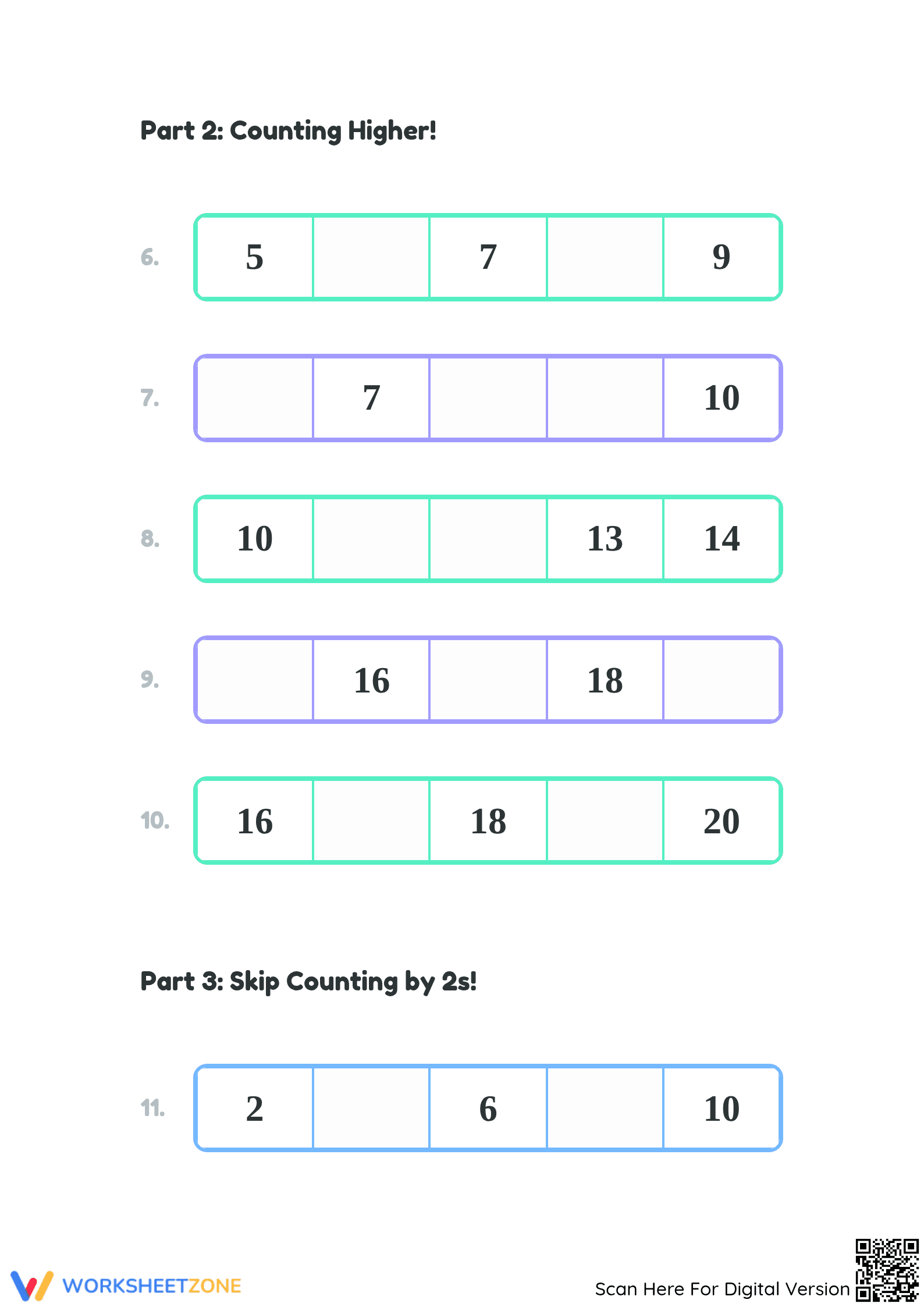
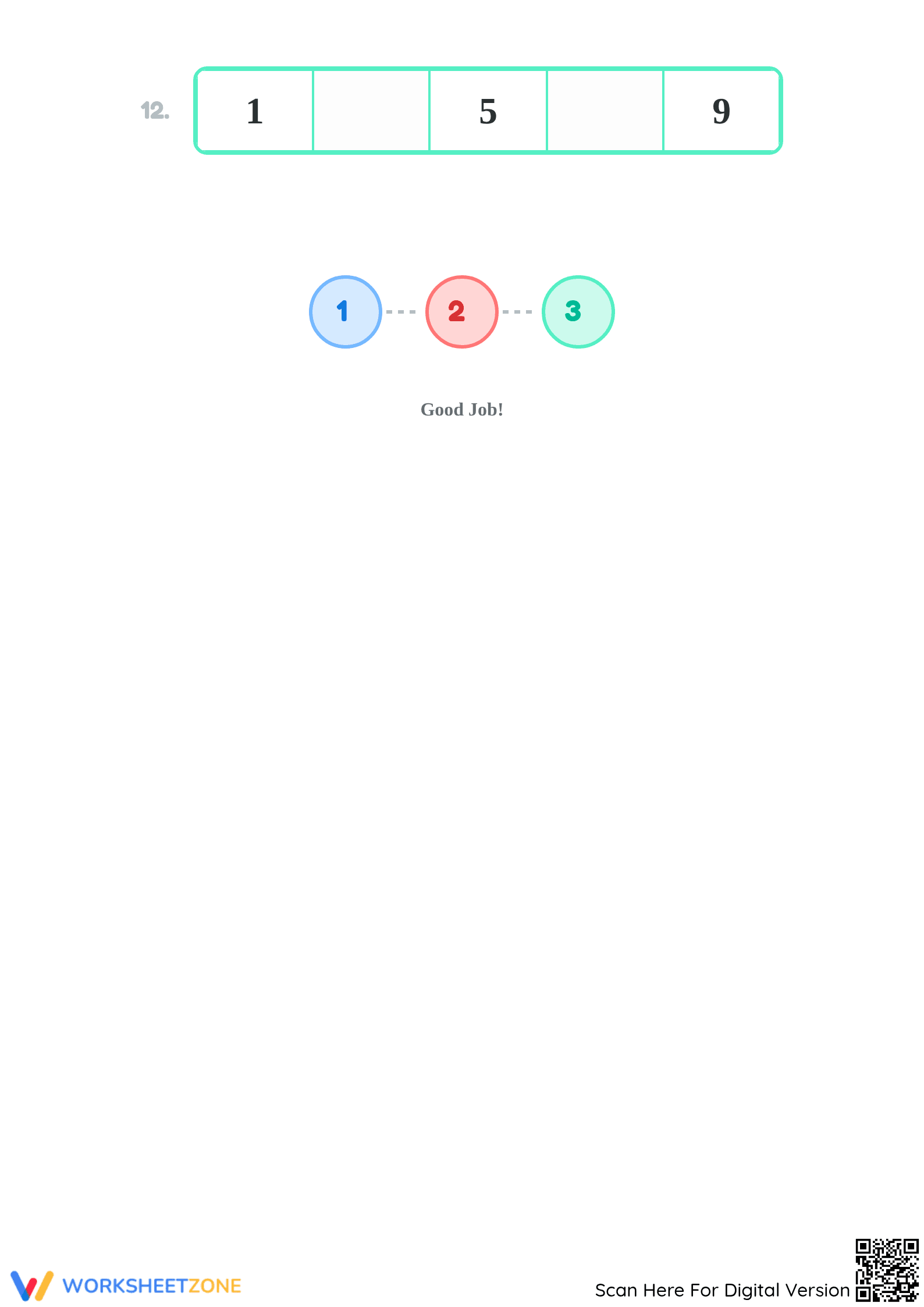

Grade 1 Ascending Numbers — Essential Printable Worksheet
Paste this activity's link or code into your existing LMS (Google Classroom, Canvas, Teams, Schoology, Moodle, etc.).
Students can open and work on the activity right away, with no student login required.
You'll still be able to track student progress and results from your teacher account.
Help your first-grade students master number sequences with this comprehensive ascending numbers worksheet. This resource focuses on ordering numbers from least to greatest, ensuring students understand magnitude within 20. By completing these sequences, learners build the numerical fluency required for more complex operations like addition and subtraction.
At a Glance
At a Glance
- Grade: 1 · Subject: Math
- Standard:
CCSS.MATH.CONTENT.1.NBT.A.1— Count to 120, starting at any number less than 120- Skill Focus: Ascending order and skip counting
- Format: 3 pages · 12 problems · Answer key included · PDF
- Best For: Independent practice or morning work
- Time: 15–20 minutes
What's Inside
This three-page PDF contains 12 distinct problems organized into three progressive parts. Part 1 focuses on basic ascending order within the 0-5 range. Part 2, "Counting Higher!", challenges students with sequences up to 20. Part 3 introduces "Skip Counting by 2s!", providing a bridge to more advanced patterns. Each page features clear, large-print boxes for student responses and a full answer key is included for easy grading.
Zero-Prep Workflow
This resource is designed for a zero-prep classroom environment. Step 1: Print the three-page PDF (30 seconds). Step 2: Distribute to students during your math block or as a transition activity (1 minute). Step 3: Review the completed sequences using the provided answer key for immediate feedback (2 minutes). Total teacher preparation time is under two minutes, making this an ideal solution for substitute plans or unexpected schedule changes.
Standards Alignment
This worksheet is primarily aligned with CCSS.MATH.CONTENT.1.NBT.A.1, which requires students to count to 120, starting at any number less than 120. In this range, students read and write numerals and represent a number of objects with a written numeral. It also supports foundational patterns necessary for 2.NBT.A.2. Both standard codes can be copied directly into lesson plans, IEP goals, or district curriculum mapping tools.
How to Use It
Use this worksheet as a formative assessment after a lesson on number lines. As students work through Part 2, observe if they are counting on their fingers or using mental math to identify the next number in the sequence. This observation can help identify students who may need additional support with one-to-one correspondence. The expected completion time is 15 to 20 minutes.
Who It's For
This resource is tailored for Grade 1 students but works for Kindergarteners ready for a challenge or Grade 2 RTI intervention. It pairs naturally with a hundreds chart or number line activity to provide a multi-sensory learning experience during direct instruction.
According to the RAND AIRS 2024 report on early numeracy, the ability to sequence numbers in ascending order is a foundational predictor of later algebraic reasoning. This worksheet targets CCSS.MATH.CONTENT.1.NBT.A.1 by requiring students to identify and fill in missing numbers within a sequence, moving from basic counting to skip counting by twos. Research by Fisher & Frey (2014) emphasizes that scaffolded practice with number lines and sequences helps solidify the mental number line, which is critical for addition and subtraction fluency. By providing 12 distinct tasks across three pages, this resource ensures students encounter various starting points in the number string, preventing rote memorization of the 1-10 sequence. The inclusion of skip counting further bridges the gap between simple counting and multiplicative thinking. This structured approach provides the necessary repetition for Grade 1 students to achieve mastery in number patterns and sequence logic.


