


























Views
Downloads
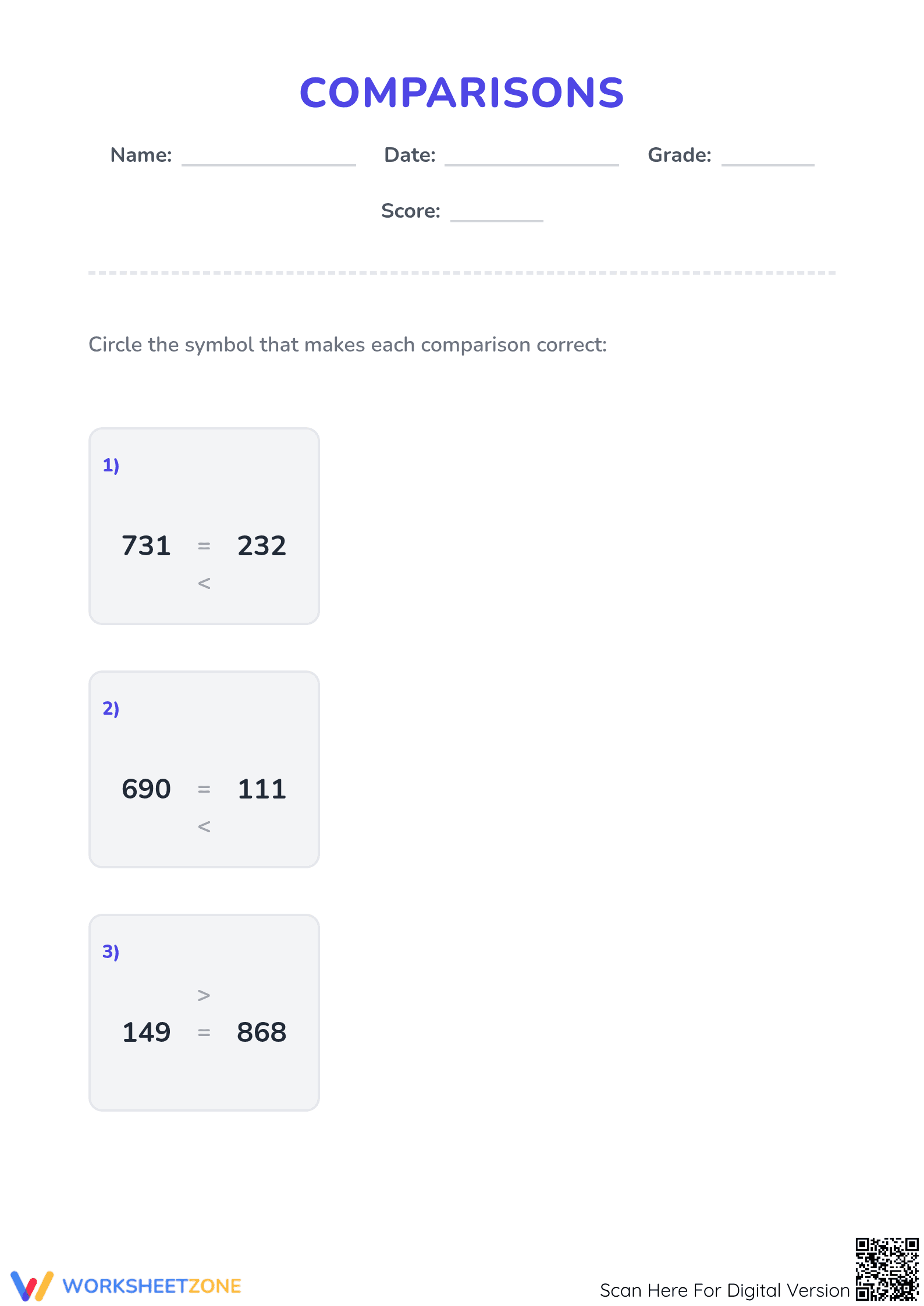

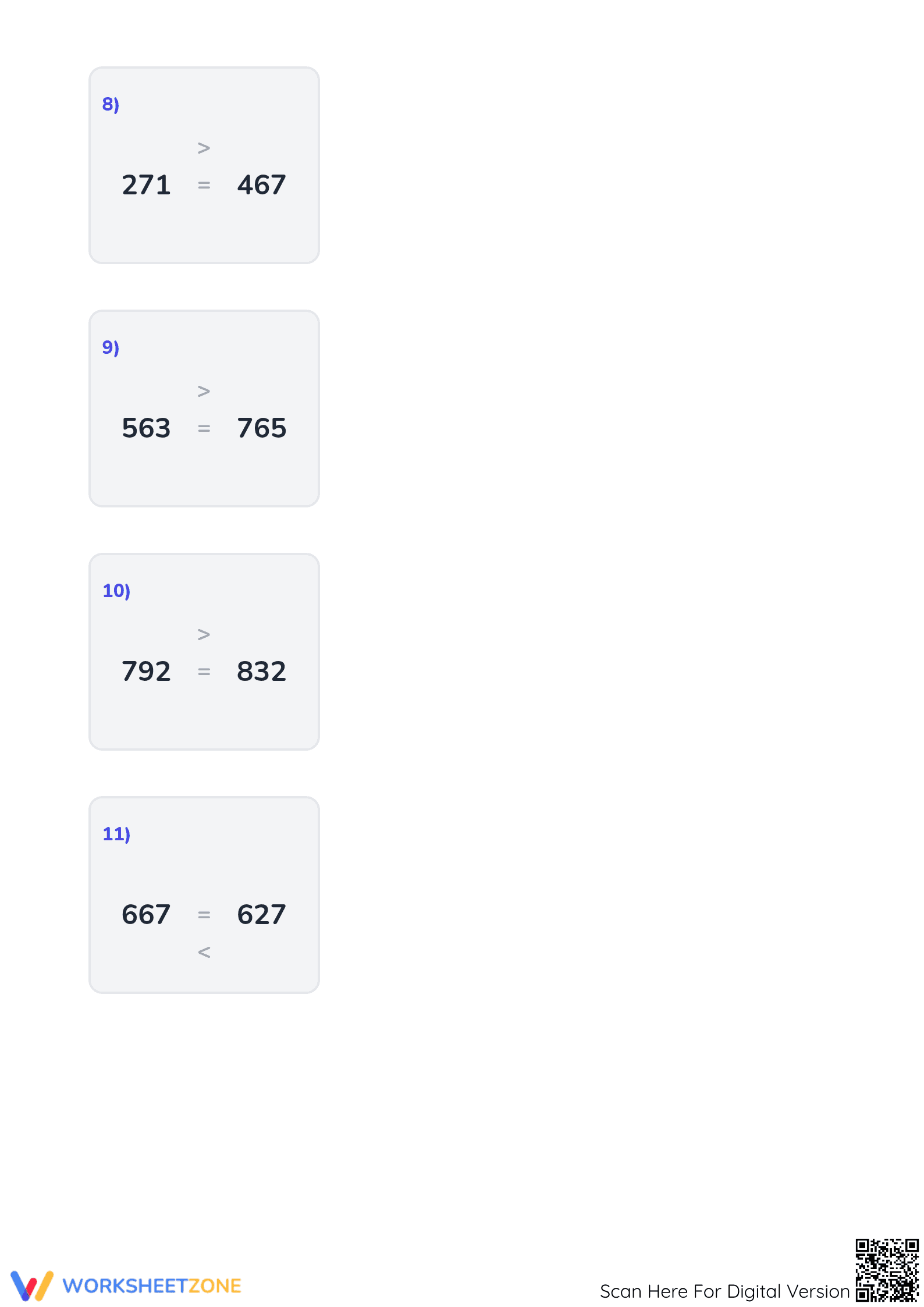
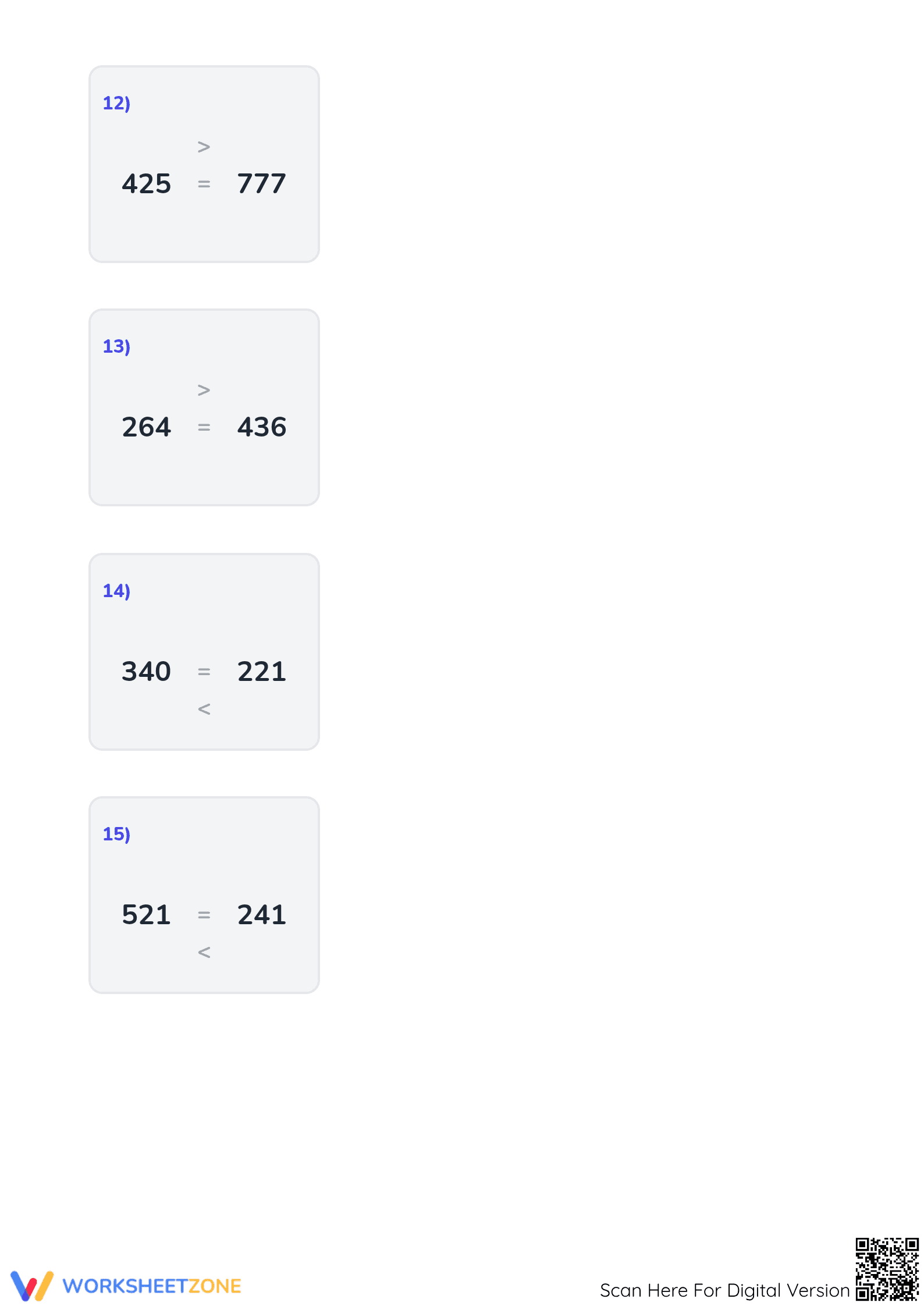
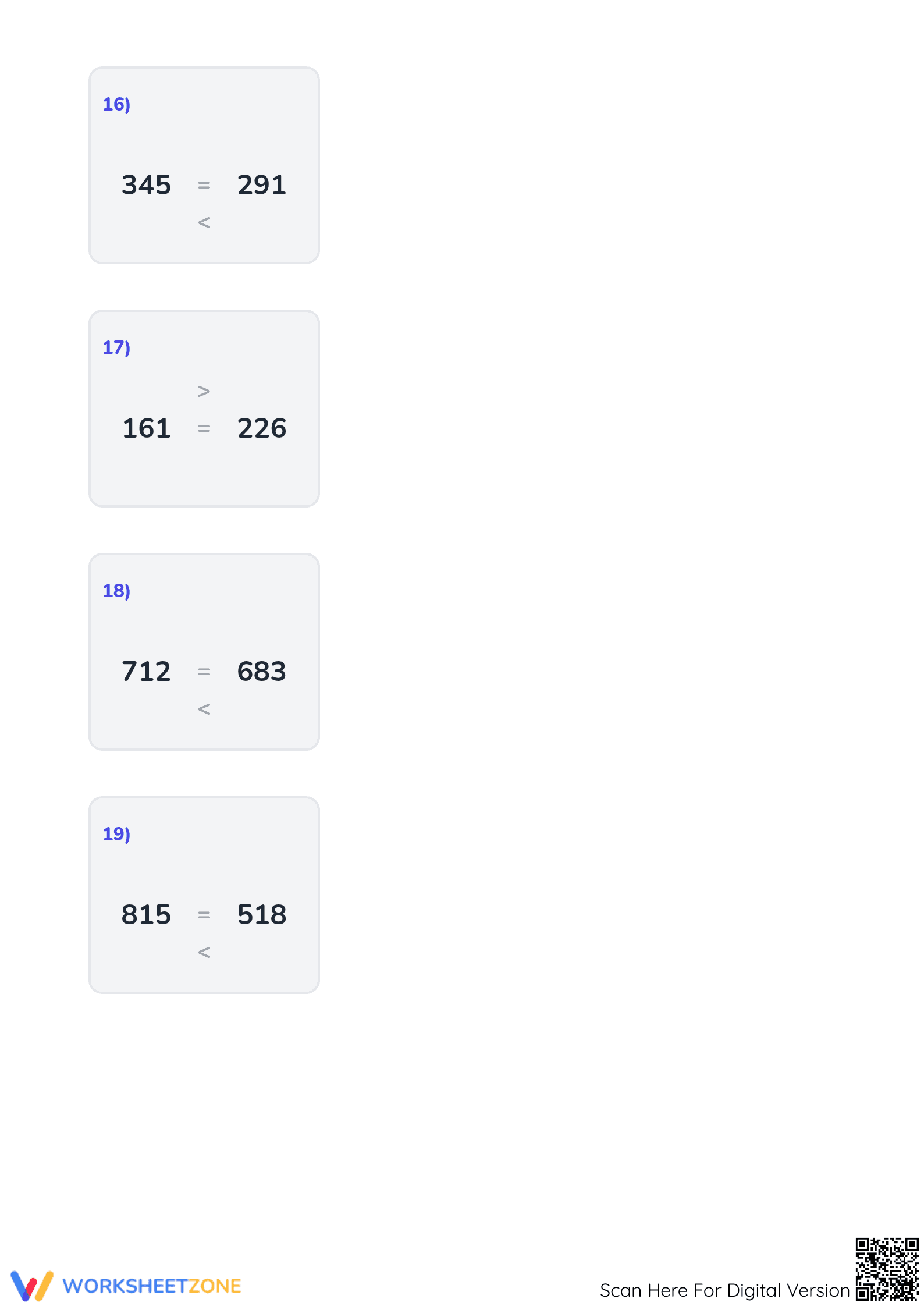

Essential Comparing Numbers Worksheet | Grade 2 Math
Paste this activity's link or code into your existing LMS (Google Classroom, Canvas, Teams, Schoology, Moodle, etc.).
Students can open and work on the activity right away, with no student login required.
You'll still be able to track student progress and results from your teacher account.
Mastering Number Comparison for Grade 2
This comprehensive worksheet provides focused practice for second-grade students learning to compare three-digit numbers. Through a series of structured exercises, learners will build fluency and confidence in using the greater than (>), less than (<), and equal to (=) symbols. This resource is designed to move students from initial understanding to independent application, making it a versatile tool for any primary math classroom.
At a Glance
- Grade: 2 · Subject: Math
- Standard:
CCSS.MATH.CONTENT.2.NBT.A.4— Compare two three-digit numbers using >, =, and < symbols to record the results.- Skill Focus: Comparing three-digit numbers
- Format: 5 pages · 44 problems · Answer key included · PDF
- Best For: Independent practice, homework, or formative assessment
- Time: 20–30 minutes
What's Inside
This packet contains a five-page PDF download. The first four pages are dedicated to student practice, featuring a total of 44 problems that require students to compare numbers and identify true or false statements. The layout includes clear instructions and ample space for students to work. The fifth page provides a complete answer key, allowing for quick grading by the teacher or for students to self-check their work and correct their understanding.
A Progression of Skills
This resource follows a gradual-release model to support student learning, consistent with the "I Do, We Do, You Do" framework. The worksheet is structured to guide students from foundational practice to more independent application.
- Guided Practice: The first page introduces the core task with clear sections for filling in the correct symbol and identifying true or false comparisons, providing initial reinforcement of the concept.
- Supported Practice: The subsequent pages offer varied problem sets that continue to build on the same skills, providing the repetition necessary for procedural fluency.
- Independent Practice: The final worksheet page can serve as a summative check for understanding. Students apply their knowledge across 10 problems, demonstrating their mastery of the skill without direct support.
Standards Alignment
This resource is directly aligned with the Common Core State Standard for second-grade mathematics: CCSS.MATH.CONTENT.2.NBT.A.4, which expects students to "Compare two three-digit numbers based on meanings of the hundreds, tens, and ones digits, using >, =, and < symbols to record the results of comparisons." The tasks in this worksheet give students direct practice to meet this specific grade-level expectation. The standard code can be copied directly into lesson plans, IEP goals, or district curriculum mapping tools.
How to Use It
This worksheet is flexible and can be integrated into various instructional moments. Use it as an in-class practice activity after a direct instruction lesson on place value and number comparison. The 44 problems provide enough work for a 20- to 30-minute independent work block. Alternatively, it serves as an excellent homework assignment to reinforce skills learned in the classroom. As a formative assessment tool, observe students as they complete the final page to quickly gauge which learners have achieved mastery and who may need small-group reteaching.
Who It's For
This resource is designed primarily for second-grade students who are learning or practicing number comparison skills. It is also suitable for advanced first-graders ready for a challenge or for third-grade students who require a review of place value concepts. To support struggling learners, pair this worksheet with a place value anchor chart or base-ten blocks. The clear format and focused skill make it accessible for a wide range of learners in a general education classroom setting.
Targeted practice is a critical component of mathematical proficiency, enabling students to internalize procedures and apply them with accuracy. According to Fisher & Frey (2014), providing students with opportunities for independent, purposeful practice is essential for moving new learning into long-term memory. This worksheet, aligned to CCSS.MATH.CONTENT.2.NBT.A.4, provides exactly that. By engaging with the 44 problems in this packet, students repeatedly practice the skill of comparing three-digit numbers, which builds the procedural fluency required for more complex mathematical reasoning. The structure allows students to consolidate their understanding of place value and the relative magnitude of numbers, a foundational concept for all future work in operations, algebra, and data analysis. This deliberate practice is a proven method for building lasting mathematical skills.


