


























Views
Downloads

Grade 1 Pronouns Worksheet | Essential Printable Practice
Paste this activity's link or code into your existing LMS (Google Classroom, Canvas, Teams, Schoology, Moodle, etc.).
Students can open and work on the activity right away, with no student login required.
You'll still be able to track student progress and results from your teacher account.
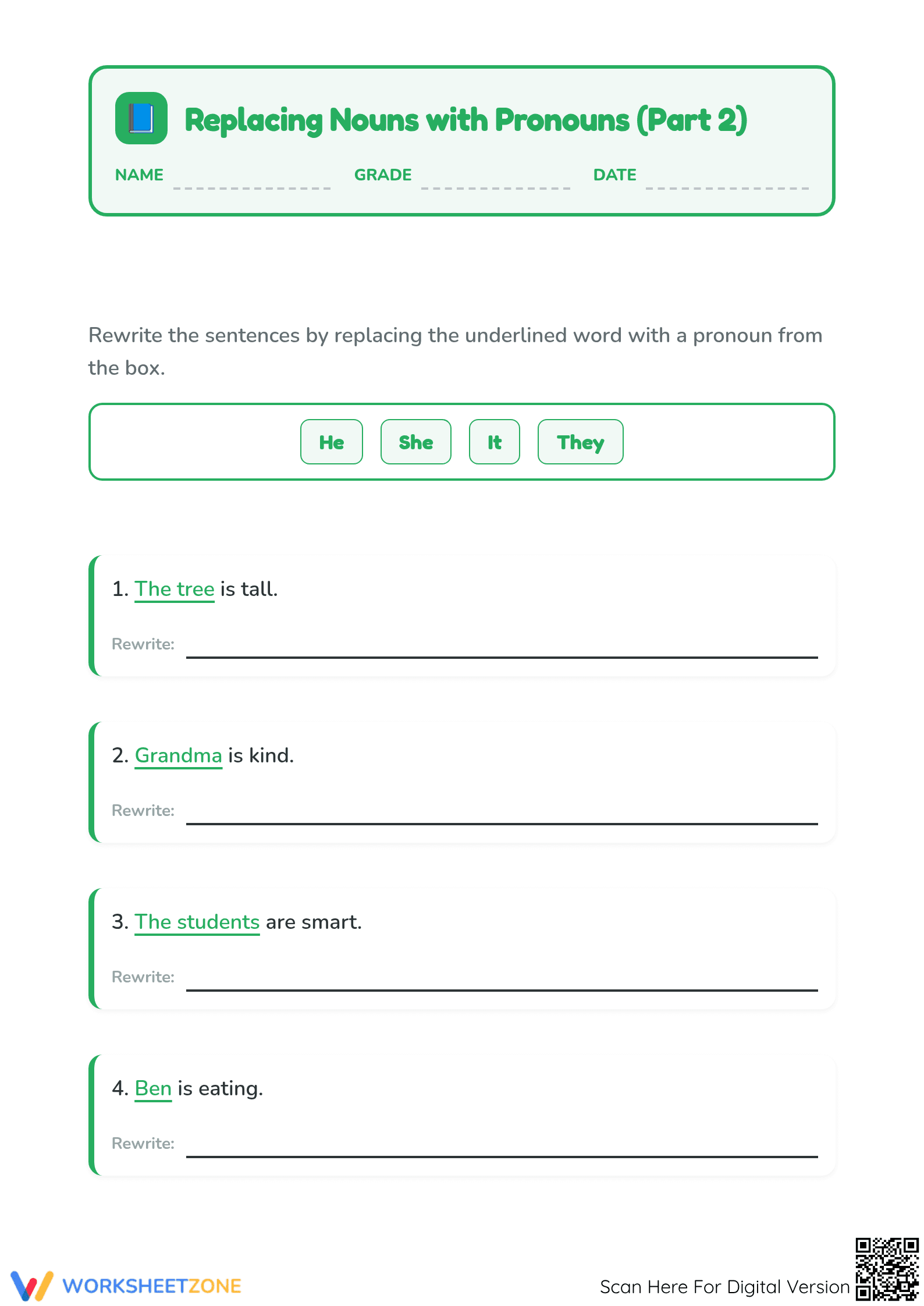
This Grade 1 ELA worksheet provides targeted practice for students learning to substitute nouns with appropriate personal pronouns. By focusing on the functional use of "He," "She," "It," and "They," learners develop a stronger grasp of sentence mechanics and subject-verb agreement. Students transform simple sentences to improve writing fluency and grammatical accuracy through direct application.
At a Glance
- Grade: 1 · Subject: ELA
- Standard:
CCSS.ELA-LITERACY.L.1.1.D— Use personal, possessive, and indefinite pronouns in sentences accurately- Skill Focus: Pronoun-antecedent substitution
- Format: 3 pages · 11 problems · Answer key included · PDF
- Best For: Independent practice or morning work
- Time: 15–20 minutes
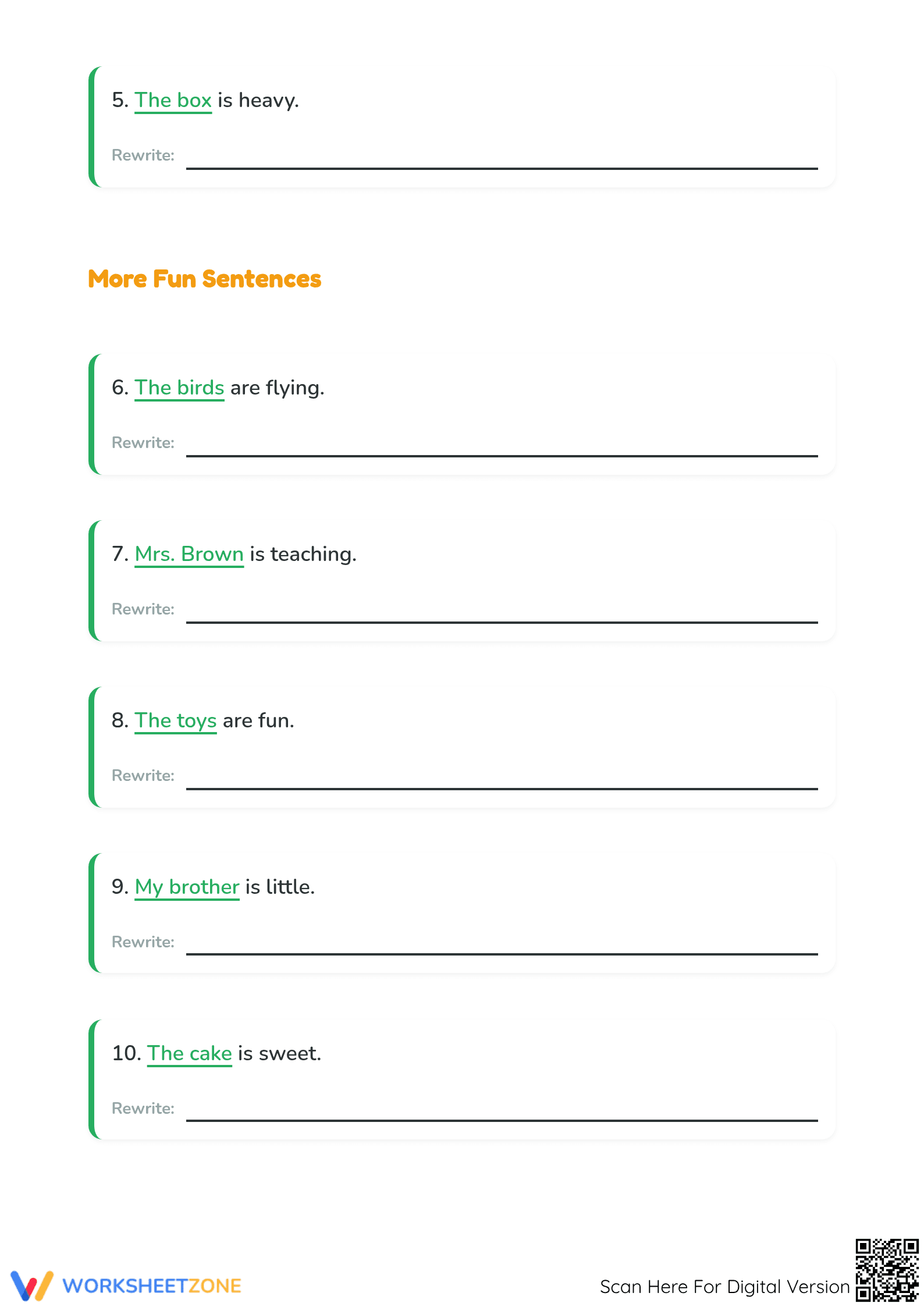
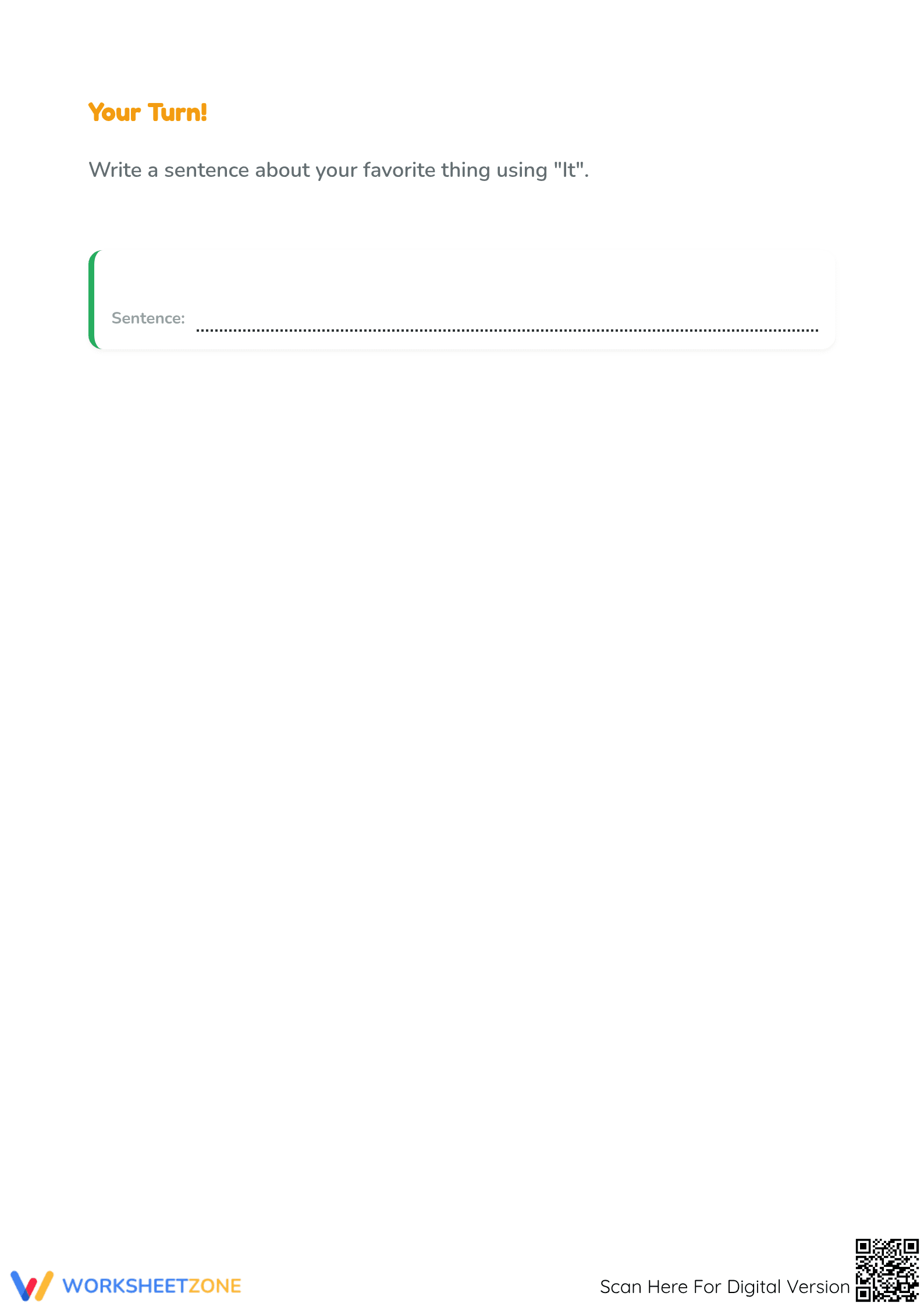
This comprehensive 3-page PDF includes 10 structured rewrite problems and one open-ended creative writing prompt. Each page features a clear word bank containing the target pronouns to support early readers and writers. The layout provides ample primary-ruled space for handwriting practice, ensuring that students can focus on both grammar and penmanship. A full 3-page answer key is included to facilitate quick grading or student self-correction.
Zero-Prep Workflow
- Print: Select the three-page set and print enough copies for your roster (30 seconds).
- Distribute: Hand out the worksheets for independent work, literacy centers, or as a quick sub plan (1 minute).
- Review: Use the provided answer key to check for understanding or display it on a projector for whole-class review (5 minutes).
Total teacher preparation time is under 2 minutes, making this an ideal resource for busy mornings or unexpected schedule changes.
Standards Alignment: This resource aligns directly with `CCSS.ELA-LITERACY.L.1.1.D`, which requires students to use personal, possessive, and indefinite pronouns. By specifically targeting the substitution of common nouns (like "Grandma" or "The tree") with personal pronouns, students build the foundational syntax skills necessary for more complex writing. Both standard codes can be copied directly into lesson plans, IEP goals, or district curriculum mapping tools.
How to Use It: Use this during the "We Do" or "You Do" phase of a grammar lesson. As students work, observe if they correctly identify the gender or number of the underlined noun before selecting a pronoun from the bank. This serves as an excellent formative assessment to see which students struggle with plural versus singular antecedents. Completion typically takes 15 to 20 minutes depending on handwriting speed.
Who It's For: This resource is designed for first-grade classrooms but also serves as an excellent intervention tool for second-grade students needing a refresher. It is particularly helpful for English Language Learners (ELLs) who benefit from the visual support of a word bank and the repetitive structure of the rewrite tasks.
According to Fisher & Frey (2014), the gradual release of responsibility is most effective when students move from scaffolded word banks to independent application. This worksheet aligns with CCSS.ELA-LITERACY.L.1.1.D by requiring students to use personal pronouns accurately in context. Research indicates that repetitive practice with pronoun-antecedent agreement in early elementary grades reduces common syntax errors in later writing. By providing 11 distinct opportunities for substitution, this resource ensures that students internalize the relationship between specific nouns and their functional pronoun counterparts. The inclusion of a creative writing prompt at the end of the sequence allows for higher-order application, moving beyond simple identification to generative language use. This structured approach is consistent with evidence-based literacy instruction that prioritizes clear modeling followed by immediate, focused practice to solidify foundational grammar skills and improve overall student writing outcomes.


