


























Views
Downloads

Grade 1 Pronouns Worksheet — Essential Printable Practice
Paste this activity's link or code into your existing LMS (Google Classroom, Canvas, Teams, Schoology, Moodle, etc.).
Students can open and work on the activity right away, with no student login required.
You'll still be able to track student progress and results from your teacher account.
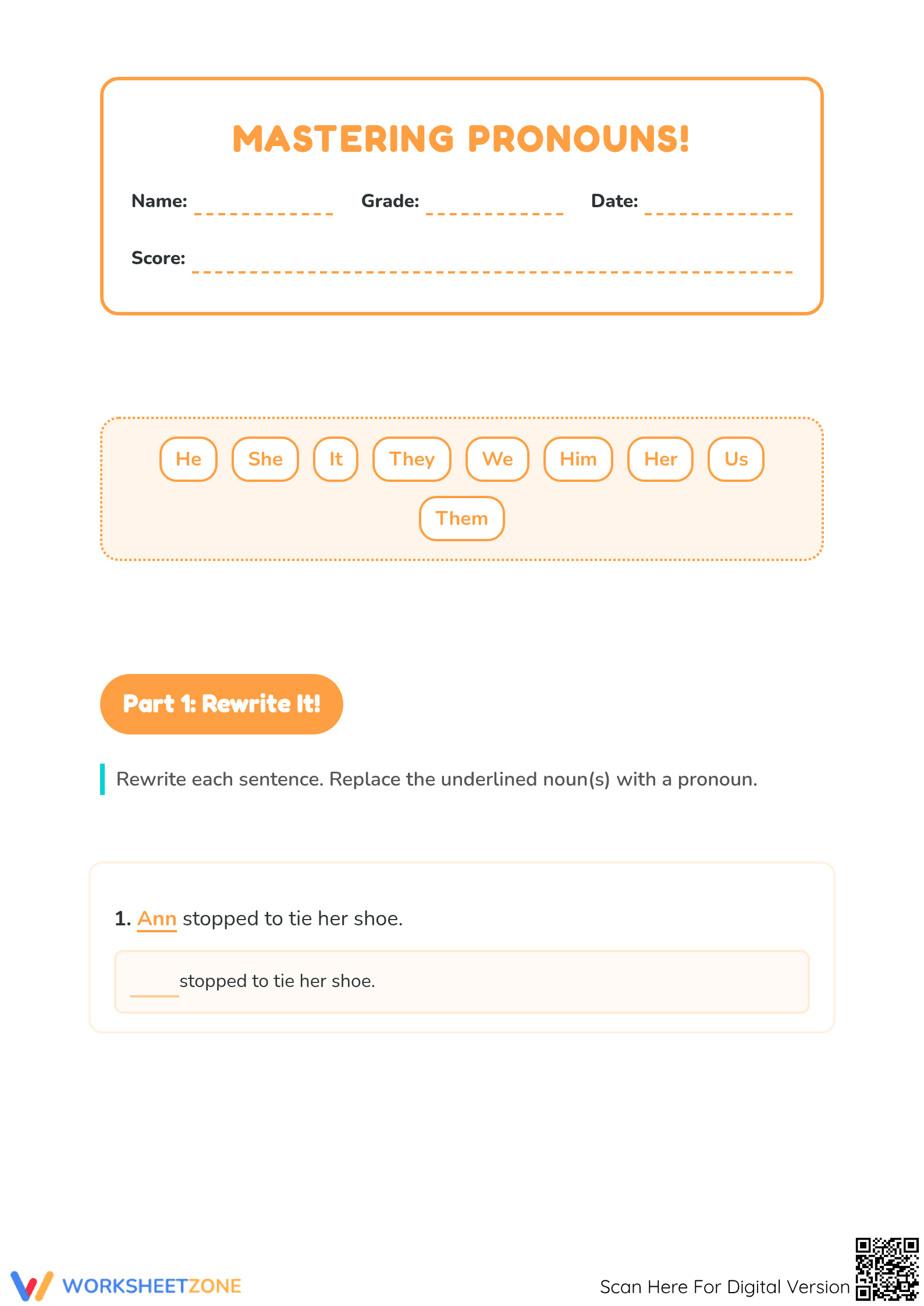
This Grade 1 English Language Arts worksheet helps students master the transition from concrete nouns to functional pronouns. By practicing how to replace specific names and objects with words like "he," "she," "it," and "they," learners develop the grammatical foundations necessary for fluid writing and reading comprehension. This resource ensures students understand how pronouns function as substitutes to make language more efficient.
At a Glance
- Grade: 1 · Subject: ELA
- Standard:
CCSS.ELA-LITERACY.L.1.1.D— Use personal, possessive, and indefinite pronouns correctly in sentences- Skill Focus: Personal Pronouns
- Format: 5 pages · 12 problems · Answer key included · PDF
- Best For: Independent practice and grammar centers
- Time: 20–30 minutes
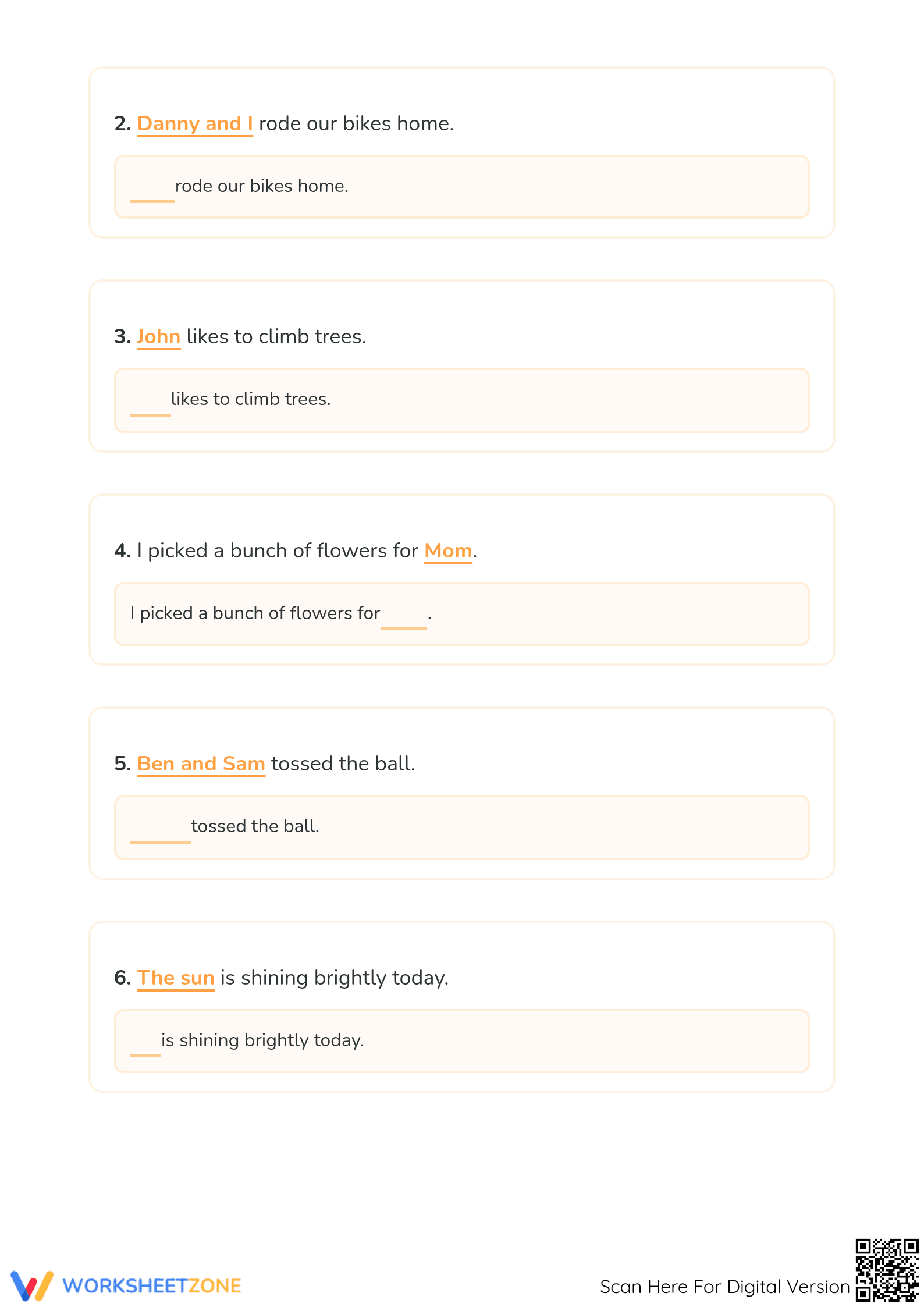
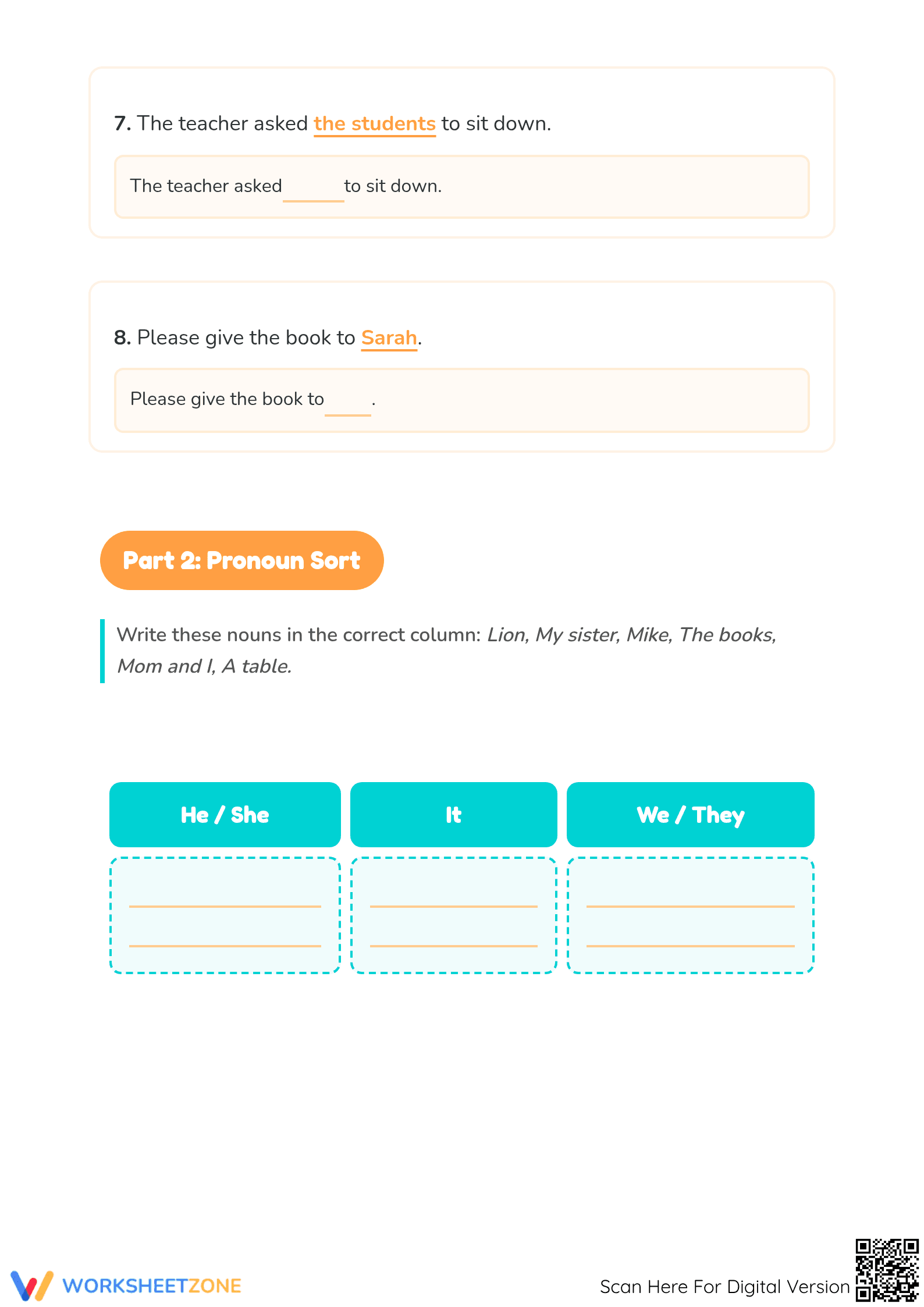
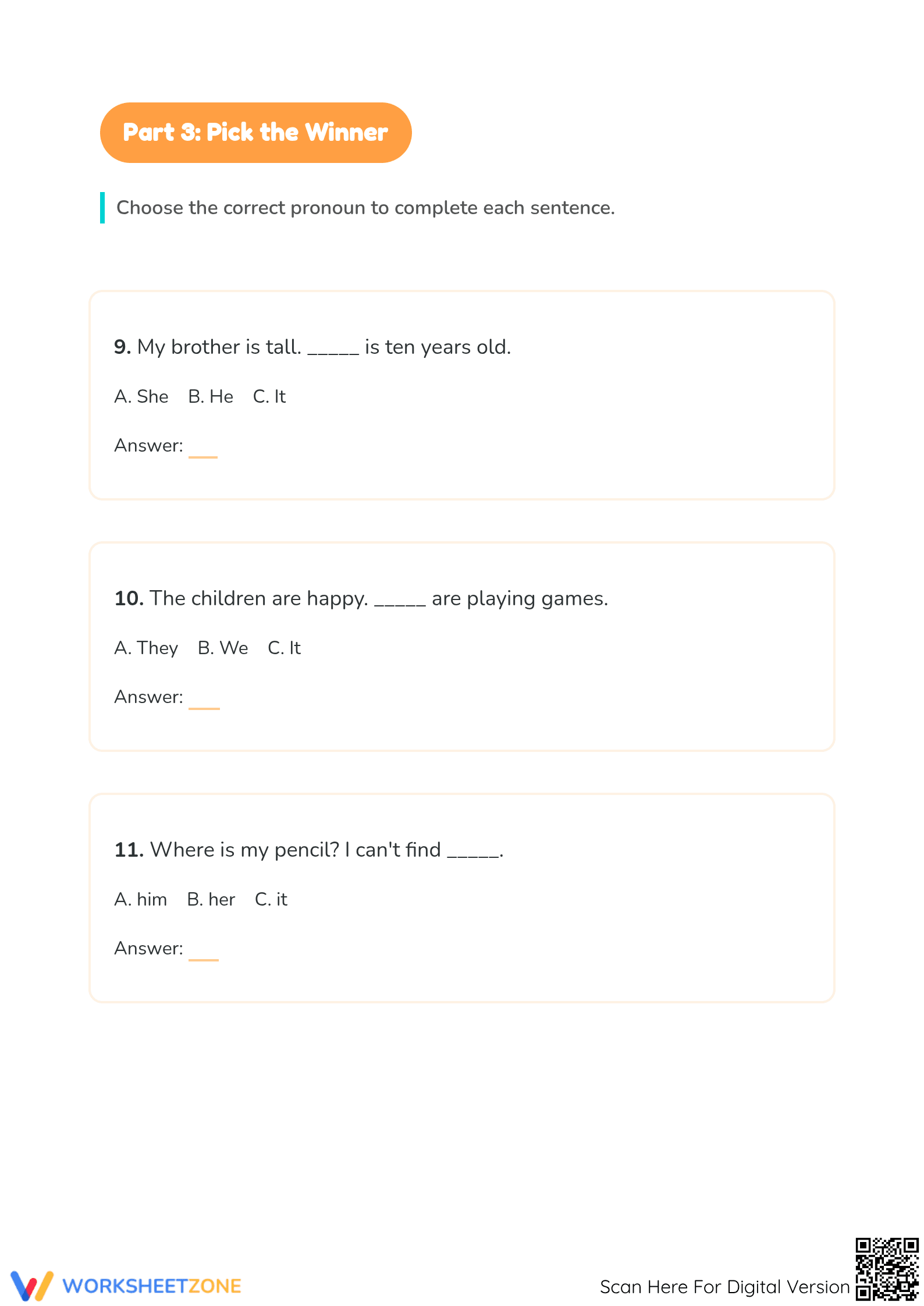
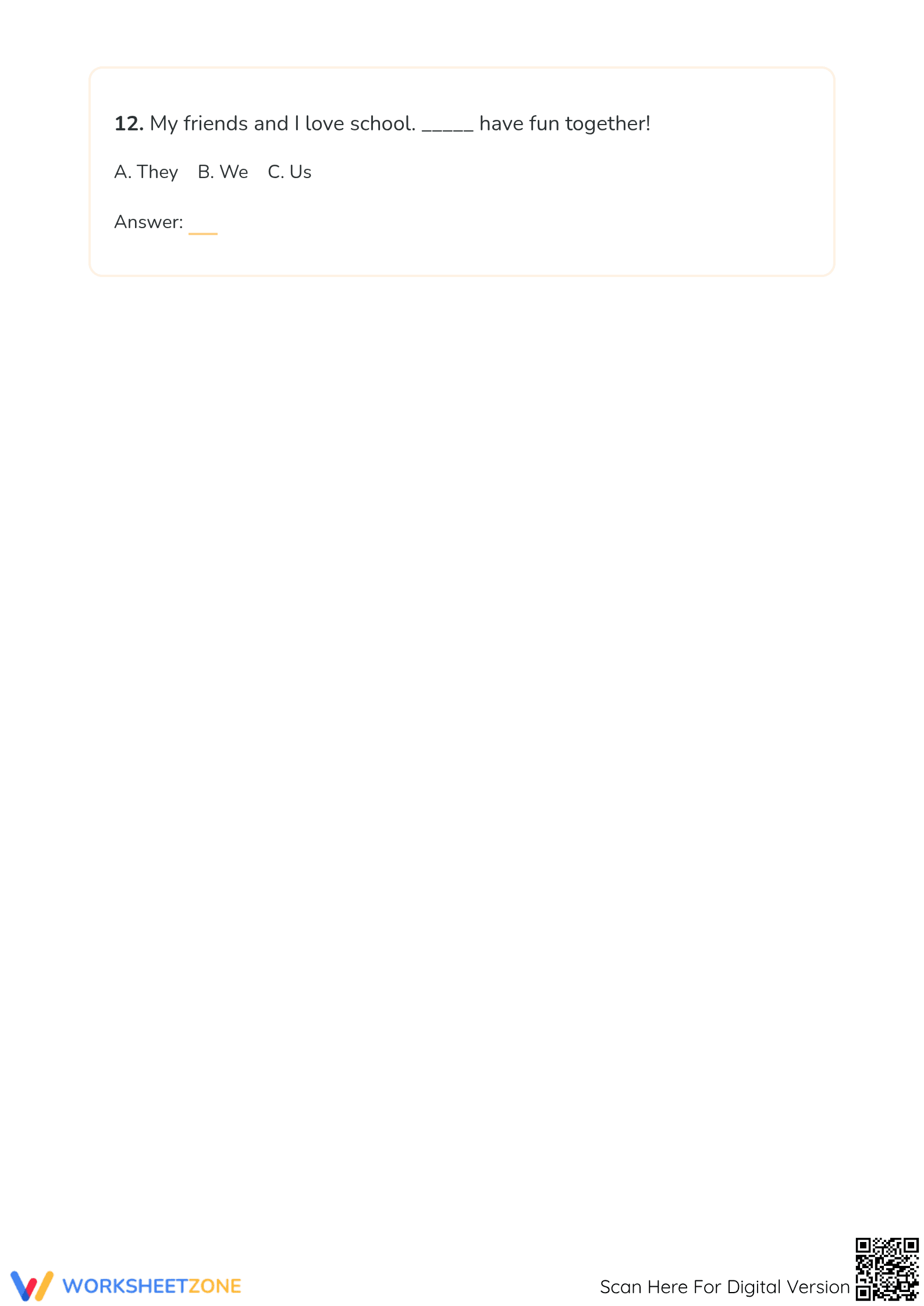
This comprehensive 5-page packet features three distinct sections to reinforce pronoun usage. Part 1 requires students to rewrite 8 full sentences, replacing underlined nouns with the correct pronoun from a provided word bank. Part 2 is a conceptual sorting activity where students categorize nouns like "Lion" or "Mom and I" into pronoun groups. Part 3 concludes with 4 multiple-choice questions to check for final understanding. A full answer key is provided for every page to facilitate quick grading.
Teachers can implement this resource in under two minutes. First, print the 5-page PDF (1 minute). Second, distribute the packets to students during your grammar block or as a morning work assignment (30 seconds). Finally, use the included answer key to review the "Pick the Winner" section as a whole-class check for understanding (30 seconds). This streamlined process makes it an ideal choice for emergency sub plans or busy Friday rotations.
The primary focus is CCSS.ELA-LITERACY.L.1.1.D: "Use personal, possessive, and indefinite pronouns (e.g., I, me, my; they, them, their, anyone, everything)." This worksheet specifically targets personal pronouns in both subject and object positions. Both standard codes can be copied directly into lesson plans, IEP goals, or district curriculum mapping tools to ensure instructional alignment.
Use this worksheet during the independent practice phase of a gradual release lesson on word classes. It works exceptionally well as a formative assessment after a direct instruction session on gendered and plural pronouns. Teachers should observe students during the sorting activity in Part 2; if a student struggles to place "The books" under "They," it indicates a need for additional instruction on pluralization. The expected completion time is approximately 25 minutes.
This resource is designed for first-grade students but serves as an excellent scaffold for second graders needing a refresher or English Language Learners (ELL) practicing syntax. It pairs naturally with a classroom anchor chart displaying common pronouns and their noun counterparts. The clear layout and large text make it accessible for early readers who are still developing fine motor skills for writing.
Effective pronoun instruction in early elementary grades is a prerequisite for complex sentence construction. According to Fisher & Frey (2014), the gradual release of responsibility—moving from guided sentence rewriting to independent multiple-choice selection—is critical for internalizing grammatical rules. This worksheet applies these principles by providing a word bank for initial support before requiring students to categorize and select pronouns independently. By mastering CCSS.ELA-LITERACY.L.1.1.D, students reduce repetitive noun usage, which is a key marker of maturing writing skills. Research from the NAEP suggests that early mastery of functional word classes like pronouns correlates with higher reading fluency scores in later primary years. This 5-page resource provides the high-repetition practice necessary to move these skills from short-term memory to long-term application in student compositions.


