


























Views
Downloads

Grade 1 Nouns to Pronouns — Printable No-Prep Worksheet
Paste this activity's link or code into your existing LMS (Google Classroom, Canvas, Teams, Schoology, Moodle, etc.).
Students can open and work on the activity right away, with no student login required.
You'll still be able to track student progress and results from your teacher account.
This Grade 1 ELA worksheet provides comprehensive practice for students learning to substitute nouns with appropriate personal pronouns. By engaging with 16 distinct tasks, learners develop the grammatical fluency needed to avoid repetition in writing and speech. The structured format ensures students move from recognition to application with confidence and accuracy.
At a Glance
- Grade: 1 · Subject: ELA
- Standard:
CCSS.ELA-LITERACY.L.1.1.D— Use personal, possessive, and indefinite pronouns in sentences- Skill Focus: Noun-Pronoun Substitution
- Format: 5 pages · 16 problems · Answer key included · PDF
- Best For: Independent practice and grammar centers
- Time: 20–30 minutes
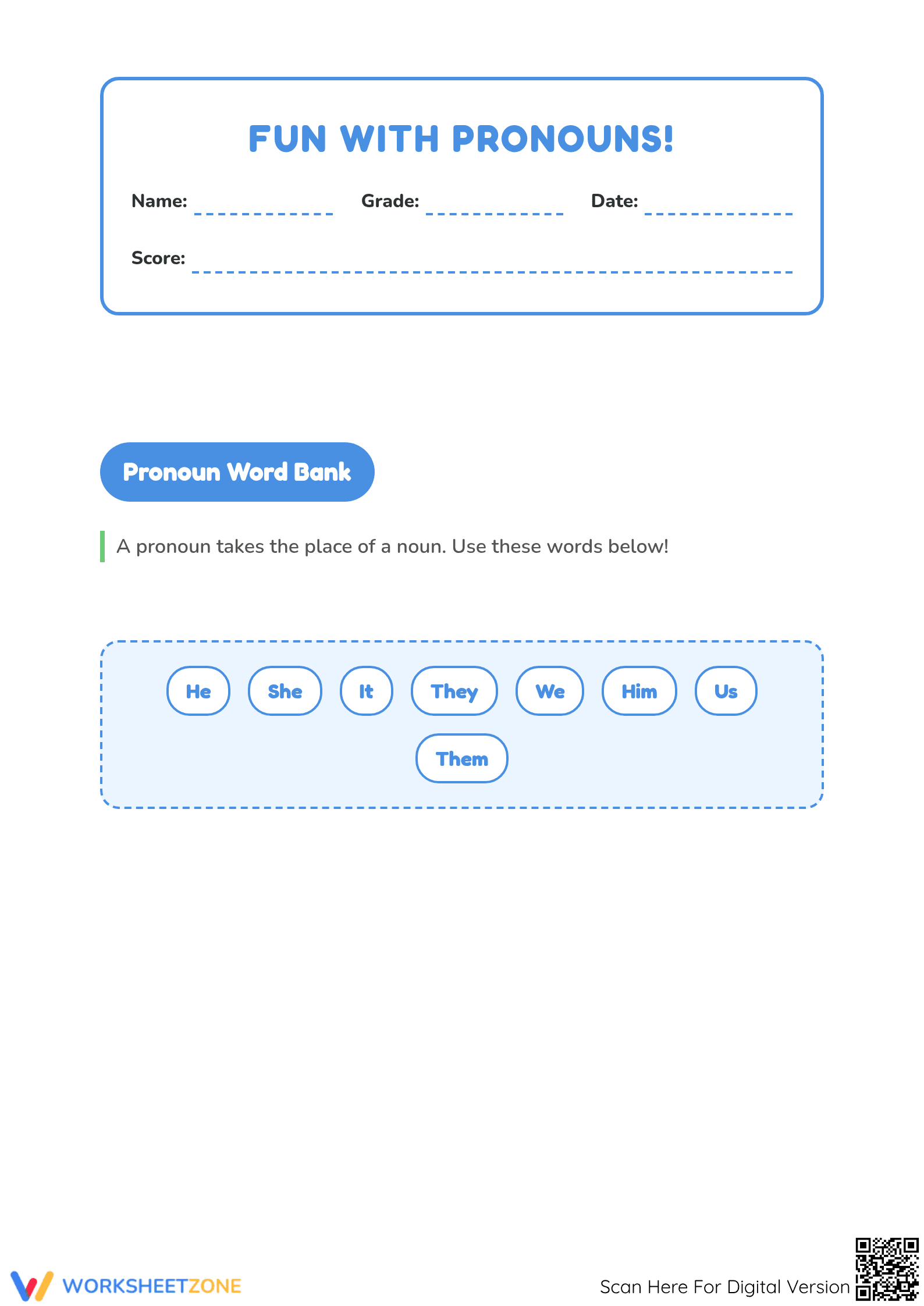
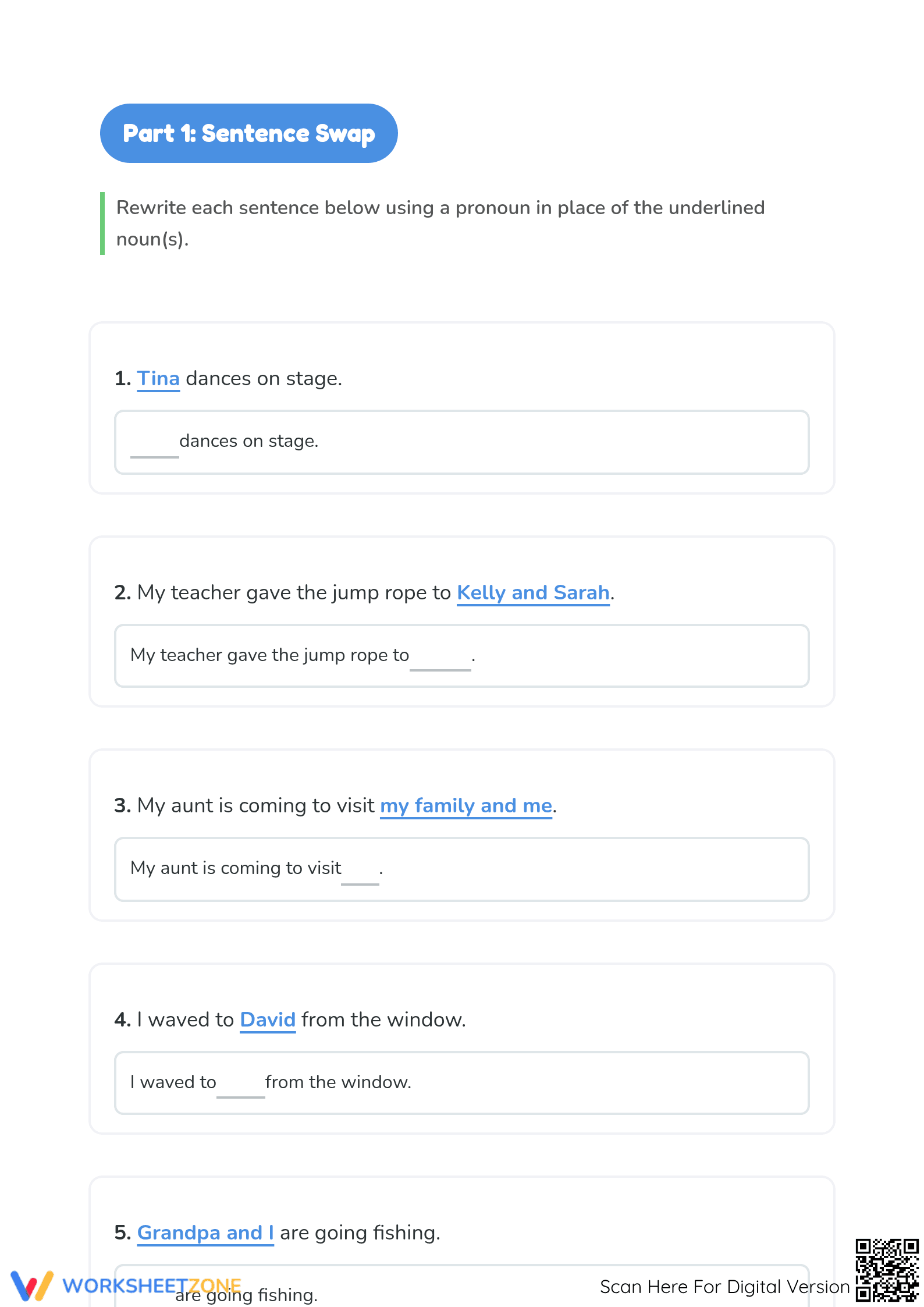
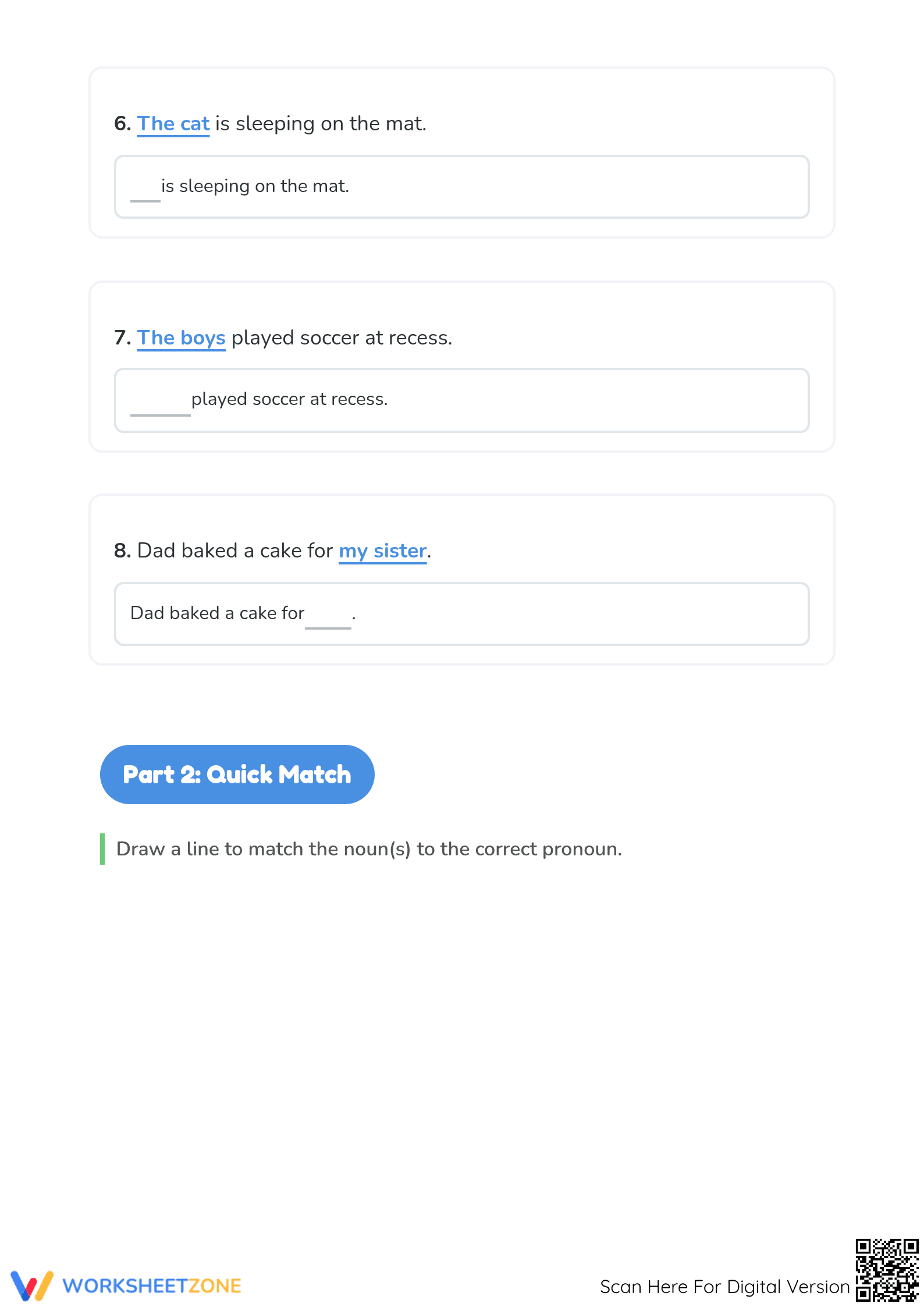
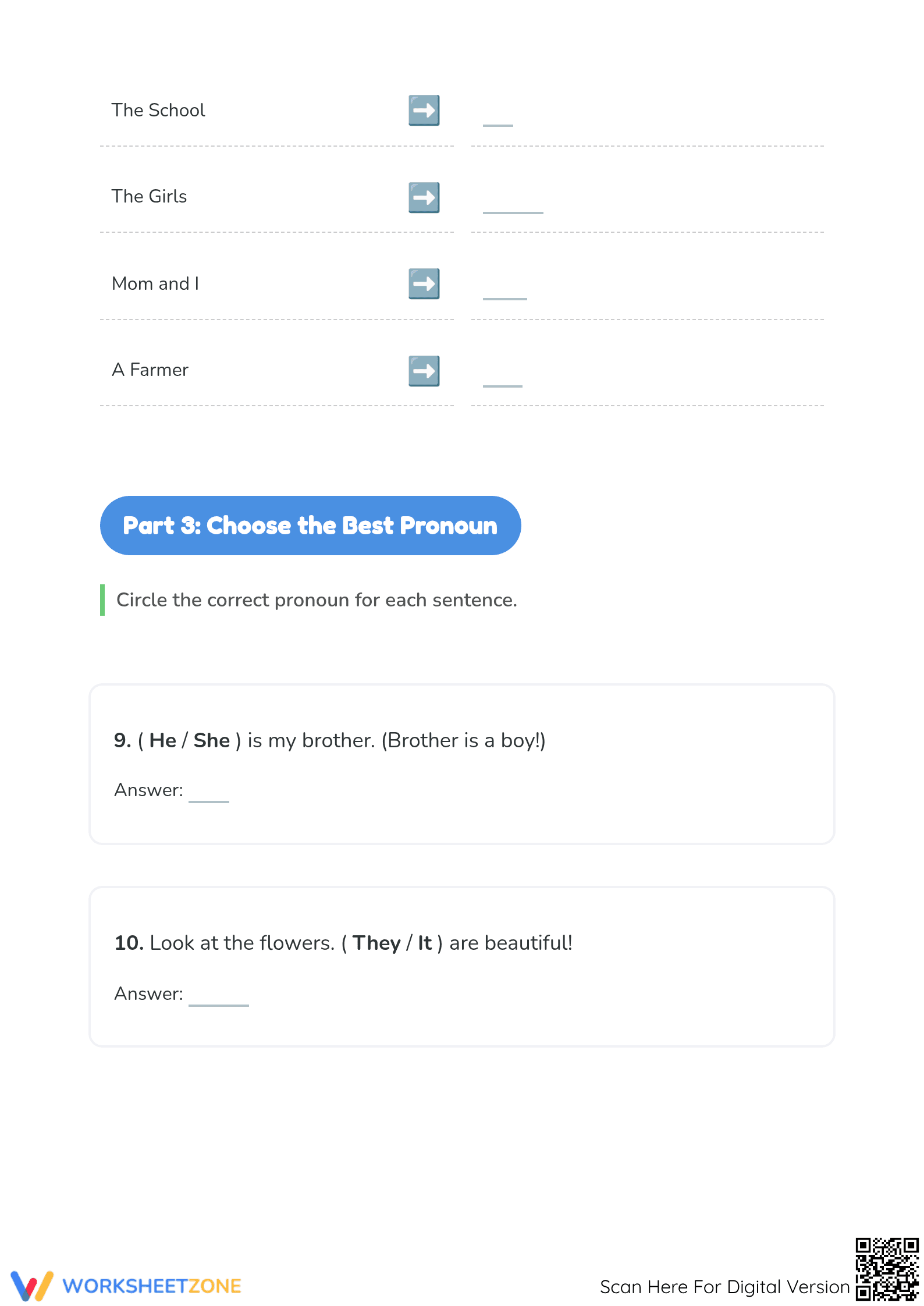
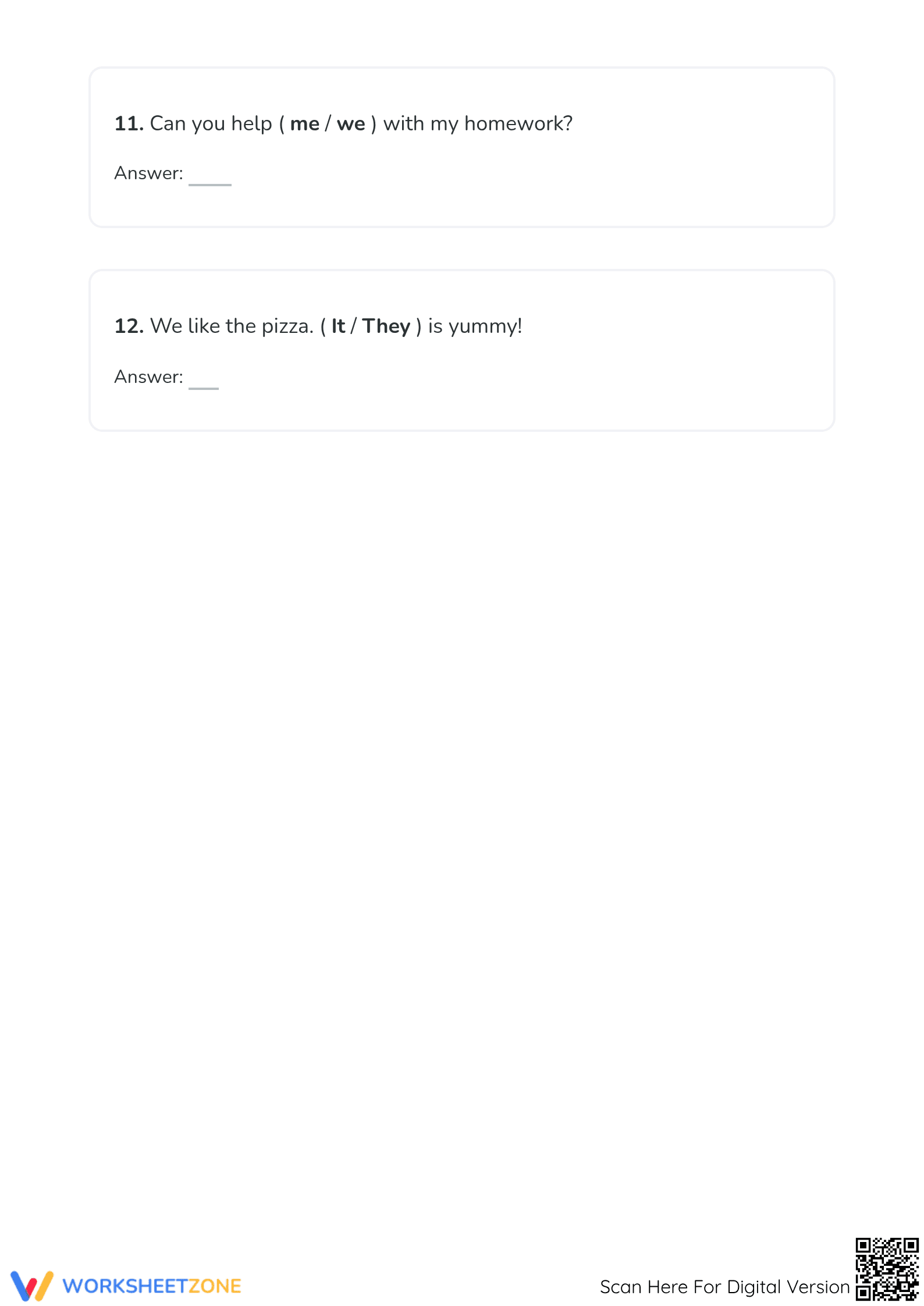
The packet contains five pages of instructional content designed for young learners. It begins with a clear Pronoun Word Bank featuring essential terms like "He," "She," "It," and "They." Students then progress through three distinct parts: a Sentence Swap section for rewriting, a Quick Match activity for visual association, and a multiple-choice "Choose the Best Pronoun" assessment. A full answer key is provided for every page to facilitate quick grading.
The zero-prep workflow is designed for maximum efficiency in busy classrooms. Step 1: Print the five-page PDF (30 seconds). Step 2: Distribute to students as a packet or individual daily warm-ups (1 minute). Step 3: Review using the included answer keys for immediate feedback (5 minutes). This resource requires no additional teacher setup and is perfectly suited for emergency sub plans or last-minute literacy rotations.
This resource is explicitly aligned to `CCSS.ELA-LITERACY.L.1.1.D`, which requires students to use personal, possessive, and indefinite pronouns correctly. The worksheet focuses specifically on personal pronouns (subject and object cases) to build a foundational understanding of word classes. Both standard codes can be copied directly into lesson plans, IEP goals, or district curriculum mapping tools.
Use this worksheet during the "You Do" phase of a gradual release lesson. After teaching the concept of pronouns using an anchor chart, assign the Sentence Swap section to evaluate if students can identify the gender and number of the nouns they are replacing. For a quick formative assessment, use the Quick Match page as an exit ticket to gauge student mastery before moving to more complex writing tasks.
This material is ideal for first-grade students, but also serves as an excellent intervention tool for second graders or English Language Learners (ELLs) who need visual support for pronoun-antecedent agreement. It pairs naturally with a mentor text that features clear character names, allowing students to see how authors use pronouns to maintain flow in a narrative.
According to research by Fisher & Frey (2014) on the gradual release of responsibility, providing students with scaffolded tools like word banks and sentence frames is critical for mastering new grammatical structures. This worksheet applies these principles by offering a clear reference point before requiring independent substitution. Mastery of CCSS.ELA-LITERACY.L.1.1.D ensures that Grade 1 students can produce more sophisticated sentences, moving beyond simple repetitive noun usage. The 16 tasks included here provide the necessary repetition for cognitive encoding of pronoun rules. By utilizing a variety of task types—matching, rewriting, and selecting—the resource addresses multiple learning modalities. This alignment with evidence-based instructional design helps bridge the gap between isolated grammar rules and functional writing skills. Educators can rely on this structured approach to meet district literacy benchmarks and support diverse learner needs within the standard ELA curriculum framework.


