


























Views
Downloads

Printable Grade 1 Nouns and Sentences Practice Worksheet
Paste this activity's link or code into your existing LMS (Google Classroom, Canvas, Teams, Schoology, Moodle, etc.).
Students can open and work on the activity right away, with no student login required.
You'll still be able to track student progress and results from your teacher account.
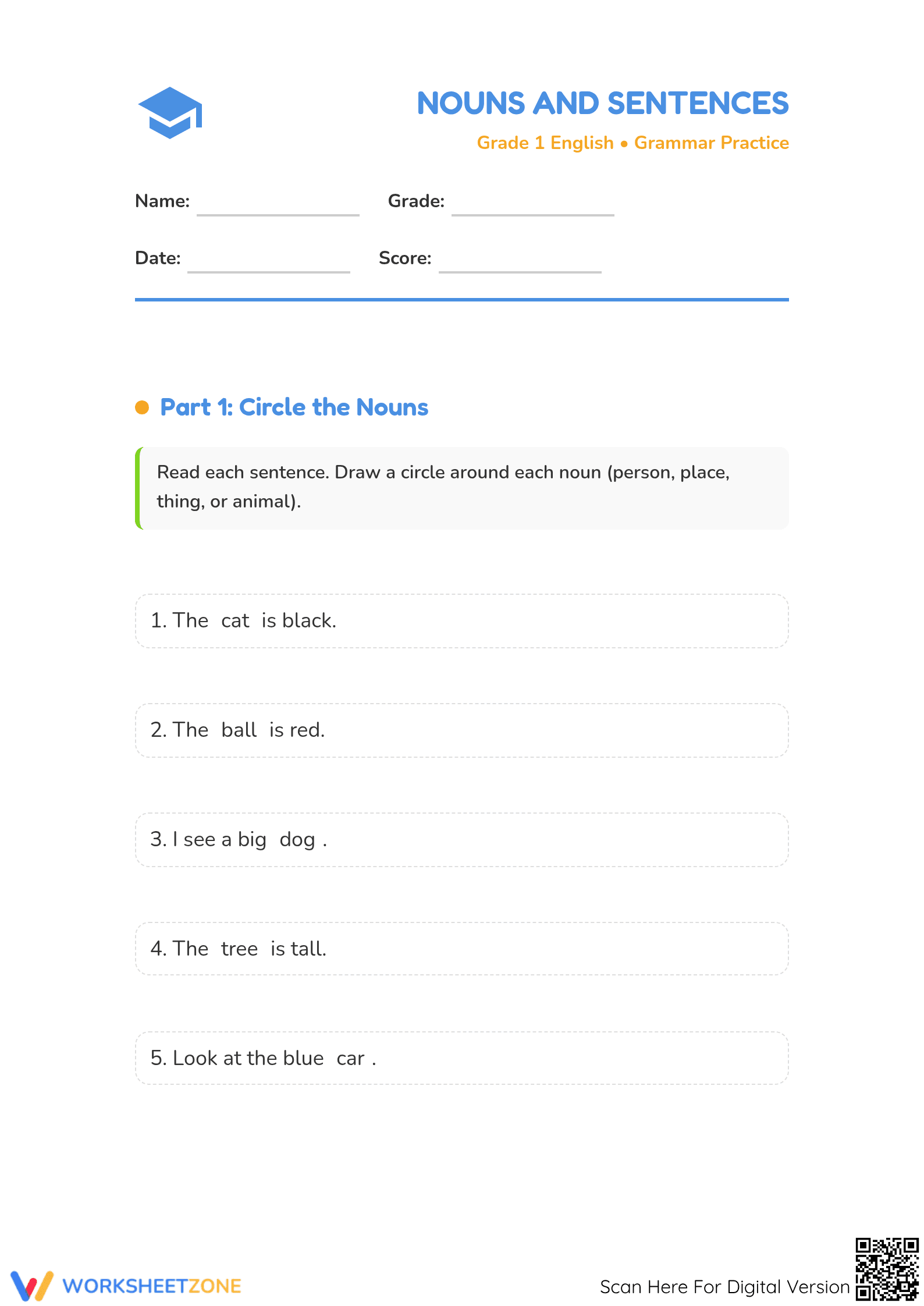
This Grade 1 ELA worksheet helps students master noun identification and usage through structured sentence-based activities. By engaging with 21 distinct tasks, learners develop the ability to recognize people, places, things, and animals within a variety of contexts. This resource ensures students can confidently apply grammar rules to their own writing.
At a Glance
- Grade: 1 · Subject: ELA
- Standard:
CCSS.ELA-LITERACY.L.1.1.B— Use common, proper, and possessive nouns in sentences- Skill Focus: Noun identification and usage
- Format: 4 pages · 21 problems · Answer key included · PDF
- Best For: Independent practice and formative assessment
- Time: 20–30 minutes
What's Inside
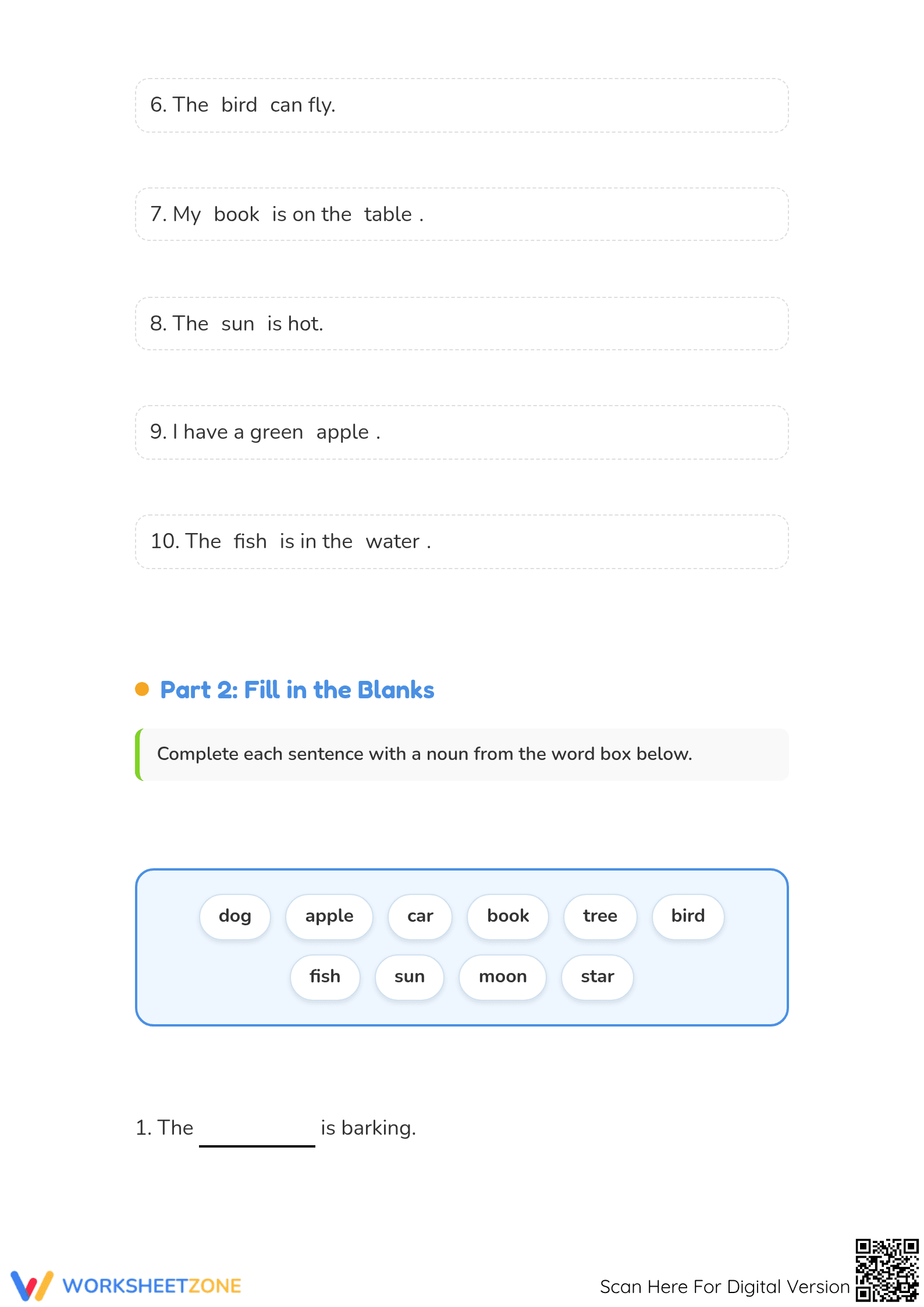
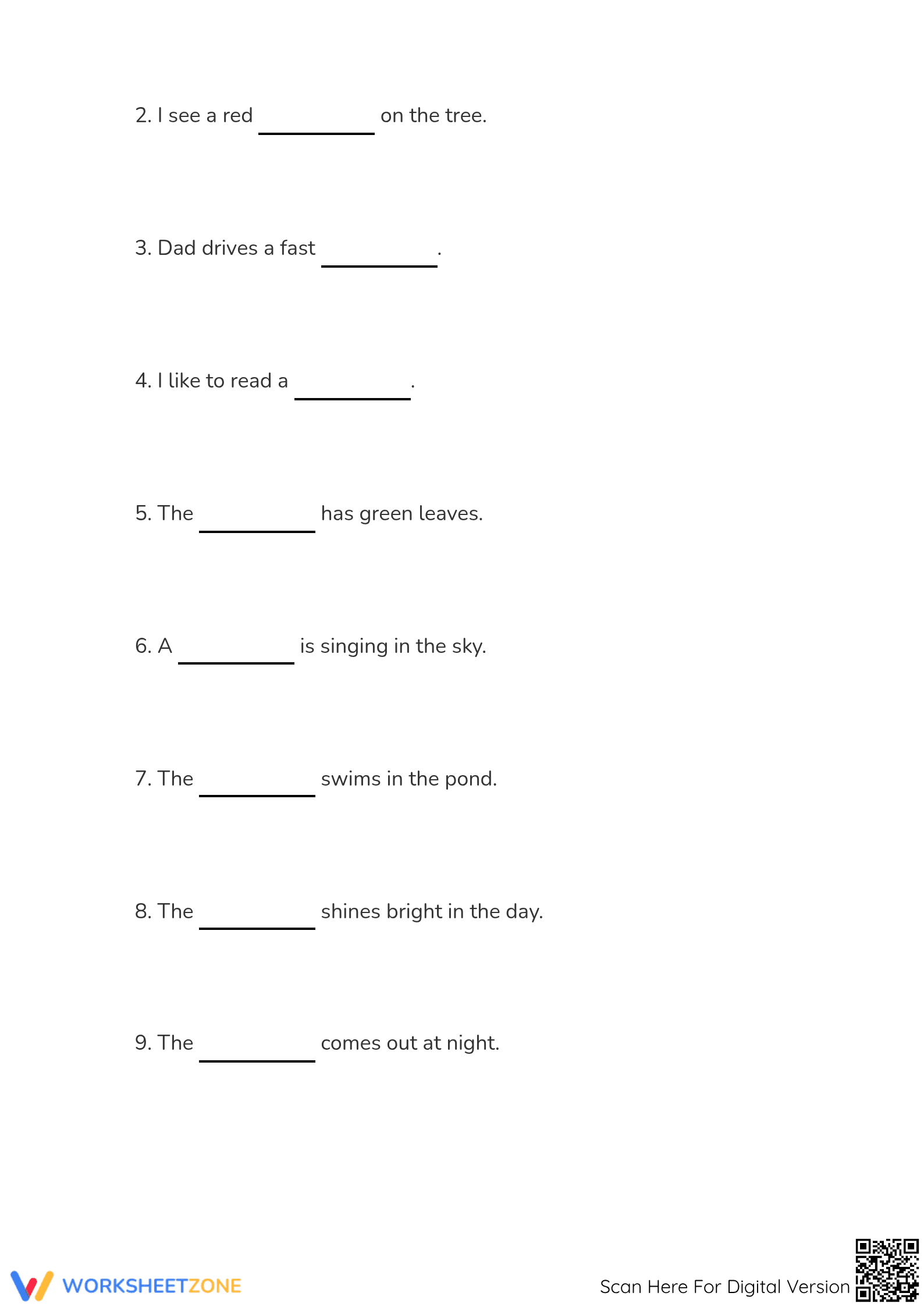
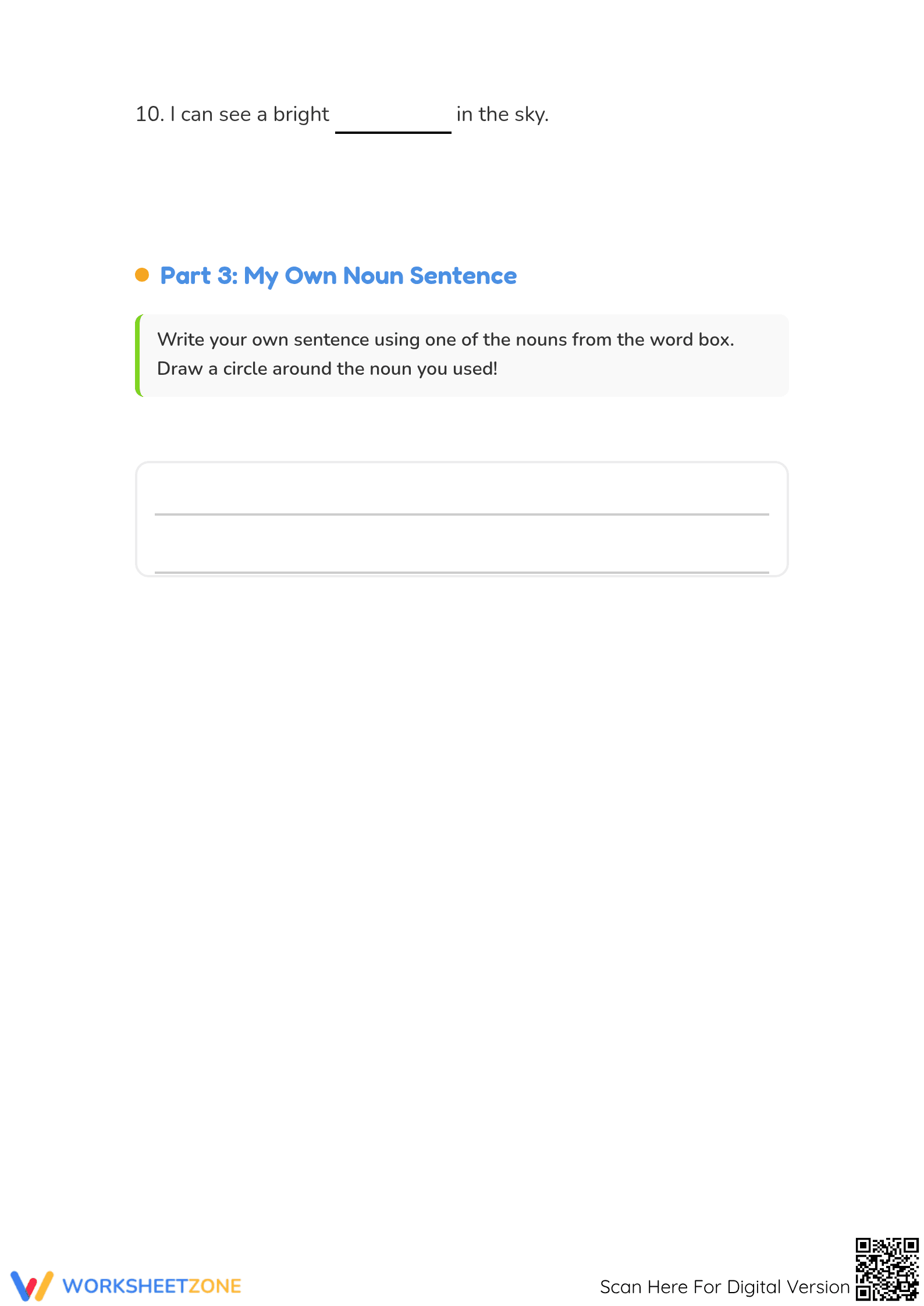
This comprehensive four-page resource includes three distinct sections designed to build confidence. Students begin by identifying nouns in ten sentences, then progress to a fill-in-the-blank section using a provided word bank of ten common nouns. The final page encourages creative application, where students write their own original sentence and identify the noun used. A full answer key is included for quick grading.
Zero-Prep Workflow
The zero-prep design of this resource allows for immediate classroom implementation. Step 1: Print the four-page PDF (30 seconds). Step 2: Distribute to students for independent work or small group instruction (1 minute). Step 3: Review student work using the provided comprehensive answer key (1 minute). This streamlined workflow minimizes teacher administrative burden while maximizing instructional time. It is also an ideal choice for emergency sub plans.
Standards Alignment
This worksheet is aligned to CCSS.ELA-LITERACY.L.1.1.B, which focuses on the use of common, proper, and possessive nouns. It also supports foundational writing skills by requiring students to produce complete sentences. Both standard codes can be copied directly into lesson plans, IEP goals, or district curriculum mapping tools.
How to Use It
Use this worksheet as a formative assessment after an introductory lesson on parts of speech. It works effectively as morning work or a quiet activity during literacy centers. While students work, observe if they can distinguish between nouns and verbs during the circling activity to identify those needing additional support. Completion typically takes 20 to 30 minutes.
Who It's For
This resource is ideal for first-grade students, but it also serves as an excellent intervention tool for second graders or English Language Learners (ELL) who need extra practice with lexical word classes. For best results, pair this worksheet with a noun anchor chart or a short reading passage to reinforce the concept in different formats.
The CCSS.ELA-LITERACY.L.1.1.B standard requires first-grade students to demonstrate command of the conventions of standard English grammar and usage when writing or speaking, specifically focusing on the use of common, proper, and possessive nouns. Research by Fisher & Frey (2014) emphasizes the importance of the gradual release of responsibility model in early literacy instruction. This worksheet facilitates that model by moving from recognition (circling nouns) to application (filling blanks with a word bank) and finally to independent production (writing original sentences). By providing 21 distinct opportunities for practice across 4 pages, this resource ensures that students move beyond rote memorization toward functional grammar mastery. Systematic practice with lexical word classes in the first grade establishes the foundational syntactic awareness necessary for complex sentence construction in later elementary years. This resource serves as a reliable tool for teachers to gather evidence of student progress toward foundational language standards.


