


























0
Views
0
Downloads

7.0
0
Save
0 Likes
Share
Nitrogen Cycle Worksheet for Students
0 Views
0 Downloads
Paste this activity's link or code into your existing LMS (Google Classroom, Canvas, Teams, Schoology, Moodle, etc.).
Students can open and work on the activity right away, with no student login required.
You'll still be able to track student progress and results from your teacher account.
Information
Description
What It Is:
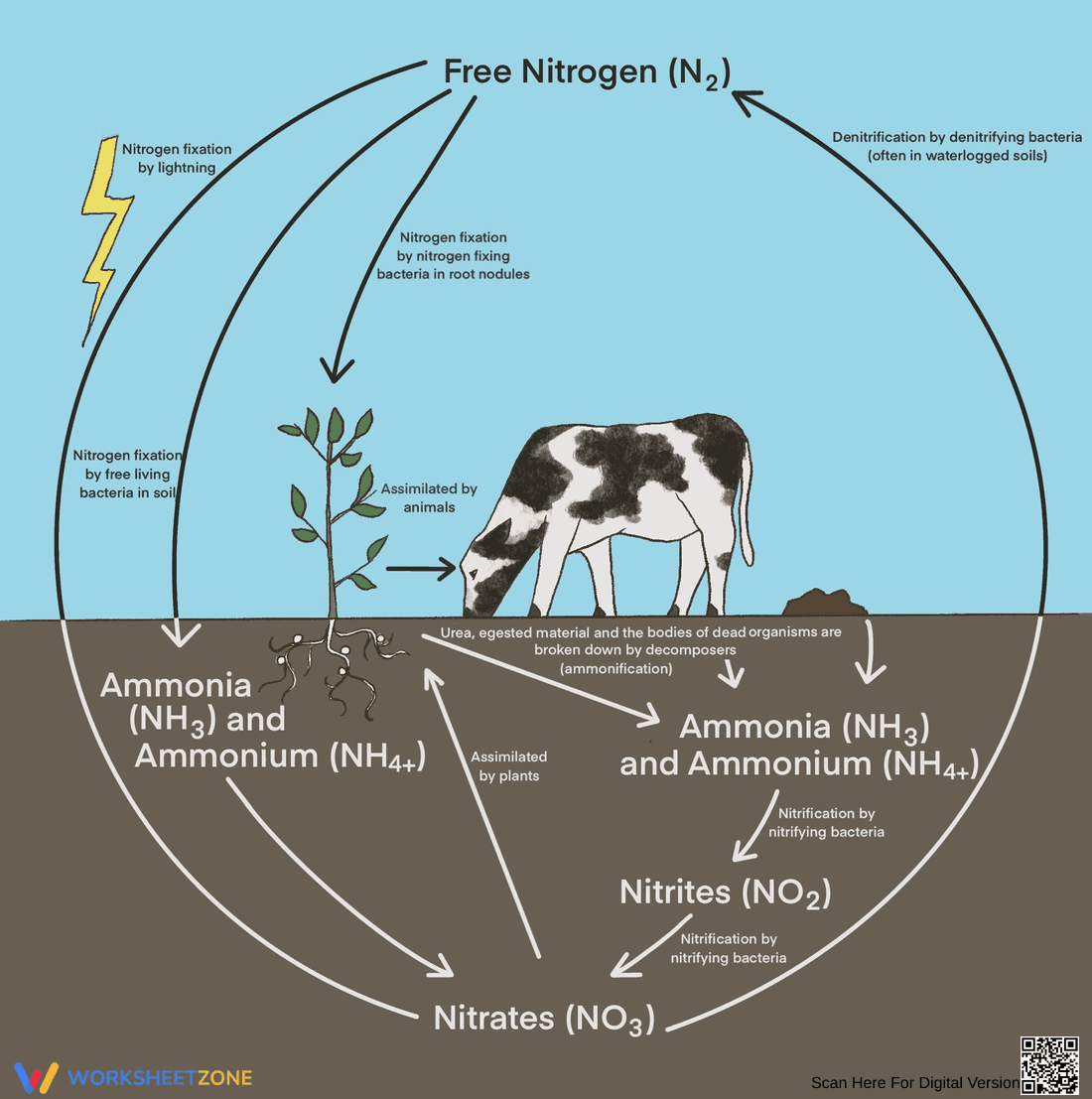
This is a diagram illustrating the nitrogen cycle. It shows the different forms of nitrogen, including free nitrogen (N2), ammonia (NH3), ammonium (NH4+), nitrites (NO2), and nitrates (NO3). The diagram depicts processes such as nitrogen fixation (by lightning and bacteria in soil), assimilation by plants and animals, ammonification, nitrification, and denitrification. A cow, a plant, lightning, and soil layers are visually represented to explain the cycle.
Grade Level Suitability:
This worksheet is suitable for grades 6-9, potentially even higher depending on the depth of study. The complexity of the nitrogen cycle and the chemical formulas require some foundational knowledge of science and chemistry typically introduced in middle school.
Why Use It:
This worksheet helps students understand the nitrogen cycle, a crucial process for life on Earth. It visually explains how nitrogen moves through the environment, including the atmosphere, soil, plants, and animals. It aids in understanding the importance of bacteria in nitrogen conversion and the role of nitrogen in plant growth.
How to Use It:
Use this diagram as a visual aid to explain the nitrogen cycle. Students can label the different parts of the cycle, explain the processes occurring at each stage, and discuss the importance of each component. It can be used as a study guide or a reference during lessons on ecosystems, biogeochemical cycles, or plant nutrition.
Target Users:
This worksheet is designed for middle and high school students studying biology, environmental science, or general science. It can be used by teachers to supplement their lessons on the nitrogen cycle or by students for independent study and review.
This is a diagram illustrating the nitrogen cycle. It shows the different forms of nitrogen, including free nitrogen (N2), ammonia (NH3), ammonium (NH4+), nitrites (NO2), and nitrates (NO3). The diagram depicts processes such as nitrogen fixation (by lightning and bacteria in soil), assimilation by plants and animals, ammonification, nitrification, and denitrification. A cow, a plant, lightning, and soil layers are visually represented to explain the cycle.
Grade Level Suitability:
This worksheet is suitable for grades 6-9, potentially even higher depending on the depth of study. The complexity of the nitrogen cycle and the chemical formulas require some foundational knowledge of science and chemistry typically introduced in middle school.
Why Use It:
This worksheet helps students understand the nitrogen cycle, a crucial process for life on Earth. It visually explains how nitrogen moves through the environment, including the atmosphere, soil, plants, and animals. It aids in understanding the importance of bacteria in nitrogen conversion and the role of nitrogen in plant growth.
How to Use It:
Use this diagram as a visual aid to explain the nitrogen cycle. Students can label the different parts of the cycle, explain the processes occurring at each stage, and discuss the importance of each component. It can be used as a study guide or a reference during lessons on ecosystems, biogeochemical cycles, or plant nutrition.
Target Users:
This worksheet is designed for middle and high school students studying biology, environmental science, or general science. It can be used by teachers to supplement their lessons on the nitrogen cycle or by students for independent study and review.


