


























Views
Downloads
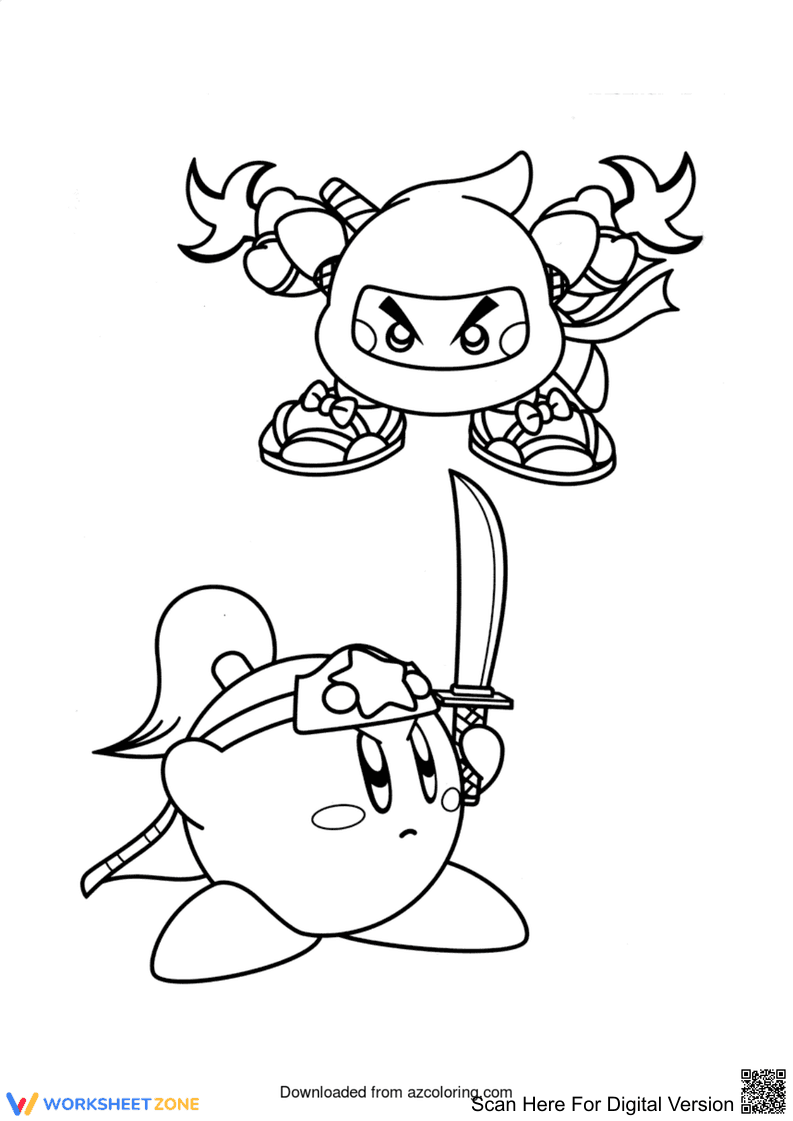

Ninja Kirby Coloring Page | Essential Grade K-2
Paste this activity's link or code into your existing LMS (Google Classroom, Canvas, Teams, Schoology, Moodle, etc.).
Students can open and work on the activity right away, with no student login required.
You'll still be able to track student progress and results from your teacher account.
This Ninja Kirby coloring worksheet provides early learners with a high-interest activity to develop essential fine motor control and hand-eye coordination. By engaging with familiar characters, students practice the precision required for future writing tasks while exploring creative expression. It serves as a functional tool for transitioning between lessons or as a focused quiet-time activity.
At a Glance
- Grade: K-5 · Subject: Arts & English
- Standard:
CCSS.ELA-LITERACY.L.K.1— Demonstrate command of the conventions of standard English grammar and usage when writing- Skill Focus: Fine Motor Control
- Format: 1 page · 1 task · No answer key required · PDF
- Best For: Morning work or early finishers
- Time: 15–20 minutes
This single-page PDF features two distinct Ninja Kirby illustrations with bold, clear outlines designed for easy coloring. The layout provides ample white space for students to practice staying within lines, a precursor to letter formation. No complex instructions are needed, making it an ideal resource for independent student work or as part of a larger character-themed unit.
Zero-Prep Workflow
- Print: Select the single-page PDF and print enough copies for your group (30 seconds).
- Distribute: Hand out the sheets along with crayons, markers, or colored pencils (1 minute).
- Review: Observe student grip and spatial awareness as they complete the task (30 seconds).
Total teacher preparation time is under two minutes, making this an excellent option for unexpected sub plans or transition periods.
Standards Alignment
The primary alignment for this activity is `CCSS.ELA-LITERACY.L.K.1`, which focuses on the physical command of writing tools. While primarily an artistic task, the grip and pressure control practiced during coloring directly support the foundational mechanics of handwriting. Both standard codes can be copied directly into lesson plans, IEP goals, or district curriculum mapping tools.
How to Use It
Use this worksheet during the "settle-in" period at the start of the school day to help students focus. It also functions effectively as a formative assessment tool; observe how students hold their coloring utensils to identify those who may need additional occupational therapy support. Expected completion typically takes 15 to 20 minutes depending on the student's detail orientation.
Who It's For
This resource is tailored for preschool through second-grade students who are refining their motor skills, though older Kirby fans will also find it engaging. It is particularly useful for students requiring sensory breaks or those working on specific IEP goals related to task stamina. Pair this with a short reading passage about ninjas or a character-building lesson on perseverance.
Research by Fisher & Frey (2014) emphasizes the importance of purposeful independent practice in the gradual release of responsibility model. While coloring may appear purely recreational, it serves as a critical scaffold for developing the intrinsic hand muscles necessary for sustained writing endurance. This Ninja Kirby worksheet aligns with CCSS.ELA-LITERACY.L.K.1 by providing a low-stakes environment for students to master tool manipulation. According to the Fisher & Frey framework, such activities allow students to apply motor skills independently before moving to more complex linguistic tasks. By integrating high-interest visual content with foundational skill-building, educators can increase student engagement while meeting essential developmental milestones. This specific resource facilitates the transition from gross motor movements to the fine motor precision required for academic success in early elementary grades. It is a practical, evidence-based addition to any early childhood or primary classroom toolkit.


