


























Views
Downloads
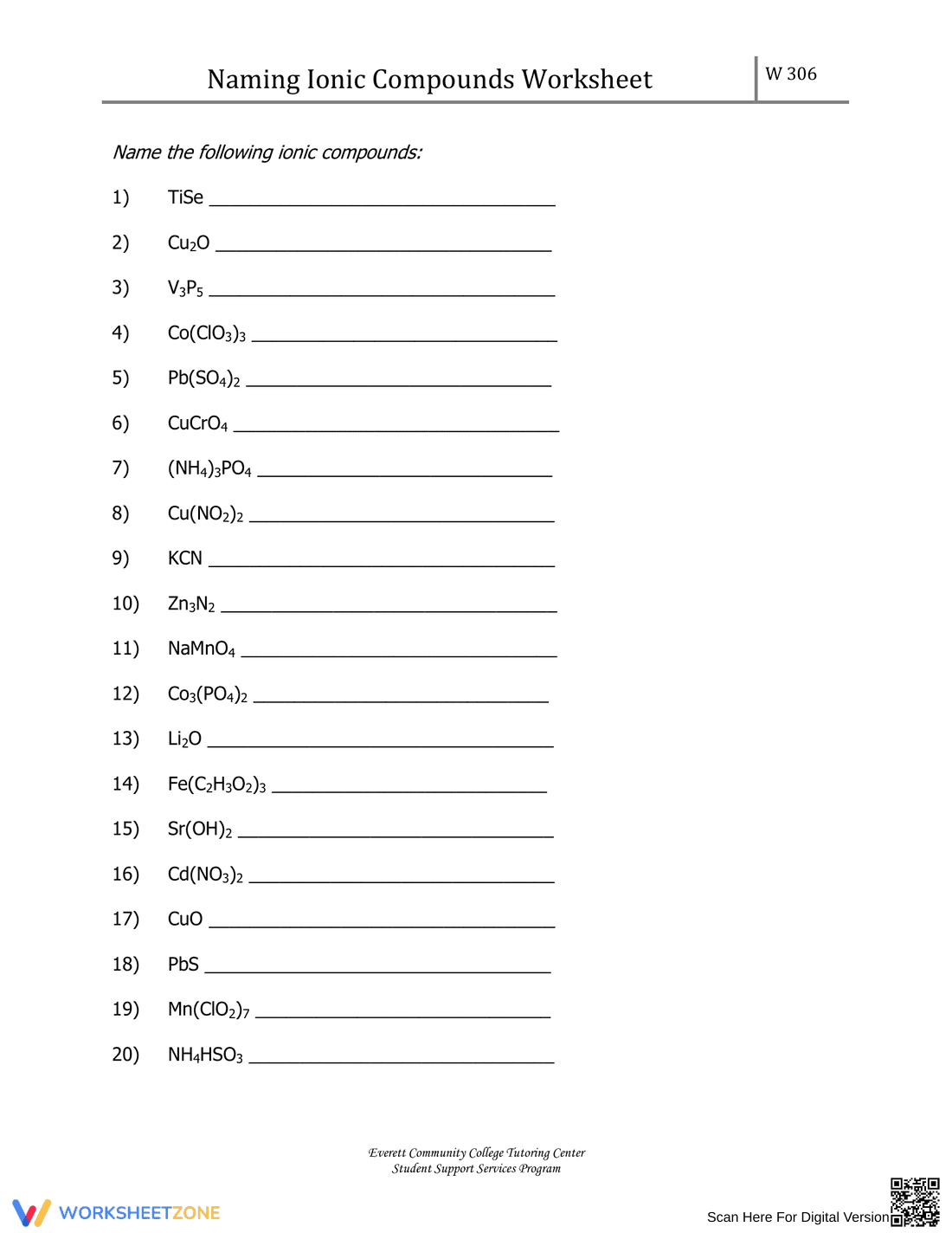
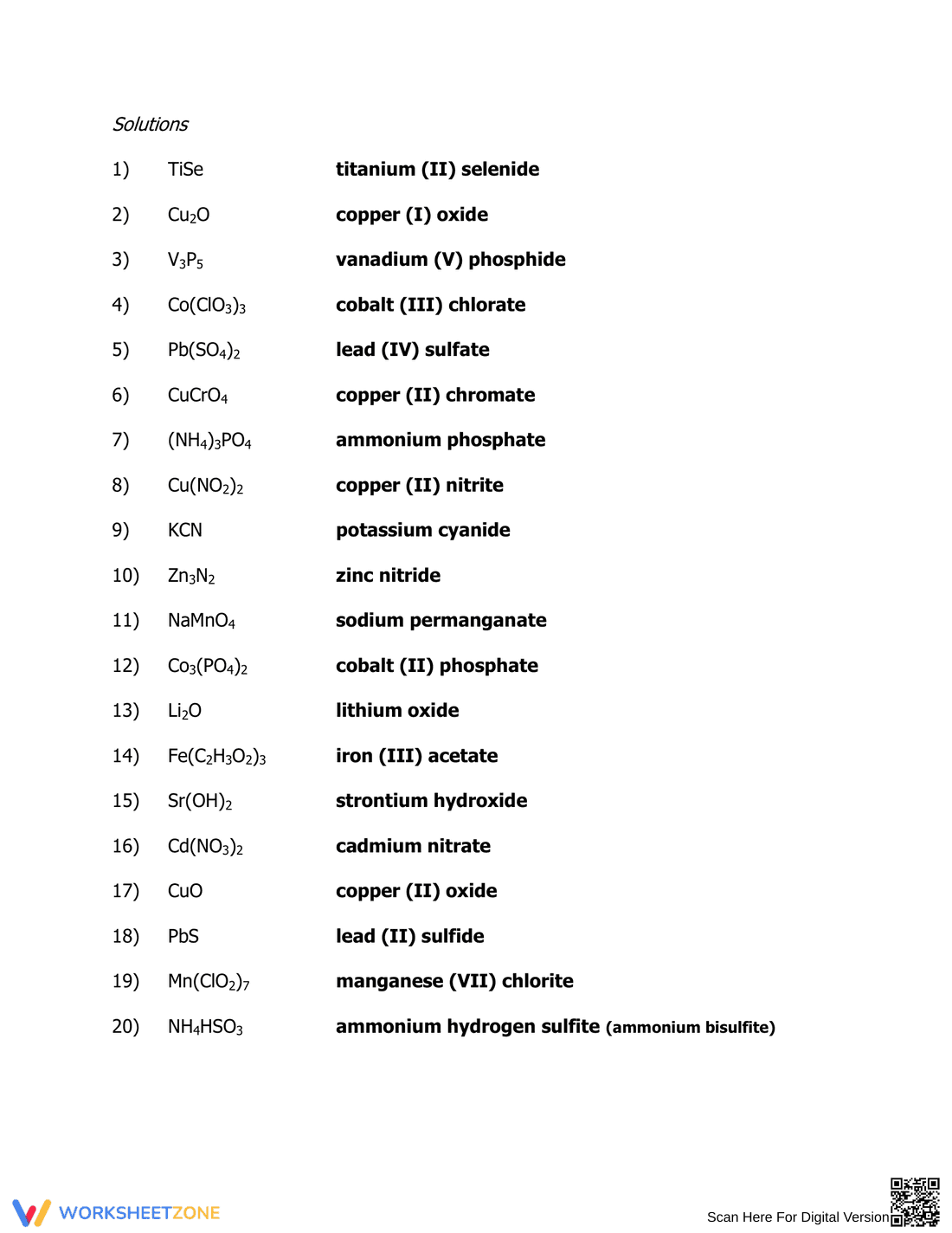

Grades 9-12 Ionic Compounds — Printable No-Prep Worksheet
Paste this activity's link or code into your existing LMS (Google Classroom, Canvas, Teams, Schoology, Moodle, etc.).
Students can open and work on the activity right away, with no student login required.
You'll still be able to track student progress and results from your teacher account.
This high school chemistry worksheet provides targeted practice for naming ionic compounds, ensuring students can accurately translate chemical formulas into standard nomenclature. By working through these problems, learners will solidify their understanding of transition metal charges, polyatomic ions, and foundational chemical vocabulary required for advanced reactions.
At a Glance
- Grade: 9-12 · Subject: Chemistry
- Standard:
HS-PS1-2— Construct explanations for chemical reactions based on electron states.- Skill Focus: Naming ionic compounds
- Format: 2 pages · 20 problems · Answer key included · PDF
- Best For: Independent practice and review
- Time: 15–20 minutes
Inside this resource, educators will find a straightforward, single-page assignment featuring 20 distinct chemical formulas that require proper naming. The problem set includes a mix of standard binary ionic compounds, compounds containing polyatomic ions, and transition metals requiring Roman numerals to denote specific oxidation states. A complete, separate one-page answer key is provided to facilitate quick grading or allow for student self-assessment.
Zero-Prep Workflow
This resource is designed for immediate classroom implementation:
- Print (1 minute): Print the single-page student handout. The design ensures fast copying.
- Distribute (1 minute): Hand out as a warm-up or homework task.
- Review (3 minutes): Use the included answer key to quickly check student work.
Total teacher preparation time is under two minutes, making this an excellent option for substitute plans.
Standards Alignment
This practice aligns with HS-PS1-2: Construct and revise an explanation for the outcome of a simple chemical reaction based on the outermost electron states of atoms, trends in the periodic table, and knowledge of the patterns of chemical properties. Mastery of chemical nomenclature is a prerequisite for balancing equations and predicting reaction outcomes. Both standard codes can be copied directly into lesson plans, IEP goals, or district curriculum mapping tools.
How to Use It
Deploy this worksheet immediately following direct instruction on ionic bonding and nomenclature rules. It serves as an excellent independent practice activity to solidify new concepts. Alternatively, use it as a formative assessment tool; observe whether students remember to include Roman numerals for transition metals like copper and iron, which often indicates their grasp of variable oxidation states. Students should be able to complete the 20 problems within a 15 to 20-minute timeframe.
Who It's For
This assignment is ideal for high school chemistry or physical science students who have just been introduced to chemical naming conventions. For students requiring additional support, provide a periodic table with common polyatomic ions and transition metal charges to reference while working. This worksheet pairs perfectly with introductory lessons on chemical bonding or as a review activity before moving into stoichiometry.
Consistent practice with foundational skills like naming ionic compounds is critical for long-term success in secondary science courses. According to a ScienceDirect TpT Analysis, structured repetition of core vocabulary and nomenclature significantly reduces cognitive load when students transition to more complex tasks, such as balancing chemical equations and predicting reaction outcomes. By mastering the skills aligned with HS-PS1-2, where students construct explanations for chemical reactions based on electron states, learners build the automaticity required for advanced scientific reasoning. When students do not have to struggle to identify a compound from its formula, they can dedicate their working memory to understanding the underlying chemical phenomena. This targeted worksheet provides exactly the type of focused practice that researchers recommend for cementing essential scientific literacy and preparing students for rigorous laboratory applications.


