




























Views
Downloads
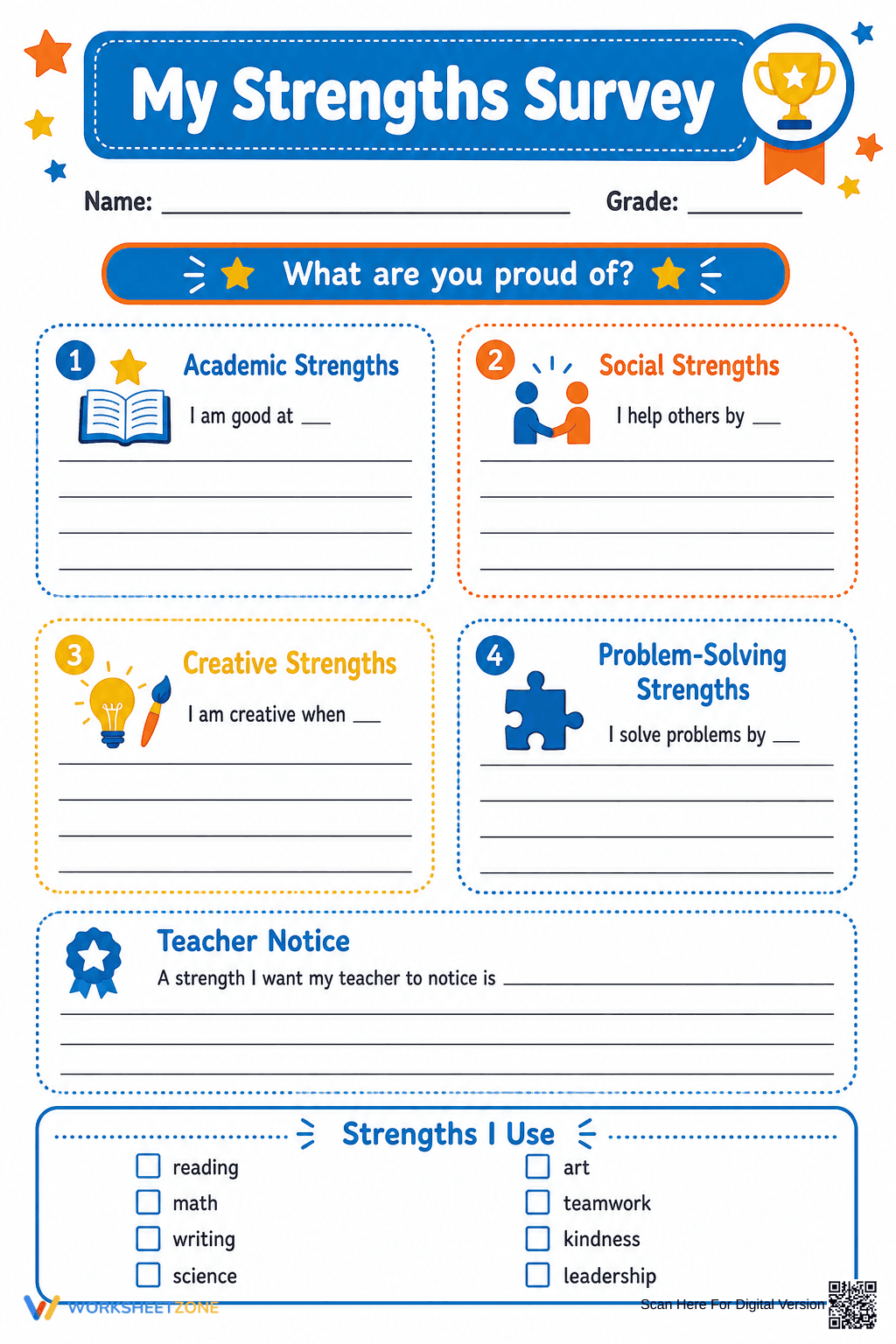

My Strengths Survey | Essential Grade 4-6 SEL Worksheet

Paste this activity's link or code into your existing LMS (Google Classroom, Canvas, Teams, Schoology, Moodle, etc.).
Students can open and work on the activity right away, with no student login required.
You'll still be able to track student progress and results from your teacher account.
This Grade 4-6 self-awareness worksheet helps students identify and articulate their personal assets across academic, social, and creative domains. By completing structured reflection prompts, learners build the confidence necessary for a growth mindset and positive classroom culture. It provides a clear framework for students to communicate their unique value to teachers and peers before moving into more complex collaborative work.
At a Glance
- Grade: 4-6 · Subject: Social Emotional Learning
- Standard:
CCSS.ELA-LITERACY.W.4.10— Write routinely for a range of discipline-specific tasks and purposes.- Skill Focus: Self-Awareness & Reflection
- Format: 1 page · 6 tasks · No answer key needed · PDF
- Best For: Back-to-school icebreakers and student inventories
- Time: 15–20 minutes
What's Inside: This single-page PDF features a clean, organized layout with five distinct writing zones and one quick-check list. The worksheet includes four rounded cards focusing on Academic, Social, Creative, and Problem-Solving strengths, each with a sentence starter and three ruled lines. A dedicated "Teacher Notice" section allows for deeper reflection, while the "Strengths I Use" checklist covers eight common student skills ranging from math and science to teamwork and kindness.
Zero-Prep Workflow: This resource is designed for immediate classroom implementation with a total teacher prep time of under 2 minutes. First, print the single-page PDF (30 seconds). Second, distribute the sheets to students as a morning warm-up or transition activity (30 seconds). Finally, review the completed surveys to gain instant insights into student self-perception and interests (1 minute). It is an ideal "sub plan" filler or first-week activity that requires no prior instruction.
Standards Alignment: The primary alignment is `CCSS.ELA-LITERACY.W.4.10`, which requires students to write routinely over shorter time frames for a range of tasks. By reflecting on personal attributes, students practice functional writing that serves a social-emotional purpose. This activity also supports CASEL competencies for self-awareness. Both standard codes can be copied directly into lesson plans, IEP goals, or district curriculum mapping tools.
How to Use It: Use this survey during the first week of school as a formative assessment of student writing stamina and self-concept. It serves as an excellent "get to know you" tool that goes beyond surface-level hobbies. Alternatively, assign it before parent-teacher conferences to provide students with a voice in describing their own progress. Observe which students struggle to identify strengths to target those needing extra confidence-building support during the first month of school.
Who It's For: This worksheet is tailored for upper elementary and middle school students (Grades 4–6) who are developing metacognitive skills. It is particularly effective for inclusive classrooms where students may have diverse strengths not always captured by traditional testing. Pair this with a growth mindset anchor chart or a classroom "Wall of Fame" to celebrate the identified strengths of every learner in the room.
Research by Fisher & Frey (2014) emphasizes that self-reflection is a critical component of the gradual release of responsibility, allowing students to take ownership of their learning identity. This worksheet aligns with the CASEL framework for self-awareness, specifically the ability to recognize one's strengths and maintain a well-grounded sense of self-confidence. By utilizing the `CCSS.ELA-LITERACY.W.4.10` standard, educators ensure that even non-academic reflection time contributes to writing fluency and routine practice. Data from the NAEP suggests that students who can articulate their learning preferences and strengths show higher engagement levels in complex tasks. This 1-page inventory provides the necessary scaffolding for students to bridge the gap between internal feelings and external communication, making it a vital tool for establishing a supportive and responsive classroom environment from day one.


