


























Views
Downloads
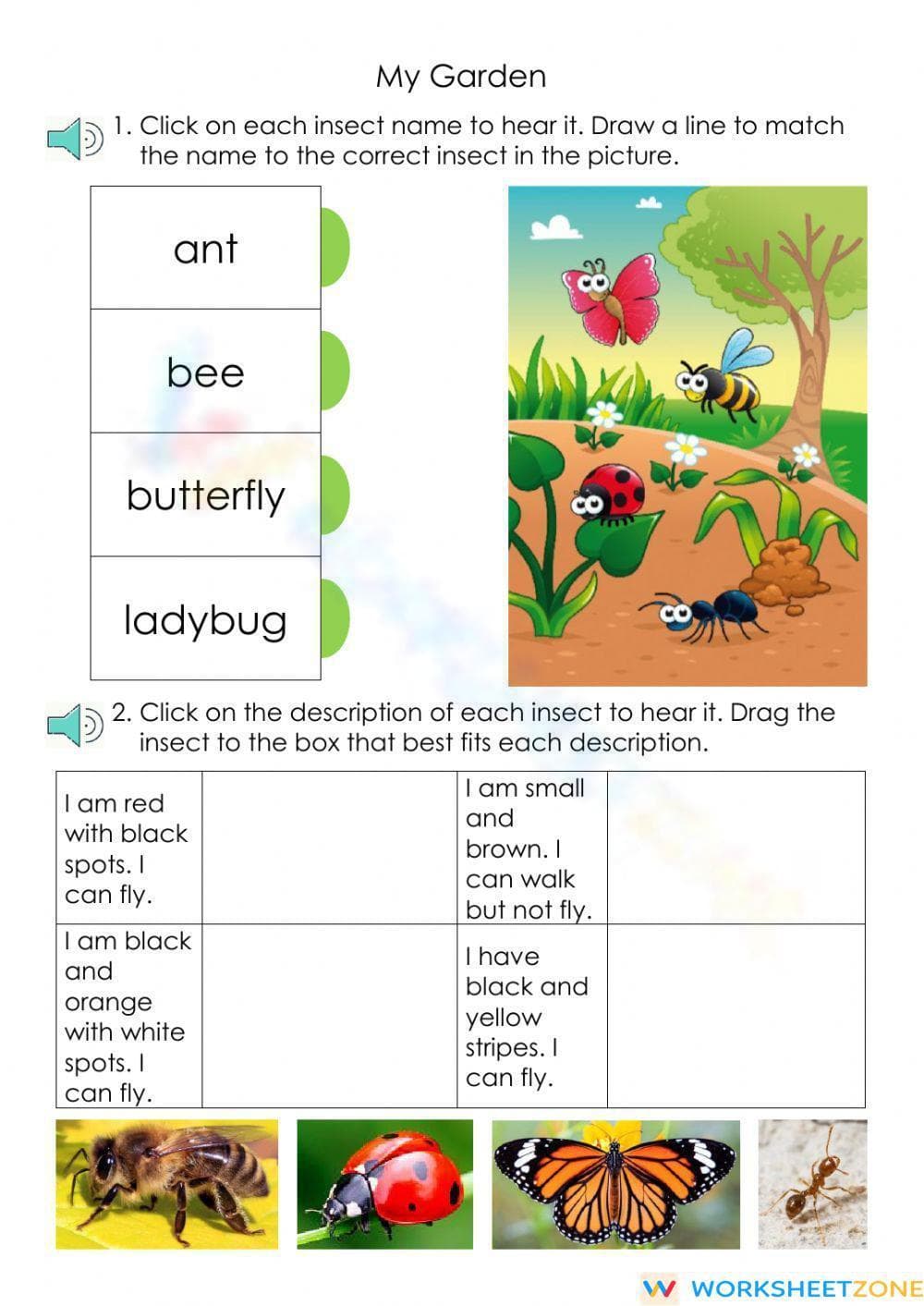

Grade K My Garden — Printable No-Prep Insect Worksheet
Paste this activity's link or code into your existing LMS (Google Classroom, Canvas, Teams, Schoology, Moodle, etc.).
Students can open and work on the activity right away, with no student login required.
You'll still be able to track student progress and results from your teacher account.
This printable garden-themed worksheet introduces early learners to common insects and their descriptive characteristics. Students practice identifying ants, bees, butterflies, and ladybugs through matching and categorization tasks. By connecting names and descriptions to visual images, children build essential vocabulary and observation skills. This resource is perfect for a spring-themed unit or a nature science lesson.
At a Glance
- Grade: Kindergarten · Subject: English Language Arts
- Standard:
CCSS.ELA-LITERACY.L.K.5.A— Sort common objects into categories to gain a sense of the concepts the categories represent- Skill Focus: Garden insect identification and descriptive vocabulary
- Format: 1 page · 8 problems · Answer key included · PDF
- Best For: Independent morning work or nature-themed centers
- Time: 10–15 minutes
This single-page worksheet features two distinct sections designed for literacy success. The first section contains four matching items where students link written insect names—ant, bee, butterfly, and ladybug—to vibrant illustrations. The second section provides four descriptive riddles that challenge students to categorize insects based on physical traits like color, spots, and movement. This structured approach ensures students receive multiple exposures to key vocabulary.
Zero-Prep Workflow
Using this worksheet requires minimal effort from busy educators. Step 1: Print the PDF or open the interactive version (1 minute). Step 2: Distribute to students for independent practice (1 minute). Step 3: Review the completed work using the included answer key to identify vocabulary gaps (1 minute). Total teacher preparation time is under 2 minutes, making this an ideal emergency sub-plan.
Standards Alignment
The primary alignment for this activity is `CCSS.ELA-LITERACY.L.K.5.A`, which focuses on sorting common objects into categories to gain a sense of the concepts the categories represent. By distinguishing between different insects based on specific attributes like wing patterns and locomotion, students demonstrate foundational cognitive sorting skills. Both standard codes can be copied directly into lesson plans, IEP goals, or district curriculum mapping tools.
How to Use It
Introduce the worksheet after a direct instruction session on garden habitats or during a nature walk debrief. For a formative assessment observation, watch as students process the descriptions in the second task to see if they can differentiate between black and orange versus red with black spots. This activity typically takes 10 to 15 minutes to complete depending on student reading levels.
Who It's For
This resource is specifically designed for Preschool and Kindergarten students who are building their initial sight word vocabulary and descriptive language. It provides excellent support for English Language Learners (ELL) through high-quality visual aids. Pair this worksheet with a picture book about gardens or an anchor chart showing different backyard animals for maximum instructional impact in the early childhood classroom.
The My Garden worksheet provides a structured environment for Kindergarten students to master the CCSS.ELA-LITERACY.L.K.5.A standard through categorization and attribute identification. Research from EdReports (2024) emphasizes that early exposure to specific, thematic vocabulary significantly improves long-term reading comprehension and cognitive development. By requiring students to match insects like ladybugs and bees to specific descriptors—such as red with black spots or yellow stripes—the activity reinforces the mental schemas necessary for scientific observation. This type of scaffolded practice aligns with best practices for early literacy, ensuring that students move beyond simple naming to understanding functional and physical characteristics. Teachers can use the 8 task items as a reliable metric for determining student mastery of category-based language, providing a clear data point for progress monitoring in both general education and inclusive classroom settings. This resource is a vital addition to any Kindergarten teacher's toolkit for monitoring foundational ELA standards.


