


























Views
Downloads
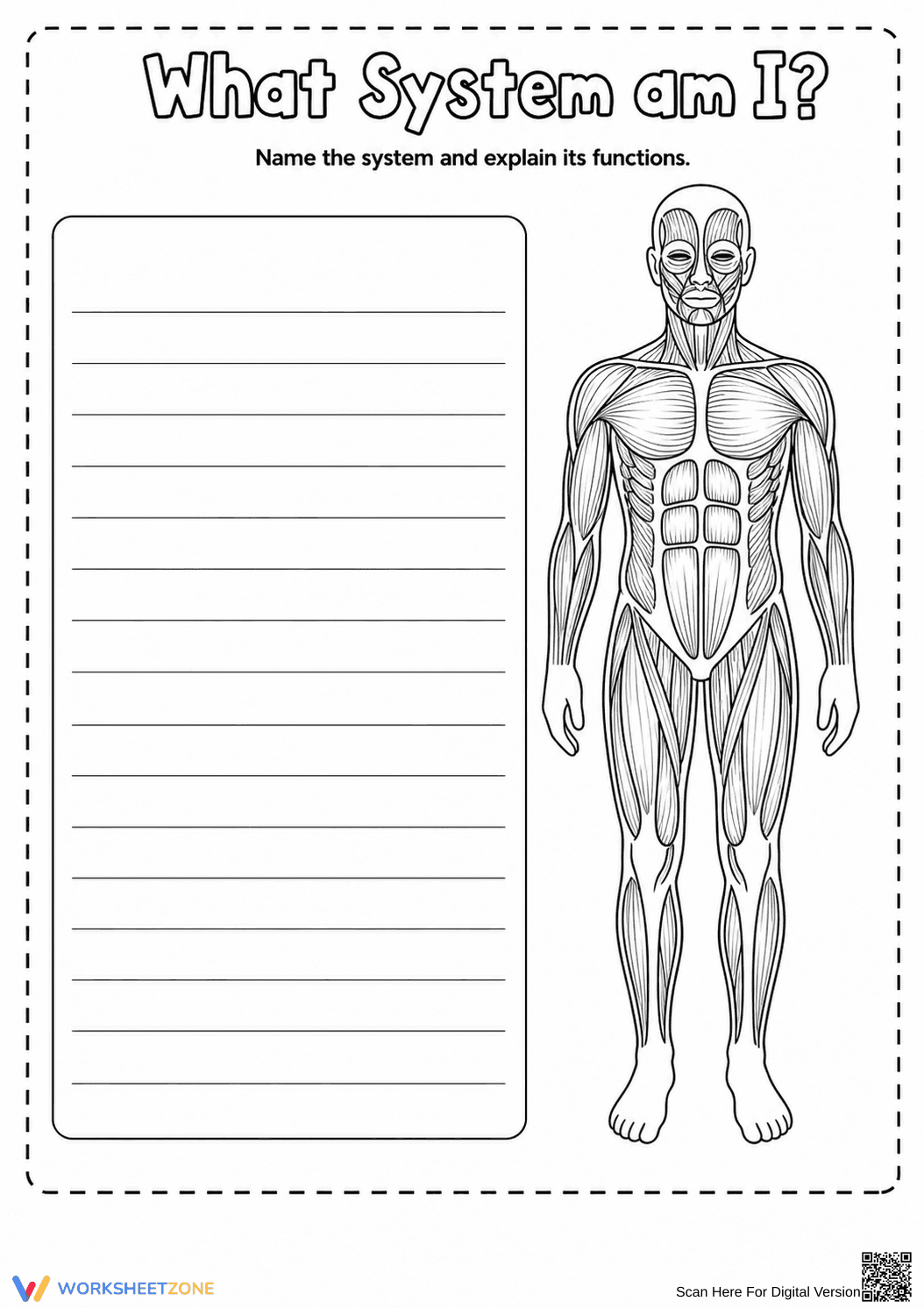

Muscular System Worksheet | Grade 5-8 Essential
Paste this activity's link or code into your existing LMS (Google Classroom, Canvas, Teams, Schoology, Moodle, etc.).
Students can open and work on the activity right away, with no student login required.
You'll still be able to track student progress and results from your teacher account.
This muscular system worksheet challenges students to identify the human muscular system from a detailed anatomical illustration and articulate its primary functions. By connecting visual recognition with descriptive writing, students demonstrate a comprehensive understanding of how muscles facilitate movement and support the skeletal structure.
At a Glance
- Grade: 5-8 · Subject: Science
- Standard:
MS-LS1-3— Use evidence to explain how the body is a system of interacting subsystems- Skill Focus: Anatomical Identification
- Format: 1 page · 2 tasks · Answer key included · PDF
- Best For: Formative assessment or quick review
- Time: 15–20 minutes
The resource features a high-quality line-art illustration of the human muscular system, providing a clear visual reference for students. Below the prompt, a generous ruled writing area allows for detailed explanations. The single-page PDF format ensures that the core objective—linking structure to function—remains the central focus without distracting elements or unnecessary teacher setup.
The zero-prep workflow is designed for maximum efficiency. Print the single-page PDF in under 30 seconds. Distribute to students as a bell-ringer or exit ticket, requiring zero verbal instructions due to the self-explanatory prompt. Review student responses using the included answer key in less than 5 minutes to gauge class-wide mastery of body system interactions and identify any common misconceptions about muscle physiology.
This worksheet is aligned to MS-LS1-3, which requires students to use argument supported by evidence for how the body is a system of interacting subsystems composed of groups of cells. This worksheet provides the foundational evidence-gathering step by requiring students to define the specific role of the muscular subsystem. Both standard codes can be copied directly into lesson plans, IEP goals, or district curriculum mapping tools.
Use this as a formative assessment after a direct instruction lesson on human anatomy. It serves as an excellent bridge between viewing a diagram and performing a more complex dissection or lab activity. Teachers can observe whether students mention voluntary versus involuntary movement to differentiate between basic identification and deeper conceptual understanding. Expected completion time ranges from 15 to 20 minutes depending on the depth of explanation required.
This resource is ideal for middle school science students and upper elementary learners exploring life science. It is particularly effective for English Language Learners (ELLs) who benefit from the visual support of the diagram while practicing scientific writing. Pair this with a 3D torso model or an interactive skeletal system chart for a multi-sensory learning experience that reinforces the connection between different body systems.
According to the RAND AIRS 2024 report on science literacy, the integration of visual diagrams with open-ended writing prompts significantly improves long-term retention of anatomical concepts compared to multiple-choice testing alone. This worksheet utilizes the MS-LS1-3 standard to bridge the gap between simple identification and functional analysis. By requiring students to explain the "why" behind the "what," the activity aligns with Fisher & Frey’s (2014) gradual release of responsibility model, moving students toward independent mastery of complex biological systems. The clear anatomical rendering serves as a non-linguistic representation that supports diverse learners in identifying the muscular system's role in human physiology. This structured approach ensures that Grade 5-8 students develop the precise vocabulary and conceptual frameworks necessary for advanced high school biology, making it a reliable tool for standards-based science instruction.


