


























Views
Downloads

Essential Grade 5 Decimals Mind Riddle | Printable Math
Paste this activity's link or code into your existing LMS (Google Classroom, Canvas, Teams, Schoology, Moodle, etc.).
Students can open and work on the activity right away, with no student login required.
You'll still be able to track student progress and results from your teacher account.
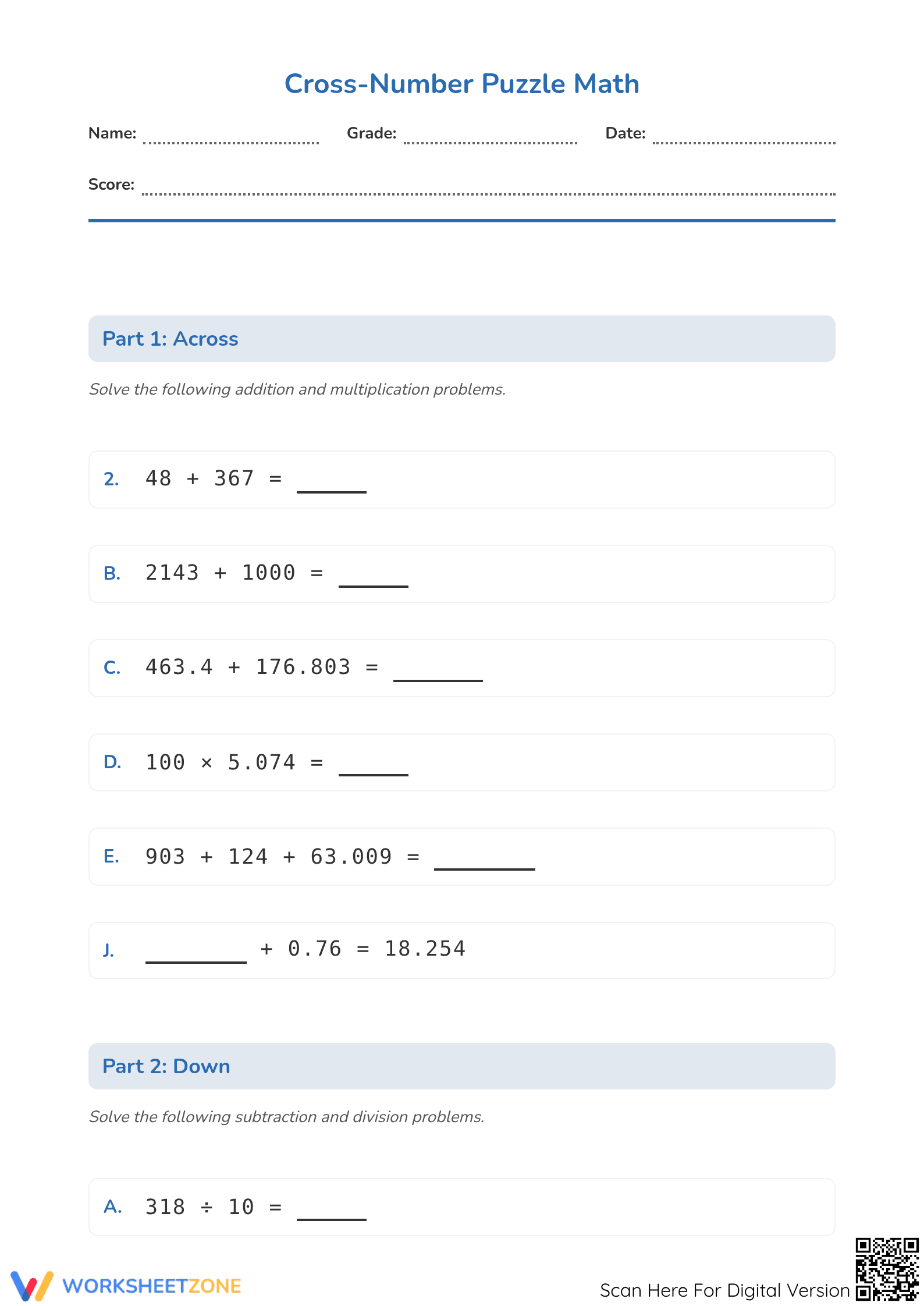
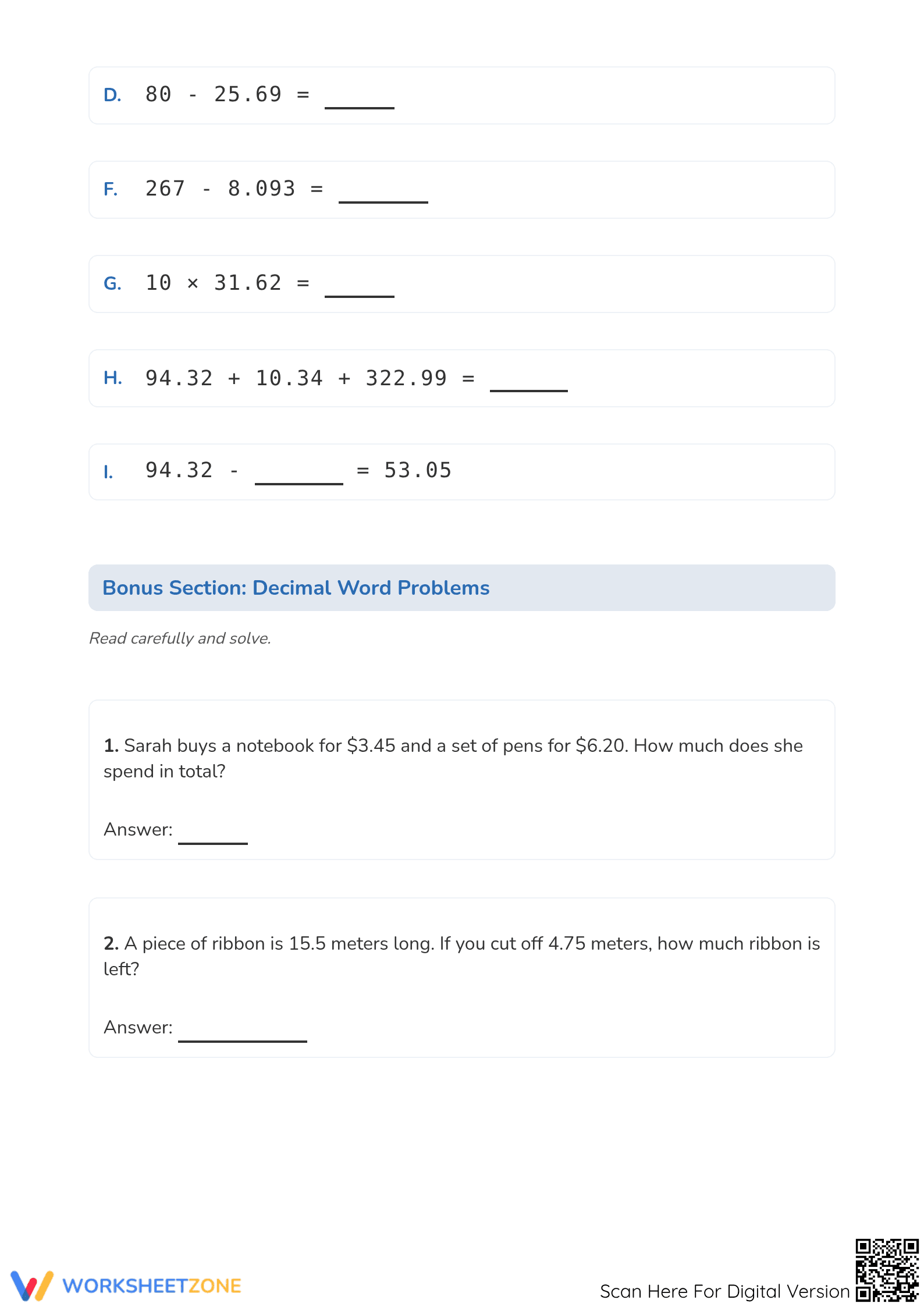
This Grade 5 decimals mind riddle worksheet engages students in rigorous decimal computation through a fun, mystery-solving format. Students perform addition and subtraction of decimals to the hundredths place, using their answers to decode a hidden message. This activity transforms routine practice into a high-interest challenge that ensures students remain focused on accuracy while building computational fluency.
At a Glance
- Grade: 5 · Subject: Math
- Standard:
5.NBT.B.7— Add and subtract decimals to hundredths using place value strategies- Skill Focus: Decimal Addition and Subtraction
- Format: 3 pages · 24 problems · Answer key included · PDF
- Best For: Independent practice or fun sub plans
- Time: 25–35 minutes
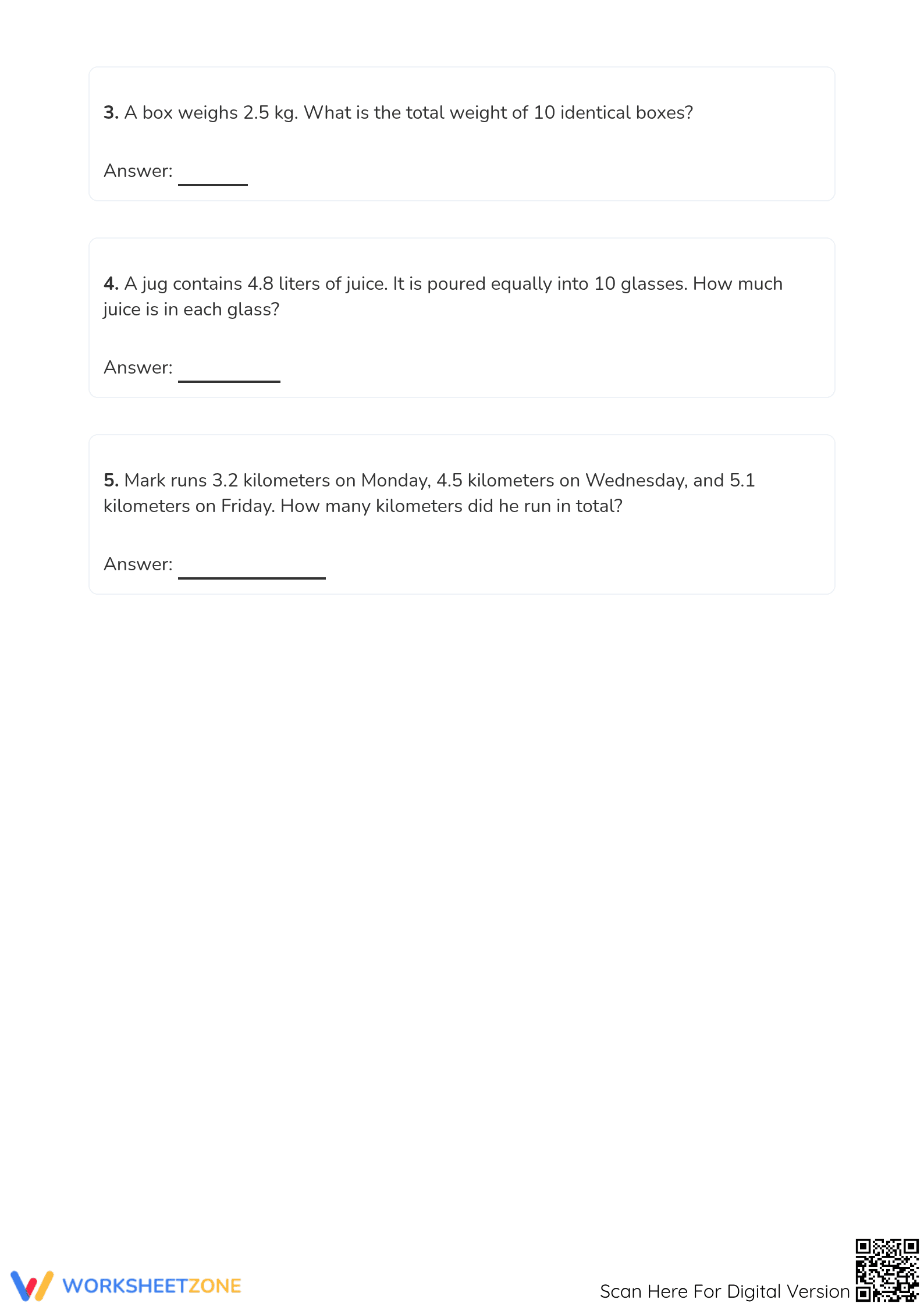
The "Mind Riddle" packet includes three comprehensive pages of decimal operations. Each page features a set of distinct problems where students must align decimal points and compute sums and differences. The self-checking nature of the riddle ensures immediate feedback; if the message doesn't make sense, students know they need to revisit their calculations. A full answer key is included for rapid teacher review or student self-correction.
The zero-prep workflow for this resource is designed for busy educators. Step 1: Print the three-page PDF (less than 30 seconds). Step 2: Distribute to students for independent work or as a math center activity (1 minute). Step 3: Review the decoded riddles to verify mastery (1 minute). This streamlined process requires under two minutes of teacher preparation, making it an ideal choice for emergency sub plans or "fast finisher" packets.
This resource is strictly aligned to `5.NBT.B.7`, which requires students to add and subtract decimals to hundredths, using concrete models or drawings and strategies based on place value, properties of operations, and the relationship between addition and subtraction. It also supports `4.NF.C.7` for transitionary learners. Both standard codes can be copied directly into lesson plans, IEP goals, or district curriculum mapping tools.
Use this worksheet as a formative assessment during the independent practice phase of your decimals unit. It works exceptionally well as a transition activity between direct instruction and small-group rotations. Observe students to ensure they are correctly aligning the decimal points, especially when adding or subtracting numbers with a different number of digits. The expected completion time for most fifth graders is approximately 30 minutes.
This worksheet is primarily designed for Grade 5 students, though it provides excellent challenge material for Grade 4 or review for Grade 6. It accommodates diverse learners by providing a clear goal (the riddle), which motivates students who struggle with abstract math. It pairs naturally with a place-value anchor chart or a short passage explaining the importance of the decimal point in financial transactions.
According to research from RAND AIRS 2024, the integration of game-like elements into mathematical practice significantly increases student engagement and "time on task" for computational skills. This worksheet addresses the specific requirements of 5.NBT.B.7 by requiring students to demonstrate precision in decimal addition and subtraction. By solving 24 targeted problems, students move toward mastery of hundredths-level computation, a critical precursor to middle school algebraic thinking. The self-checking riddle format serves as a scaffold for executive functioning, allowing students to monitor their own progress without constant teacher intervention. Fisher & Frey (2014) emphasize the importance of such purposeful practice in the gradual release of responsibility model, noting that students who engage with self-correcting materials show higher retention rates in base-ten operations. This Grade 5 resource provides a structured yet enjoyable path to achieving the fluency demands of the Common Core State Standards.


