


























Views
Downloads
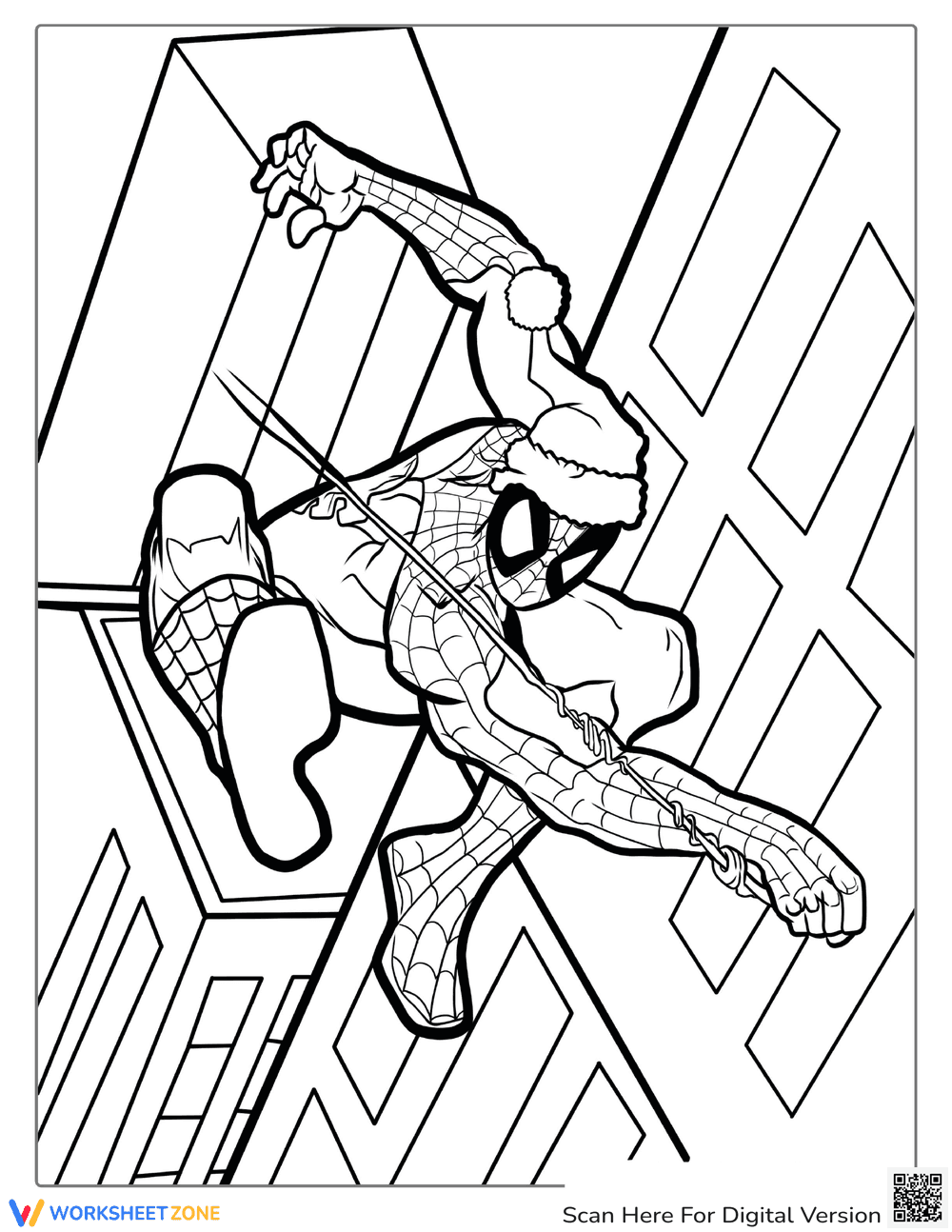

Christmas Spider-Man Coloring Page | Essential K-2 Art
Paste this activity's link or code into your existing LMS (Google Classroom, Canvas, Teams, Schoology, Moodle, etc.).
Students can open and work on the activity right away, with no student login required.
You'll still be able to track student progress and results from your teacher account.
This Christmas Spider-Man coloring page provides Kindergarten through 2nd-grade students with a high-interest creative activity to strengthen fine motor control and hand-eye coordination. By focusing on the iconic superhero in a festive Santa hat, students remain engaged while practicing the precise grip and pressure control necessary for early writing development and artistic expression.
At a Glance
- Grade: K-2 · Subject: English / Fine Arts
- Standard:
CCSS.ELA-LITERACY.L.K.1— Demonstrate command of the conventions of standard English grammar and usage when writing.- Skill Focus: Fine Motor Control & Creative Expression
- Format: 1 page · 1 task · Answer key N/A · PDF
- Best For: Holiday morning work or indoor recess
- Time: 15–20 minutes
This single-page PDF features a high-resolution illustration of Spider-Man swinging through a city landscape while wearing a festive Santa hat. The line art is clean and bold, making it accessible for younger students using crayons or older students using colored pencils for detail work. No additional materials or teacher setup are required beyond standard coloring supplies, ensuring a smooth integration into any classroom schedule.
The zero-prep workflow for this resource is designed for maximum efficiency in a busy December classroom. First, print the single-page PDF (30 seconds). Second, distribute the sheets to students as they arrive or during a transition period (1 minute). Third, review the completed work to observe pencil grip and spatial awareness (1 minute). Total teacher preparation time is under two minutes, making it an ideal emergency sub plan or seasonal filler during the hectic holiday weeks.
This resource aligns with CCSS.ELA-LITERACY.L.K.1, which focuses on the foundational conventions of writing. While primarily an artistic activity, the development of the small muscles in the hand through coloring is a direct prerequisite for letter formation and sustained writing stamina. Both standard codes can be copied directly into lesson plans, IEP goals, or district curriculum mapping tools to justify the inclusion of creative motor practice.
Use this worksheet as a "hook" during the final week before winter break to maintain student focus during transition times. It also serves as an excellent formative assessment tool for observing tripod grasp and boundary awareness in early learners. Expected completion time ranges from 15 to 20 minutes depending on the medium used, providing a predictable window of quiet engagement for the whole class.
This activity is designed for Kindergarten, Grade 1, and Grade 2 students, particularly those who are motivated by popular culture and superheroes. It is an inclusive resource that allows for varying levels of artistic ability and can be easily paired with a holiday-themed read-aloud or a short writing prompt about what Spider-Man might do for Christmas to extend the learning experience.
Research from RAND AIRS 2024 emphasizes that high-interest, culturally relevant materials—such as those featuring familiar characters—significantly increase student engagement and persistence in fine motor tasks. For early elementary learners, the transition from coloring to formal writing is bridged by activities that demand precision and spatial reasoning. By integrating the CCSS.ELA-LITERACY.L.K.1 standard into creative blocks, educators support the physical development required for literacy without increasing student anxiety. This worksheet provides a structured environment for practicing the "stop-and-start" motor movements essential for character stroke production. According to Fisher & Frey (2014), providing students with choice and familiar imagery in their practice materials fosters a positive classroom climate and encourages independent task completion. This resource serves as a practical application of these principles, ensuring that holiday-themed activities remain pedagogically sound while meeting the immediate needs of the classroom environment.


