


























Views
Downloads

6.SP.B.5c Worksheet: Mean, Median, Mode — Grade 6 Aligned
Paste this activity's link or code into your existing LMS (Google Classroom, Canvas, Teams, Schoology, Moodle, etc.).
Students can open and work on the activity right away, with no student login required.
You'll still be able to track student progress and results from your teacher account.
At a Glance
- Grade: 6 · Subject: Math
- Standard:
CCSS.MATH.CONTENT.6.SP.B.5c— Find measures of center (median/mean) and variability (range).- Skill Focus: Mean, median, mode, and range
- Format: 5 pages · 14 problems · Answer key included · PDF
- Best For: Independent practice, homework, or formative assessment
- Time: 25–40 minutes
What's Inside
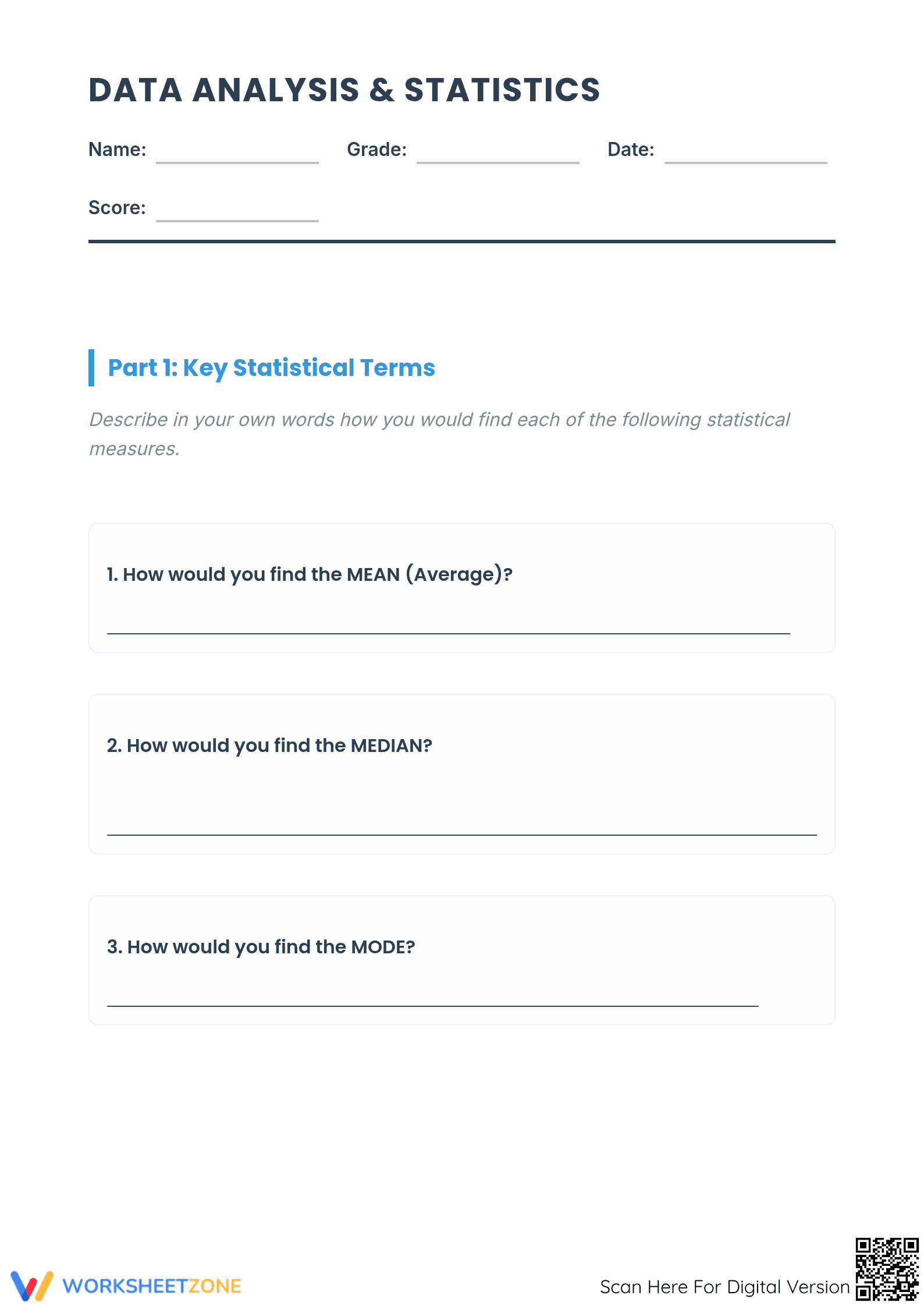
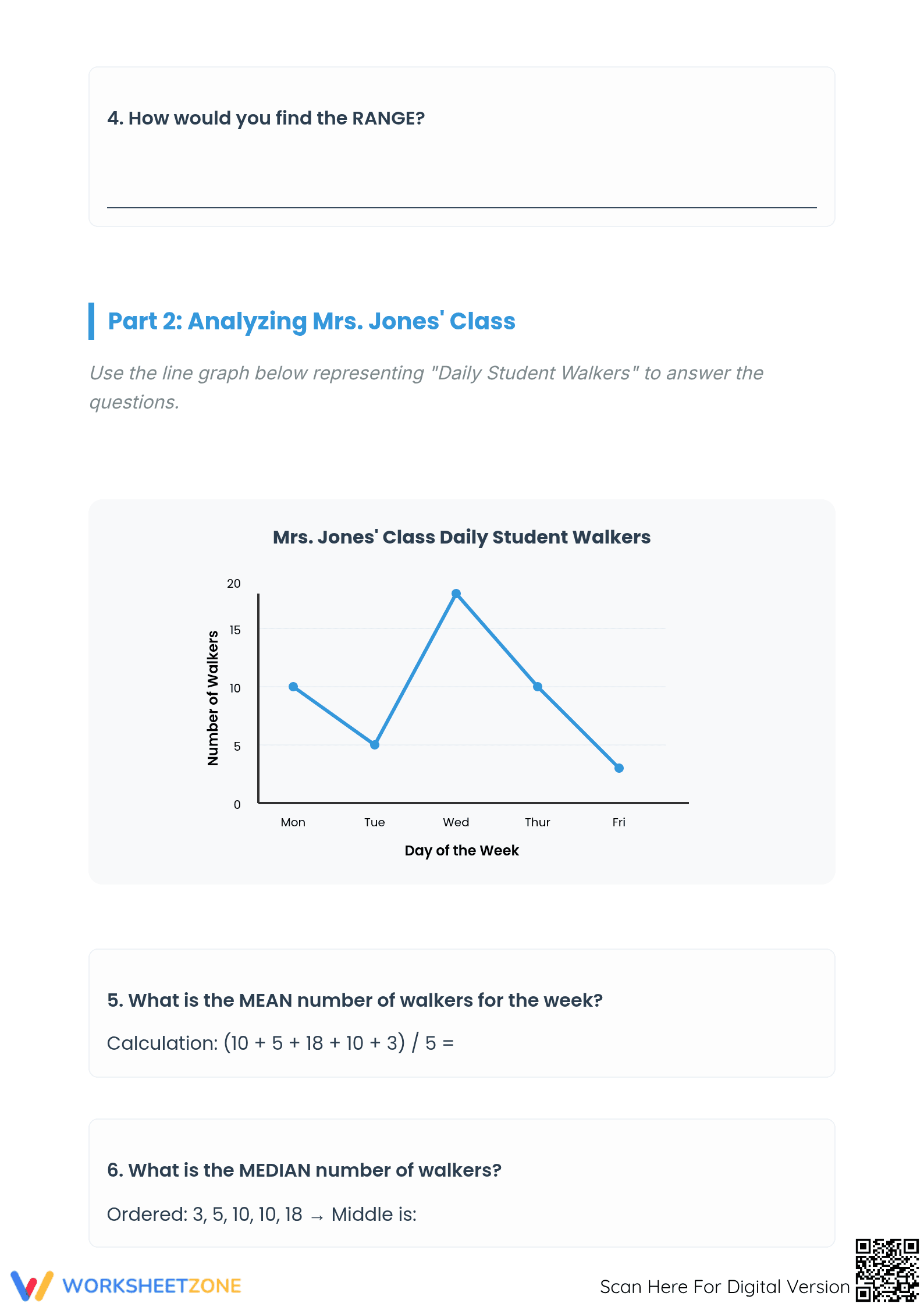
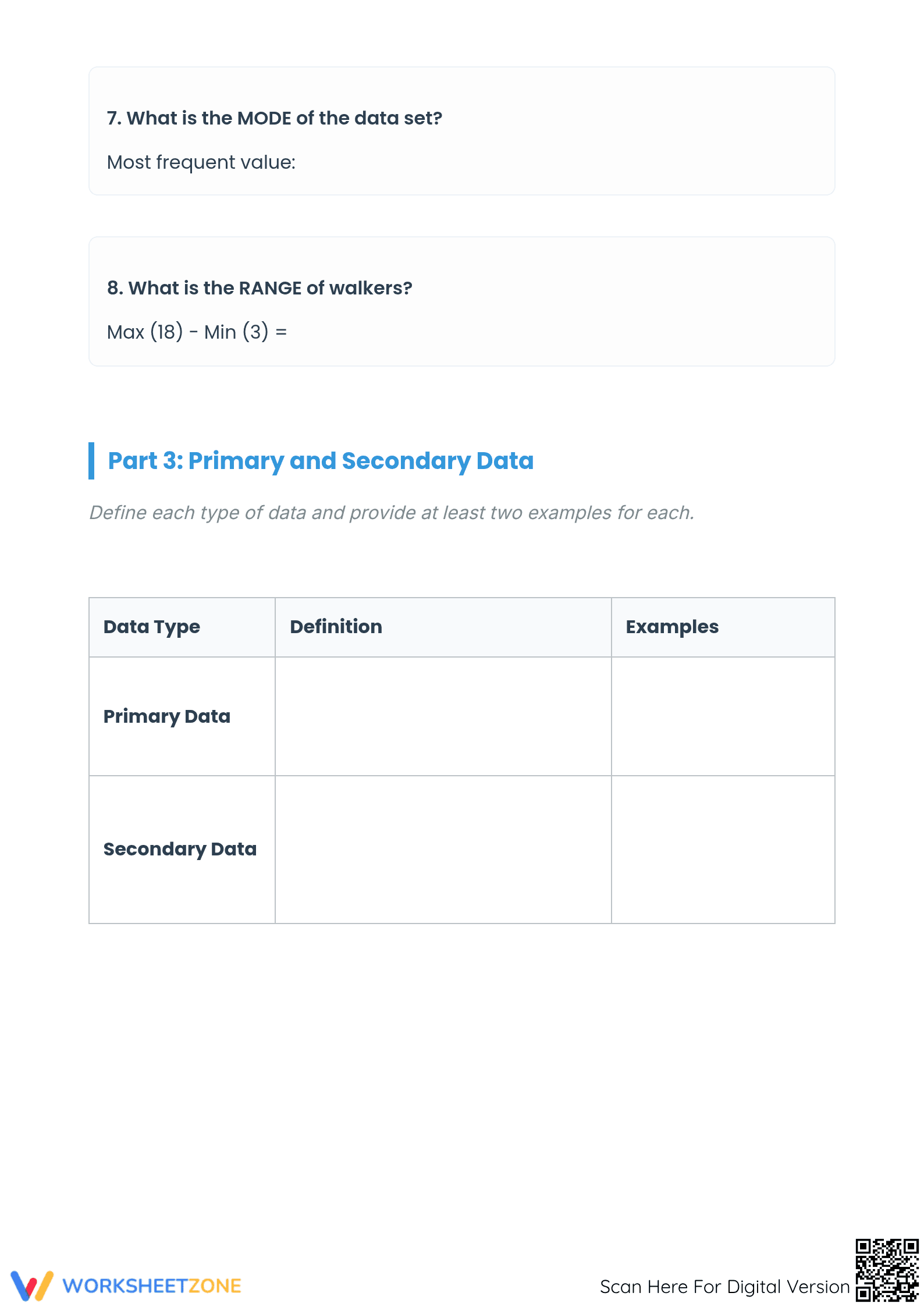
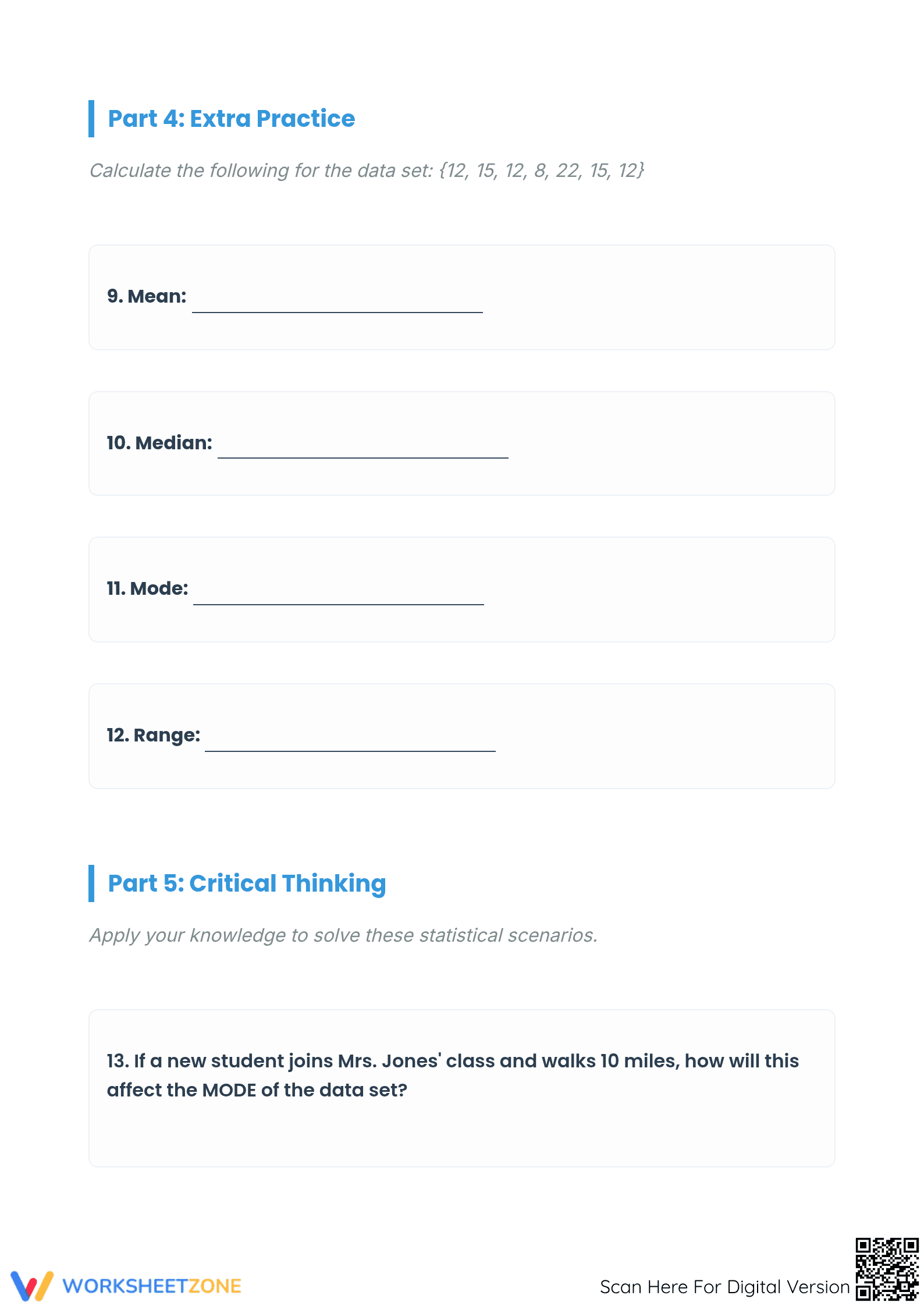
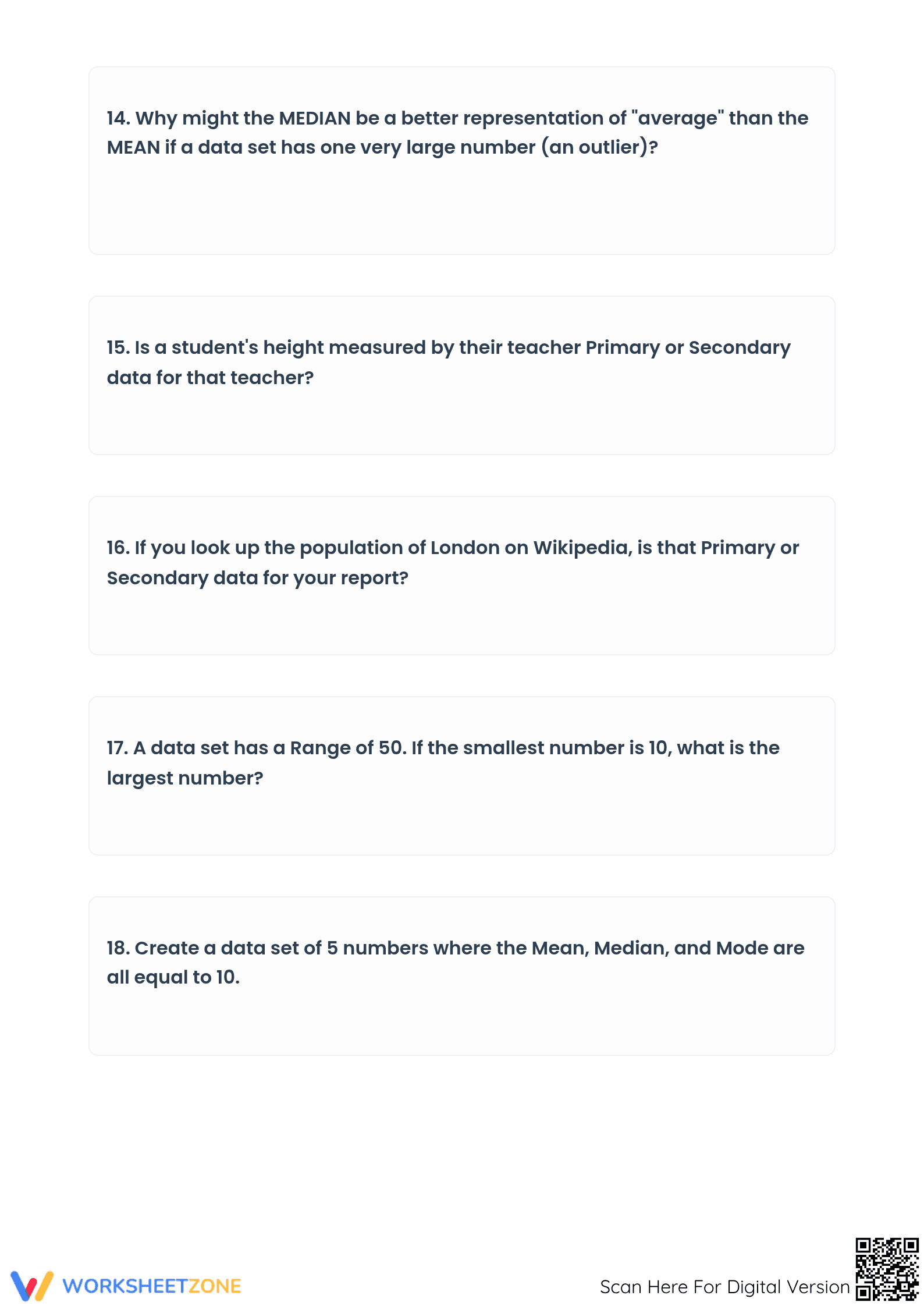
This five-page PDF includes a four-page worksheet and a one-page answer key. The worksheet contains 14 problems: 10 structured data sets for direct calculation and 4 real-world word problems. This progression helps students apply their understanding of mean, median, mode, and range in various contexts.
Evidence of Mastery
Directly aligned to CCSS.MATH.CONTENT.6.SP.B.5c, this worksheet provides clear evidence of student mastery. The 14 problems assess the core procedural skill of calculating each measure. The final four word problems require students to interpret data in context, demonstrating deeper understanding. Teacher observation can identify common errors, like confusing median and mode, allowing for targeted re-teaching. Student scores serve as a reliable data point for gradebooks or progress monitoring.
Standards Alignment
This worksheet targets the Common Core standard CCSS.MATH.CONTENT.6.SP.B.5c, which focuses on giving "quantitative measures of center (median and/or mean) and variability." This resource builds student proficiency in finding the mean, median, and range from data sets. The standard code can be copied directly into lesson plans, IEP goals, or district curriculum mapping tools for easy documentation.
How to Use It
Use this as independent practice after a lesson on central tendency. Students can typically complete it in 25-40 minutes. For formative assessment, quickly review completed work for common errors, such as miscalculating the median in an even-numbered data set. The worksheet is also effective as a homework assignment or review activity before a test.
Who It's For
Designed for Grade 6 math students, this resource also suits advanced 5th graders or 7th graders needing review. The straightforward layout supports diverse learners. Pair this worksheet with an anchor chart that defines each measure of center and variability with clear examples for a complete instructional sequence.
This worksheet offers targeted practice on CCSS.MATH.CONTENT.6.SP.B.5c, a critical Grade 6 data analysis standard. Students build fluency in calculating measures of center—mean and median—and the measure of variability known as range. This aligns with findings from RAND AIRS 2024, which stress the importance of practice moving from procedural skill to application. The NAEP has identified data analysis as a key predictor of readiness for higher-level mathematics. This resource supports that development by providing scaffolded practice across 14 problems, moving from simple data sets to contextual word problems. By completing this worksheet, students gain confidence in summarizing numerical data sets, a foundational skill for statistics and quantitative reasoning.


