


























Views
Downloads

4.NF.C.6 Worksheet: Decimals — Grade 4 Aligned
Paste this activity's link or code into your existing LMS (Google Classroom, Canvas, Teams, Schoology, Moodle, etc.).
Students can open and work on the activity right away, with no student login required.
You'll still be able to track student progress and results from your teacher account.
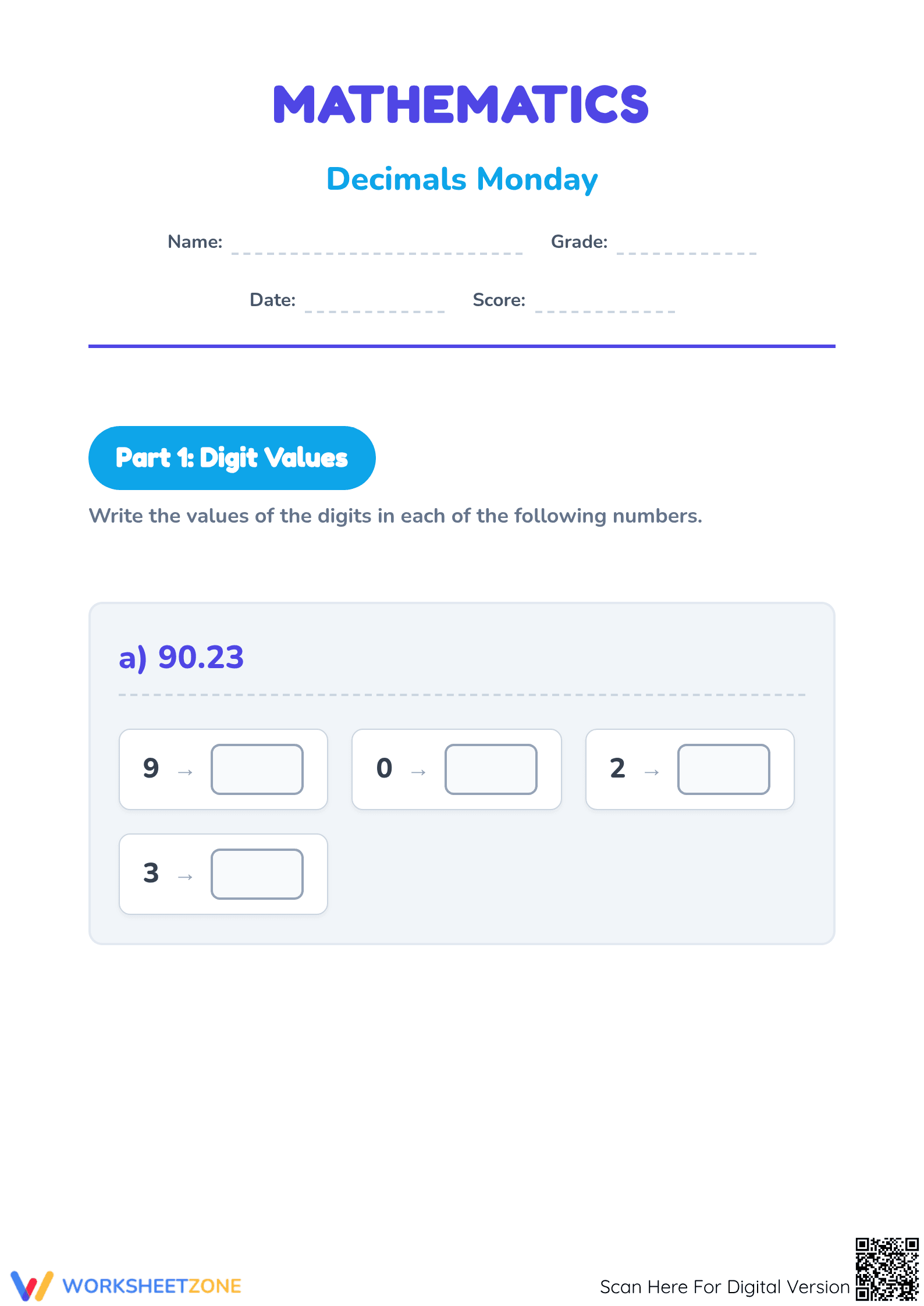
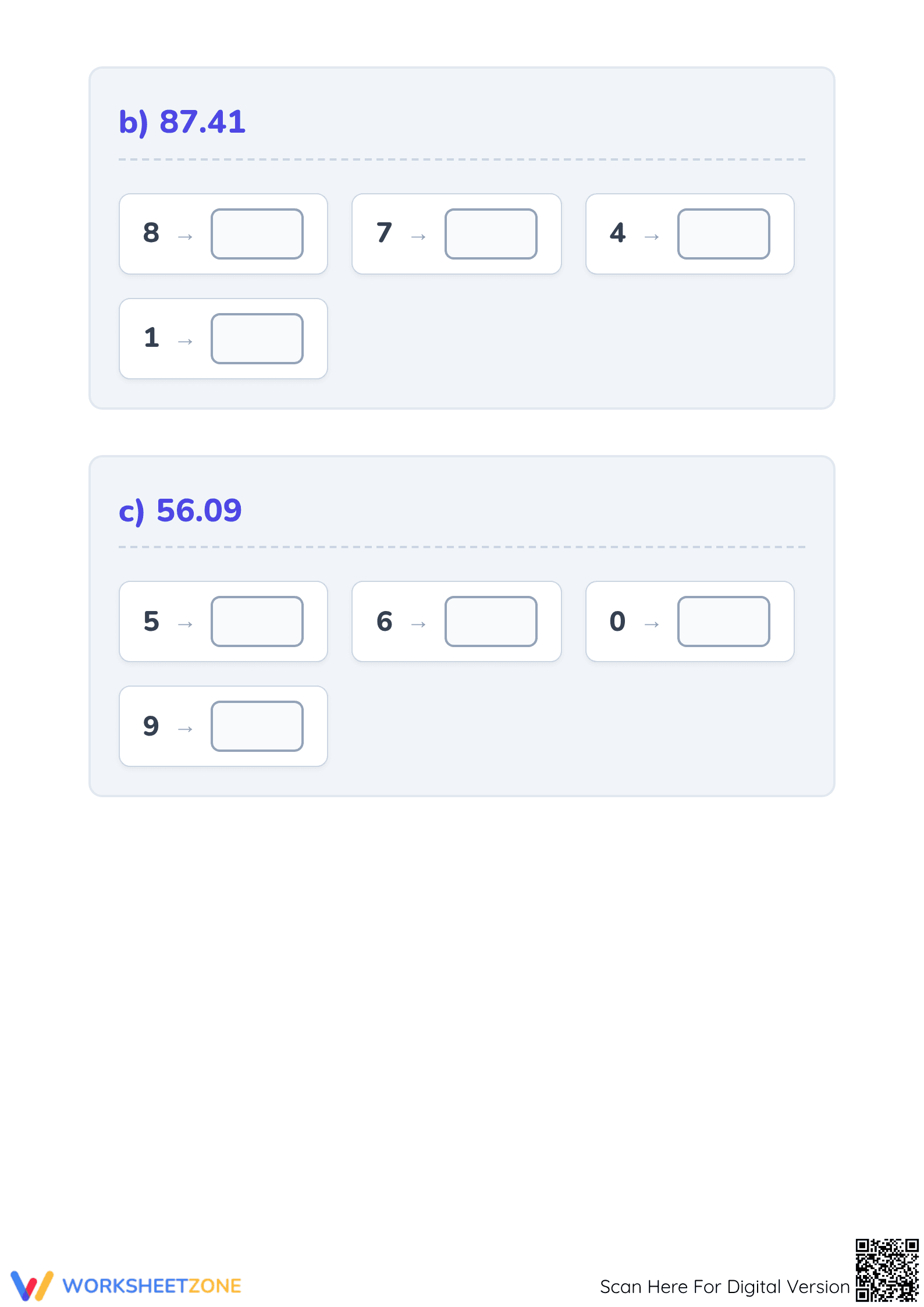
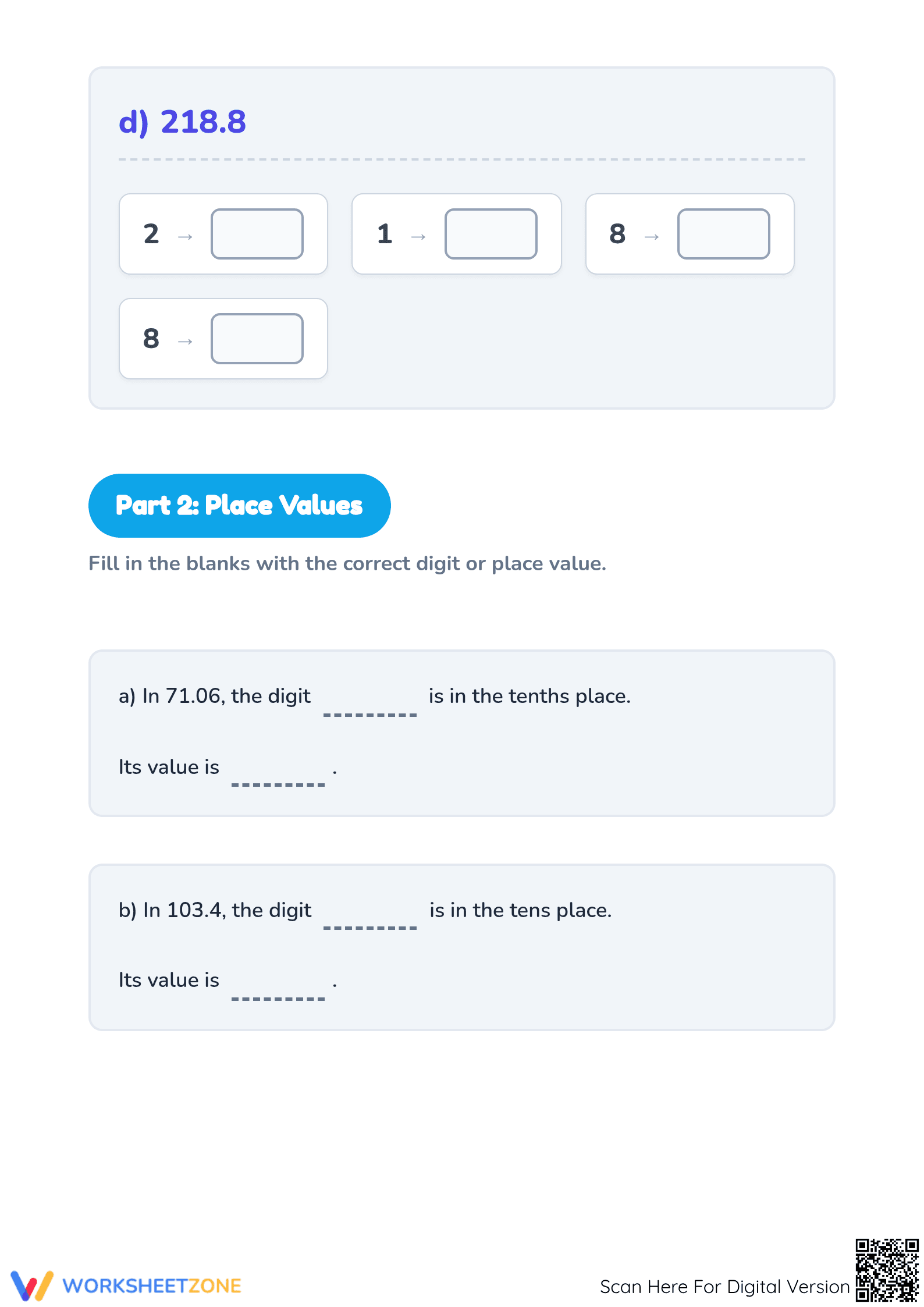
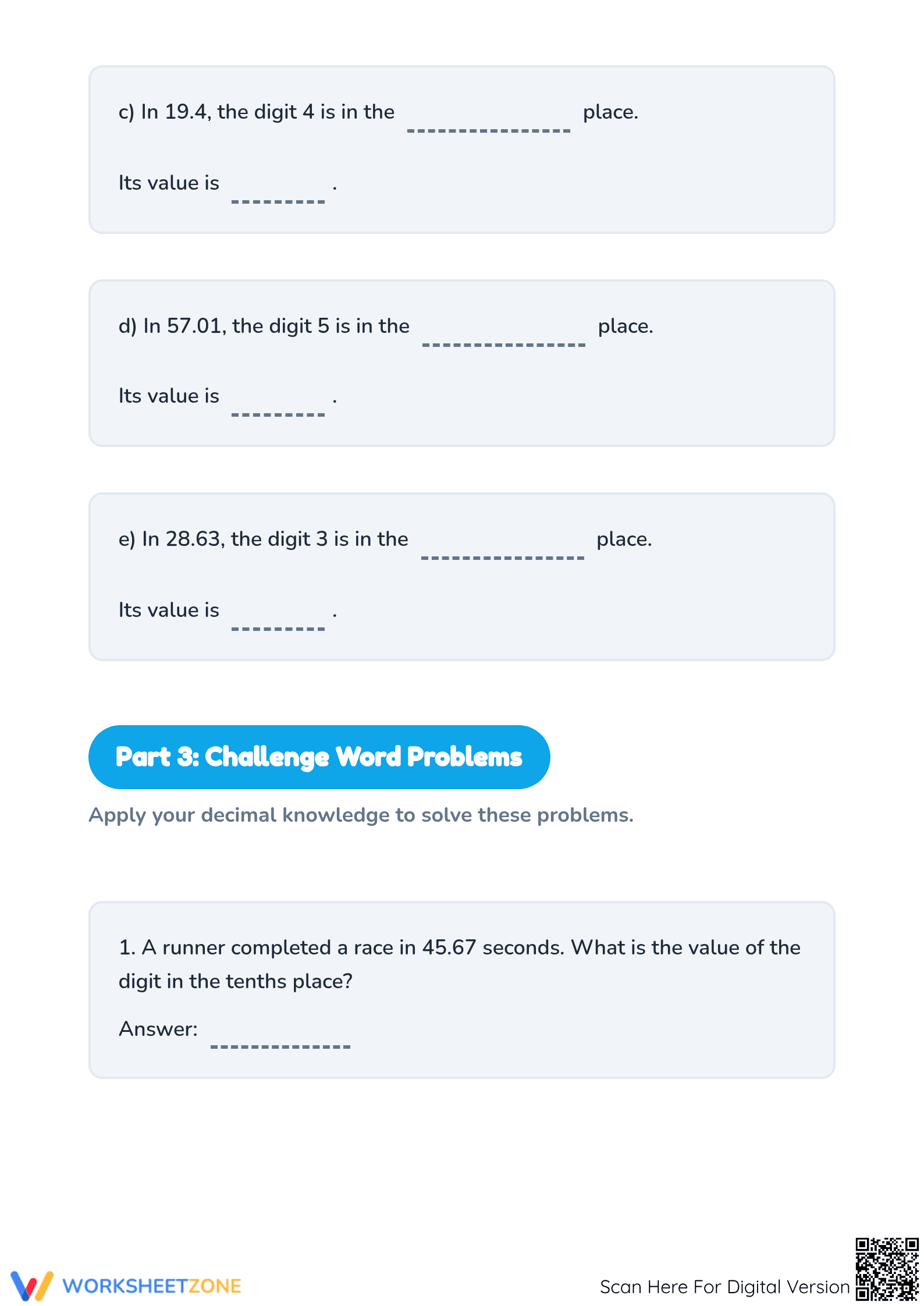
This comprehensive Grade 4 math worksheet provides targeted practice for students learning to work with decimals. Through a structured sequence of exercises, learners will master converting fractions to decimals, expressing decimals as fractions, and rounding decimals to various place values, culminating in a multi-page assessment to gauge their understanding.
At a Glance
- Grade: 4 · Subject: Math
- Standard:
CCSS.MATH.CONTENT.4.NF.C.6— Use decimal notation for fractions and convert between the two forms.- Skill Focus: Converting Fractions and Decimals, Rounding
- Format: 5 pages · 57 problems · Answer key included · PDF
- Best For: Core concept practice, unit review, assessment
- Time: 40–55 minutes
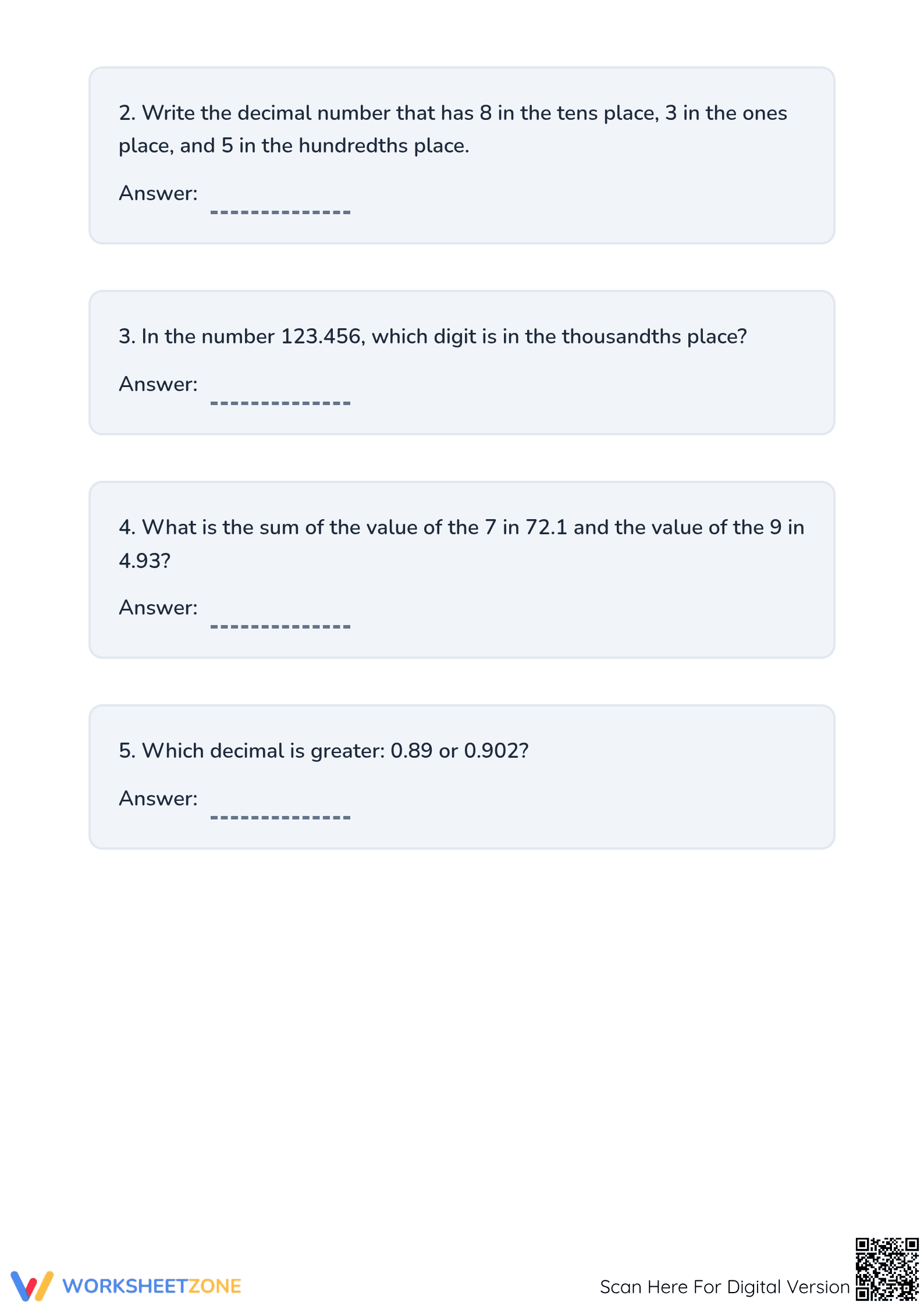
This five-page resource contains six practice sections and a final 17-question test. Problems cover converting fractions to decimals and rounding to different place values. A full answer key is provided for efficient grading and student review, making it a complete, self-contained module for decimal practice and assessment.
Evidence of Mastery
This worksheet serves as a full learning and assessment cycle. The practice sections build fluency with the core skills of CCSS.MATH.CONTENT.4.NF.C.6. The packet ends with "Test A," a formal assessment requiring students to apply their skills in a mixed-problem format. Performance on this test provides clear data on a student's grasp of decimal concepts, with scores that can be entered directly into gradebooks or used for progress monitoring.
Standards-Aligned for Grade 4 Math
This resource is aligned to Common Core standard CCSS.MATH.CONTENT.4.NF.C.6, which requires students to use decimal notation for fractions. The rounding problems also support standard CCSS.MATH.CONTENT.5.NBT.A.4. Both standard codes can be copied directly into lesson plans or curriculum maps. This targeted alignment ensures students are working on essential grade-level skills needed for mathematical reasoning.
Classroom Implementation
This worksheet is highly versatile. Use the first three pages as an in-class activity after a direct instruction lesson. As students work, circulate to observe their strategies and identify misconceptions. Alternatively, assign the packet as a homework assignment, with the final test completed in class as a summative assessment. The practice sections take about 10 minutes each, while the test should take around 20 minutes to complete.
Built for the Everyday Classroom
This resource is designed for Grade 4 and 5 students solidifying their understanding of decimals. For students needing support, pre-teach with a place value chart. For an extension, ask advanced learners to explain why converting 1/8 to a decimal is different than 1/10. This worksheet pairs well with any lesson focused on decimal place value and its connection to fractions.
This worksheet provides focused practice on CCSS.MATH.CONTENT.4.NF.C.6, a critical gateway skill where students learn to represent fractions as decimals. Mastering this conversion is fundamental for future success in algebra and advanced mathematics. Research consistently shows that procedural fluency, built through structured practice like the 57 problems included here, is a key component of mathematical proficiency. According to the RAND AIRS (2024) analysis of effective math interventions, practice that is targeted to a specific standard and includes a mix of problem types significantly improves student retention and application of concepts. This resource directly applies that finding, moving students from converting fractions with denominators of 10 and 100 to applying rounding rules, thereby building a robust and flexible understanding of decimals that aligns with evidence-based instructional practices and prepares them for more complex number system work.


