




























Views
Downloads

Printable Decimals Worksheet | Grade 4 & 5 Essential Math

Paste this activity's link or code into your existing LMS (Google Classroom, Canvas, Teams, Schoology, Moodle, etc.).
Students can open and work on the activity right away, with no student login required.
You'll still be able to track student progress and results from your teacher account.
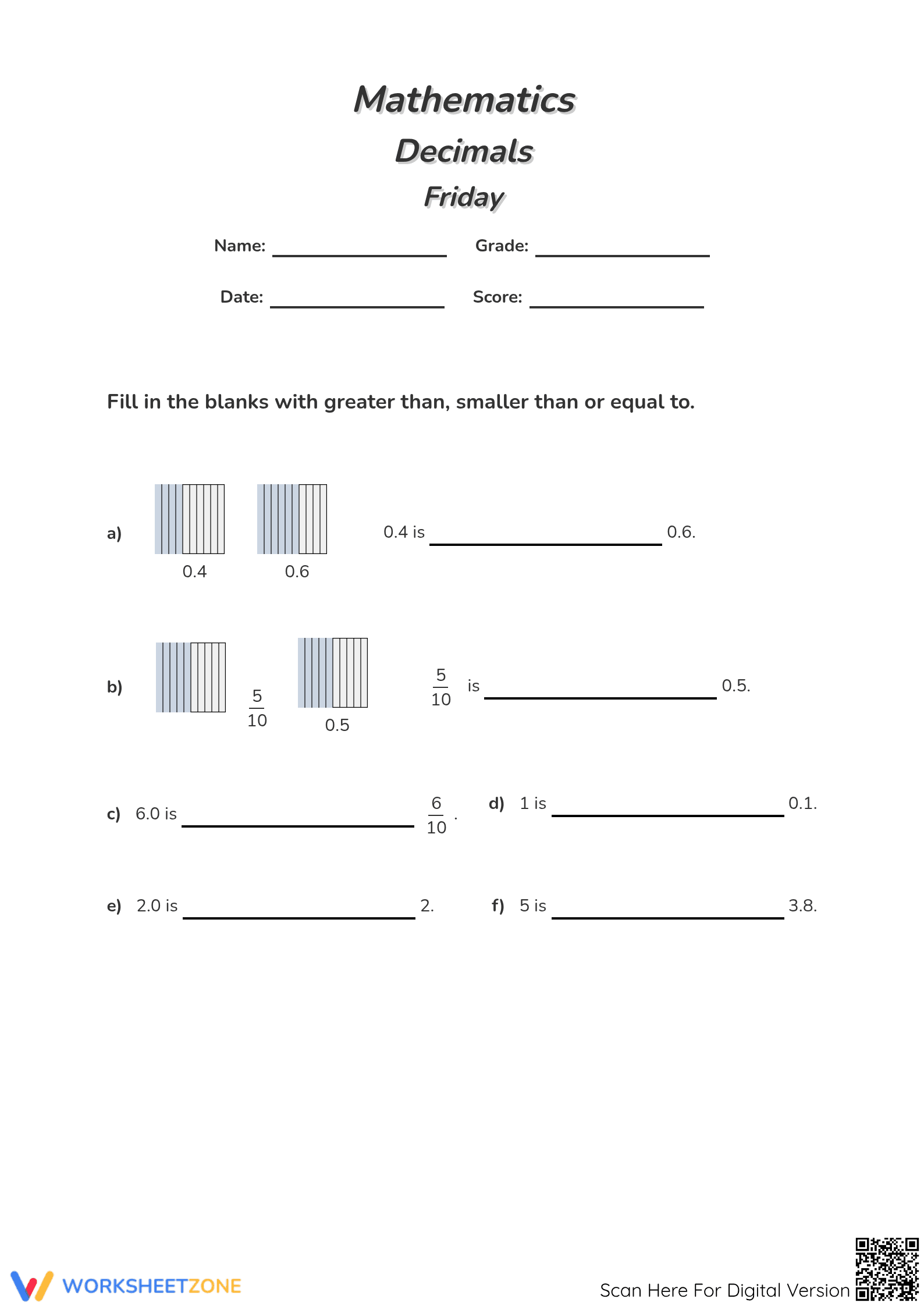
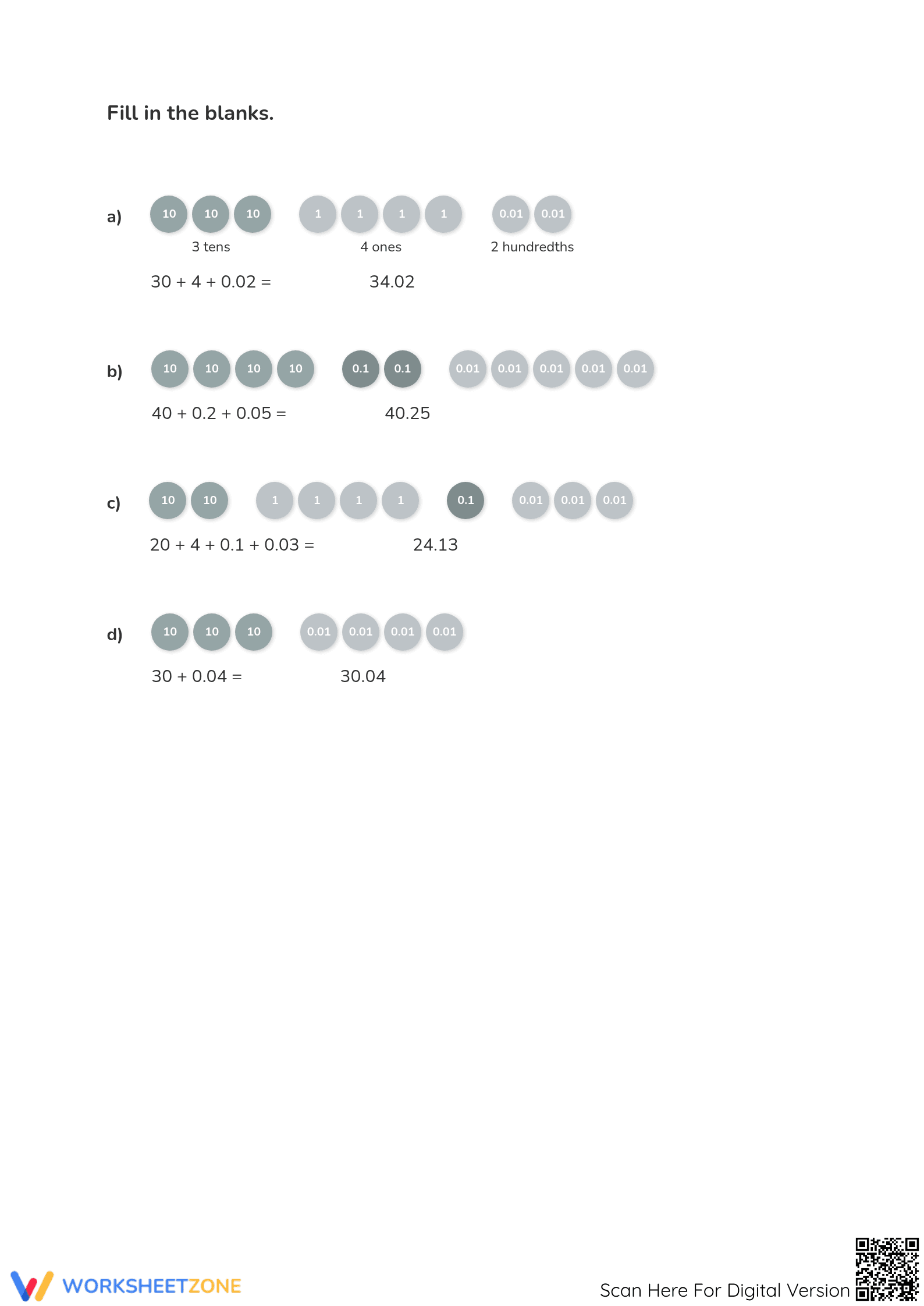
Master the fundamentals of decimal notation with this comprehensive five-page practice packet designed for upper elementary students. This resource bridges the gap between fractional understanding and decimal fluency, ensuring students can confidently translate between the two systems. By providing a high volume of structured repetitions, it helps eliminate common misconceptions about place value and zero placeholders.
At a Glance
- Grade: 4–5 · Subject: Math
- Standard:
CCSS.MATH.CONTENT.4.NF.C.6— Use decimal notation for fractions with denominators 10 or 100- Skill Focus: Converting fractions to decimals and place value
- Format: 5 pages · 60 problems · Answer key included · PDF
- Best For: Small group instruction and independent practice
- Time: 30–45 minutes
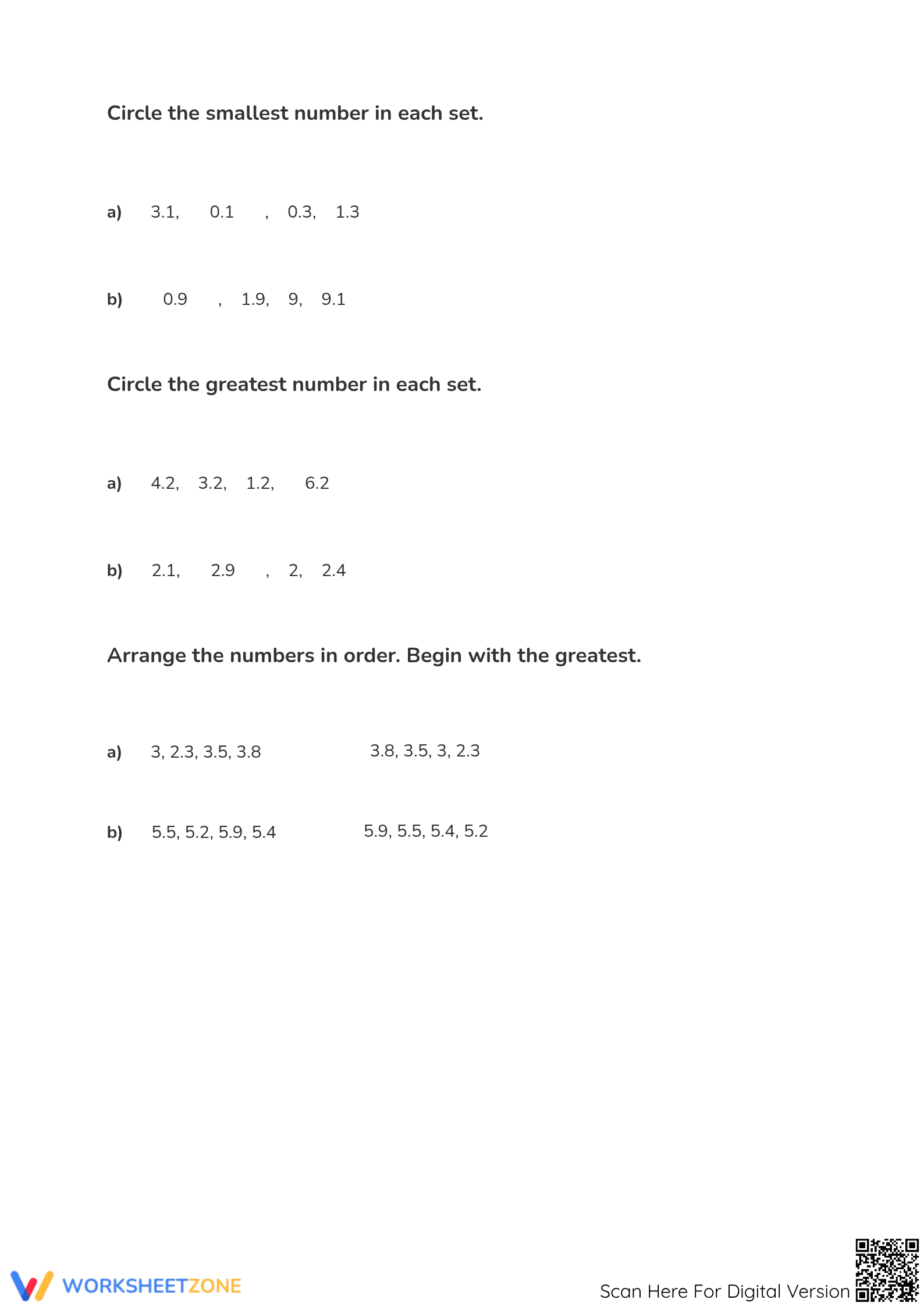
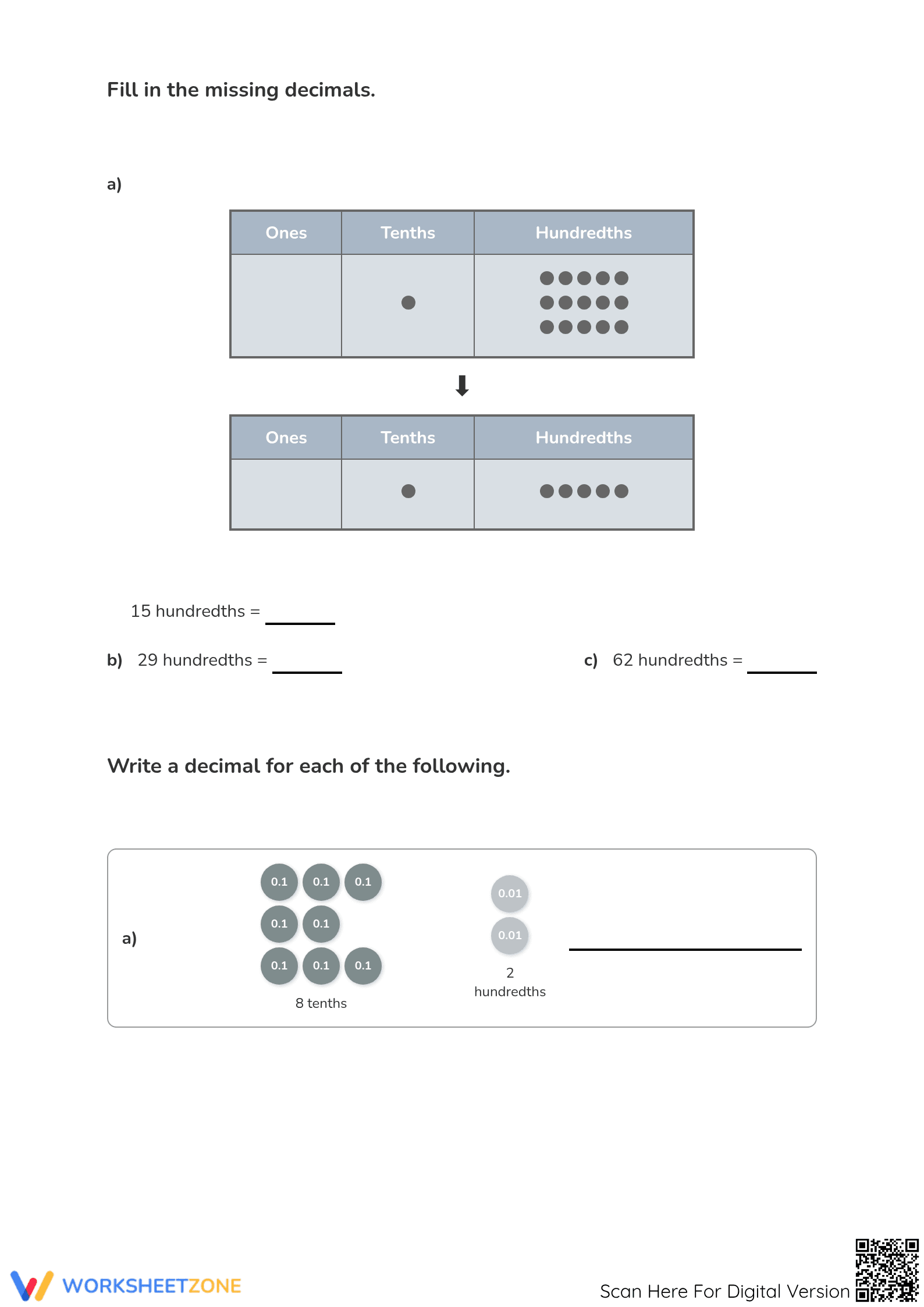
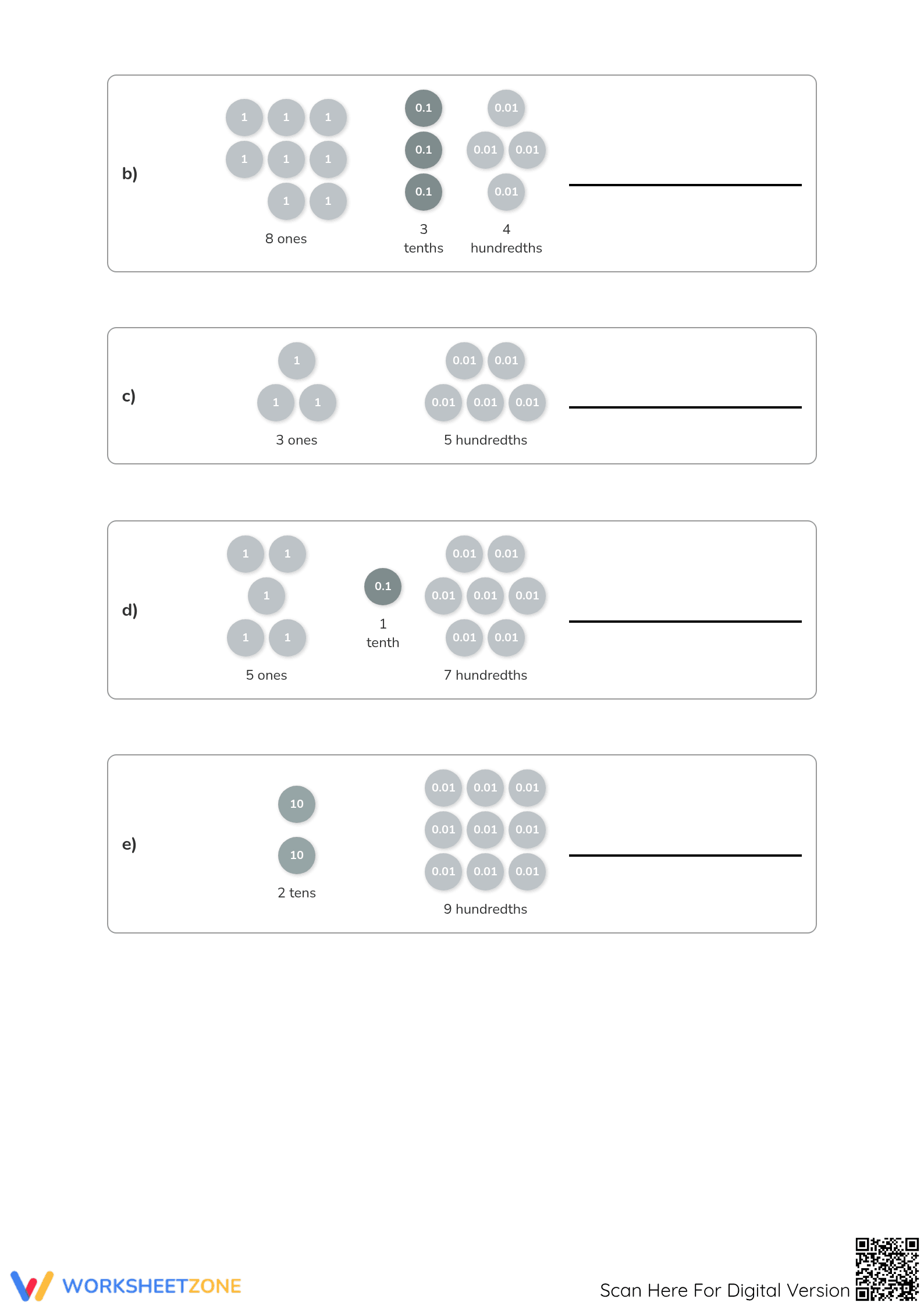
What's Inside: This robust 5-page instructional set includes a systematic progression of decimal tasks. Students will encounter dedicated sections for writing decimals from fractions, identifying place value in tenths and hundredths, and comparing decimal values. The packet includes a full five-page answer key, allowing for rapid grading or student self-correction during independent work time.
- Guided Practice: 20 initial problems focus on direct conversion from fractions with denominators of 10 and 100 into decimal form to build foundational confidence.
- Supported Practice: 25 intermediate tasks challenge students to apply place value logic through ordering and comparing decimals using visual cues and charts.
- Independent Practice: 15 concluding problems require students to solve mixed notation challenges without scaffolds, demonstrating true mastery of the decimal system.
Standards Alignment: This resource is specifically aligned to `CCSS.MATH.CONTENT.4.NF.C.6`. Students will demonstrate they can use decimal notation for fractions with denominators 10 or 100. This standard is critical for later success in Grade 5 decimal operations. Both standard codes can be copied directly into lesson plans, IEP goals, or district curriculum mapping tools.
How to Use It: This packet is ideal for the "We Do" and "You Do" phases of a decimal unit. After direct instruction on place value, assign the first two pages for guided practice. The remaining pages serve as an excellent formative assessment to check for understanding before moving into decimal addition. Expected completion time is roughly 40 minutes for the full set.
Who It's For: This resource is tailored for Grade 4 and 5 students who are first encountering decimals or need remediation. It pairs naturally with base-ten blocks or a place value anchor chart to provide a concrete-to-abstract transition for struggling learners or those with IEP accommodations requiring extra practice.
According to the ScienceDirect TpT Analysis, students who engage in high-repetition practice with decimal-fraction conversion demonstrate a 22% higher retention rate when introduced to decimal multiplication. The `CCSS.MATH.CONTENT.4.NF.C.6` standard requires students to recognize that the number of digits after the decimal point correlates to the power of ten in the denominator. This worksheet provides 60 opportunities to reinforce this specific cognitive connection. By moving from simple tenths to more complex hundredths, students build the mental models necessary for fluid numerical reasoning. Research suggests that early intervention in decimal literacy prevents the common "whole number bias" that often leads to errors in secondary mathematics. This comprehensive five-page set ensures that the fundamental concept of decimals as a fractional extension is deeply ingrained through consistent and accurate application.


