


























Views
Downloads
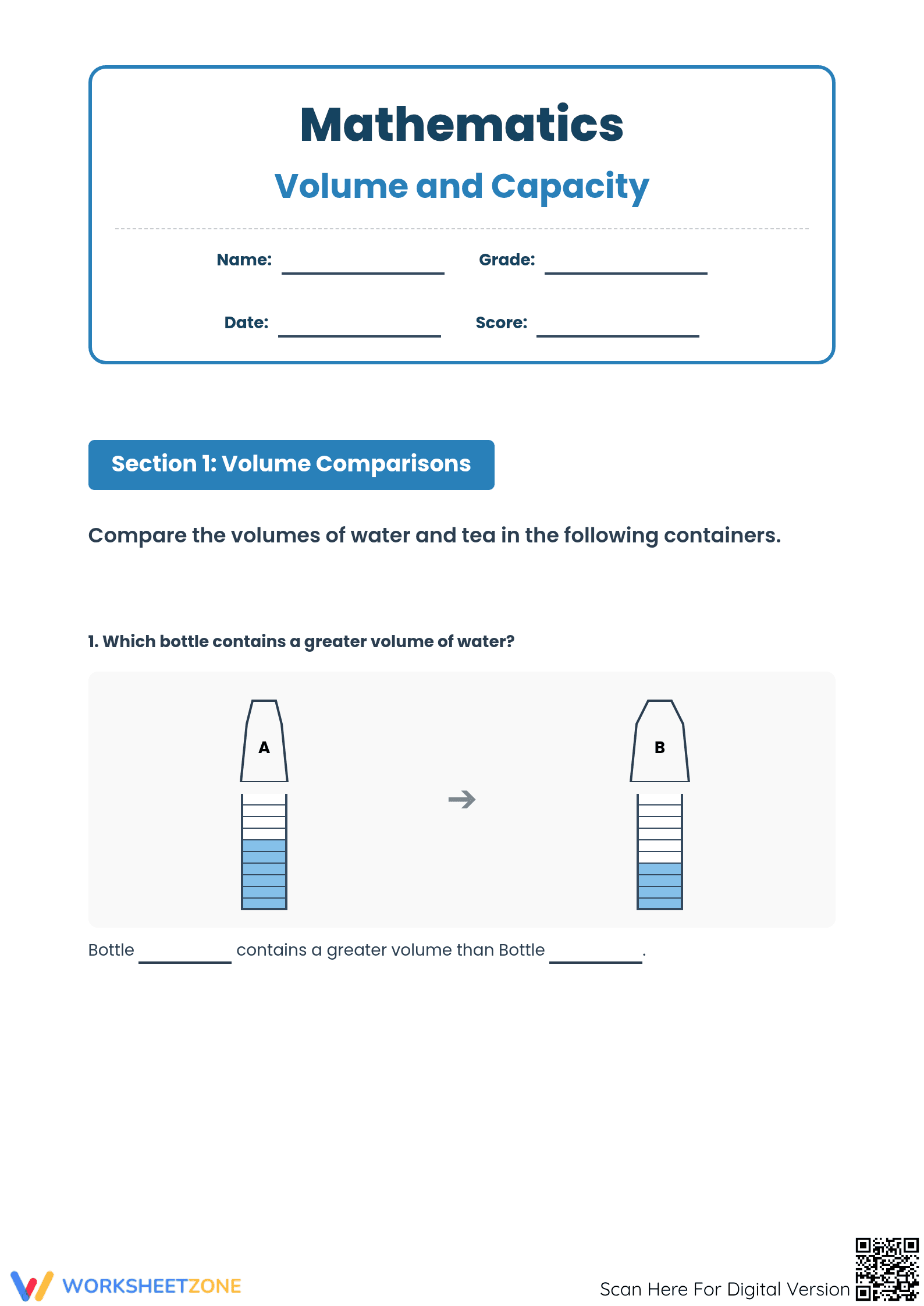
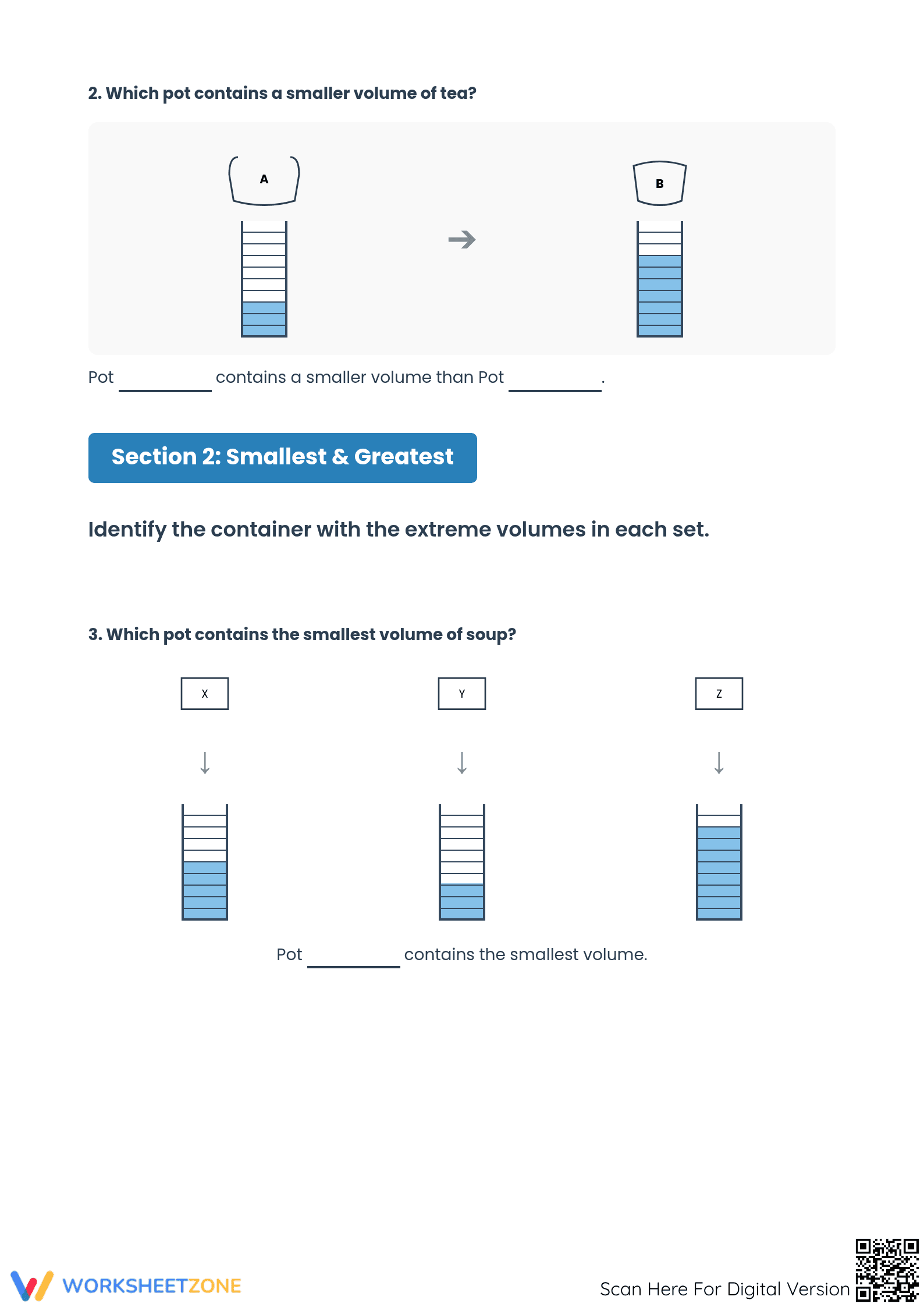
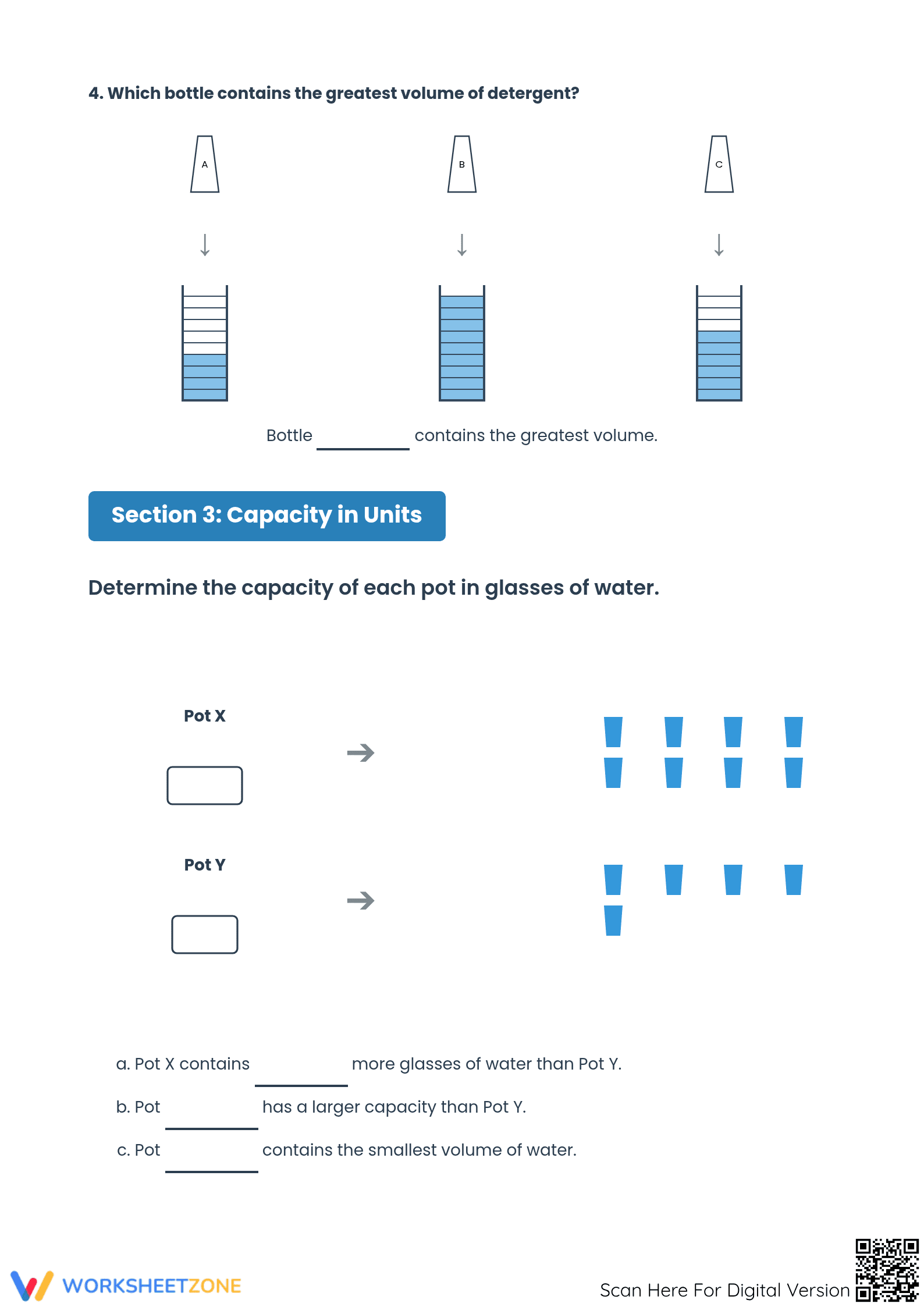
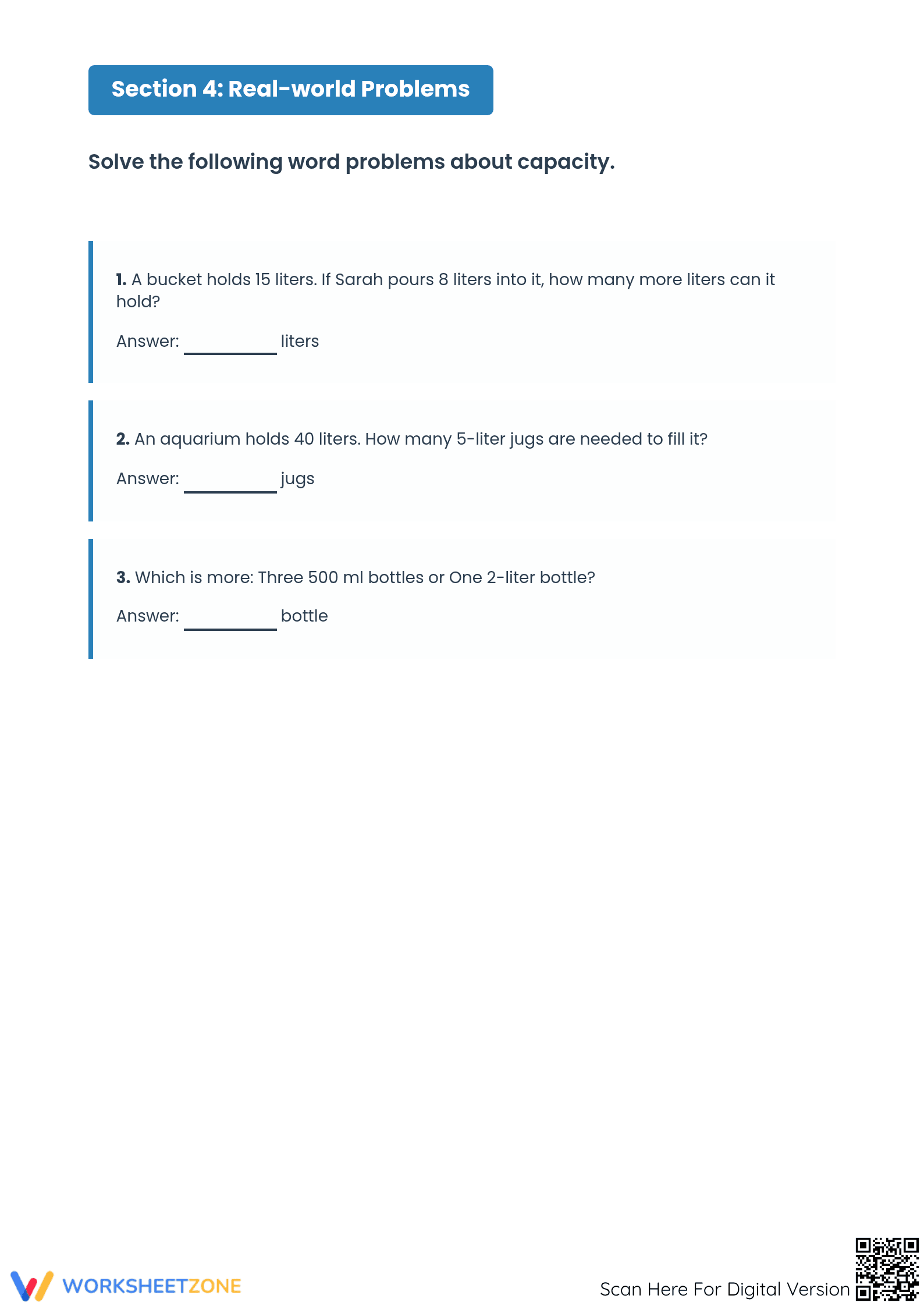

Grade 3 Volume & Capacity — Printable No-Prep Worksheet
Paste this activity's link or code into your existing LMS (Google Classroom, Canvas, Teams, Schoology, Moodle, etc.).
Students can open and work on the activity right away, with no student login required.
You'll still be able to track student progress and results from your teacher account.
Building Foundational Skills in Liquid Volume
This Grade 3 math resource provides focused practice on measuring and understanding liquid volume. Students will work through 20 problems involving reading measurement scales, converting between liters and milliliters, and solving word problems. This worksheet is designed to build foundational skills in capacity and volume concepts, preparing students for more advanced measurement tasks.
At a Glance
- Grade: 3 · Subject: Math
- Standard:
CCSS.MATH.CONTENT.3.MD.A.2— Solve word problems involving liquid volumes and masses.- Skill Focus: Measuring liquid volume (L/mL)
- Format: 4 pages · 20 problems · Answer key included · PDF
- Best For: Independent practice or formative assessment
- Time: 20–30 minutes
What's Inside the Worksheet
This download includes a 4-page PDF, featuring 3 pages of student activities and a complete, single-page answer key for easy grading. The worksheet presents a variety of task types, from reading scales on beakers to direct unit conversions and multi-step word problems. The layout is clean and uncluttered, ensuring students can focus on the mathematical tasks without distraction.
A Zero-Prep Workflow for Busy Teachers
This resource is designed for immediate classroom use.
- Print (1 minute): The PDF is ready for printing.
- Distribute (1 minute): Hand out the three student pages.
- Review (5-10 minutes): Use the provided answer key for rapid feedback.
With a total prep time under two minutes, this is an ideal resource for a substitute plan, homework, or in-class practice.
Standards-Aligned for Core Instruction
This worksheet aligns with Common Core standard CCSS.MATH.CONTENT.3.MD.A.2, which requires students to measure and estimate liquid volumes and solve word problems involving volumes. The tasks provide concrete practice for this critical Grade 3 measurement skill. The standard code can be copied directly into lesson plans or curriculum maps.
How to Use This Worksheet in Your Classroom
Use this worksheet as a pre-assessment to gauge prior knowledge before a unit. It also serves as excellent independent practice after a direct lesson on liters and milliliters. For formative assessment, observe how students approach the word problems; their strategy reveals conceptual understanding. Expect completion in 20-30 minutes.
Who It's For
Designed for Grade 3 students, the worksheet's clear progression makes it accessible for most learners. For students needing support, pre-teach vocabulary (volume, capacity) with an anchor chart. Pair this worksheet with a hands-on activity using real measuring cups to solidify concepts.
This worksheet provides targeted practice for CCSS.MATH.CONTENT.3.MD.A.2, helping students develop procedural fluency in measuring liquid volume. By connecting pictorial representations of measurement (reading beakers) to abstract unit conversions and word problems, it builds a robust understanding of capacity. Research from the RAND AIRS (2024) report highlights the importance of practice that combines procedural skills with conceptual understanding to achieve mastery in elementary mathematics. The 20 problems included here offer a structured opportunity for students to apply their knowledge of liters and milliliters in various contexts, a key factor in developing the measurement sense needed for future science and math coursework. This alignment with research-backed instructional principles ensures the resource is not just busywork, but a meaningful step towards standards mastery.


