


























Views
Downloads


Kindergarten Synonym Matching Worksheet | Essential
Paste this activity's link or code into your existing LMS (Google Classroom, Canvas, Teams, Schoology, Moodle, etc.).
Students can open and work on the activity right away, with no student login required.
You'll still be able to track student progress and results from your teacher account.
This Kindergarten synonym matching worksheet helps young learners build vital vocabulary by identifying words with similar meanings. Students progress through matching, multiple-choice selection, and independent writing tasks to solidify their understanding of lexical relationships. By connecting familiar verbs and adjectives, children expand their expressive language and improve reading comprehension skills.
At a Glance
- Grade: Kindergarten · Subject: English Language Arts (ELA)
- Standard:
CCSS.ELA-LITERACY.L.K.5.B— Identify synonyms for frequently occurring verbs and adjectives to demonstrate word relationship understanding- Skill Focus: Synonym Identification and Lexical Word Classes
- Format: 3 pages · 15 problems · Answer key included · PDF
- Best For: Vocabulary expansion and independent literacy centers
- Time: 15–20 minutes
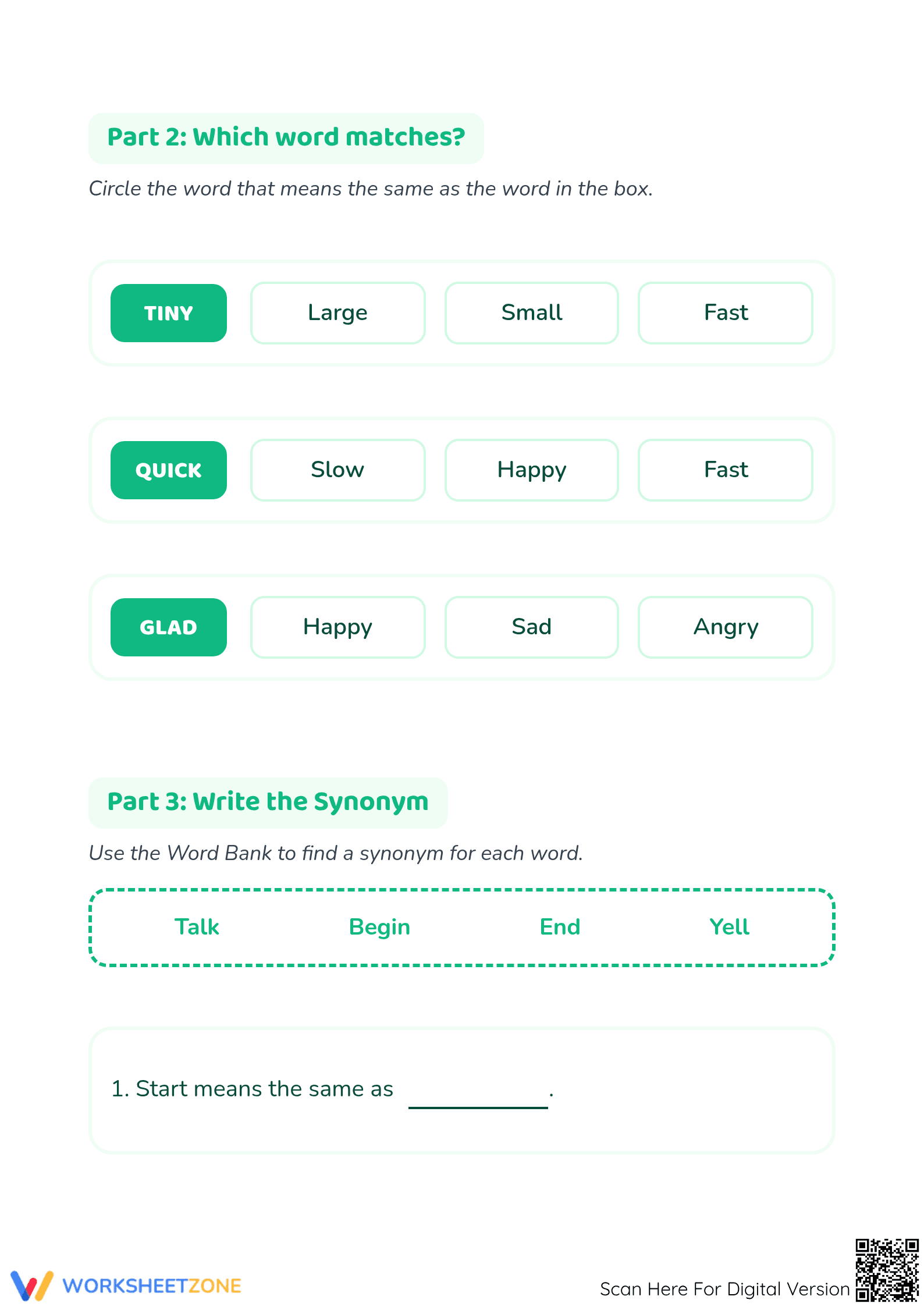
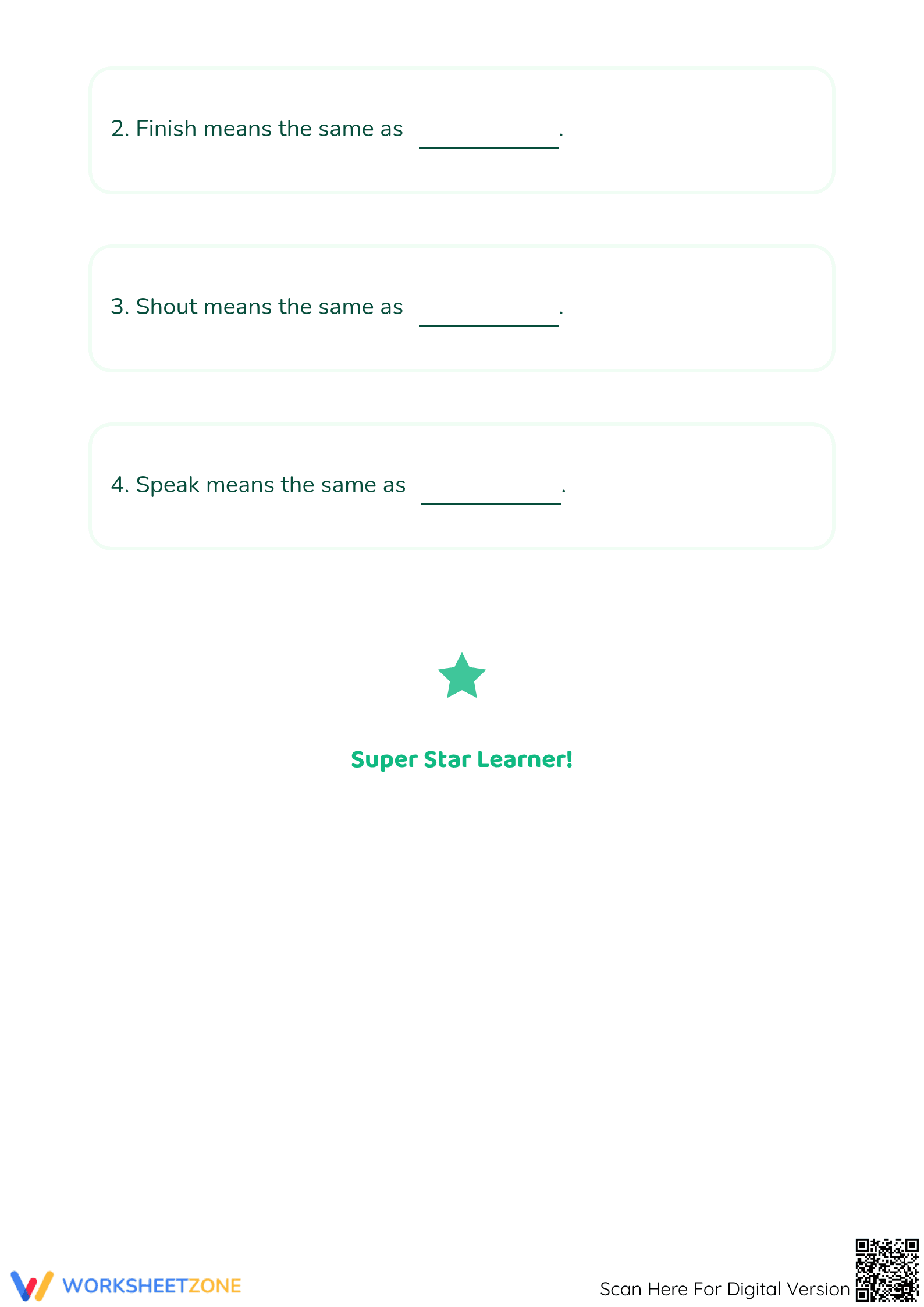
The What's Inside section explains the three-part structure of this comprehensive resource. Page one features a robust matching activity where students draw lines between eight pairs of synonyms, such as shout and yell. Page two transitions to a multiple-choice format, requiring students to circle the correct synonym for words like tiny and quick. The final section utilizes a word bank to support students in writing the correct synonym to complete four descriptive sentences.
The zero-prep workflow is designed for maximum efficiency. First, print the three-page PDF and the corresponding answer key (30 seconds). Next, distribute the packets during a literacy block or as a transition activity (1 minute). Finally, use the included answer key for rapid grading or project it for a collaborative whole-class review (1 minute). Total teacher preparation time is under two minutes, making this an ideal choice for emergency sub plans.
This worksheet is primarily aligned with `CCSS.ELA-LITERACY.L.K.5.B`, which tasks students with demonstrating understanding of frequently occurring verbs and adjectives by identifying their synonyms. It also supports general vocabulary acquisition found in the L.K.6 anchor standard. Both standard codes can be copied directly into lesson plans, IEP goals, or district curriculum mapping tools to ensure instructional compliance and tracking.
Use this worksheet as a formative assessment after introducing same-meaning words via an anchor chart. During completion, circulate to observe if students use the word bank effectively in Part 3; this provides a window into their semantic processing. Alternatively, assign the matching page as a Do Now morning work activity to reinforce previously taught vocabulary in under ten minutes.
This resource is tailored for Kindergarten students but serves as an excellent intervention for first graders needing a vocabulary refresher. It is particularly beneficial for English Language Learners (ELLs) who need visual and structural support to understand word nuances. Pair this worksheet with a Synonym Song or a physical movement game where students find their synonym partner in the classroom for a multi-sensory learning experience.
According to the NAEP framework, early exposure to lexical relationships like synonyms is a primary predictor of later reading comprehension success. This Kindergarten synonym matching worksheet aligns with research-based practices identified in EdReports 2024, focusing on the systematic development of Tier 2 vocabulary through structured word-relationship tasks. By engaging with 15 specific problems targeting CCSS.ELA-LITERACY.L.K.5.B, students move beyond simple word recognition to deeper semantic understanding. Fisher & Frey (2014) emphasize that the gradual release of responsibility—moving from the guided matching in Part 1 to the independent writing in Part 3—is essential for long-term retention in early literacy. This resource provides the necessary scaffolding to ensure that learners can transition from identifying word pairs to applying them in context, effectively bridging the gap between isolated word study and functional language application in elementary writing.


