


























Views
Downloads

Printable Letter M Worksheet | Preschool Phonics
Paste this activity's link or code into your existing LMS (Google Classroom, Canvas, Teams, Schoology, Moodle, etc.).
Students can open and work on the activity right away, with no student login required.
You'll still be able to track student progress and results from your teacher account.
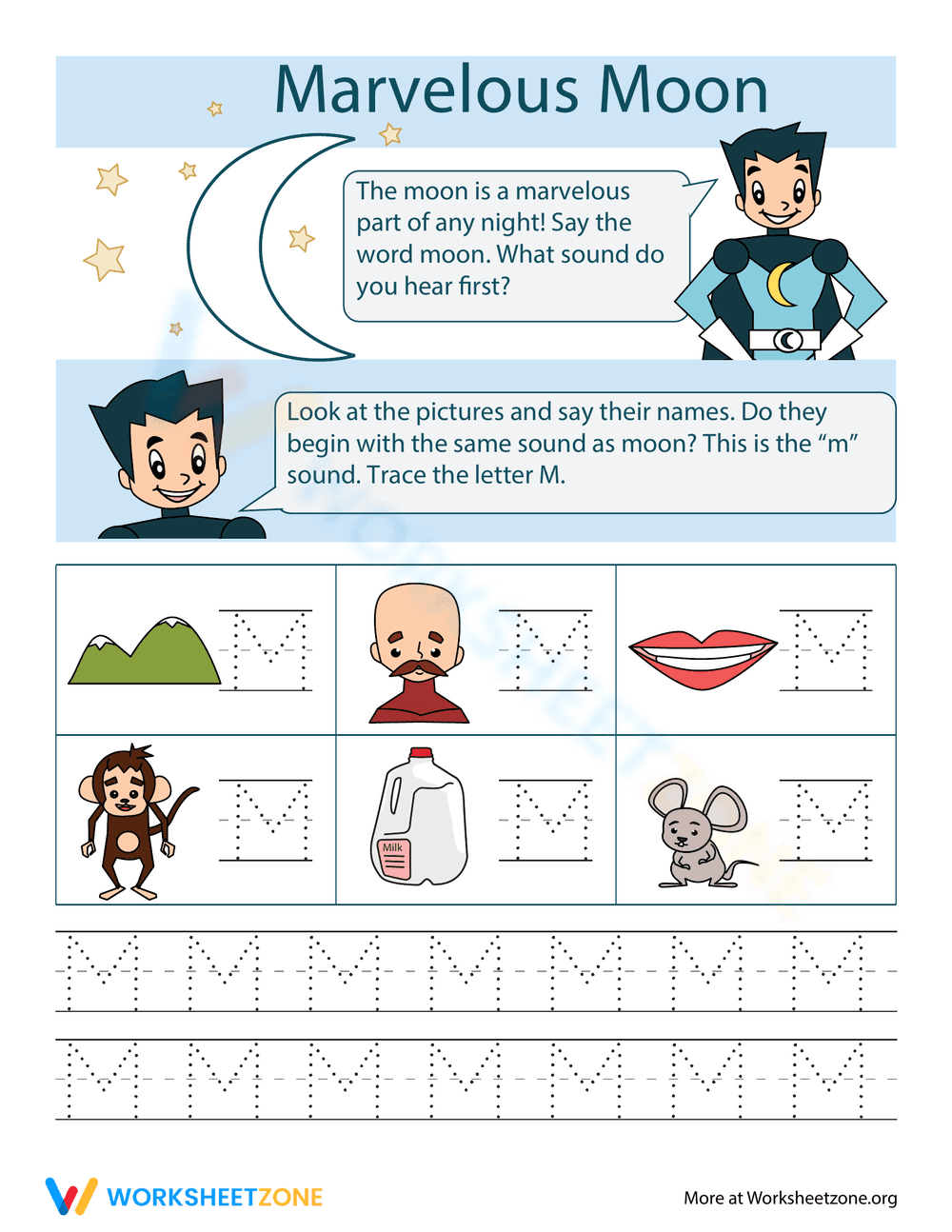
This printable preschool worksheet helps early learners master the letter M through visual identification and handwriting practice. Students identify objects starting with the /m/ sound and trace uppercase letters to build fine motor control. This resource establishes a strong foundation for phonics development and early reading success.
At a Glance
- Grade: Preschool · Subject: ELA & Phonics
- Standard:
CCSS.ELA-LITERACY.RF.K.1.D— Recognize and name uppercase letter M and its sound- Skill Focus: Letter M tracing and beginning sound identification
- Format: 1 page · 26 tasks · No answer key · PDF
- Best For: Morning work or independent phonics practice
- Time: 10–15 minutes
This single-page PDF contains six vocabulary illustrations paired with individual letter tracing lines, followed by two dedicated rows of uppercase letter M tracing practice. The featured words include mountain, man, mouth, monkey, milk, and mouse, which help children connect the letter shape to its initial phoneme. The clear dotted lines guide young writers through proper stroke order.
This zero-prep worksheet fits into any busy classroom routine. First, print the single-page PDF for your class, taking less than one minute. Next, distribute the sheets along with pencils or crayons, requiring about thirty seconds of transition time. Finally, review the letter sound and pictures as a whole group for one minute before letting students work independently. This entire workflow requires under two minutes of teacher preparation, making it an ideal choice for emergency sub plans or quick morning activities.
Standards Alignment
This activity aligns with the Common Core State Standard CCSS.ELA-LITERACY.RF.K.1.D, which requires students to recognize and name all upper- and lowercase letters of the alphabet. By focusing on the uppercase letter M, students connect the visual grapheme with its corresponding phoneme. Both standard codes can be copied directly into lesson plans, IEP goals, or district curriculum mapping tools.
How to Use It
Use this worksheet during small-group phonics instruction after introducing the letter M sound. Have students point to each picture, say the word aloud, and trace the letter next to it. For formative assessment, observe if students can independently produce the /m/ sound for each image. The activity takes approximately 10 to 15 minutes to complete.
Who It's For
This resource is designed for preschool and kindergarten students learning letter recognition and handwriting. It supports English language learners by pairing visual vocabulary with letter shapes. Pair this worksheet with a read-aloud book about the moon or an anchor chart displaying letter M words to reinforce learning.
Early literacy research emphasizes that combining phonemic awareness with letter-formation practice accelerates reading readiness. According to the Fisher & Frey (2014) framework for gradual release of responsibility, structured visual prompts and guided tracing tasks help young learners transition from guided instruction to independent mastery. This worksheet targets standard CCSS.ELA-LITERACY.RF.K.1.D by integrating letter-sound association with fine motor development. By practicing the 26 tracing and identification tasks, students build the muscle memory and cognitive associations necessary for fluent decoding. Utilizing structured worksheets like this one ensures that preschool students receive systematic exposure to print concepts, which aligns with evidence-based early childhood education practices. This resource serves as a practical tool for teachers seeking to implement research-backed phonics instruction that supports long-term literacy outcomes.


