


























Views
Downloads

Kindergarten Plural Nouns — Printable No-Prep Worksheet
Paste this activity's link or code into your existing LMS (Google Classroom, Canvas, Teams, Schoology, Moodle, etc.).
Students can open and work on the activity right away, with no student login required.
You'll still be able to track student progress and results from your teacher account.
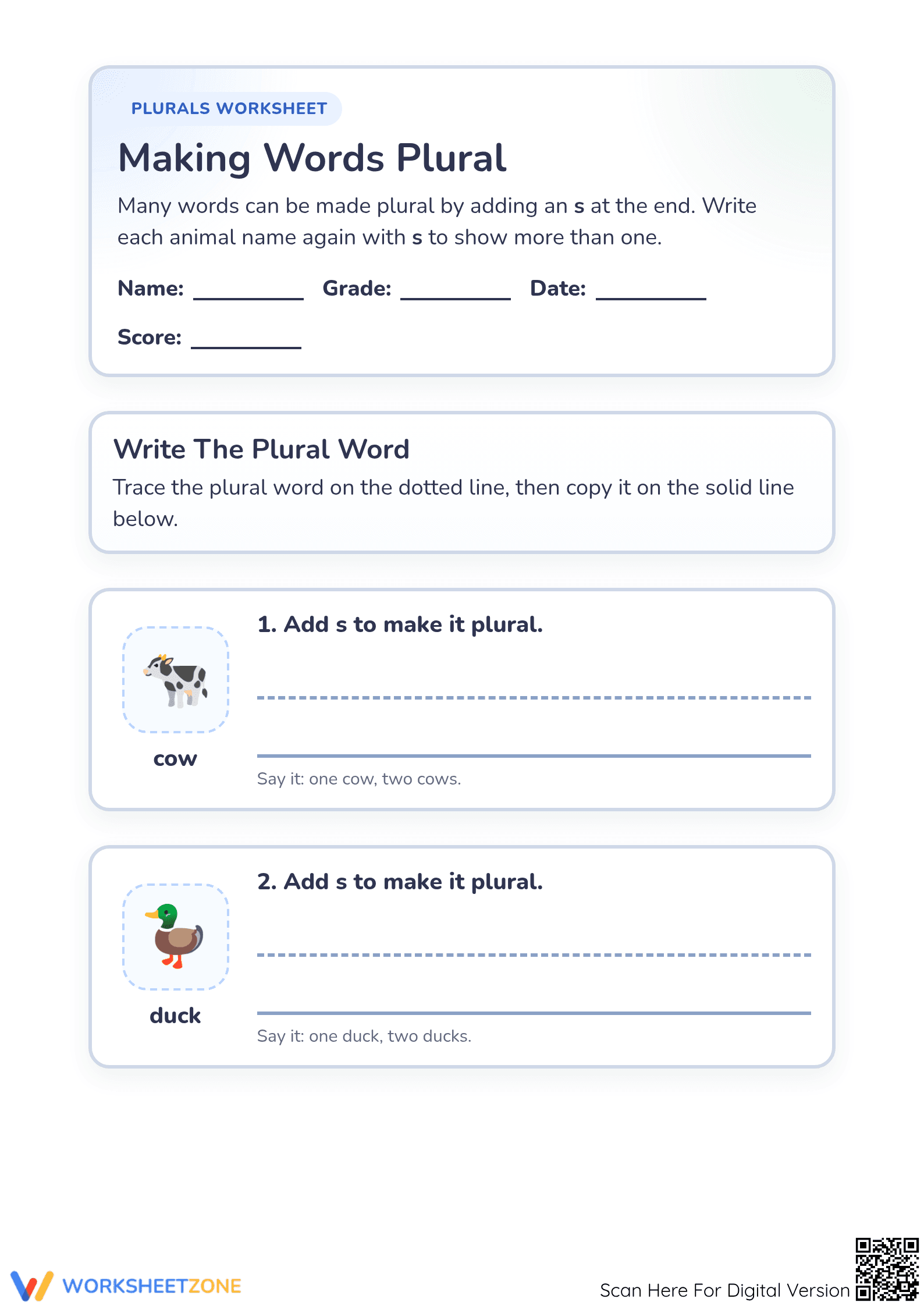
This Kindergarten ELA worksheet helps young learners master the fundamental concept of pluralization by adding the letter "s" to common animal nouns. By combining visual cues with tracing and independent writing, students develop a concrete understanding of how word forms change to represent more than one object. It is an effective tool for early literacy development.
At a Glance
At a Glance
- Grade: Kindergarten · Subject: ELA
- Standard:
CCSS.ELA-LITERACY.L.K.1.C— Form regular plural nouns by adding /s/ to the end of words- Skill Focus: Plural noun formation
- Format: 2 pages · 5 problems · Answer key included · PDF
- Best For: Independent practice or morning work
- Time: 10–15 minutes
What's Inside
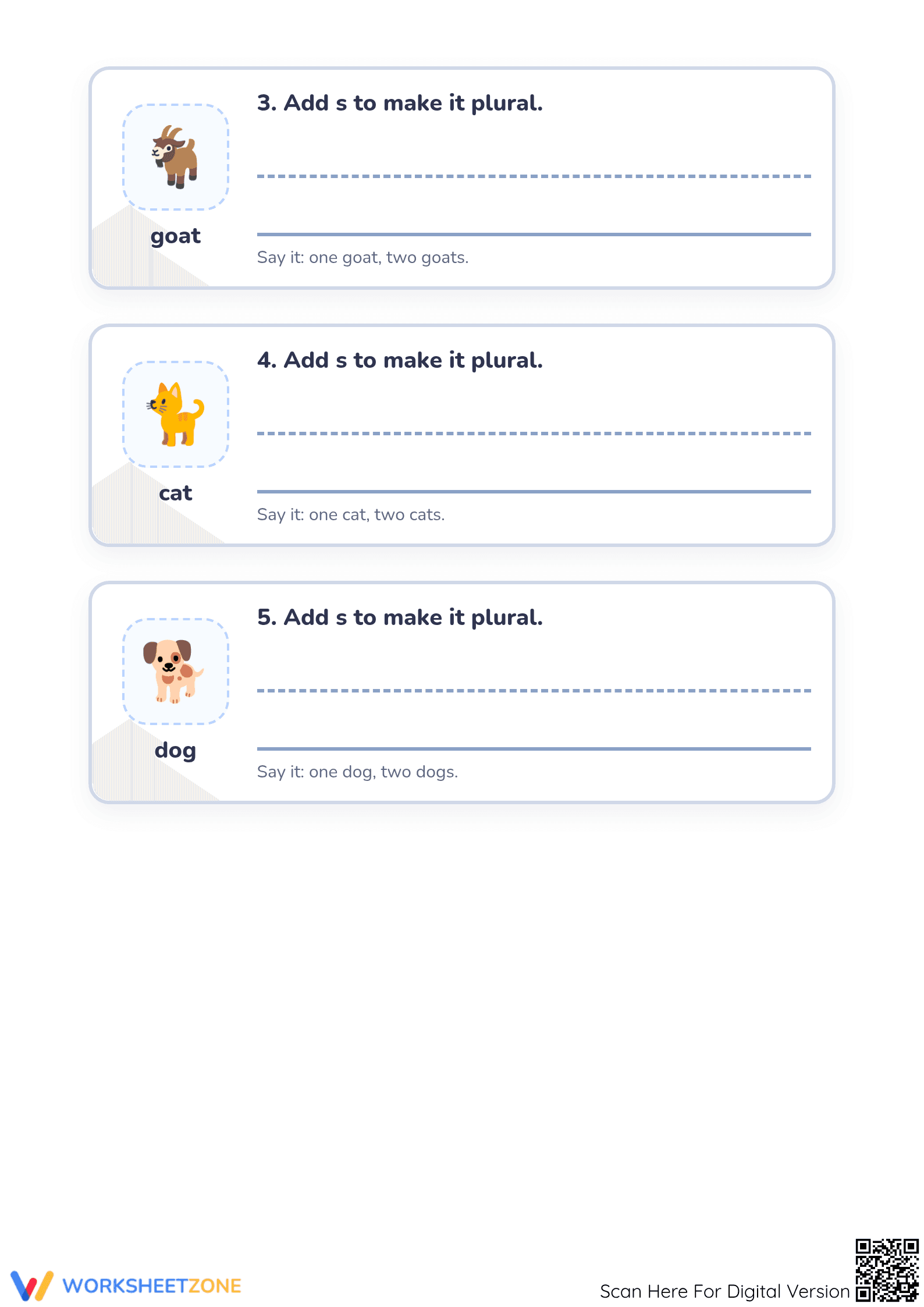
This resource consists of two PDF pages featuring five distinct animal-themed exercises. Each task includes a clear illustration of the animal, a tracing line for the pluralized word, and a solid line for independent writing. The layout is spacious and student-friendly, ensuring that early writers have enough room to practice their letter formation. A full answer key is provided to facilitate quick grading.
Zero-Prep Workflow
This worksheet is designed for immediate classroom implementation with three simple steps. First, print the two-page document (30 seconds). Second, distribute the sheets to students during your lexical word class block (1 minute). Finally, review the completed work using the included answer key or by having students "say it" aloud as prompted on the page. Total teacher preparation time is under two minutes, making it an ideal choice for sub plans.
Standards Alignment
The primary focus of this activity is `CCSS.ELA-LITERACY.L.K.1.C`, which requires students to form regular plural nouns orally and in writing. By adding the suffix "s" to familiar nouns, students demonstrate their understanding of grammatical number. This standard code can be copied directly into lesson plans, IEP goals, or district curriculum mapping tools to ensure instructional compliance and tracking.
How to Use It
Use this worksheet as a formative assessment after a direct instruction lesson on singular and plural nouns. Observe students as they trace the words to ensure they are following the correct stroke order for the letter "s." Alternatively, assign this as a quiet center activity where students can work independently. The oral prompts at the bottom of each task encourage language practice, which is vital for reinforcing auditory differences.
Who It's For
This resource is tailored for Preschool and Kindergarten students who are beginning to explore word classes and lexical structures. It is particularly beneficial for English Language Learners who need visual support to connect vocabulary with grammatical rules. Pair this worksheet with a physical set of animal figurines or an anchor chart showing "One vs. Many" to provide a multi-sensory learning experience.
According to the Fisher & Frey (2014) framework for gradual release of responsibility, providing students with structured tracing before independent writing is essential for cognitive scaffolding in early literacy. This worksheet aligns with that research by offering a clear progression within each of the 5 tasks. The focus on CCSS.ELA-LITERACY.L.K.1.C ensures that students are meeting national benchmarks for Kindergarten language standards. By practicing the addition of the /s/ suffix to animal names like "cow" and "duck," learners build the morphological awareness necessary for future reading fluency and writing accuracy. Research from NAEP suggests that early mastery of these basic grammatical structures is a strong predictor of later academic success in English Language Arts. This 2-page PDF provides the targeted, high-repetition practice required for students to internalize the rule of pluralization without overwhelming them with complex exceptions.


