


























Views
Downloads
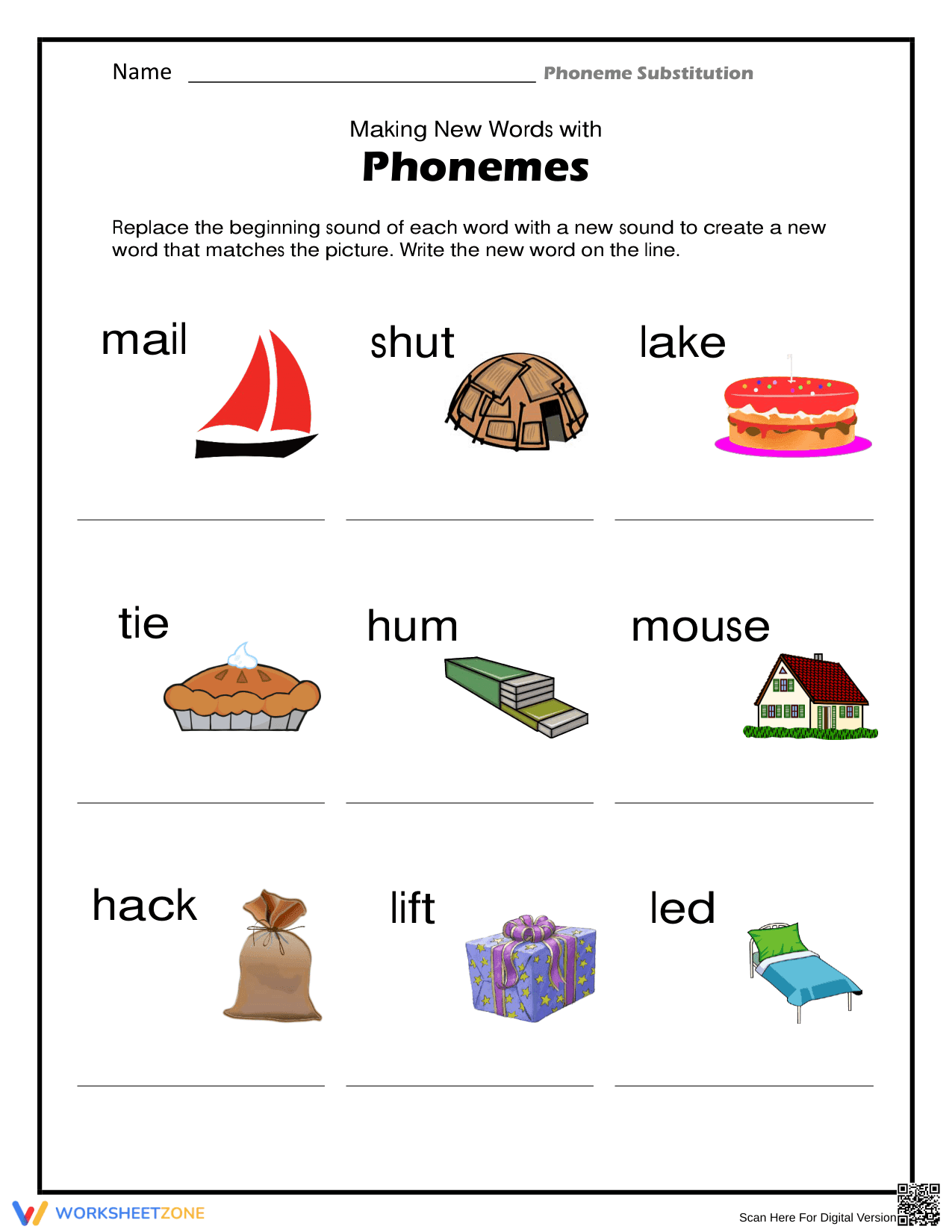

Grade K-1 Phoneme Substitution — Printable No-Prep Worksheet
Paste this activity's link or code into your existing LMS (Google Classroom, Canvas, Teams, Schoology, Moodle, etc.).
Students can open and work on the activity right away, with no student login required.
You'll still be able to track student progress and results from your teacher account.
This Essential Phoneme Substitution worksheet empowers Kindergarten and First Grade students to master beginning sound manipulation. By replacing the initial phoneme of words to match visual cues, learners develop the phonemic awareness necessary for fluent reading. This practice ensures students confidently transition between similar CVC words while building foundational literacy skills.
At a Glance
- Grade: K–1 · Subject: ELA Phonics
- Standard:
CCSS.ELA-LITERACY.RF.K.2.E— Substitute individual sounds in simple, one-syllable words to make new words.- Skill Focus: Initial Phoneme Substitution
- Format: 1 page · 9 problems · Answer key included · PDF
- Best For: Literacy centers or independent practice
- Time: 10–15 minutes
What's Inside
This resource features nine phoneme manipulation tasks on a single page. Each task presents a starting word alongside a clear illustration of the target word. Students identify the beginning sound, determine the substitution required by the picture, and write the new word on the line. The worksheet includes a clear header and an answer key for quick grading. This structure helps students bridge the gap between spoken sounds and written letters.
Zero-Prep Workflow
The zero-prep workflow allows teachers to integrate phonics practice in minutes. Simply print the PDF and distribute it as morning work or during a literacy block. Reviewing the nine tasks takes very little time using the included answer key. This efficiency makes it ideal for substitute plans or last-minute reinforcement, requiring no extra materials beyond a pencil for each student in your classroom.
Standards Alignment
The primary alignment is CCSS.ELA-LITERACY.RF.K.2.E, requiring students to substitute sounds in one-syllable words. By focusing on initial sound changes, the activity also supports CCSS.ELA-LITERACY.RF.1.2.C. These codes can be copied into lesson plans or IEP goals. Mastery is a critical step in developing orthographic mapping and decoding skills for early readers in Kindergarten and First Grade classrooms across all districts.
How to Use It
Use this worksheet during small-group phonics to reinforce beginning sound isolation. It also serves as a formative assessment; observe students to identify those struggling with phoneme deletion. For Grade 1, the completion time is 10 to 15 minutes. This allows the worksheet to fit into a rotational literacy center or as a quick exit ticket after a whole-group phonics lesson to check for understanding.
Who It's For
This resource is for Kindergarten and Grade 1 learners needing phonics reinforcement. It is beneficial for English Language Learners (ELLs) who use visual cues to connect sound changes to meaning. This worksheet pairs naturally with a lesson using magnetic letters. It provides a structured environment for students to practice high-frequency sound substitutions in a predictable and low-stakes format that builds learner confidence.
Phoneme substitution is a proven indicator of reading success per the NAEP framework. Research from Fisher & Frey (2014) emphasizes that focused practice helps students internalize phonological patterns. This worksheet provides nine structured opportunities to master the CCSS.ELA-LITERACY.RF.K.2.E standard. By connecting phoneme manipulation to visual representation, the resource bridges the gap between auditory discrimination and orthographic mapping. Data from the RAND AIRS 2024 report suggests that frequent phonics activities improve decoding accuracy. This one-page resource offers a classroom-ready solution that balances complexity with student engagement. Educators can utilize these tasks to track progress toward literacy benchmarks while providing feedback through the answer key. This approach aligns with evidence-based practices for early literacy, ensuring that all students build the phonological foundation necessary for advanced reading fluency and comprehension.


